
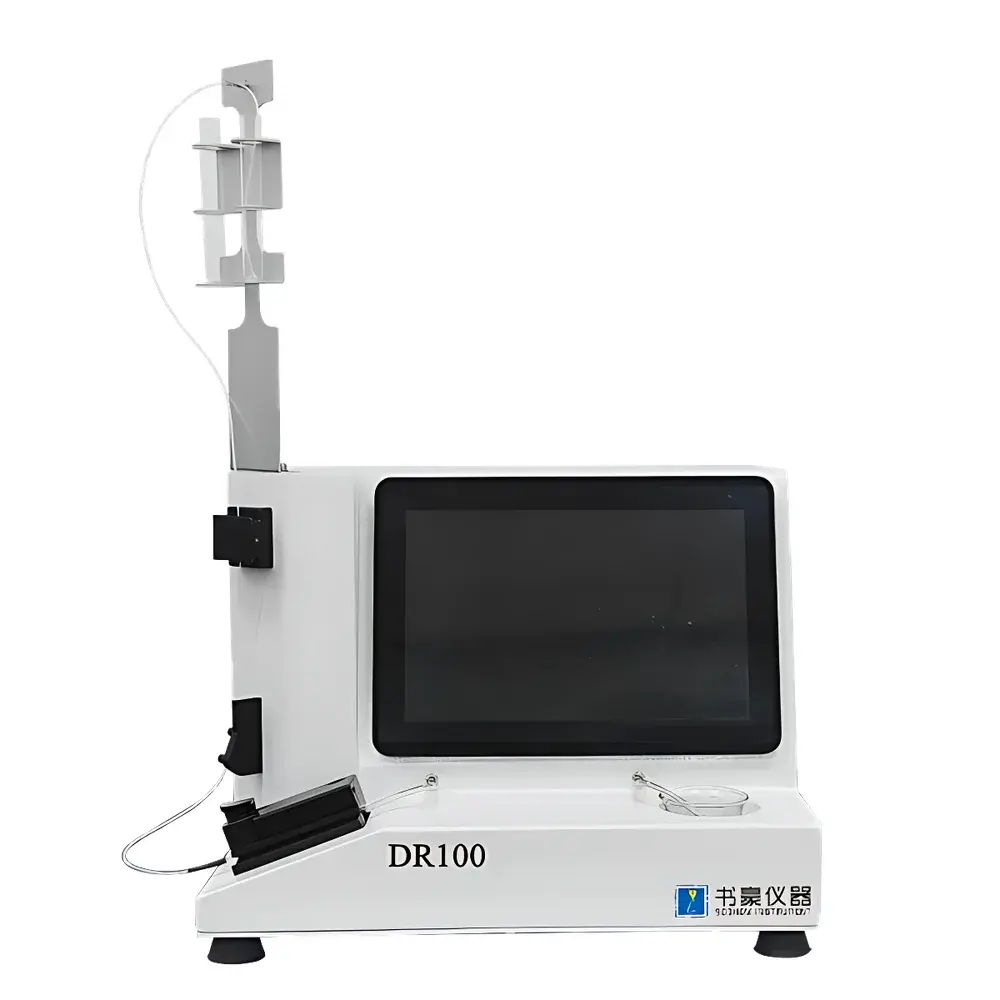
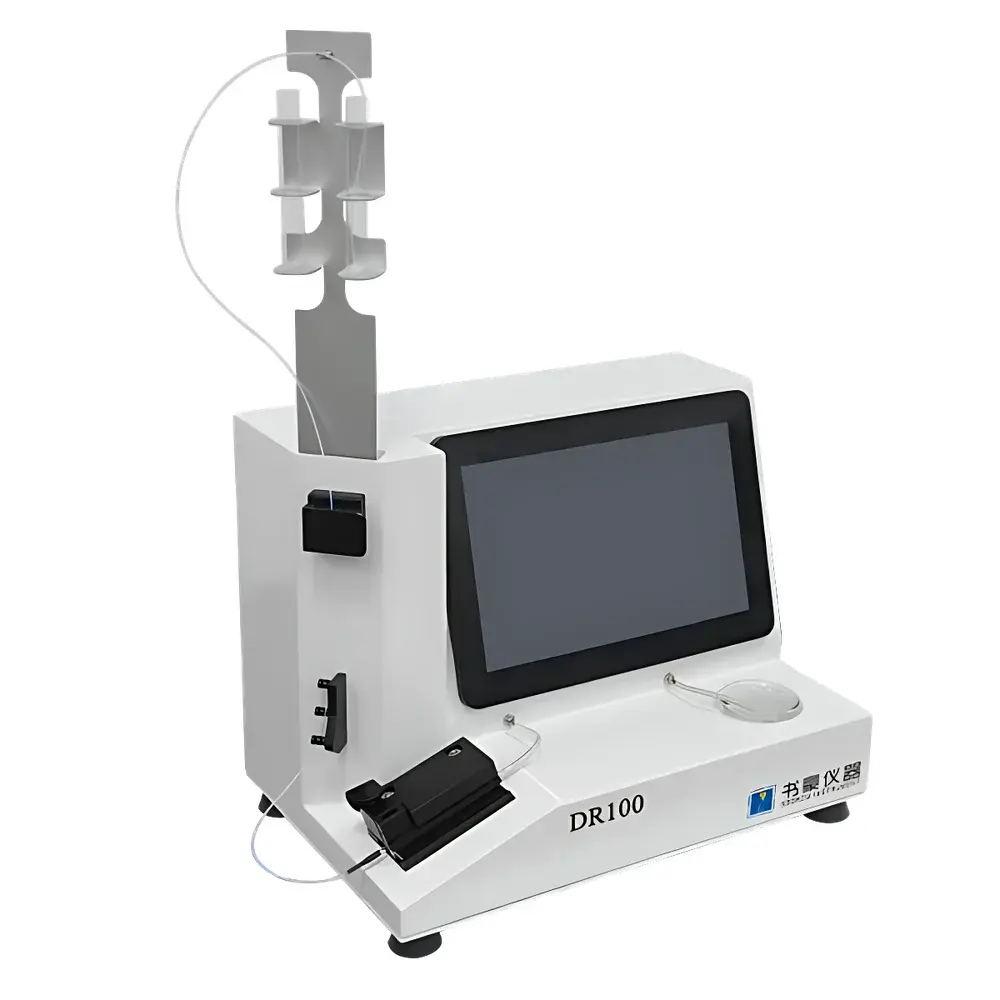
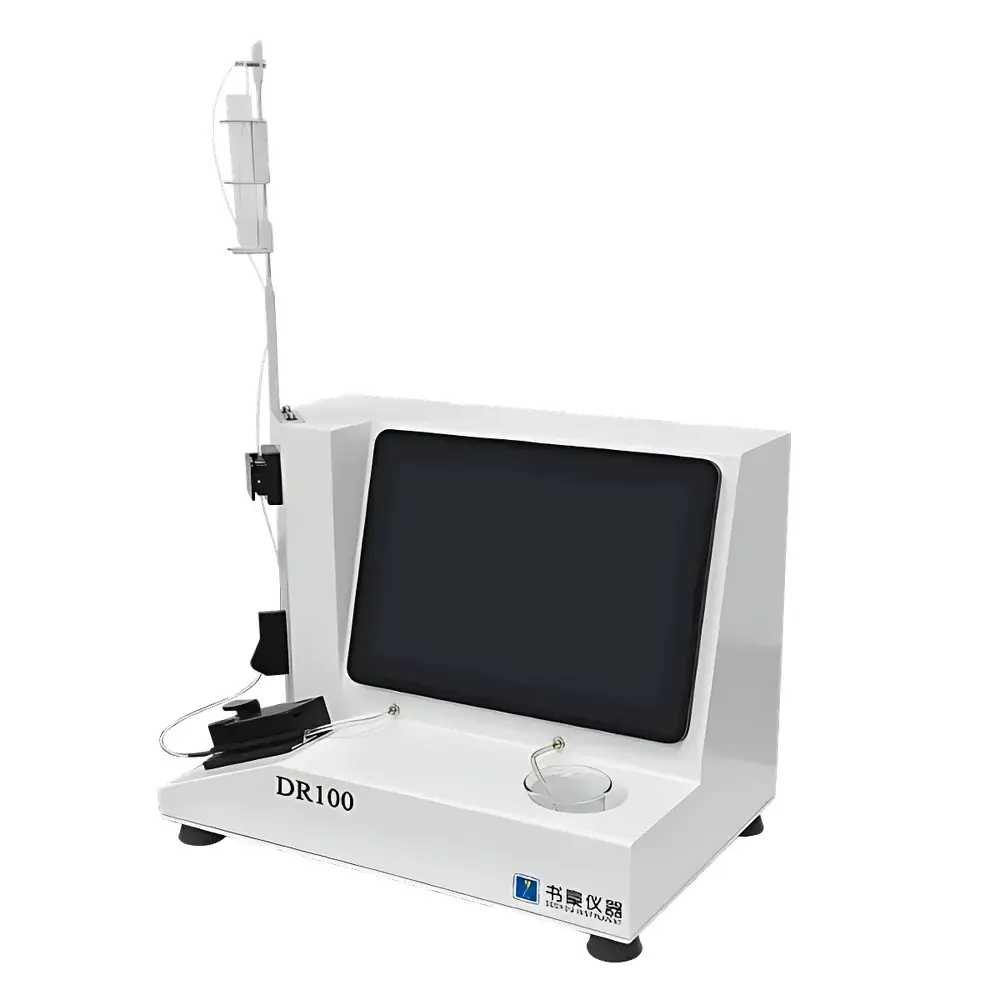
SOOHOW DR100 Direct-Reading Ferroscope
| Brand | SOOHOW INSTRUMENT |
|---|---|
| Origin | Jiangsu, China |
| Manufacturer Type | OEM Manufacturer |
| Model | DR100 |
| Power Supply | 220 VAC ±10%, 50 Hz (with 12 VDC/5 A adapter) |
| Sample Volume | 1 mL per analysis |
| Analysis Time | <10 min |
| Magnetic Field Gradient | >5.0 T/cm |
| Maximum Magnetic Flux Density | >1.5 T |
| Resolution | 0.1 (unitless reading scale) |
| Input Interface | Auto-sampling |
| Display | High-sensitivity capacitive touch screen |
| OS | Windows 7 |
| USB Ports | 4 × USB 2.0 |
| Network Interface | RJ45 Ethernet |
| Cleaning Solvent | Tetrachloroethylene (C₂Cl₄) |
Overview
The SOOHOW DR100 Direct-Reading Ferroscope is an engineered solution for rapid, quantitative ferrographic analysis of lubricating oils and hydraulic fluids in condition-based maintenance programs. Based on the principle of magnetic sedimentation under a high-gradient magnetic field, the DR100 separates and quantifies ferromagnetic wear debris—primarily elemental iron, steel alloys, and magnetite—by differential magnetic susceptibility. Unlike analytical ferrography requiring microscopic interpretation, the DR100 delivers immediate numerical outputs: the Direct Reading (DR) values for large particles (DL, >5 µm) and small particles (DS, 1–5 µm), expressed as dimensionless units proportional to optical density of deposited debris. This enables real-time assessment of wear severity without subjective operator judgment, supporting early fault detection in rotating machinery such as gearboxes, turbines, compressors, and diesel engines.
Key Features
- High-gradient magnetic separation system with field gradient exceeding 5.0 T/cm and peak flux density greater than 1.5 T—ensuring efficient capture and stratification of sub-micron to coarse ferromagnetic particles.
- Automated sample introduction with precise 1 mL volumetric delivery, minimizing operator variability and ensuring repeatability across sequential analyses.
- Integrated high-sensitivity capacitive touch display running on embedded Windows 7, enabling local operation without external PC dependency.
- Onboard data acquisition and processing with <10-minute total cycle time—from sample loading to DR value output—including magnetic deposition, solvent rinse (using tetrachloroethylene), and photometric quantification.
- Four USB 2.0 ports for peripheral connectivity (e.g., external storage, barcode scanners) and RJ45 Ethernet interface for networked deployment in centralized oil lab environments or SCADA-integrated predictive maintenance systems.
- Rugged industrial enclosure designed for laboratory and mobile field use, compliant with IEC 61000-4 electromagnetic compatibility standards.
Sample Compatibility & Compliance
The DR100 is validated for use with mineral-based, synthetic, and semi-synthetic lubricants, including engine oils (SAE 0W–60), turbine oils (ISO VG 32–100), gear oils (EP formulations), and hydraulic fluids (HL, HM, HV). It accommodates viscosity ranges up to 300 cSt at 40 °C. All wetted components are chemically resistant to tetrachloroethylene—a Class A chlorinated solvent specified in ASTM D5183 (Standard Test Method for Determining Wear Metals in Used Lubricating Oils by Inductively Coupled Plasma Atomic Emission Spectrometry) and widely accepted in ferrographic protocols. The instrument supports traceable calibration via certified reference oil standards and meets internal QA requirements aligned with ISO 17025 documentation practices for in-house oil analysis labs.
Software & Data Management
The native DR100 software provides trend logging, statistical process control (SPC) charting, and alarm threshold configuration (e.g., DL > 120 or DS/DL ratio < 0.3 indicating abnormal cutting wear). Data export is supported in CSV and XML formats for integration into CMMS (Computerized Maintenance Management Systems) such as SAP PM or IBM Maximo. Audit trails record user actions, calibration events, and method changes—supporting GLP-compliant workflows. While not FDA 21 CFR Part 11 certified out-of-the-box, the software architecture allows configuration for electronic signature and role-based access control when deployed within validated enterprise environments.
Applications
- Early-stage wear monitoring in wind turbine gearboxes to detect micropitting and spalling before vibration signatures emerge.
- Condition assessment of marine diesel engine crankcase oils during port turnaround inspections.
- Baseline wear profiling during commissioning of new gas compressor trains.
- Trend analysis of hydraulic system contamination in aerospace ground support equipment.
- Correlation studies between DR values and ferrous particle counts from automatic particle counters (APCs) per ISO 4406:2017.
FAQ
What types of wear debris does the DR100 detect?
It detects only ferromagnetic particles—primarily iron, cobalt, nickel, and their alloys—with sensitivity down to ~1 µm. Non-ferrous debris (e.g., aluminum, copper, silicon) and non-magnetic oxides are not quantified.
Can the DR100 be used with biodegradable or vegetable-based lubricants?
Yes, provided the fluid’s dielectric constant and viscosity fall within operational limits; validation testing with specific base stocks is recommended prior to routine deployment.
Is tetrachloroethylene the only acceptable cleaning solvent?
It is the reference solvent specified for method consistency and optical clarity; alternatives such as trichloroethylene may be used but require revalidation of calibration curves and wash efficiency.
Does the DR100 require annual recalibration?
Annual verification against traceable reference standards is recommended; full recalibration is required after sensor replacement or major firmware updates.
How is data security handled for network-connected units?
RJ45 communication uses TCP/IP with configurable firewall rules; no cloud upload occurs by default—data remains on-device or on local network drives unless explicitly exported.





