
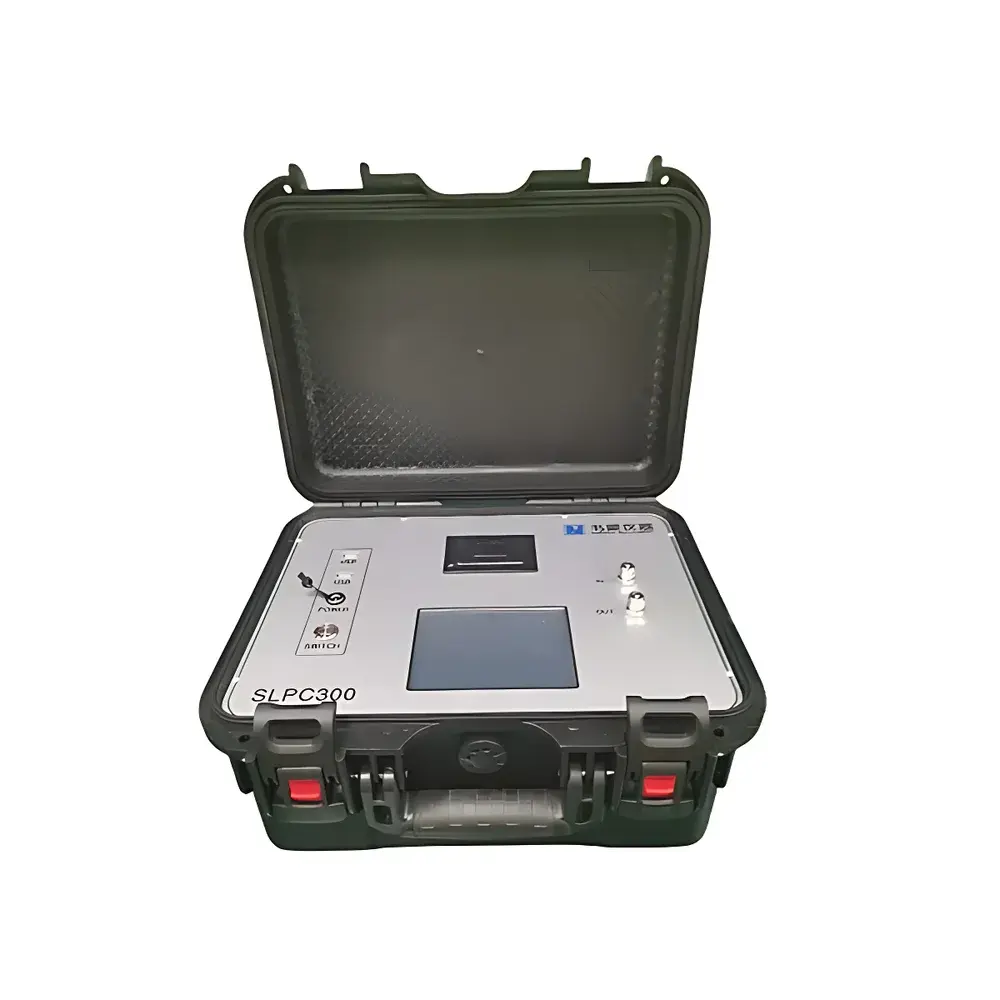
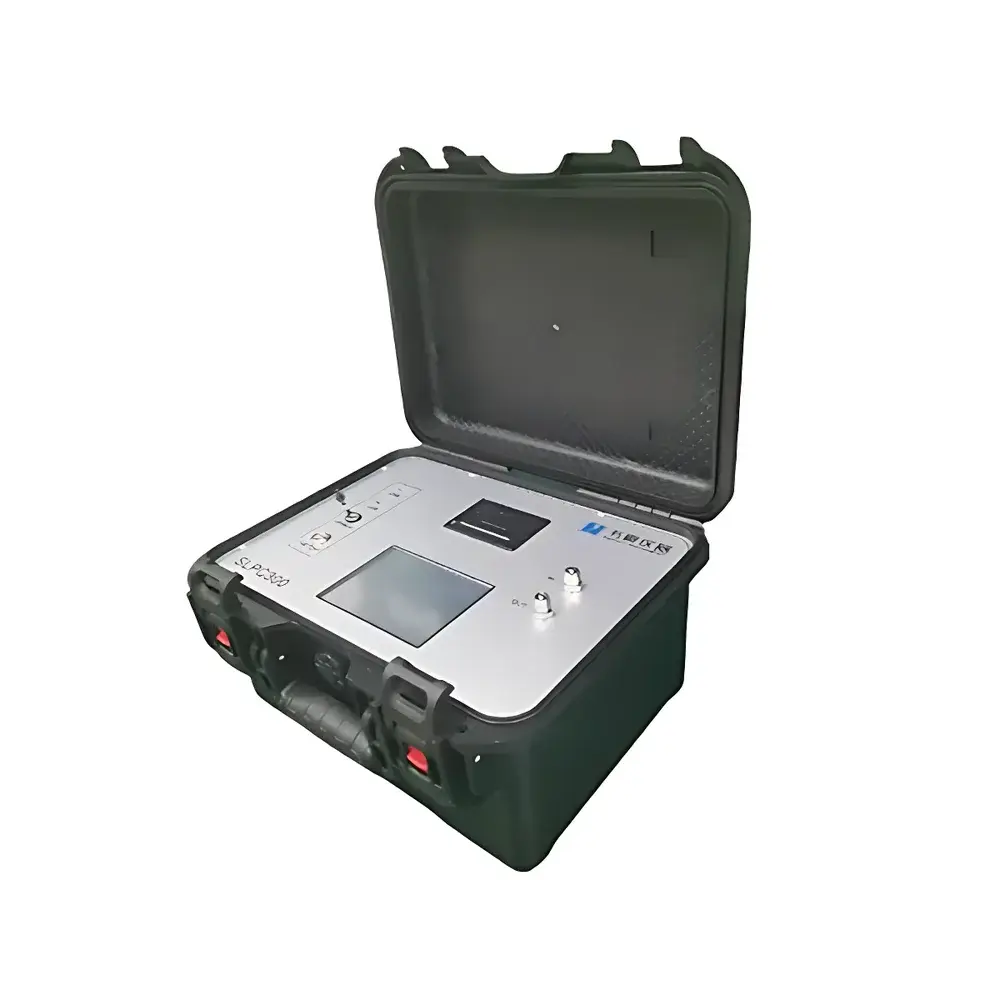
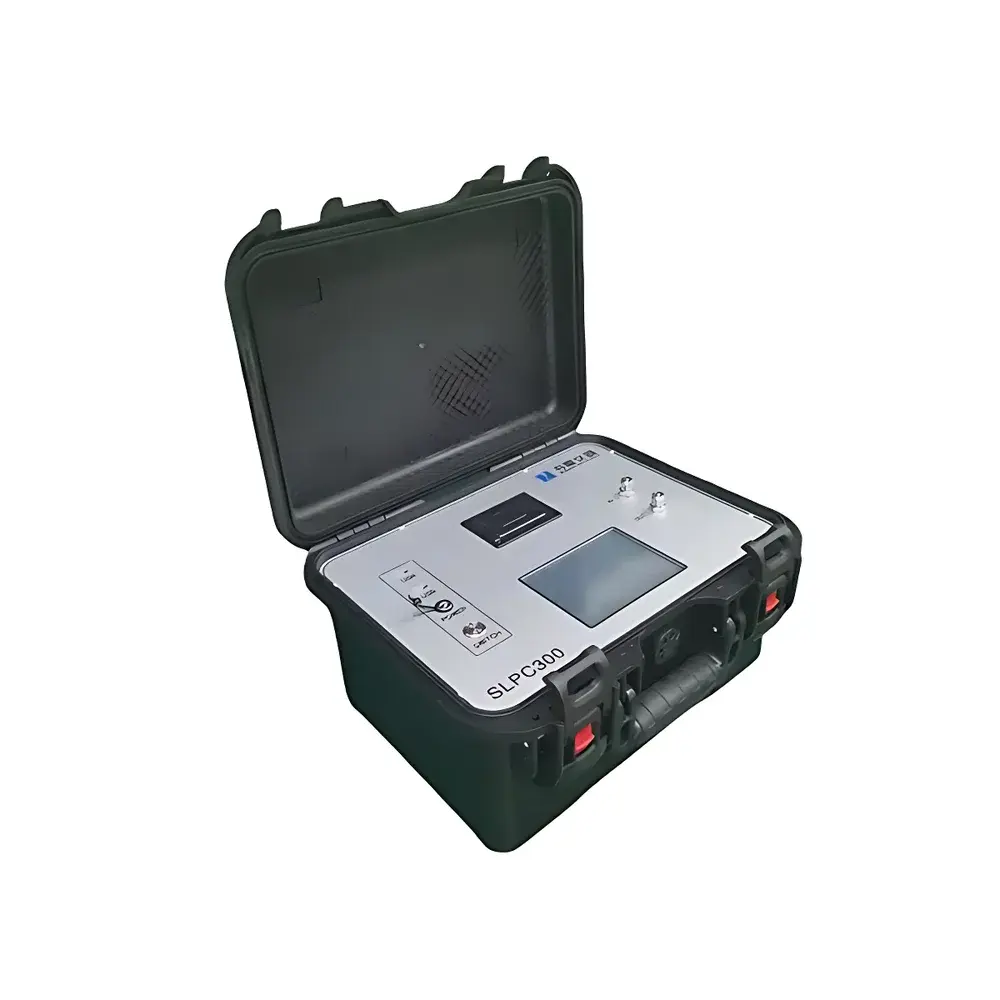
SOOHOW INSTRUMENT SLPC300 Optical Oil Particle Counter
| Brand | SOOHOW INSTRUMENT |
|---|---|
| Origin | Jiangsu, China |
| Manufacturer Type | Direct Manufacturer |
| Product Category | Domestic |
| Model | SLPC300 |
| Instrument Type | Optical Particle Counter |
| Light Source | 670 nm semiconductor laser (5 mW) |
| Particle Size Range | 1–600 µm (sensor-dependent) |
| Sensitivity | 1 µm or 4 µm |
| Detection Channels | 8 user-configurable channels with 1-µm incremental resolution |
| Sampling Mode | Offline or online (with optional pressure regulator) |
| Sample Volume | 10 mL |
| Volume Accuracy | ±3% |
| Flow Rate (Detection & Rinse) | 30 ± 5 mL/min |
| Coincidence Error Limit | 12,000–40,000 particles/mL (sensor-dependent) |
| Counting Repeatability | RSD < 2% |
| Counting Accuracy | ±10% |
| Online Operating Pressure | 0.1–0.6 MPa (up to 40 MPa with optional pressure-reduction module) |
| Sampling Interval | 1 s to 10 h 59 min 59 s |
| Sample Temperature Range | 0–80 °C |
| Operating Ambient Temperature | −20–60 °C |
| Storage Temperature | −30–80 °C |
| Power Supply | 100–265 VAC / 24 VDC / Internal Li-ion battery |
Overview
The SOOHOW INSTRUMENT SLPC300 Optical Oil Particle Counter is a precision-engineered instrument designed for quantitative analysis of particulate contamination in hydraulic fluids, lubricating oils, turbine oils, and other industrial liquid media. It operates on the principle of light obscuration (also known as single-particle optical sensing, SPOS), where particles suspended in a flowing liquid stream pass through a focused laser beam (670 nm, 5 mW), generating transient shadows proportional to their cross-sectional area. These signals are digitized and classified into up to eight user-defined size channels—each configurable at 1-µm increments—enabling high-resolution particle distribution profiling across a broad dynamic range (1–600 µm). The SLPC300 supports both offline laboratory analysis and continuous online monitoring, making it suitable for condition-based maintenance (CBM), ISO 4406:2017 compliance reporting, and proactive contamination control in critical fluid systems.
Key Features
- High-fidelity optical detection using a stable 670 nm semiconductor laser with low thermal drift and extended service life.
- Configurable 8-channel detection architecture allowing granular size binning from 1 µm upward; ideal for differentiating wear debris, sludge, and external contaminants.
- Dual-mode sampling capability: standardized offline analysis (10 mL sample volume, ±3% volumetric accuracy) and real-time online monitoring (0.1–0.6 MPa nominal pressure, extendable to 40 MPa with certified pressure-reduction module).
- Robust flow control system maintaining consistent detection and rinse rates of 30 ± 5 mL/min, minimizing shear-induced particle breakage and ensuring repeatable hydrodynamic conditions.
- Wide operational envelope: functional across sample temperatures from 0–80 °C and ambient environments from −20–60 °C—validated for use in engine test cells, power generation facilities, and offshore hydraulic systems.
- Flexible power architecture supporting universal AC input (100–265 VAC), 24 VDC for integration into industrial control cabinets, or internal rechargeable Li-ion battery for portable field deployment.
Sample Compatibility & Compliance
The SLPC300 is optimized for transparent to moderately opaque mineral oils, synthetic lubricants, phosphate esters, and water-glycol hydraulic fluids. Its optical design accommodates varying refractive index contrasts between particle and medium, though highly viscous (>400 cSt) or strongly absorbing fluids may require dilution or viscosity-matched carrier fluids. The instrument complies with core international standards governing particle counting methodology—including ISO 11171 (calibration), ISO 4402 (legacy method equivalence), and ASTM D6786 (standard practice for automatic particle counters). Data output formats align with ISO 4406:2017 coding conventions and support direct integration into asset integrity management platforms. For regulated environments, audit-trail functionality and user-access controls can be enabled to meet GLP/GMP documentation requirements and FDA 21 CFR Part 11 readiness when paired with compliant software configurations.
Software & Data Management
The SLPC300 interfaces via USB 2.0 or RS-485 with dedicated PC-based acquisition and analysis software (Windows 10/11 compatible). The software provides real-time histogram visualization, cumulative/differential distribution plots, trend logging, and automated ISO cleanliness code generation per channel. All measurement sessions include timestamped metadata (sample ID, operator, temperature, pressure, flow rate), enabling full traceability. Raw pulse data is stored in binary format with lossless fidelity, permitting retrospective re-binning or advanced statistical post-processing. Export options include CSV, PDF reports, and XML for LIMS or CMMS integration. Optional OPC UA server module enables seamless connectivity to SCADA and IIoT infrastructure for predictive maintenance workflows.
Applications
- Hydraulic system health monitoring in aerospace actuators, wind turbine pitch control, and mobile machinery.
- Lubricant condition assessment in gas turbines, steam turbines, and large electric motors per OEM oil analysis specifications.
- Filter performance validation and beta-ratio testing in accordance with ISO 16889.
- Manufacturing process verification for clean-room hydraulic component assembly (e.g., servo valves, fuel injectors).
- Research and development of anti-wear additives, dispersants, and filtration media under controlled contamination exposure protocols.
- Third-party certification labs performing ISO 4406 reporting for equipment commissioning and warranty validation.
FAQ
What calibration standards are supported for the SLPC300?
NIST-traceable latex sphere suspensions (ISO 11171 compliant) are recommended for primary calibration; secondary verification may be performed using ISO MTD or ACD test dusts.
Can the SLPC300 measure particles in diesel or jet fuel?
Yes, provided the fuel meets minimum transparency requirements at 670 nm and has kinematic viscosity below 15 cSt at 40 °C; pre-filtration through a 5-µm membrane is advised to avoid sensor clogging.
Is firmware upgrade capability available remotely?
Firmware updates are delivered via secure USB stick or authenticated FTP; no remote network access is embedded by default to maintain cybersecurity integrity in OT environments.
How is coincidence error corrected during high-concentration measurements?
The SLPC300 applies algorithmic coincidence correction based on pulse width analysis and Poisson statistics, validated against reference slurries within its specified limit (12,000–40,000 particles/mL depending on sensor configuration).
Does the system support multi-language UI and report generation?
English and Chinese language interfaces are factory-standard; additional languages (German, French, Spanish) are available upon request with localized regulatory terminology and unit formatting.



