
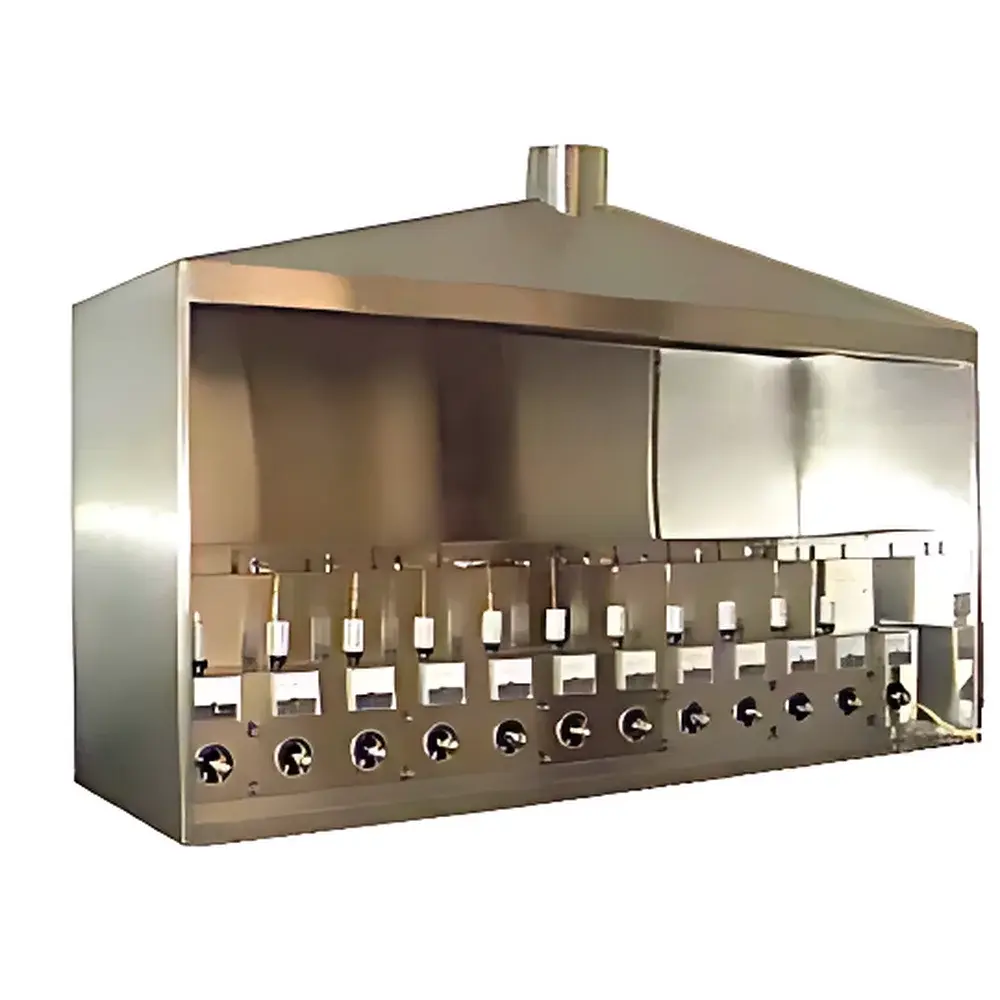
Phoenix EP Series Alpha Sample Electrodeposition System
| Origin | USA |
|---|---|
| Manufacturer Type | Authorized Distributor |
| Origin Category | Imported Instrument |
| Model | EP |
| Pricing | Available Upon Request |
Overview
The Phoenix EP Series Alpha Sample Electrodeposition System is an engineered solution for high-precision sample preparation in alpha-particle spectrometry. Designed specifically to address the physical constraints of alpha radiation—namely its short range in air (typically <5 cm) and significant self-absorption within non-uniform or thick samples—the EP system enables reproducible, ultra-thin electrodeposited sources on conductive substrates. Unlike direct evaporation or micro-precipitation techniques, electrodeposition produces homogeneous, adherent, and atomically thin actinide layers (e.g., U, Pu, Am, Th) on polished stainless steel or nickel planchets. This process minimizes energy straggling and self-absorption effects—particularly critical below 3 MeV—thereby preserving intrinsic energy resolution and reducing minimum detectable activity (MDA) by up to 40% compared to conventional deposition methods. The system operates on the principle of controlled electrolytic reduction under constant current or potentiostatic conditions, ensuring stoichiometric retention and quantitative recovery across diverse matrix types (e.g., nitric acid leachates, environmental water extracts, or radiochemical separation eluates).
Key Features
- Modular channel configuration: Available in 1-, 2-, 4-, 8-, and 12-channel versions for parallel sample processing—ideal for high-throughput environmental monitoring labs or nuclear safeguards facilities.
- Sub-micron deposition control: Achieves uniform source thicknesses ≤0.1 mg/cm², directly enhancing spectral peak resolution (FWHM <20 keV at 5.15 MeV for 239Pu) and minimizing low-energy tailing.
- High-purity platinum wire electrodes: Chemically inert, corrosion-resistant, and thermally stable—ensuring consistent current density distribution and >10,000-cycle operational longevity without performance drift.
- USP Class VI-compliant polyethylene sample vials: Non-leaching, low-background, autoclavable, and reusable—reducing consumable cost and eliminating trace metal contamination risks during long-term storage or reanalysis.
- Standardized substrate compatibility: Supports 19 mm (3/4″) and 25.4 mm (1″) diameter planchets; custom diameters and material options (e.g., polished copper, silver, or tantalum) available upon specification.
Sample Compatibility & Compliance
The EP system accommodates aqueous solutions containing alpha-emitting isotopes in nitric, hydrochloric, or oxalic acid media (pH 1–3), including post-separation fractions from TRU resin, DGA, or TEVA column chromatography. It complies with ISO 11929:2019 (evaluation of measurement uncertainty in ionizing radiation), ASTM D3648-19 (standard practice for alpha-particle spectrometry), and supports GLP/GMP audit requirements through full procedural traceability. All wetted components meet USP and EU Pharmacopoeia 3.1.1 specifications for extractables and leachables. No radioactive waste generation occurs during operation—electrolyte solutions are recyclable after pH neutralization and metal recovery.
Software & Data Management
Each EP unit integrates a dedicated embedded controller with programmable deposition parameters (current density: 0.1–5 mA/cm²; time: 30 min–24 h; temperature: ambient–60°C). Optional USB- or Ethernet-connected PC software provides real-time current/voltage logging, automated protocol recall, electronic signature support, and 21 CFR Part 11–compliant audit trails—including user ID, timestamp, parameter set, and completion status per run. Data export is compatible with common alpha-spectrum analysis platforms (e.g., Genie 2000, GammaVision-32, or custom Python-based fitting pipelines).
Applications
- Environmental radioactivity monitoring: Soil, sediment, seawater, and airborne particulate filters per EPA Method 900.0 and IAEA-TECDOC-1369.
- Nuclear fuel cycle QA/QC: Uranium isotopic ratio verification (e.g., 234U/238U) in UF6 conversion products and spent fuel reprocessing streams.
- Health physics and dosimetry: Quantification of transuranic nuclides in bioassay urine samples (ASTM C1127-22).
- Forensic radiochemistry: Isotopic fingerprinting of illicit nuclear materials in swipe samples.
- Reference material certification: Preparation of NIST-traceable alpha standards with certified activity uncertainties <±1.5% (k=2).
FAQ
What electrolyte systems are validated for use with the EP series?
Standard protocols include 0.15 M HNO3 + 0.05 M (NH4)2SO4 for uranium/plutonium and 0.2 M HCl + 0.02 M Fe2+ for americium/curium. Custom electrolyte optimization services are available.
Can the EP system be integrated into an automated lab workflow?
Yes—RS-232, Modbus TCP, and dry-contact I/O interfaces enable synchronization with robotic liquid handlers, LIMS, and alpha spectrometer start triggers.
Is operator training included with purchase?
Phoenix provides on-site or virtual commissioning, SOP development support, and annual refresher courses aligned with ANSI N13.30 and ISO/IEC 17025 competency requirements.
What maintenance intervals are recommended?
Platinum electrodes require visual inspection every 500 runs; vials should be inspected for clouding or etching prior to reuse. Full calibration verification is advised annually using certified reference sources.







