
GLTLab TR-10C High-Capacity Reversible Roller Mixer for Battery Slurry Homogenization
| Brand | GLTLab |
|---|---|
| Model | TR-10C |
| Type | Reversible Roller Mixer |
| Dimensions (W×D×H) | 560×400×100 mm |
| Max. Processing Volume | 10 L |
| Standard Speed Range | 5–300 rpm (Optional: 1–1000 rpm) |
| Load Capacity | 10 kg (scalable upon configuration) |
| Power Supply | 12 V/5 A or 19 V/5 A (unit-specific) |
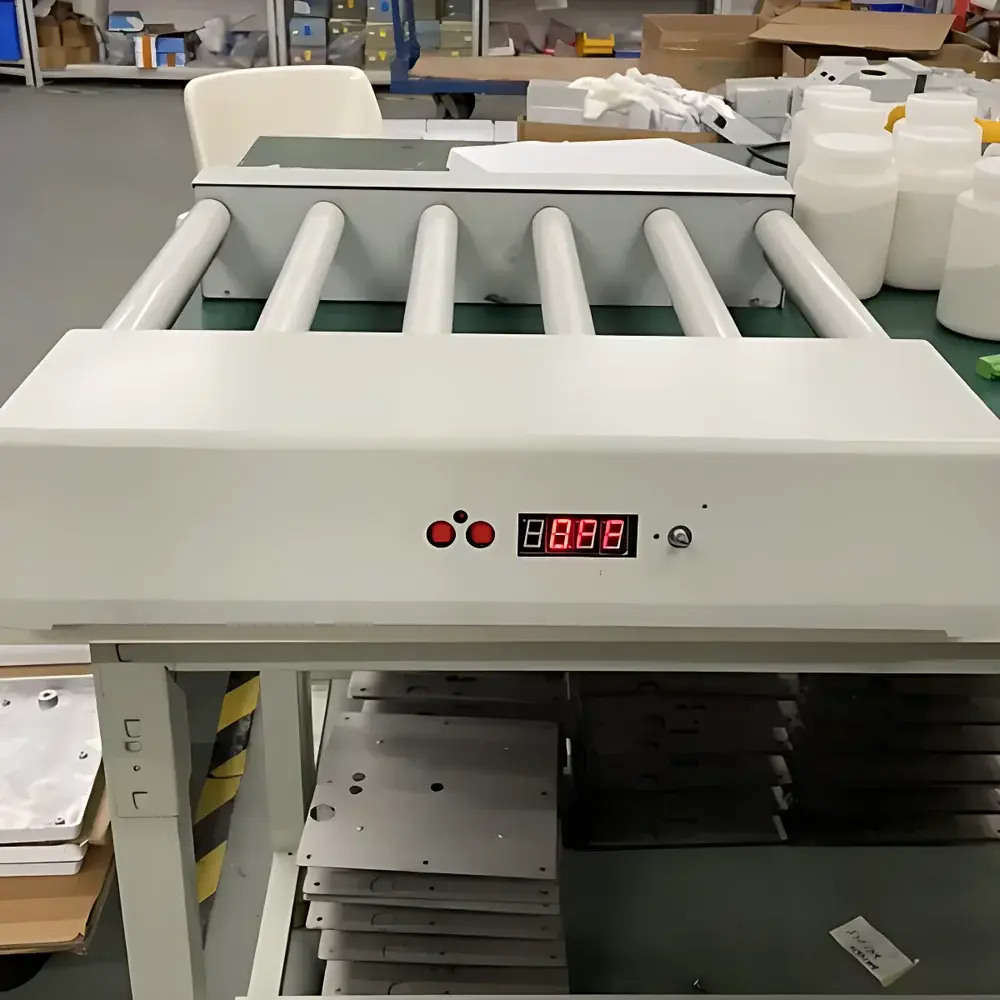
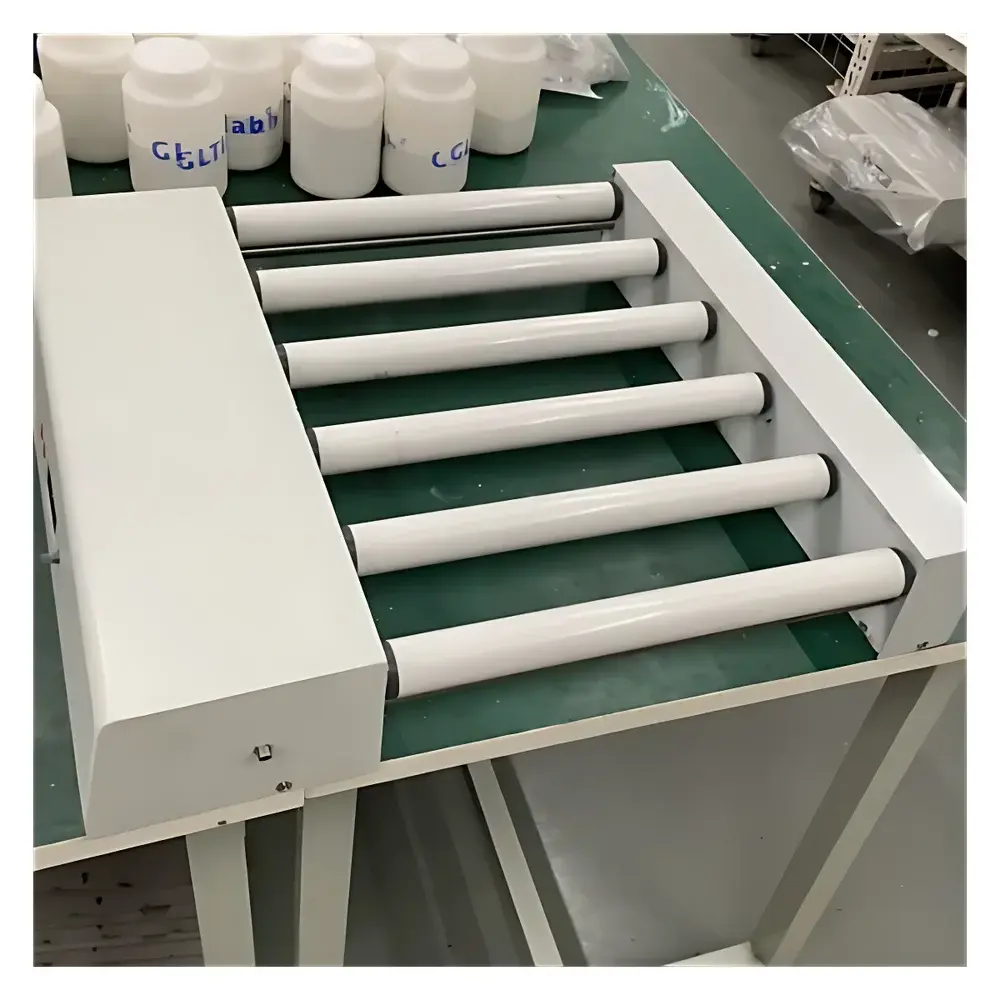
| Roller Count | 6 |
| Roller Dimensions | 340 × 30 mm |
| Compatible Vessels | Up to three 5-L bottles, or five 1-L + five 500-mL bottles |
| Origin | Guangdong, China |
| Manufacturer | GLTLab (OEM/ODM Capable) |
Overview
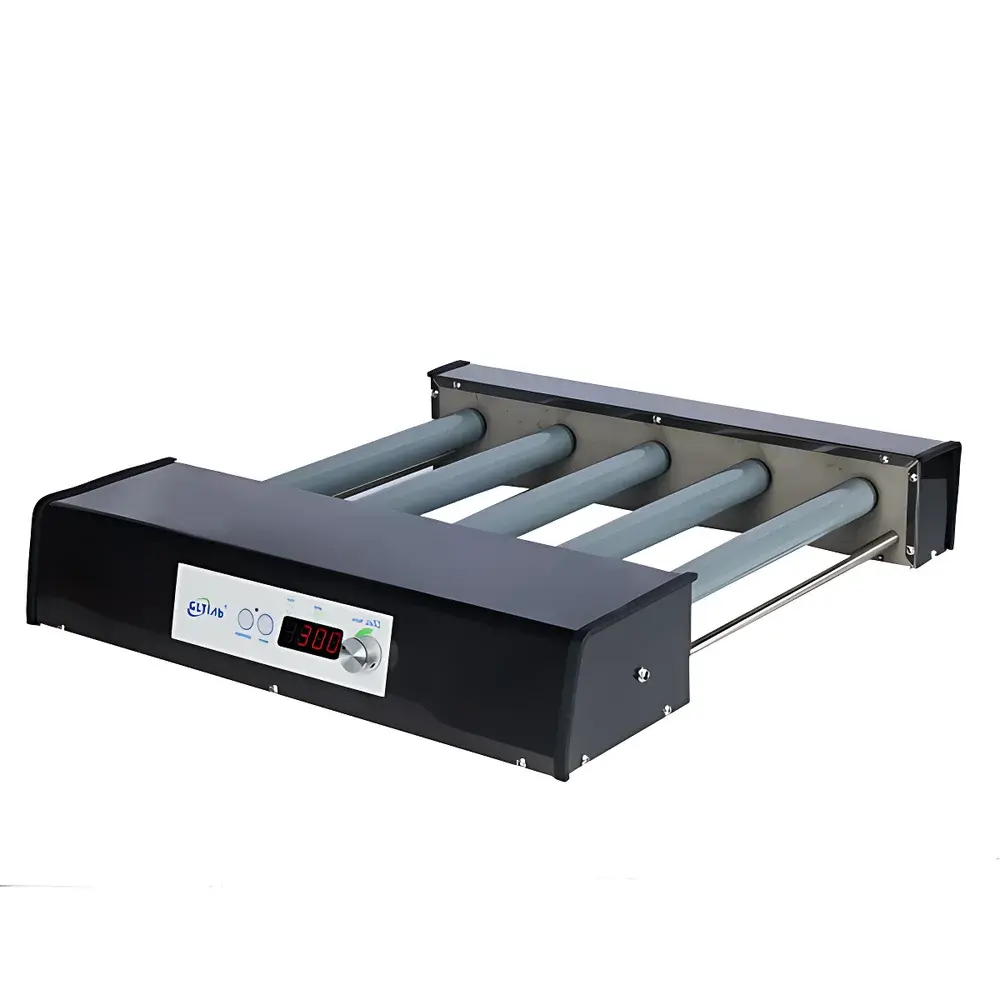
The GLTLab TR-10C is a high-torque, bidirectionally programmable roller mixer engineered for reproducible homogenization of viscous and heterogeneous suspensions in R&D and pilot-scale production environments. Unlike orbital shakers or vortex mixers, the TR-10C employs coaxial rotational motion—where cylindrical containers rotate end-over-end along a fixed horizontal axis—generating gentle yet effective laminar shear and gravitational tumbling. This principle ensures uniform dispersion without introducing excessive air entrapment, foam formation, or particle attrition—critical for preserving the structural integrity of battery electrode active materials (e.g., NMC, LFP, silicon anodes), ceramic slurries, and polymer-based coatings. Designed specifically for the stringent demands of new energy applications, the TR-10C bridges the gap between laboratory-scale formulation and pre-production slurry conditioning, supporting scalable process development under controlled mechanical parameters.
Key Features
- Reversible rotation control with programmable direction switching intervals (1–99 min), minimizing sedimentation and enhancing radial mixing uniformity across high-viscosity batches.
- High-stability brushed DC motor paired with precision planetary gear reduction, delivering consistent torque output up to 10 kg load capacity—even at low speeds (1 rpm) and extended duty cycles.
- Modular roller configuration: six independently mounted 340 mm × 30 mm rollers accommodate diverse vessel geometries—including standard glass jars, stainless-steel mixing cans, and custom-lined composite containers—without requiring adapters.
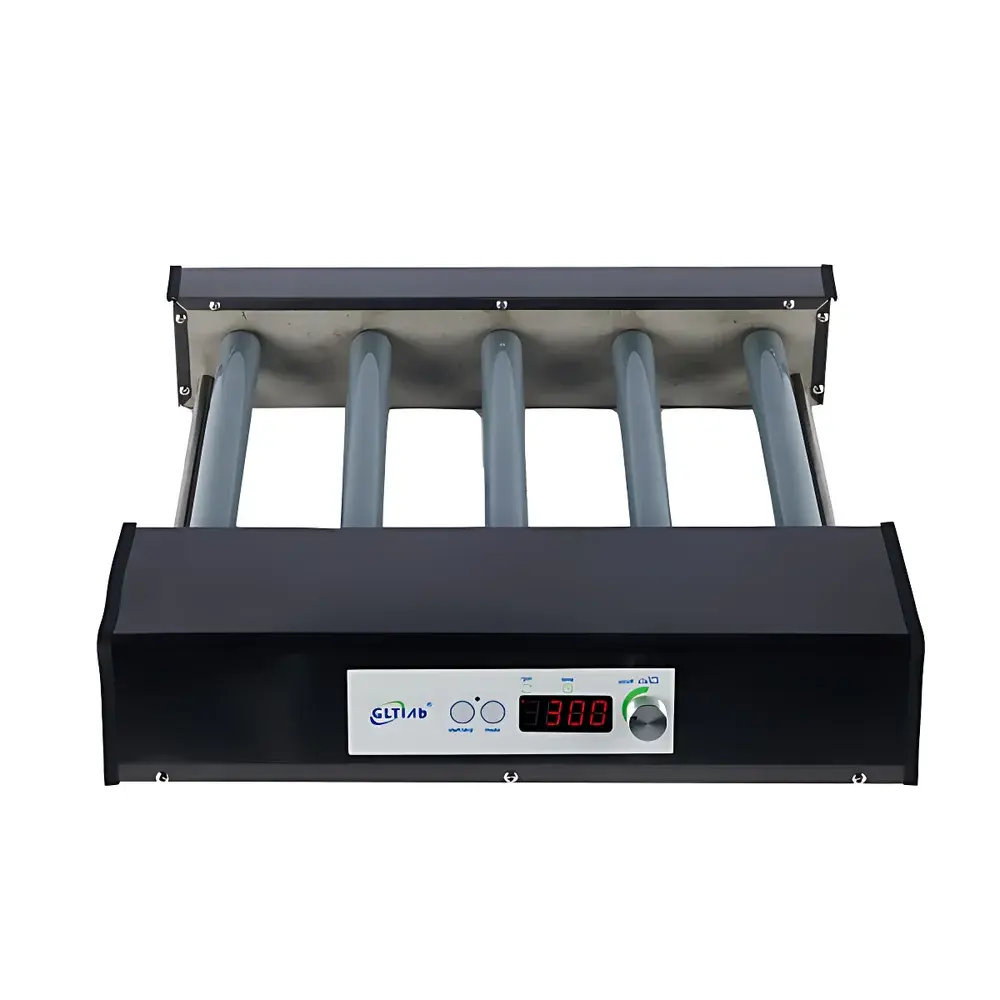
- Dual-speed calibration mode: users may select either standard (5–300 rpm) or extended-range (1–1000 rpm) operation via firmware toggle, enabling both gentle blending of fragile colloids and aggressive dispersion of agglomerated powders.
- LED-based digital interface with real-time RPM display, elapsed time counter, and memory retention for up to 5 user-defined protocols—supporting repeatable method execution across shifts and operators.
- Compact footprint (560 × 400 × 100 mm) optimized for fume hood integration or benchtop deployment in QC labs, battery material synthesis suites, and coating formulation stations.
Sample Compatibility & Compliance
The TR-10C supports vessels ranging from 500 mL wide-mouth jars to 5 L cylindrical tanks, making it suitable for batch sizes from 200 mL to 10 L per run. It maintains compatibility with chemically resistant materials including borosilicate glass, PTFE-coated stainless steel, and polypropylene containers—essential for handling NMP, DMF, aqueous binders (e.g., CMC/SBR), and abrasive ceramic precursors. While not certified to ISO/IEC 17025 or FDA 21 CFR Part 11 out-of-the-box, its operational repeatability, traceable speed calibration, and non-volatile protocol storage align with GLP-compliant documentation workflows. Users may integrate external data loggers or connect to LIMS platforms via RS-232 (optional module) for audit-ready recordkeeping in regulated battery manufacturing settings.
Software & Data Management
The TR-10C operates via embedded microcontroller firmware with no PC dependency. All parameters—including target RPM, run duration, reversal interval, and direction sequence—are configured directly on the front-panel interface. Each saved protocol includes timestamped execution history (last 20 runs), facilitating troubleshooting and SOP adherence. For advanced integration, optional USB-to-serial and analog voltage output modules enable synchronization with environmental monitoring systems (e.g., temperature/humidity sensors) or automated dispensing units in closed-loop slurry preparation lines. Raw speed and timing logs can be exported as CSV files using third-party terminal software—compatible with MATLAB, Python pandas, or LabVIEW for statistical process control (SPC) analysis.
Applications
- Battery Electrode Slurry Development: Homogenizing cathode (LiCoO₂, NMC811) and anode (graphite, SiOₓ/C) slurries with PVDF or water-based binders; preventing conductive additive segregation during long-term storage.
- Advanced Ceramics & Catalysts: Dispersing nano-sized metal oxides (e.g., TiO₂, CeO₂) in ethanol or ethyl cellulose solutions prior to tape casting or inkjet printing.
- Functional Coatings: Achieving pigment deagglomeration and resin crosslinker distribution in automotive clearcoats, anti-corrosion primers, and UV-curable inks.
- Pharmaceutical Excipient Blending: Preparing uniform suspensions of poorly soluble APIs in lipid-based delivery vehicles (e.g., self-emulsifying drug delivery systems).
- Food & Cosmetic Emulsions: Stabilizing oil-in-water emulsions containing thickeners (xanthan gum, carrageenan) without thermal degradation or phase separation.
FAQ
What vessel types are compatible with the TR-10C?
Standard compatibility includes cylindrical containers with diameters between 45 mm and 120 mm and heights up to 300 mm—such as DIN-standard glass jars, PETG mixing bottles, and custom-engineered stainless-steel cans with flat end caps.
Can the TR-10C be used under inert atmosphere conditions?
Yes—when paired with gas-tight vessels equipped with septum-sealed lids or Swagelok fittings, the TR-10C supports nitrogen- or argon-purged mixing for oxygen-sensitive battery slurries or pyrophoric catalyst precursors.
Is speed calibration traceable to national standards?
Each unit ships with a factory-verified tachometer report referencing ISO 5326:2017 (rotational speed measurement). End-users may perform periodic verification using handheld laser tachometers calibrated to NIST-traceable references.
Does the TR-10C support continuous operation beyond 24 hours?
Yes—the motor and gear train are rated for indefinite intermittent or continuous duty at ≤300 rpm; thermal protection circuitry automatically pauses operation if internal temperature exceeds 75°C.
How is maintenance performed on the roller assembly?
Rollers are secured via M4 stainless-steel set screws; periodic inspection (every 500 operating hours) for belt tension, gear lubrication, and bearing play is recommended using manufacturer-provided service manual TM-TR10C-Rev3.



