
GLTlab TR-10A-SS 10-Axis Stainless Steel Roller Mixer
| Brand | GLTlab |
|---|---|
| Origin | Guangdong, China |
| Manufacturer Type | Direct Manufacturer |
| Origin Category | Domestic (China) |
| Model | TR-10A-SS |
| Instrument Type | Roller Mixer / Sample Homogenizer |
| Timer Range | 1 s – 200 h |
| Oscillation Frequency | 5–300 rpm |
| Temperature Control Range | 0–50 °C |
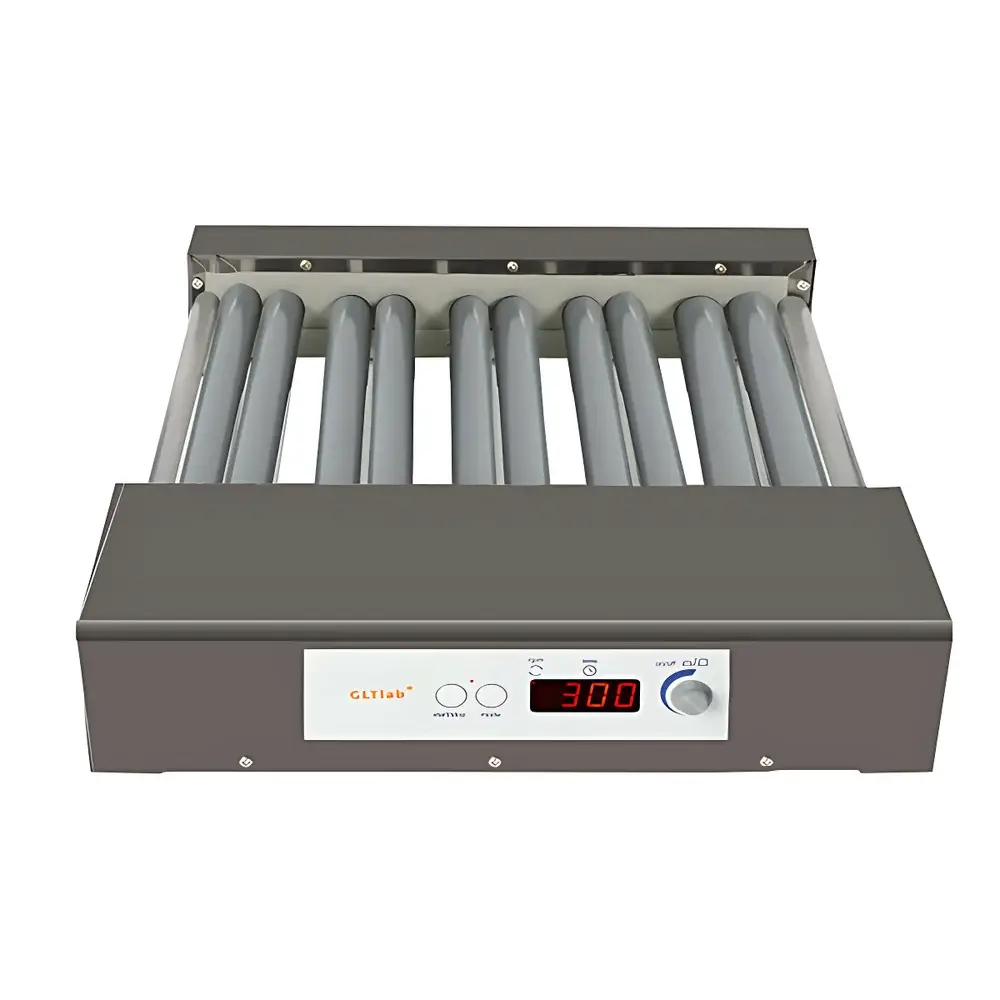
| Number of Roller Axes | 10 |
| Construction Material | 304 Stainless Steel Body |
| Power Supply | DC 12 V, 5 A |
| Control Interface | Digital LED Display |
| Motion Modes | Rolling + Rocking (programmable direction reversal) |
| Direction Reversal Interval | 1–15 min |
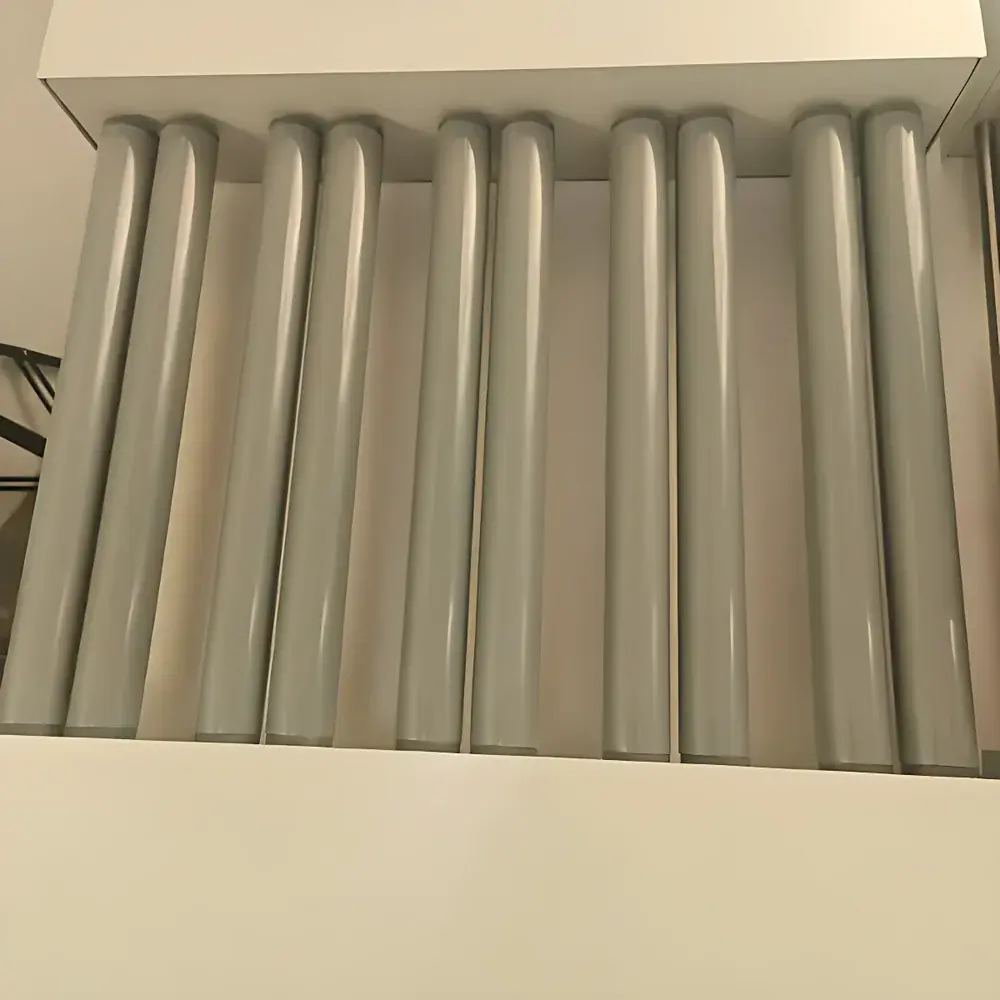
| Roller Dimensions | 340 × 30 mm (per axis) |
Overview
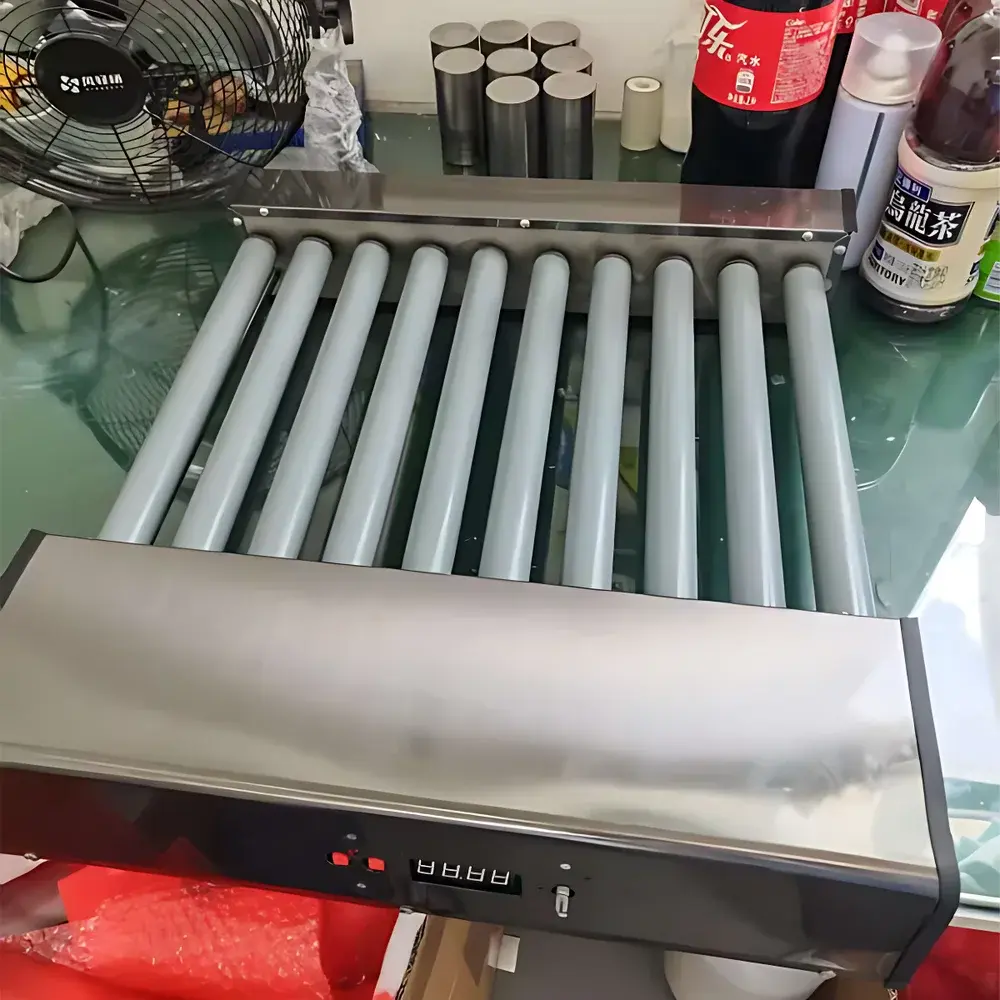
The GLTlab TR-10A-SS is a precision-engineered 10-axis roller mixer designed for consistent, low-shear homogenization of viscous, particulate-laden, or phase-separated biological and material science samples. Operating on the principle of controlled rotational motion combined with programmable rocking oscillation, the TR-10A-SS ensures uniform sample agitation without foaming, sedimentation, or thermal degradation—critical for sensitive applications such as blood bank processing, cell suspension maintenance, antibody conjugation, and nanomaterial dispersion. Its modular 10-roller configuration features five symmetrical dual-axis assemblies arranged in a balanced radial layout, minimizing mechanical resonance and maximizing load distribution across the stainless steel chassis. Unlike conventional orbital shakers or vortex mixers, this instrument delivers laminar, non-turbulent motion ideal for shear-sensitive biologics and high-viscosity formulations used in battery slurry preparation, polymer composites, and pharmaceutical suspensions.
Key Features
- Corrosion-Resistant 304 Stainless Steel Architecture: Fully enclosed chassis, roller shafts, and mounting hardware constructed from electropolished 304 stainless steel—engineered to withstand prolonged exposure to acidic, alkaline, humid, or saline environments typical in QC labs, bioprocessing facilities, and R&D cleanrooms.
- Dual-Motion Programmability: Independent selection of pure rolling, rocking-only, or synchronized rolling + rocking modes; direction reversal intervals configurable from 1 to 15 minutes to optimize particle resuspension and interfacial mixing.
- Wide Dynamic Range: Precise speed control from 5 to 300 rpm with ±1 rpm repeatability, enabling method transfer across viscosity gradients—from aqueous buffers (1–10 mPa·s) to lithium-ion cathode slurries (>5,000 mPa·s).
- Extended Timer Functionality: High-resolution digital timer supporting durations from 1 second to 200 hours, with auto-shutdown and memory retention for unattended overnight or multi-day protocols.
- Thermal Compatibility: Rated for operation within environmental chambers, refrigerated rooms (4 °C), and incubators (up to 50 °C), maintaining mechanical integrity and motor performance across temperature extremes.
- Modular Service Design: Tool-free roller assembly access, standardized DC motor modules, and corrosion-inhibited PCB housing facilitate field maintenance and extend service life beyond 60,000 operational hours under GLP-compliant usage conditions.
Sample Compatibility & Compliance
The TR-10A-SS accommodates standard and custom-format containers—including 5–50 mL screw-cap tubes, 100–500 mL glass or polypropylene bottles, and specialized roller-compatible vials—without requiring adapters. Its low-acceleration kinematics preserve cellular viability (validated per ISO 13485 Annex A for IVD sample prep) and prevent aggregation of monoclonal antibodies or exosome suspensions. The device complies with IEC 61000-6-3 (EMC emissions) and IEC 61000-6-2 (immunity), and its stainless steel construction meets FDA-recommended surface finish standards (Ra ≤ 0.8 µm) for cleanable laboratory equipment. While not intrinsically rated for Class II biosafety cabinets, it is routinely deployed inside ISO Class 5/7 laminar flow enclosures when paired with validated containment trays.
Software & Data Management
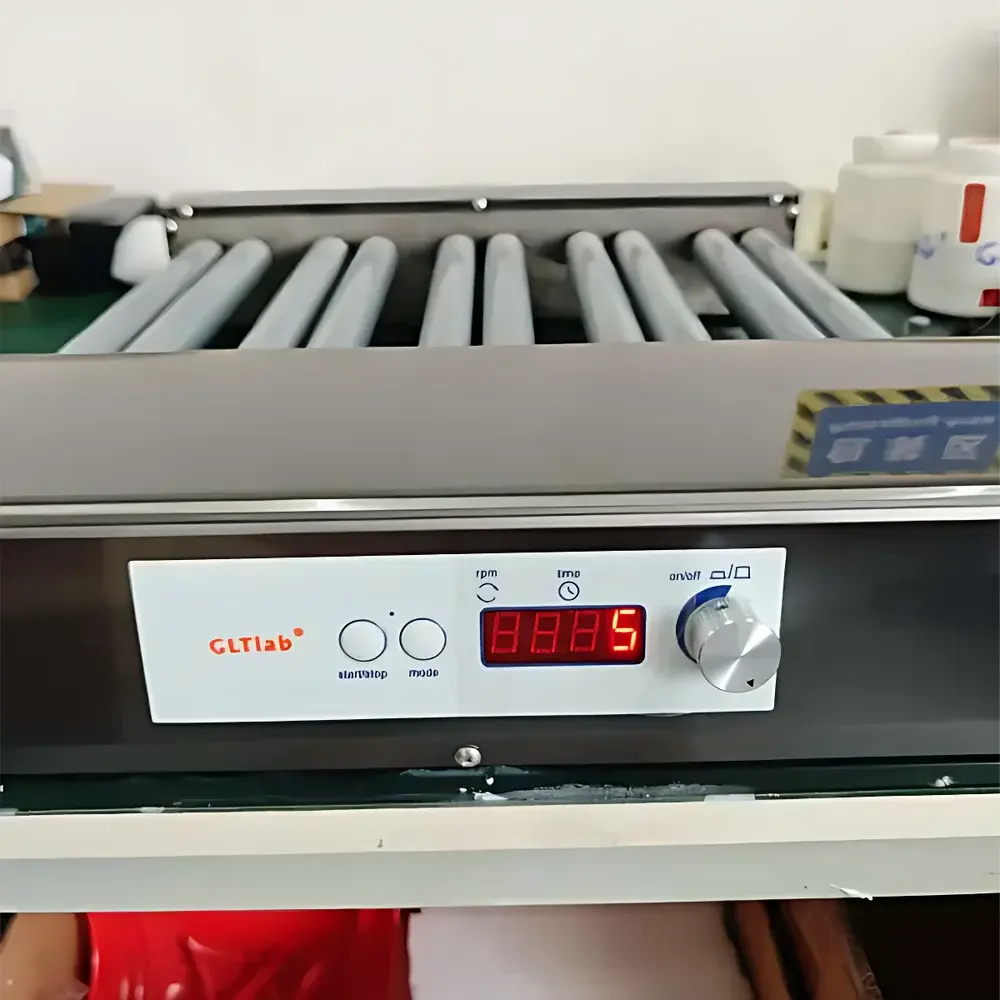
The TR-10A-SS operates via embedded microcontroller firmware with real-time LED display of speed, elapsed time, and active motion mode. For regulated environments, optional RS-485 serial interface enables integration with LIMS or SCADA systems using Modbus RTU protocol. Audit trail functionality—including operator ID tagging, parameter change logs, and timestamped run records—is available through third-party middleware compliant with 21 CFR Part 11 requirements. All calibration and maintenance events are stored locally with write-protected memory retention for ≥10 years, supporting GMP/GLP traceability during regulatory inspections.
Applications
- Blood banking: Uniform mixing of anticoagulated whole blood and platelet concentrates prior to component separation.
- Vaccine development: Gentle resuspension of adjuvant–antigen complexes without denaturation.
- Materials science: Homogenization of cathode/anode slurries for solid-state battery prototyping (per ASTM D7928).
- Diagnostic assay prep: Consistent dispersion of magnetic beads in lateral flow reagent matrices.
- Environmental testing: Extraction of microplastics from sediment cores using solvent-assisted rolling agitation.
- Biobanking: Long-term storage agitation of cryopreserved cell suspensions at 4 °C to inhibit settling-induced hypoxia.
FAQ
Is the TR-10A-SS suitable for use inside a CO₂ incubator?
Yes—provided ambient humidity remains below 80% RH and internal temperature does not exceed 50 °C. The unit’s sealed electronics and stainless steel body resist condensation-related corrosion.
Can I retrofit my existing TR-10 unit with stainless steel components?
No—stainless steel integration is structural, not modular. Only TR-10A-SS units manufactured after Q2 2024 incorporate full 304 SS architecture; legacy aluminum-frame models lack compatible mounting interfaces.
What is the maximum load capacity per roller axis?
Each axis supports up to 1.2 kg uniformly distributed mass. Total system capacity is 12 kg across all 10 axes, assuming balanced loading to maintain dynamic stability.
Does the device support external trigger input for synchronization with other lab instruments?
Not natively—but the RS-485 interface allows TTL-level start/stop signaling via custom script integration with PLC or LabVIEW-controlled workflows.
How often does the unit require recalibration?
Speed calibration is factory-set and drift-stable for ≥24 months under normal operating conditions. Annual verification against NIST-traceable tachometer is recommended for ISO/IEC 17025-accredited laboratories.




