
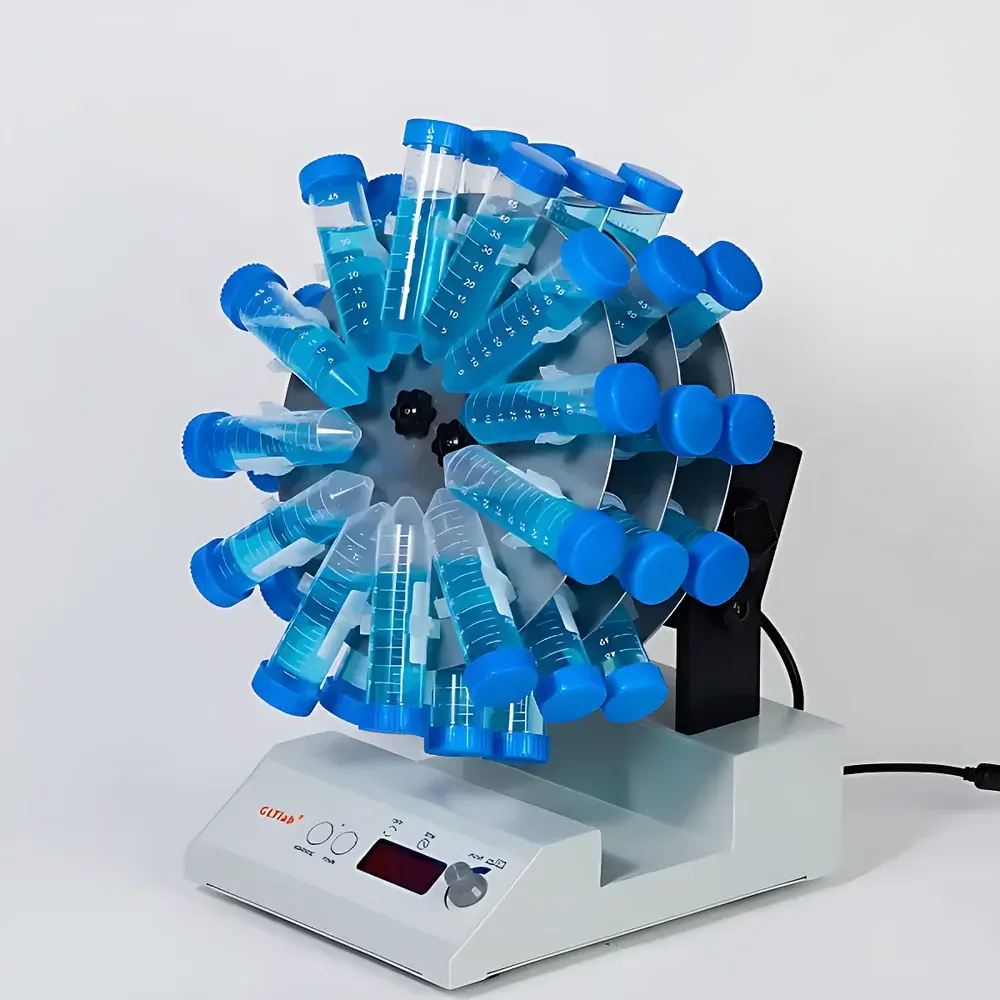
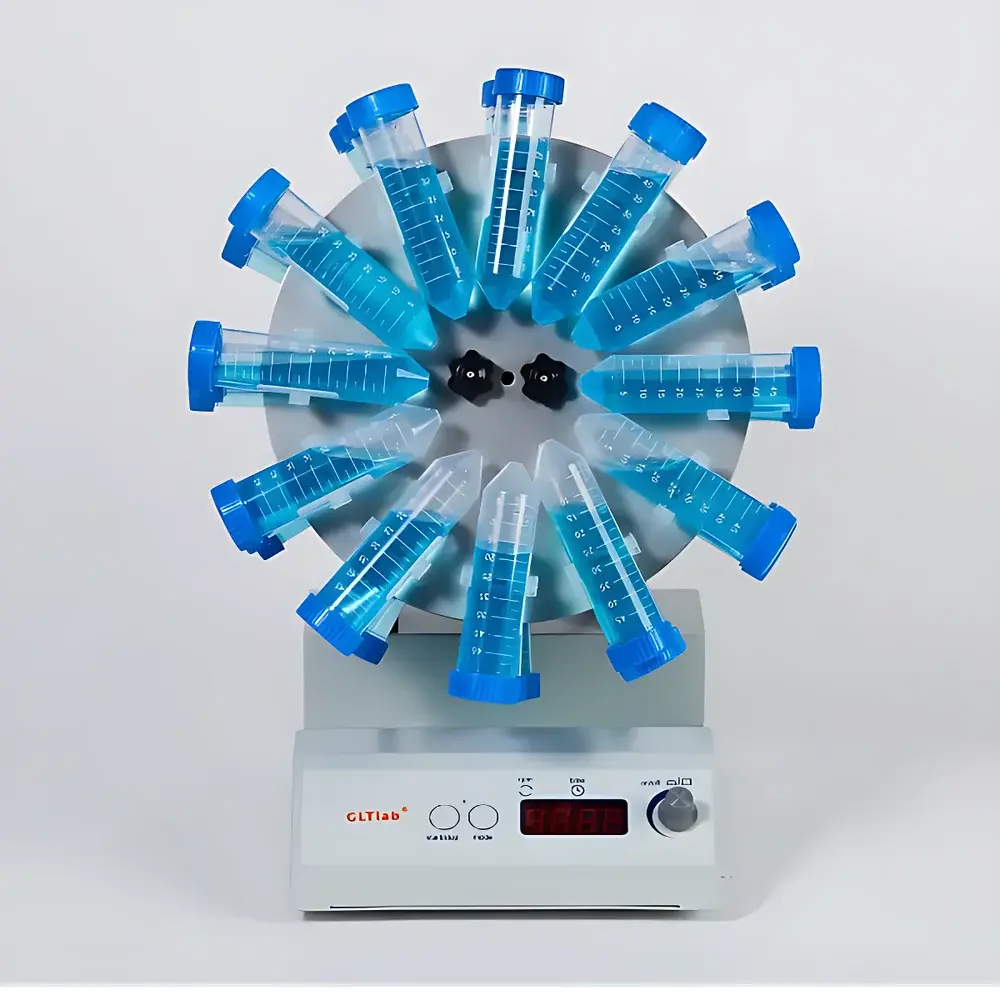
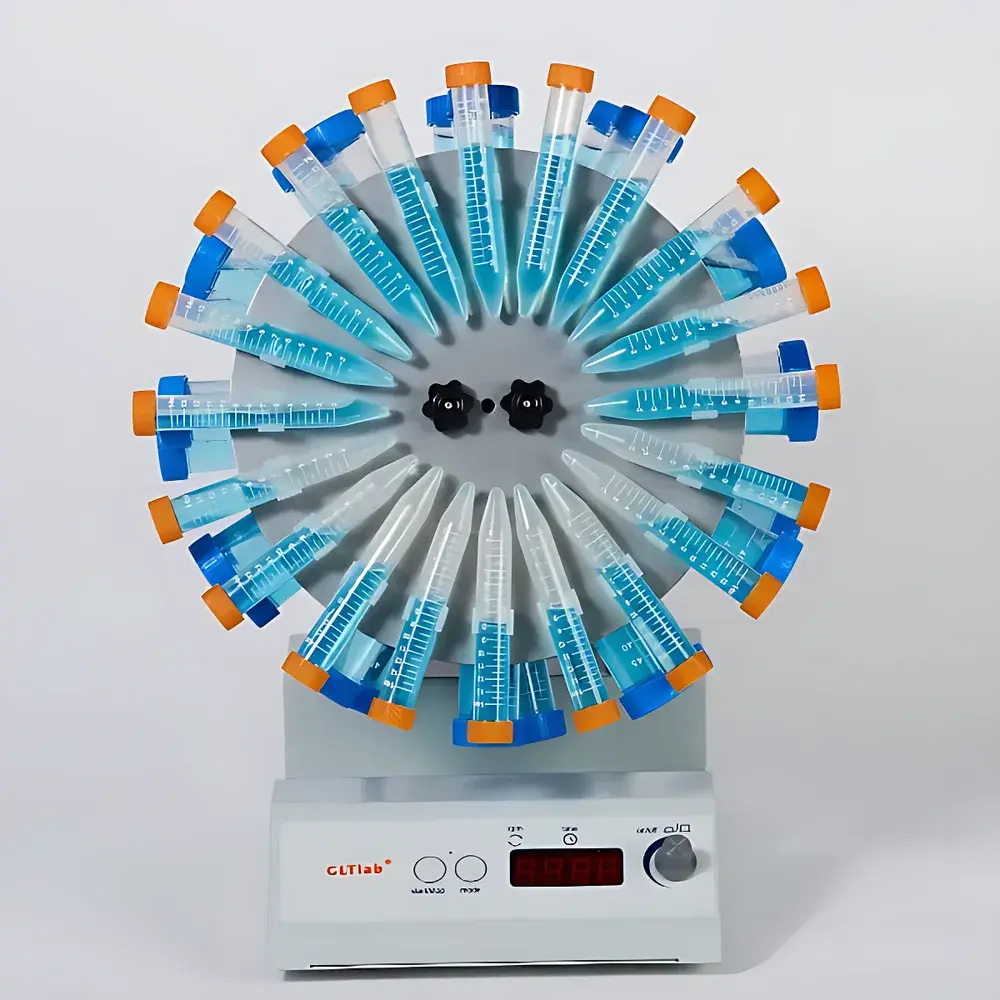
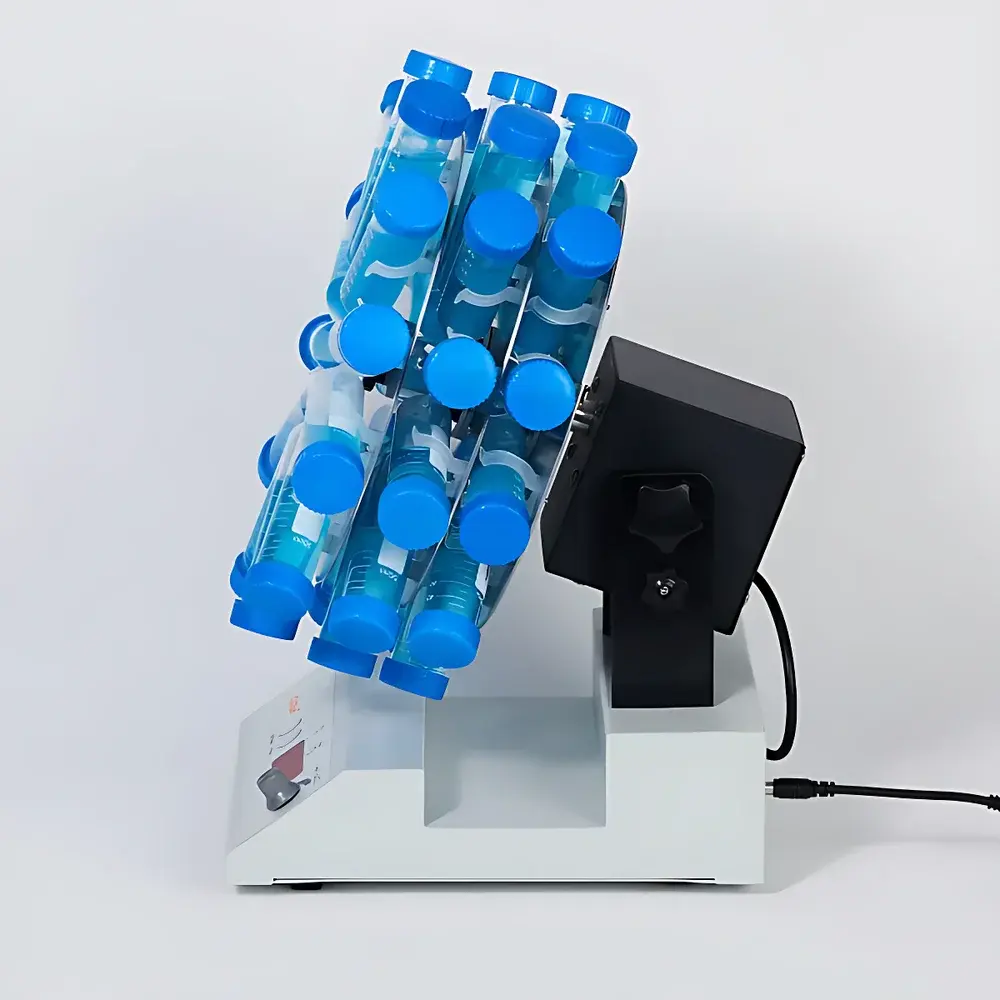
GLTlab RM-3pro Multi-Plate Silent Rotational Mixer
| Brand | GLTlab |
|---|---|
| Model | RM-3pro |
| Origin | Guangdong, China |
| Manufacturer | GLTlab (Guoli Tian Co., Ltd.) |
| Type | Digital Programmable Rotational Mixer |
| Operating Mode | Continuous or Bidirectional Rotation + Reciprocating Oscillation |
| Speed Range | 1–40 rpm |
| Speed Resolution | 1 rpm |
| Timer Range | 1 min – 9 h (digital, programmable) |
| Motion Axes | Single-axis 360° rotation |
| Adjustable Tilt Angles | 120°, 180°, 240°, 300°, 360° |
| Platform Capacity | Up to three 50 mL tube racks (max. 36 × 50 mL tubes) |
| Construction | Anodized aluminum housing with corrosion-resistant coating |
| Display | LED digital panel (speed + time) |
| Ambient Operating Temperature | 4–60 °C |
| Power Supply | 100–230 V AC, 50–60 Hz, 20 W |
| Motor | High-torque stepper motor with voltage-independent speed stability |
| Safety Features | Overload detection, stall protection, audible alarm & error display |
| Compliance | Designed for ISO/IEC 17025 laboratory environments |
Overview
The GLTlab RM-3pro Multi-Plate Silent Rotational Mixer is an engineered solution for gentle, reproducible sample homogenization in life science, clinical diagnostics, and quality control laboratories. Unlike conventional vortex mixers or orbital shakers, the RM-3pro employs a precision-controlled single-axis rotational principle—based on Couette-type fluid motion—where sample containers rotate around a fixed horizontal axis, inducing laminar shear and axial convection without cavitation or foaming. This mode of agitation minimizes mechanical stress on fragile biological matrices such as whole blood, cell suspensions, serum, ELISA plates, and antigen-antibody complexes. Its silent operation (<45 dB(A) at 1 m) stems from brushless stepper motor architecture and vibration-damped aluminum chassis, enabling unattended overnight mixing in shared lab spaces or biosafety cabinets without acoustic interference.
Key Features
- Dual-mode programmable motion: Select between continuous unidirectional (CW/CCW), bidirectional rotation, or precisely timed reciprocating oscillation across five discrete tilt angles (120°, 180°, 240°, 300°, 360°), each configurable via intuitive LED interface.
- Sub-rpm resolution control: True 1-rpm incremental adjustment across full 1–40 rpm range ensures optimal matching to viscosity-dependent mixing requirements—from low-viscosity buffers to high-molecular-weight polymer solutions.
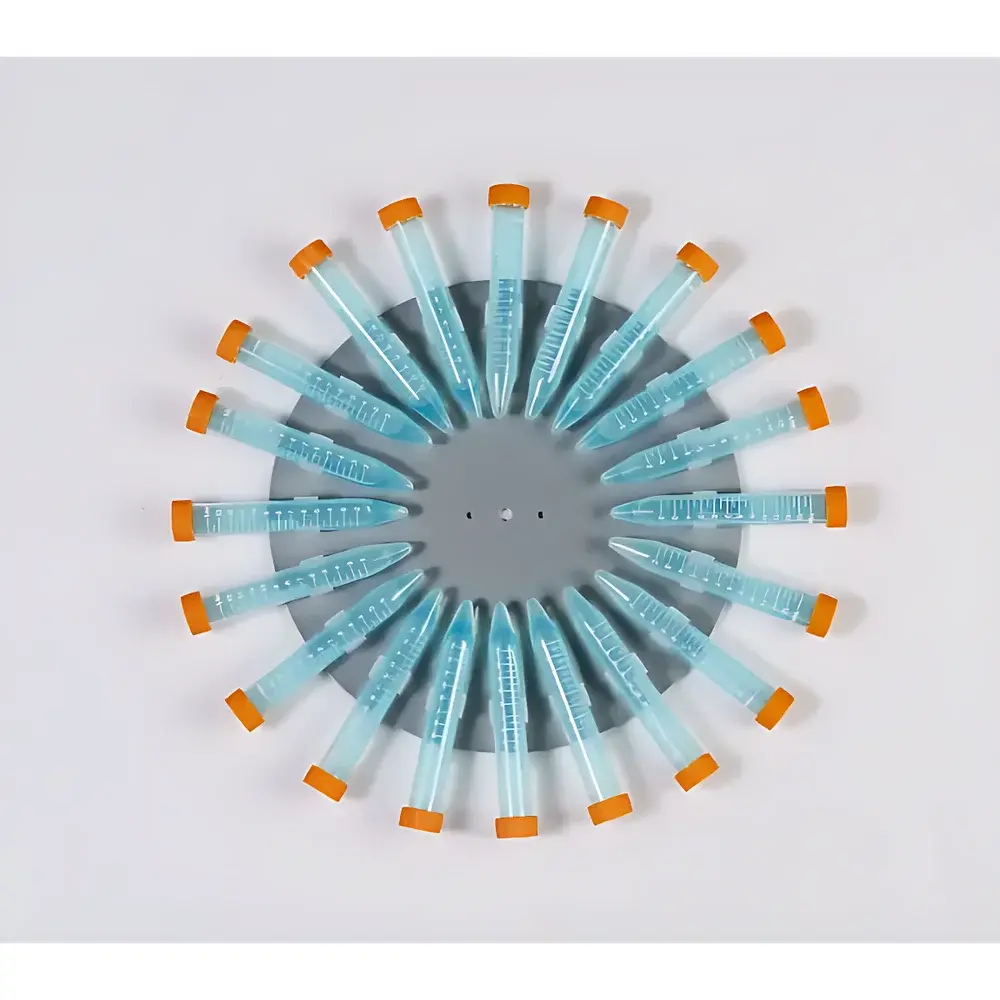
- Triple-platform scalability: Accommodates up to three independently loaded 50 mL tube racks (e.g., RM-02-03), supporting simultaneous processing of 36 × 50 mL centrifuge tubes—eliminating sequential batch handling and reducing hands-on time by ≥65% versus single-rack alternatives.
- GLP-ready digital governance: Integrated real-time timer (1 min to 9 h) with auto-shutdown, non-volatile parameter memory, and error logging (E01–E04 codes for motor stall, overload, timeout, or sensor fault).
- Material integrity & thermal resilience: Anodized aluminum frame with electrophoretic corrosion-resistant coating withstands repeated exposure to ethanol, isopropanol, and mild alkaline decontaminants; validated performance across 4–60 °C ambient conditions.
Sample Compatibility & Compliance
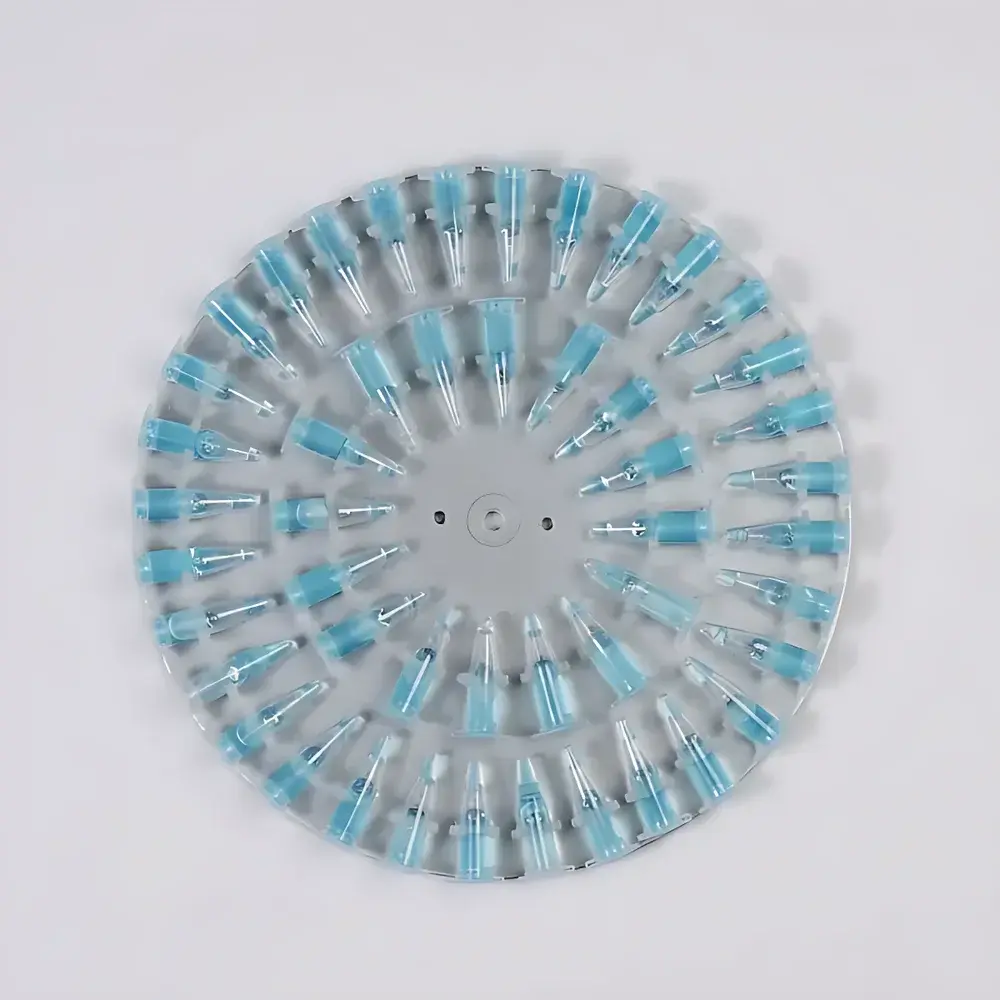
The RM-3pro accommodates standard laboratory consumables—including microcentrifuge tubes (0.2–2.0 mL), culture tubes (12–16 mm OD), and conical centrifuge tubes (15–50 mL)—via interchangeable accessory holders (RM-02-01 through RM-03-38). Its low-shear rotational profile meets ASTM D445 and ISO 3104 prerequisites for viscosity-sensitive sample preparation prior to rheological or particle size analysis. The device operates within Class II biosafety cabinet footprint constraints and complies with IEC 61010-1:2010 safety standards for electrical equipment used in laboratory environments. While not FDA-cleared as a medical device, its design aligns with USP endotoxin testing guidance and supports 21 CFR Part 11–compatible data capture when interfaced with validated LIMS platforms.
Software & Data Management
The RM-3pro operates as a standalone instrument with no embedded firmware update capability or USB/Bluetooth connectivity. All operational parameters—including speed setpoint, tilt angle, duration, and motion mode—are stored locally in EEPROM and retained after power cycling. For audit-trail compliance, users are advised to document settings manually or integrate usage logs into electronic lab notebooks (ELN) per ISO/IEC 17025 clause 7.7. The absence of network interfaces mitigates cybersecurity risks associated with IoT-enabled lab equipment while preserving deterministic timing behavior critical for method transfer consistency.
Applications
- Gentle resuspension of cryopreserved PBMCs, stem cells, or tissue homogenates without membrane disruption
- Uniform mixing of immunoassay reagents, calibration standards, and QC controls prior to plate reader analysis
- Pre-analytical stabilization of coagulation samples (e.g., citrated plasma) to prevent fibrin clot formation during transport
- Homogenization of nanoparticle dispersions and colloidal suspensions where ultrasonication induces aggregation
- Equilibration of pH-sensitive buffers and enzyme reaction mixtures requiring minimal gas entrainment
FAQ
What is the maximum load capacity per platform?
Each platform supports one standard 50 mL tube rack (RM-02-03), holding up to 12 × 50 mL conical tubes (25–35 mm OD). With three platforms installed, total capacity reaches 36 × 50 mL tubes.
Can the RM-3pro be used inside a cold room or incubator?
Yes—its operating temperature range (4–60 °C) permits installation in refrigerated environments (e.g., 4 °C cold rooms) and humidity-controlled incubators (<80% RH), provided condensation is prevented on electronics.
Is speed accuracy traceable to NIST standards?
Speed calibration is factory-verified using optical tachometry against NIST-traceable reference instruments; certificate of conformance is supplied with each unit.
Does the reciprocating mode introduce lateral shear forces?
No—the reciprocating function rotates the entire platform about its central axis in alternating arcs; no lateral translation occurs, preserving tube alignment and minimizing cross-contamination risk.
How often does maintenance require motor lubrication or belt replacement?
The stepper motor is sealed and maintenance-free for ≥10,000 hours of operation; no periodic lubrication or consumable parts replacement is specified under normal use conditions.



