
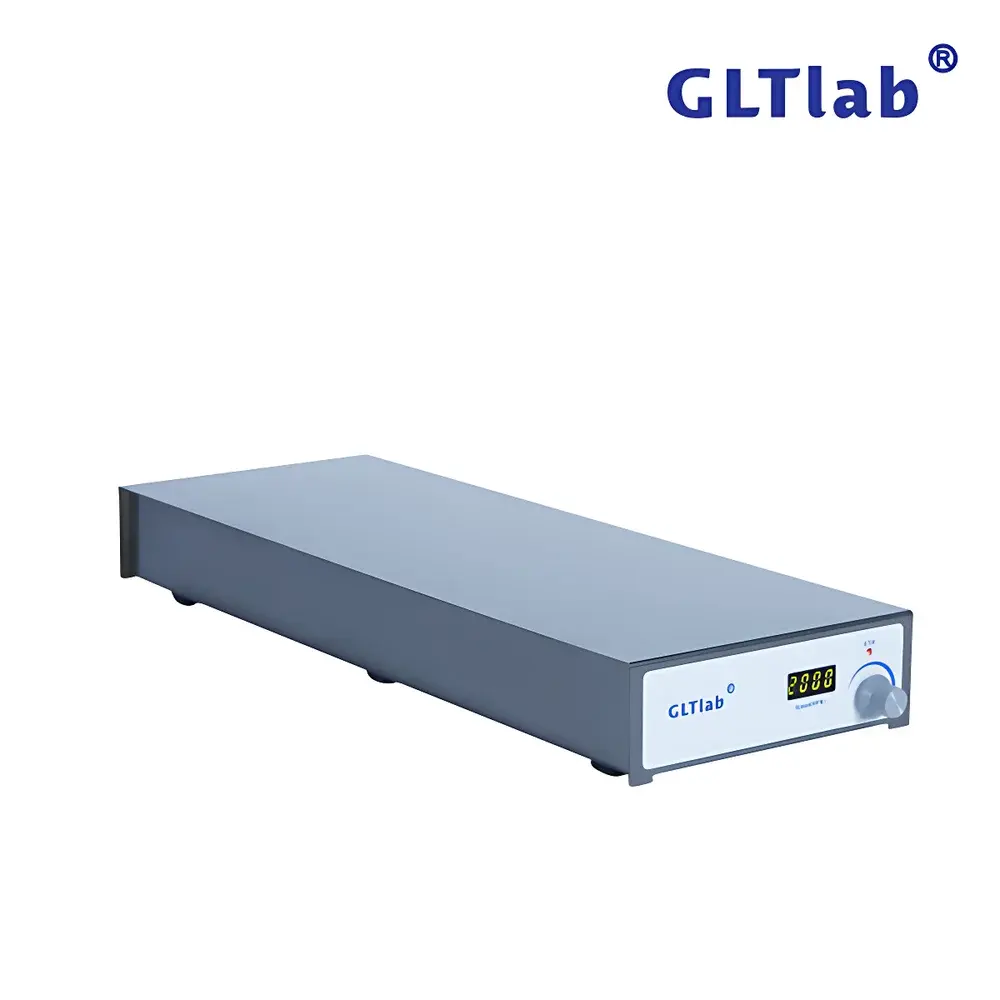
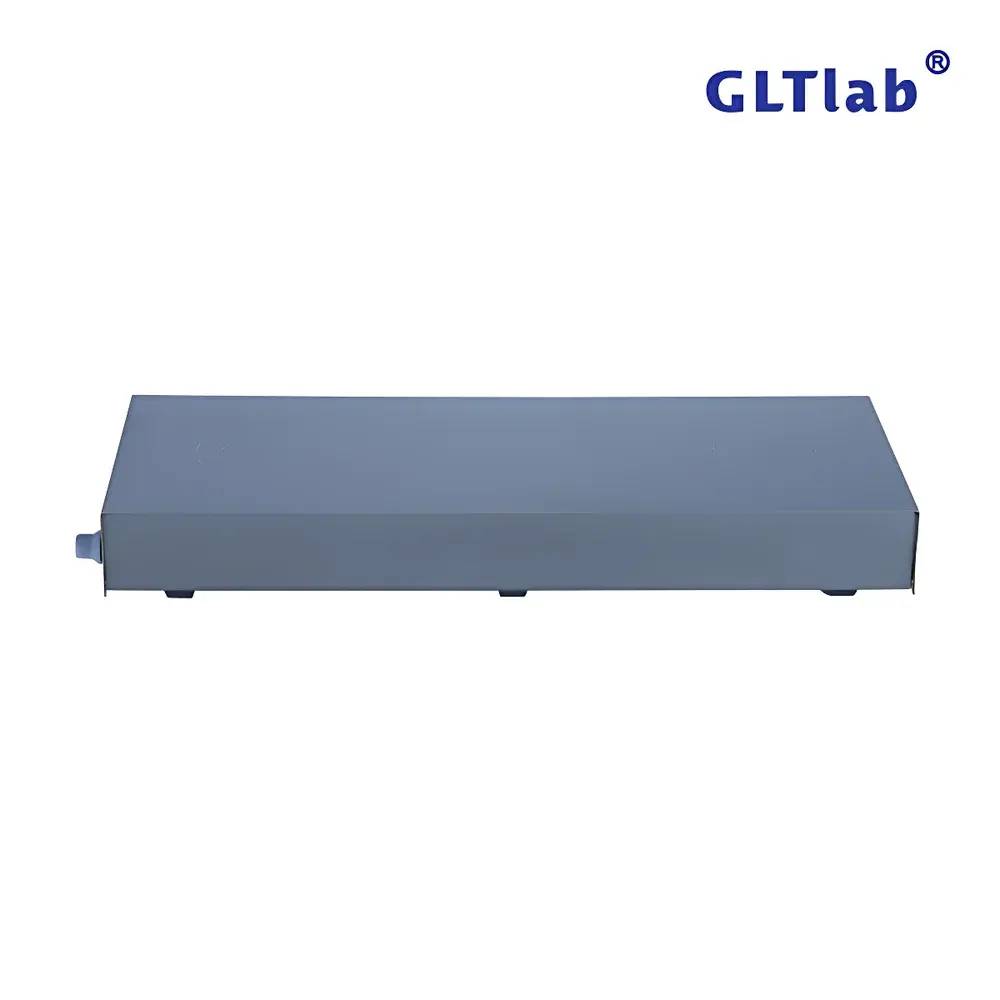
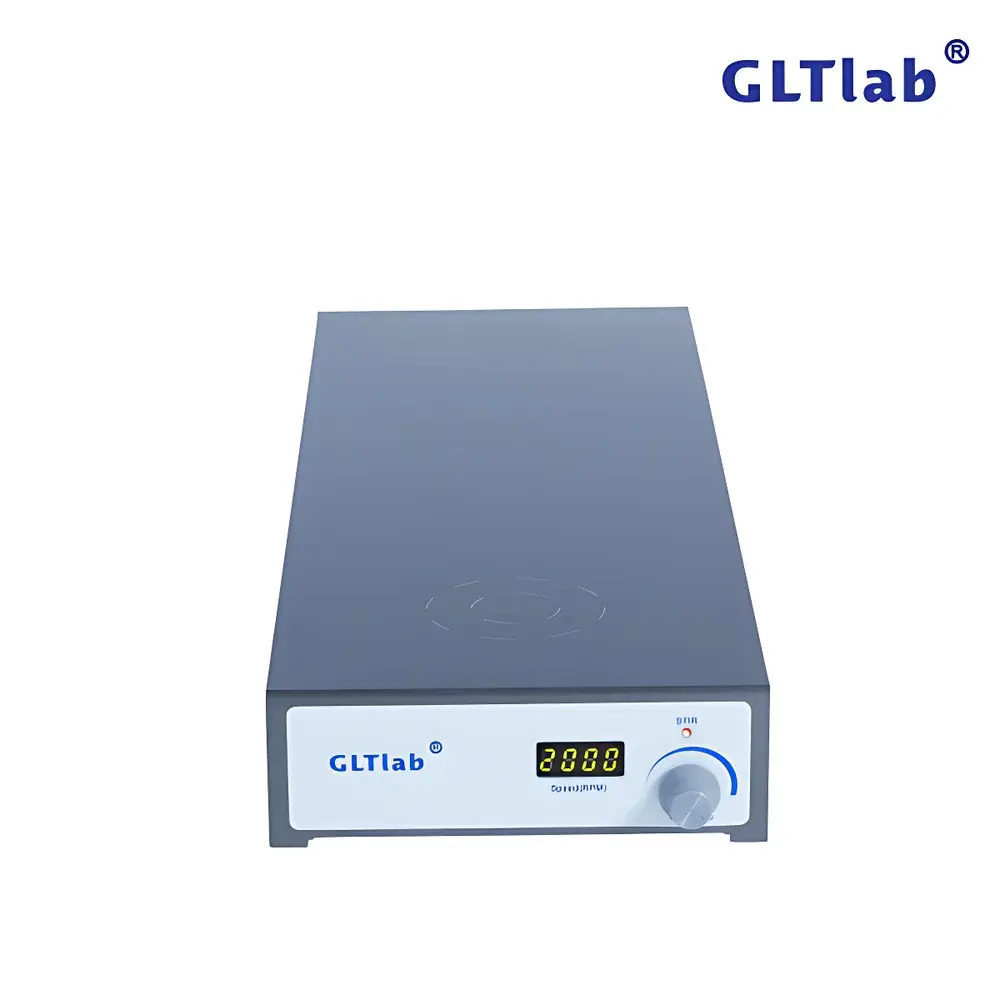
GLTlab SS-3N-100 Triple-Position Magnetic Stirrer
| Brand | GLTlab |
|---|---|
| Origin | Guangdong, China |
| Manufacturer Type | Direct Manufacturer |
| Instrument Type | Magnetic Stirrer |
| Model | SS-3N-100 |
| Maximum Stirring Volume | 1 L × 3 positions |
| Speed Range | 100–2000 rpm |
| Temperature Control | Ambient only (no heating) |
| Construction Material | Full stainless steel housing and plate |
| Display | LED digital speed readout |
| Control Mode | Independent speed adjustment per position |
| Motor Power | 36 W × 3 |
| Compliance | CE-marked design principles |
Overview
The GLTlab SS-3N-100 is a triple-position, digitally controlled magnetic stirrer engineered for precision, reproducibility, and long-term reliability in demanding laboratory environments. It operates on the principle of rotating magnetic field induction: three independent permanent magnet assemblies—each driven by a dedicated brushless DC motor—are synchronously rotated beneath a non-magnetic stainless steel top plate. This generates localized rotating magnetic fields that couple with standard PTFE- or glass-coated magnetic stir bars placed inside vessels, inducing consistent orbital motion within liquids. Unlike heated models, the SS-3N-100 is optimized for ambient-temperature mixing applications where thermal stability is critical—such as pH-sensitive biological buffers, enzyme kinetics assays, or solvent-based reaction monitoring—eliminating thermal drift artifacts associated with integrated heating elements.
Key Features
- Triple independent stirring stations with fully decoupled speed control—each position adjustable from 100 to 2000 rpm in 10-rpm increments via front-panel rotary encoder
- Full 304 stainless steel construction: corrosion-resistant housing, seamless top plate, and sealed motor compartments for compatibility with organic solvents, acids, and alkaline solutions
- LED digital display showing real-time RPM for all three positions simultaneously—no shared or multiplexed readout
- Brushless DC motors delivering high torque at low speeds (≥0.8 N·cm at 200 rpm) and stable operation up to 2000 rpm with <±2% speed deviation under load
- Integrated electronic overload protection: automatic shutdown upon current surge detection or prolonged stall condition
- Low-profile ergonomic design (H: 78 mm) minimizing benchtop footprint while maintaining ≥15 mm clearance between stir bar and plate surface for optimal vortex formation
Sample Compatibility & Compliance
The SS-3N-100 accommodates standard cylindrical or conical labware ranging from 10 mL test tubes to 1000 mL beakers (max. 1 L per position), provided vessel bottom thickness does not exceed 12 mm and material is non-ferromagnetic (e.g., borosilicate glass, PP, PC, or quartz). It supports stir bars from 15 mm to 40 mm in length and is validated for use with viscous media up to 10,000 mPa·s (e.g., 2% agarose, glycerol/water mixtures) when paired with elliptical or cross-shaped stir elements. While the unit itself carries no intrinsic regulatory certification (e.g., UL/ETL), its electrical architecture complies with IEC 61010-1:2010 safety requirements for laboratory equipment. When deployed in regulated environments—including those adhering to ISO/IEC 17025, FDA 21 CFR Part 11, or EU GMP Annex 11—the device supports audit-ready usage through external logging of operational parameters (speed, duration) and routine performance verification per SOP-LAB-STIR-03.
Software & Data Management
The SS-3N-100 operates as a standalone instrument without embedded firmware connectivity. However, it is compatible with third-party laboratory automation frameworks via optional RS-232 or USB-to-serial adapters (sold separately). GLTlab provides ASCII protocol documentation enabling integration into LabVantage, Thermo Fisher SampleManager, or custom Python-based control scripts. All speed settings are retained after power cycling, and the unit includes non-volatile memory for last-used parameters per channel. For traceability, users may implement manual log entries or deploy barcode-scanned work instructions synchronized with ELN systems to record stir duration, vessel ID, and operator signature—fulfilling ALCOA+ data integrity criteria.
Applications
This triple-position stirrer is routinely employed in analytical QC workflows requiring parallel sample homogenization prior to HPLC injection or ICP-MS digestion; in pharmaceutical development labs for simultaneous dissolution testing across multiple formulations; in environmental testing facilities for uniform mixing of aqueous extracts prior to TOC or COD analysis; and in academic research for high-throughput screening of catalyst performance under identical agitation conditions. Its ambient-only operation makes it particularly suited for cold-room applications (4 °C), anaerobic chamber integration, or glovebox-mounted configurations where heat dissipation must be minimized.
FAQ
Does the SS-3N-100 include temperature control or heating capability?
No. It is strictly a magnetic stirring platform with no integrated heater or temperature sensor. For thermostatic applications, GLTlab recommends pairing it with external recirculating chillers or Peltier-cooled plates.
Can the unit operate continuously for 24/7 duty cycles?
Yes—rated for continuous operation at ≤1500 rpm per position under nominal load (500 mL water, 30 mm stir bar). Derate maximum speed by 20% for >12-hour unattended runs.
Is calibration required, and how often should it be performed?
Speed accuracy verification using an optical tachometer is recommended every 6 months or after 500 operating hours. GLTlab supplies a calibration certificate template aligned with ISO/IEC 17025 Clause 6.5.
What stir bar geometry delivers optimal performance across all three positions?
Elliptical stir bars (e.g., 30 × 8 mm) provide superior vortex stability and laminar flow consistency at speeds >800 rpm compared to standard cylindrical designs.
How is electromagnetic compatibility addressed in sensitive instrumentation environments?
The unit meets EN 61326-1:2013 Class B emission limits. For NMR or mass spectrometry labs, maintain ≥1.5 m separation from detectors and route power cables away from signal lines.



