
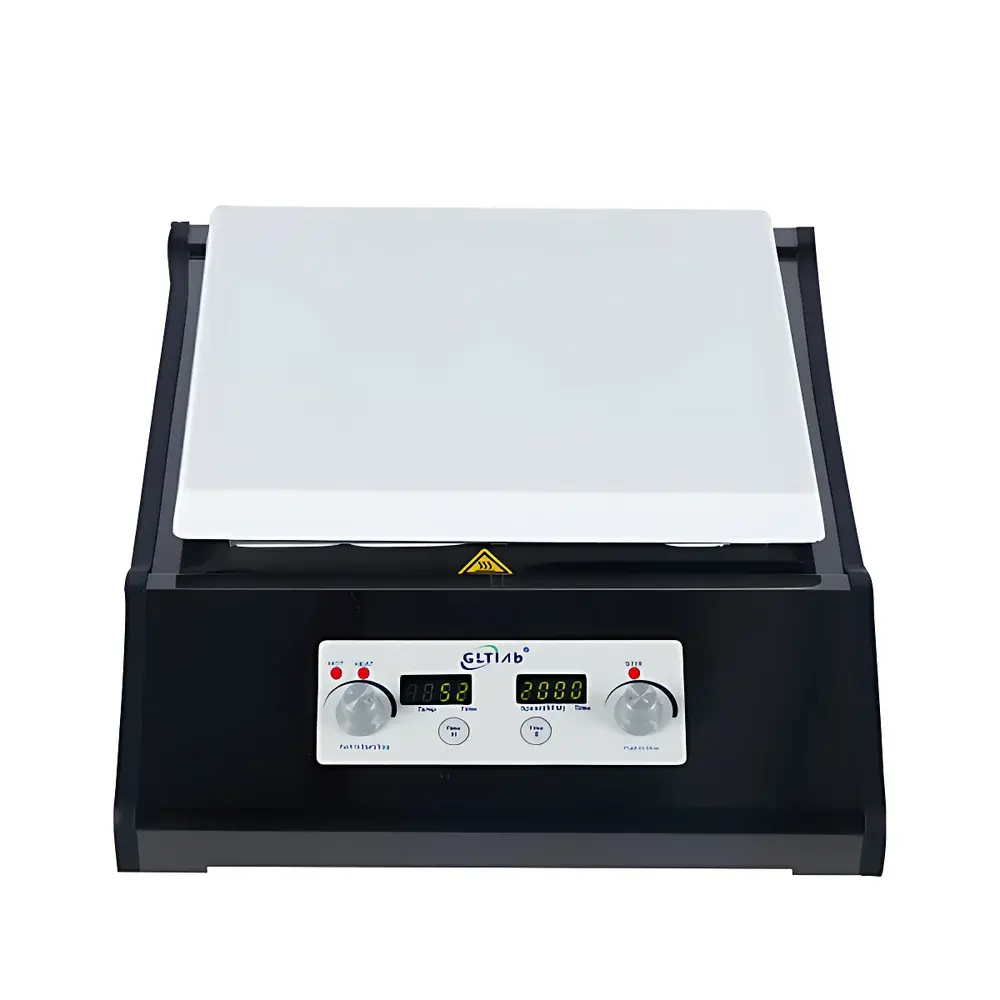
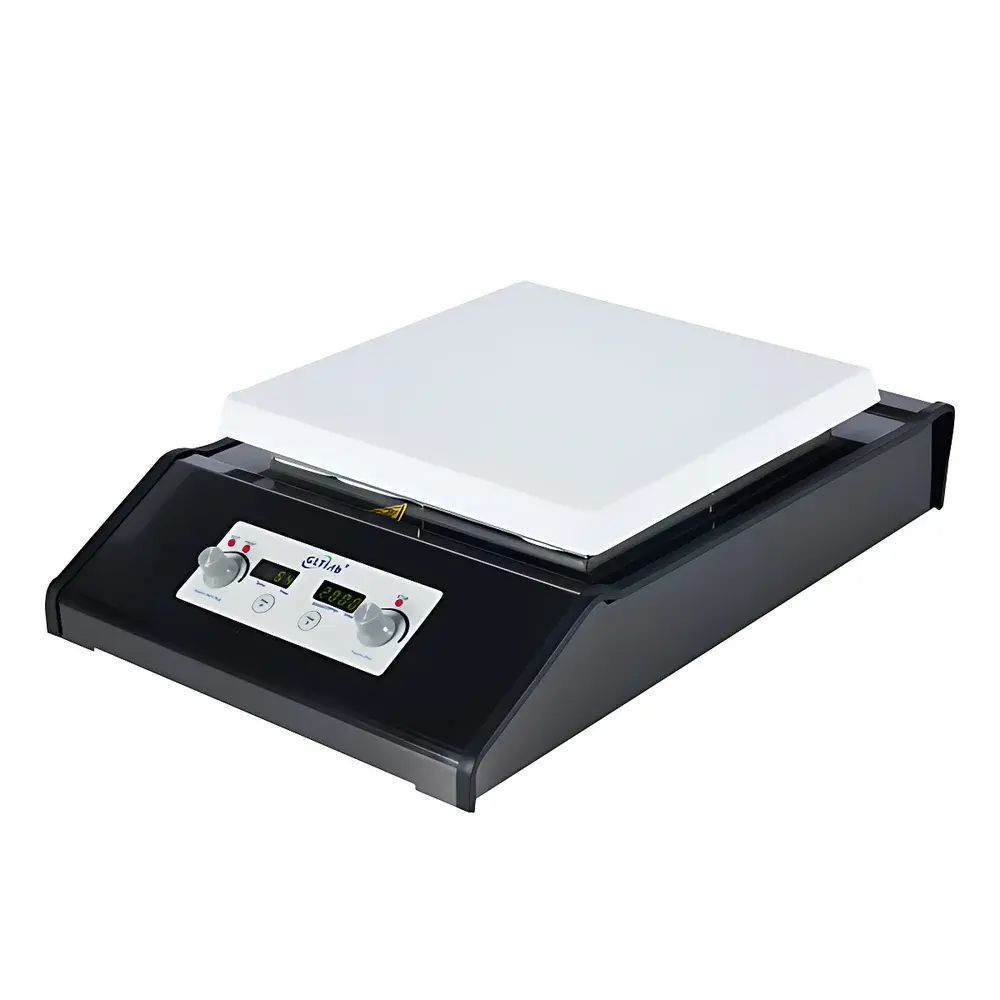
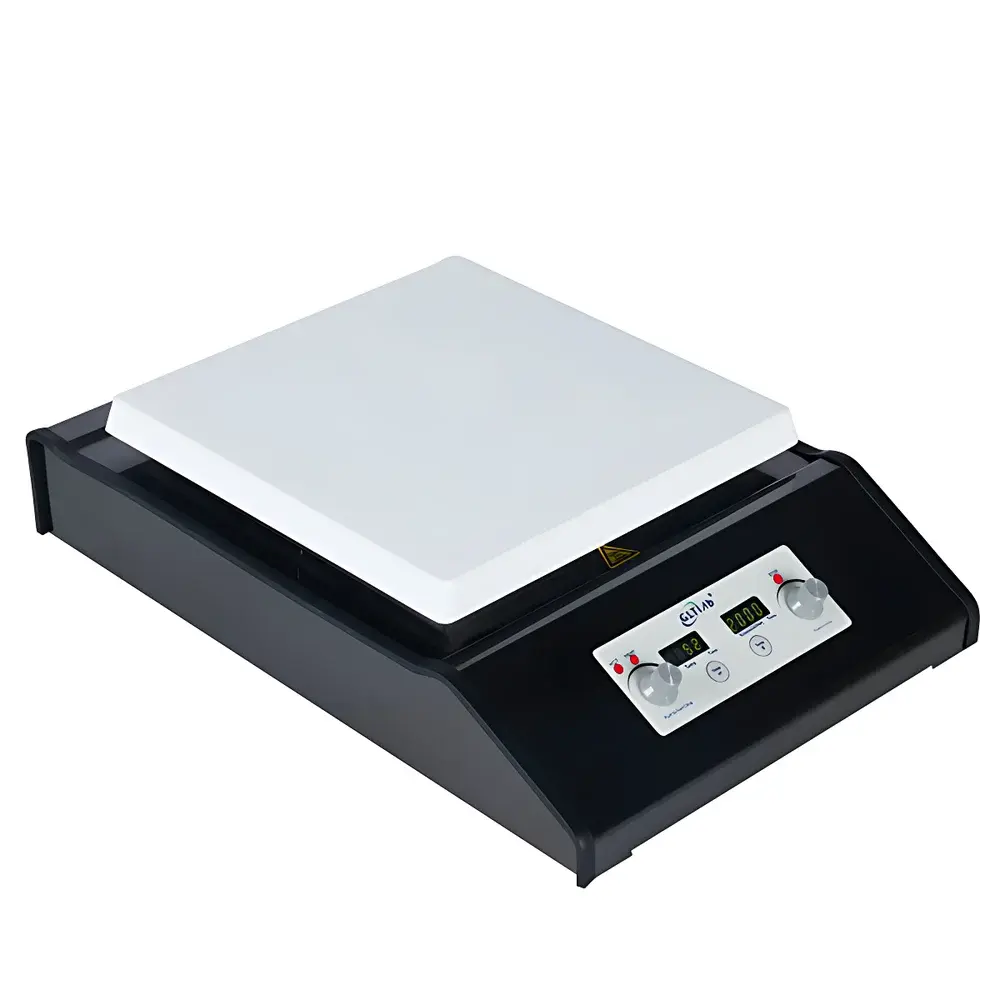
GLTlab SHA-2-SS Stainless Steel Body Constant-Temperature Magnetic Stirrer with Heating
| Brand | GLTlab |
|---|---|
| Origin | Guangdong, China |
| Manufacturer Type | Direct Manufacturer |
| Product Category | Domestic |
| Model | SHA-2-SS |
| Instrument Type | Water/Oil Bath Heater |
| Circulation Mode | Internal Circulation |
| Temperature Control | Heating-Only |
| Bath Volume | 20 L |
| Temperature Range | 35–400 °C |
| Temperature Stability | ±1 °C |
| Temperature Resolution | 0.1 °C |
| Input Power | 1600 W |
| Voltage Supply | 220 V AC |
| Stirring Speed Range | 150–1500 rpm |
| Timer Range | 1 s to 24 h |
| External Sensor | PT1000 |
| Max Stirring Capacity | 20 L |
| Plate Dimensions | 254 × 254 mm |
| Housing Material | Stainless Steel |
| Plate Material | Ceramic-Coated Aluminum |
Overview
The GLTlab SHA-2-SS is a benchtop constant-temperature magnetic stirrer engineered for precise thermal control and robust mechanical stirring in analytical, synthetic, and quality control laboratories. Unlike conventional hotplates or standalone stirrers, this integrated unit combines high-temperature heating capability (up to 400 °C) with variable-speed magnetic agitation within a single stainless steel chassis—eliminating the need for external water/oil baths while maintaining uniform thermal distribution across the ceramic-coated aluminum heating plate. Its operational principle relies on resistive heating elements embedded beneath the plate surface, coupled with a permanent magnet drive system that rotates magnetic stir bars via synchronous coupling. The device is designed for applications requiring sustained temperature maintenance under dynamic mixing conditions—particularly where solvent evaporation, viscosity changes, or exothermic reactions demand both thermal stability and mechanical homogeneity.
Key Features
- Stainless steel housing ensures long-term corrosion resistance, mechanical rigidity, and compliance with cleanroom-compatible lab infrastructure standards.
- Ceramic-coated aluminum heating plate (254 × 254 mm) provides rapid thermal response, uniform surface temperature distribution, and chemical inertness against common organic solvents and aqueous reagents.
- Dual-function digital controller enables independent adjustment of temperature (35–400 °C, resolution 0.1 °C) and stirring speed (150–1500 rpm), each with real-time LED display and tactile keypad interface.
- PT1000 external temperature probe input supports closed-loop feedback control, allowing direct immersion monitoring of sample temperature rather than relying solely on plate-surface readings—critical for process reproducibility.
- Programmable timer (1 second to 24 hours) supports unattended operation with automatic shutdown, enhancing safety during overnight or extended reaction protocols.
- Internal circulation design maintains consistent thermal gradients without external pump integration, reducing system complexity and minimizing maintenance points.
- 1600 W power rating delivers sufficient thermal capacity for 20 L maximum working volume, accommodating large-scale synthesis vessels or multi-vessel configurations.
Sample Compatibility & Compliance
The SHA-2-SS accommodates standard laboratory glassware including round-bottom flasks (up to 5 L), beakers (up to 10 L), and jacketed reactors when used with appropriately sized magnetic stir bars. Its wide temperature range supports oil bath–level operations (e.g., silicone oil, heat transfer fluids) as well as direct dry-heating of low-boiling-point solvents under controlled ventilation. The unit conforms to IEC 61010-1:2010 safety requirements for electrical equipment used in laboratory environments. While not certified for explosion-proof use, its non-sparking stir motor and grounded metal chassis meet baseline electrical safety expectations for general-purpose chemistry labs. Documentation includes CE-marked conformity statements and factory calibration records traceable to national metrology institutes.
Software & Data Management
The SHA-2-SS operates as a stand-alone instrument without proprietary software dependency. All settings—including setpoints, ramp profiles, and timer values—are stored locally in non-volatile memory and retained after power cycling. For laboratories operating under regulated frameworks (e.g., GLP, GMP, or FDA 21 CFR Part 11), optional RS-485 or analog 0–10 V output modules can be integrated to feed temperature and speed data into centralized SCADA or LIMS platforms. Audit trails require external logging; however, the built-in PT1000 sensor interface facilitates third-party validation of thermal performance per ASTM E2251 or ISO/IEC 17025 calibration guidelines.
Applications
- Controlled-temperature synthesis of polymers, pharmaceutical intermediates, and nanomaterials requiring simultaneous heating and homogeneous dispersion.
- Standardization of viscosity measurement protocols using rotational viscometers where bath temperature must remain stable within ±1 °C over extended durations.
- Preparation of calibration standards and reference solutions under thermally defined conditions (e.g., USP compounding environments).
- Accelerated stability testing of formulations where thermal stress at elevated temperatures (e.g., 60–80 °C) is applied alongside continuous agitation.
- Distillation setup preheating, reflux condensation support, and catalyst activation procedures in catalytic chemistry workflows.
FAQ
Can the SHA-2-SS be used with corrosive media such as concentrated acids or halogenated solvents?
Yes—provided appropriate containment (e.g., PTFE-coated stir bars, borosilicate glassware) is used and vapors are vented externally. The ceramic-coated plate resists mild acid exposure, but direct spillage of strong oxidizers should be avoided.
Is the ±1 °C temperature stability specified at the plate surface or within the sample?
The specification refers to plate surface stability under no-load conditions. With PT1000 feedback and proper vessel geometry, sample temperature deviation remains ≤±1.5 °C at steady state.
Does the unit support ramp-and-soak temperature programming?
No—ramp functionality is not embedded. However, manual stepwise adjustments via the front panel allow user-defined staging for multi-step protocols.
What is the expected service life of the heating element under continuous 400 °C operation?
Rated for >10,000 hours at ≤350 °C. Sustained operation above 350 °C reduces longevity; periodic verification of thermal uniformity is recommended every 6 months.
Can multiple SHA-2-SS units be synchronized for parallel reaction screening?
Not natively—but identical setpoints can be replicated manually. For automated parallel systems, consider integration via PLC-controlled analog inputs or external relay modules.



