
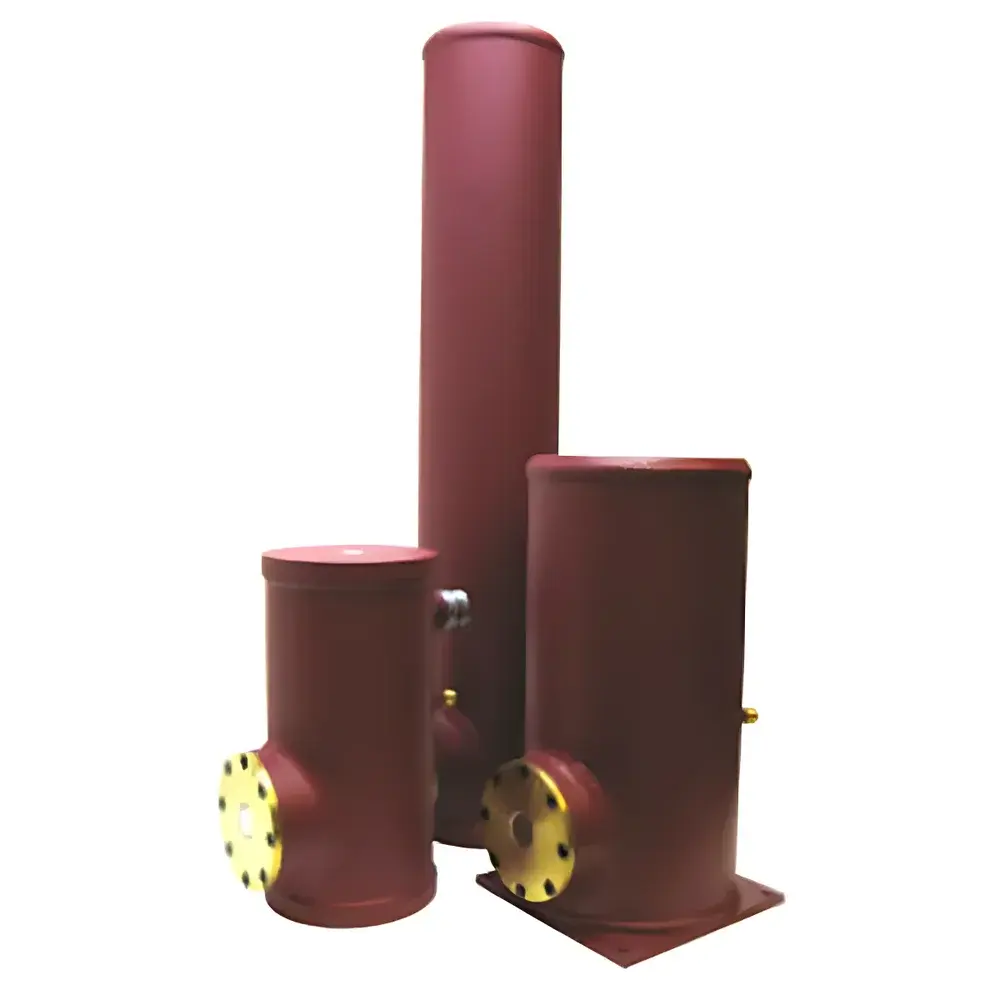
Auniontech InSb Mid-Infrared Photovoltaic Detector (Liquid Nitrogen Cooled)
| Brand | Auniontech |
|---|---|
| Origin | Shanghai, China |
| Model | IS-Series Photovoltaic Detector |
| Cooling | Liquid Nitrogen Cryogenic (77 K) |
| Spectral Range | 1–5.5 µm |
| Detector Types | IS-0.25, IS-0.5, IS-1.0, IS-2.0 |
| Junction Resistance (Rd) | 100–1000 Ω |
| Capacitance (Cd) | 0.9–30 pF |
| Short-Circuit Current (Isc) | 500–1500 µA |
| Open-Circuit Voltage (Voc) | 77–125 mV |
| Operating Temperature | 77 K |
| Standard Packaging | MSL-8 / MSL-12 / MDL-8 / MDL-12 Metal Dewars |
| Window Material | Sapphire |
| Compatible Preamplifier | INSB-1000 (Gain: 5–100×, BW: 1.5 Hz–150 kHz, optional up to 5 MHz, ±15 V DC, 100 mA per rail) |
Overview
The Auniontech InSb Mid-Infrared Photovoltaic Detector is a high-performance, liquid nitrogen–cooled photodetector engineered for precision measurement in the mid-infrared (MIR) spectral band from 1.0 to 5.5 µm. Fabricated from single-crystal indium antimonide (InSb), this detector operates on the photovoltaic principle—generating a voltage or current upon photon absorption without external bias—ensuring low-noise, zero-bias operation ideal for sensitive radiometric and spectroscopic applications. Its intrinsic cutoff near 5.5 µm at 77 K aligns with fundamental molecular vibrational absorption bands, making it particularly suitable for Fourier-transform infrared (FTIR) spectroscopy, non-contact thermometry, and passive thermal imaging where high detectivity (D*) and fast temporal response are critical. The detector’s performance is thermodynamically stabilized at 77 K using sealed metal dewar packages, eliminating cryocooler complexity while maintaining stable quantum efficiency across extended acquisition periods.
Key Features
- Photovoltaic operation: No external bias required—minimizes dark current and Johnson–Nyquist noise.
- High specific detectivity (D* > 1.0 × 10¹¹ cm·Hz¹ᐟ²/W at peak wavelength), enabling low-flux signal detection in demanding MIR environments.
- Multiple active area options (0.25 × 0.25 mm to 2.0 × 2.0 mm) optimized for spatial resolution vs. signal-to-noise trade-offs in imaging and scanning systems.
- Integrated sapphire window: Chemically inert, broadband-transmissive (0.5–6.0 µm), and mechanically robust for vacuum-compatible optical mounts.
- Standardized metal dewar packaging: MSL-8/MSL-12 (side-view) and MDL-8/MDL-12 (top-view) configurations offer 8–12 hours of hold time with LN₂, supporting unattended benchtop or field-deployable operation.
- Matched low-noise preamplifier (INSB-1000): Fully integrated transimpedance architecture with selectable gain (5×–100×), fixed 1.5 Hz–150 kHz bandwidth (extendable to 5 MHz), and internal power regulation—eliminating need for external load resistors or bias supplies.
Sample Compatibility & Compliance
The InSb detector series is compatible with standard optical breadboards, FTIR interferometers (e.g., Bruker VERTEX, Thermo Nicolet iS50), IR microscopes, and custom collimated beam paths. All models comply with RoHS 2011/65/EU and meet mechanical interface standards for Ø25.4 mm lens mounts and SMA/BNC electrical interconnects. While not certified to ISO/IEC 17025 as a standalone metrology instrument, the detector’s linear responsivity (±1.5% over 80% of full scale) and thermal stability (drift < 0.3% over 2 hr at constant LN₂ fill level) support GLP-compliant data acquisition when paired with NIST-traceable calibration sources. System-level validation against ASTM E1256-22 (Standard Test Methods for Radiation Thermometers) is routinely performed by end users in industrial process monitoring and medical thermography workflows.
Software & Data Management
The INSB-1000 preamplifier outputs analog voltage signals compatible with industry-standard DAQ systems (National Instruments USB-6363, Keysight 34972A, or Spectrum M2i.4931). Digital integration is supported via LabVIEW™ drivers (provided), Python (PyVISA + NumPy), and MATLAB® Instrument Control Toolbox. Raw output supports real-time streaming at ≥250 kS/s (with optional 5 MHz BW variant). Audit-trail functionality—including timestamped gain setting, temperature logging (via optional PT100 sensor input), and user-defined calibration coefficients—is implemented in host-side software to satisfy FDA 21 CFR Part 11 requirements for regulated laboratories. Export formats include CSV, HDF5, and vendor-neutral .mat for post-acquisition spectral deconvolution or multivariate analysis.
Applications
- Infrared Spectroscopy: High-sensitivity detection in dispersive and FTIR spectrometers for gas-phase analysis (CO, NO, CH₄), polymer characterization, and pharmaceutical API quantification.
- Medical & Industrial Thermography: Non-contact surface temperature mapping in dermatology research, laser-tissue interaction studies, and predictive maintenance of semiconductor fabrication tools.
- Radiometry & Calibration: Primary and secondary reference detectors in blackbody-based calibration labs (e.g., compliant with ISO/IEC 17025 accredited facilities).
- IR Microscopy: Integration into confocal or wide-field IR microscopes for cellular lipid distribution imaging and histopathological contrast enhancement.
- Defense & Security: Passive detection subsystems in long-range surveillance systems operating in atmospheric transmission windows (3–5 µm).
FAQ
What cooling method is required for optimal performance?
Liquid nitrogen (LN₂) immersion cooling to 77 K is mandatory to achieve specified D*, responsivity, and cutoff wavelength. Mechanical cryocoolers are not recommended due to microphonic interference and thermal instability affecting photovoltage baseline.
Can the detector be operated without the INSB-1000 preamplifier?
Yes—but only in high-impedance voltage-mode configurations with external low-noise op-amps. Performance will degrade significantly without matched transimpedance gain, bandwidth control, and zero-bias optimization provided by the dedicated preamp.
Is vacuum evacuation required inside the dewar?
No—the MSL/MDL series dewars are sealed under dry nitrogen or argon atmosphere; vacuum pumping is neither necessary nor advised, preserving long-term hermeticity and thermal hold time.
How is spectral responsivity calibrated?
Each detector is supplied with a factory-measured relative spectral response curve (RSR) referenced to NIST-traceable blackbody sources at 500 °C and 800 °C. Absolute calibration requires user-performed substitution measurements using an accredited reference detector.
What is the maximum permissible incident power density?
For continuous-wave illumination, the damage threshold is ≤100 mW/cm² at λ = 4.0 µm. Pulsed operation (e.g., Q-switched lasers) requires pulse energy limits below 10 µJ/cm² to avoid transient thermal runaway at the InSb junction.




