
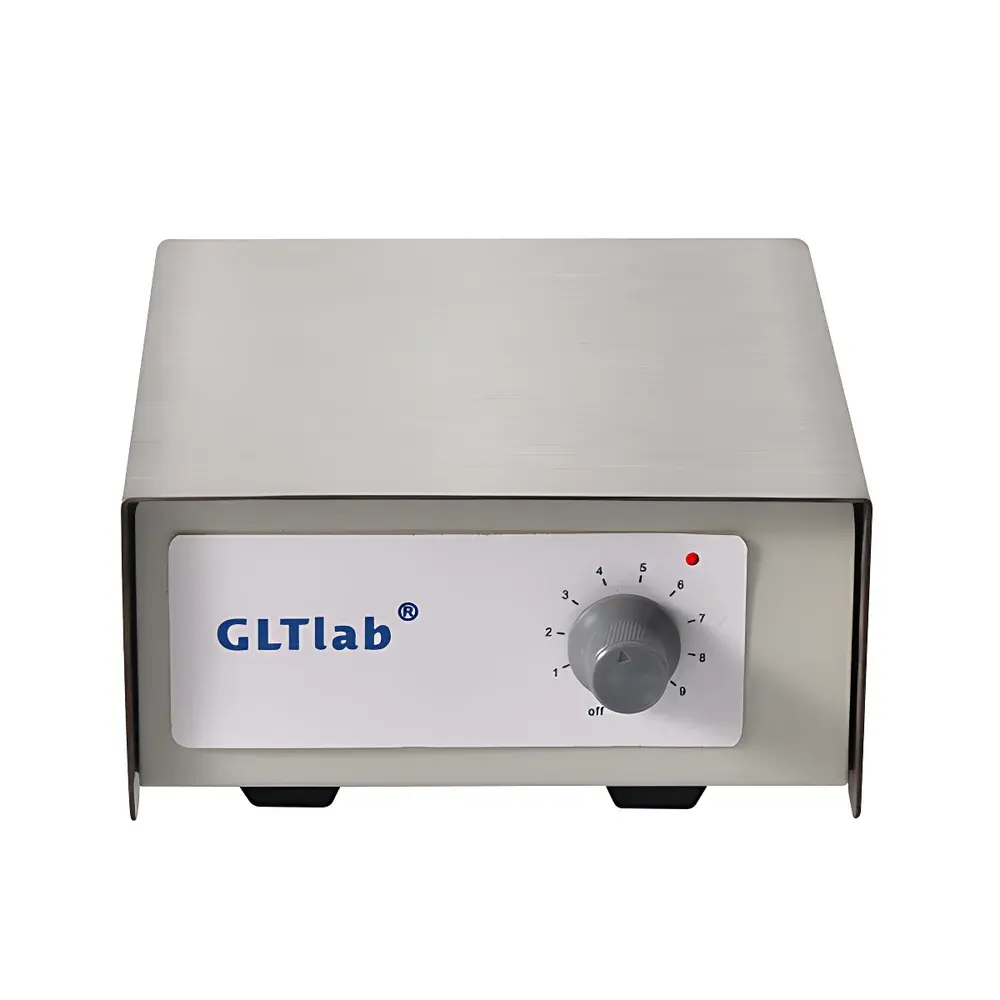
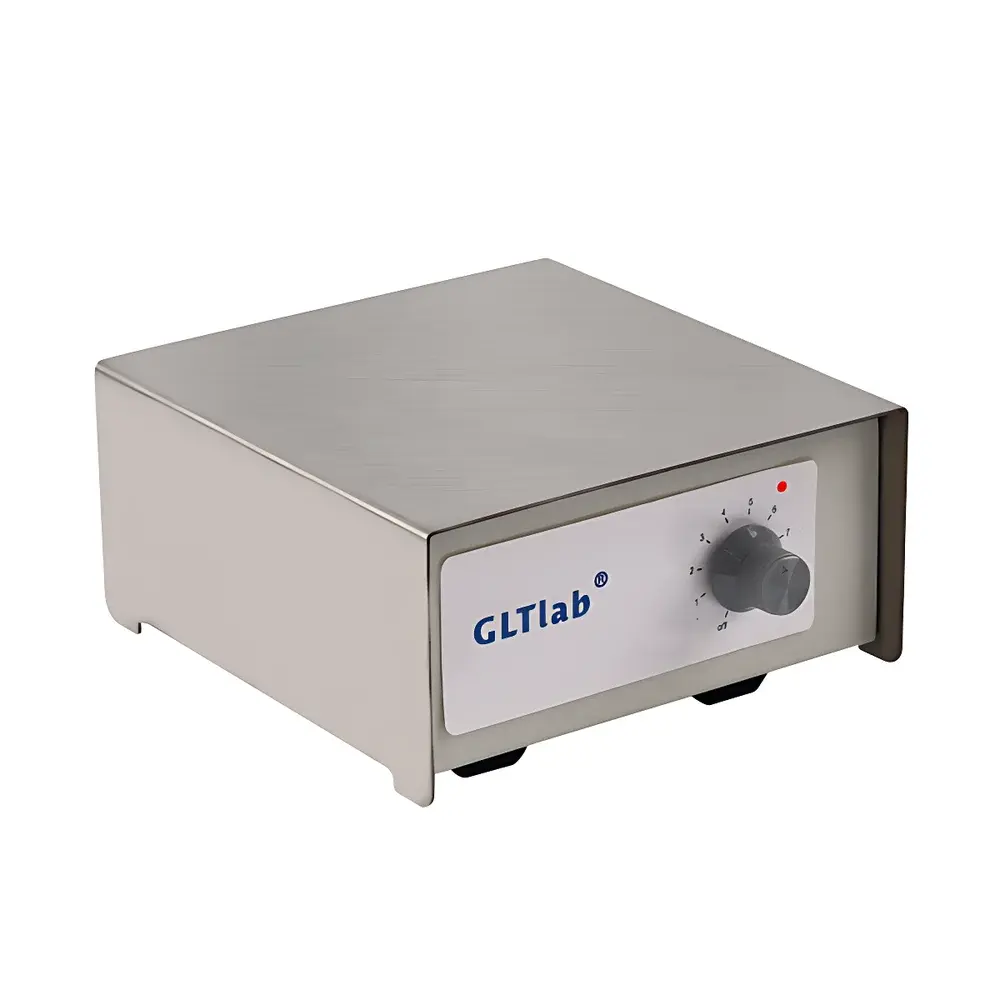
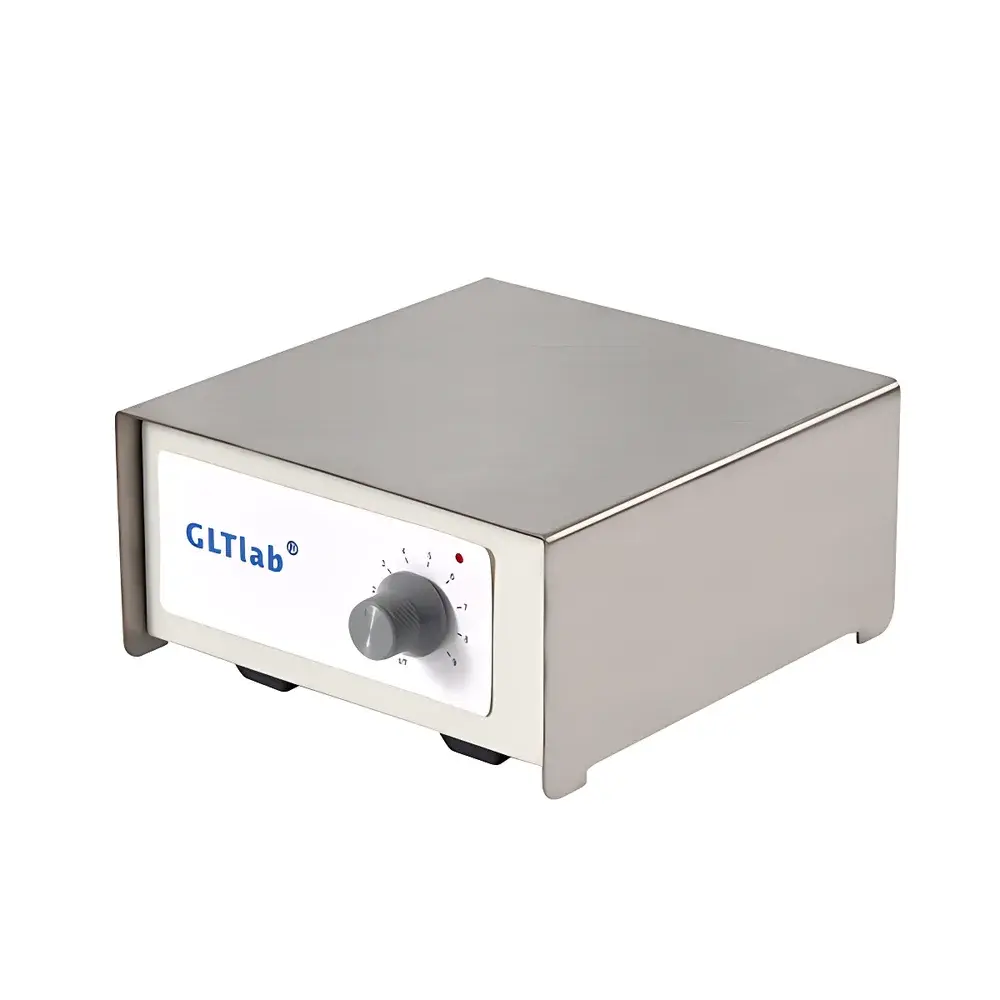
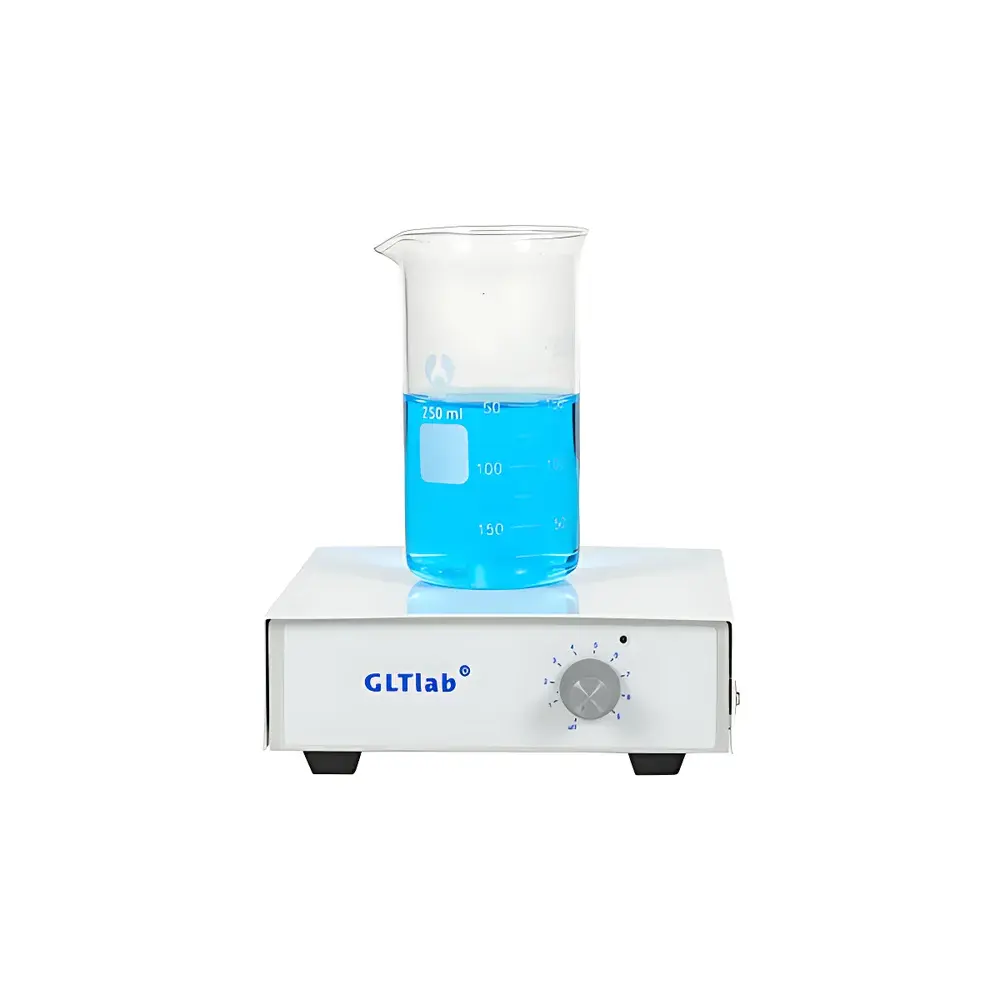
GLTlab S-2 Analog Mini Magnetic Stirrer
| Brand | GLTlab |
|---|---|
| Origin | Guangdong, China |
| Manufacturer Type | Direct Manufacturer |
| Product Category | Domestic |
| Model | S-2 |
| Instrument Type | Magnetic Stirrer |
| Max Stirring Volume | 20 L |
| Speed Range | 150–2000 rpm |
| Temperature Control | Ambient Only |
| Plate Material | SUS304 Stainless Steel |
| Compliance | CE, RoHS, UKCA |
| Power Input | 110–120 V / 220–240 V, 50/60 Hz |
| Operating Environment | 4 °C to 60 °C |
| Warranty | 2 Years |
Overview
The GLTlab S-2 Analog Mini Magnetic Stirrer is a compact, robust, and purpose-engineered benchtop device designed for reliable, continuous magnetic stirring in academic, industrial, and quality control laboratories. Built on analog proportional control architecture—without microprocessor-based digital interfaces—the S-2 delivers stable rotational torque and consistent speed regulation across its full operational range (150–2000 rpm), making it particularly suitable for applications requiring long-duration, unattended mixing under ambient conditions. Its core mechanism relies on permanent magnet coupling between the internal drive rotor and external magnetic stir bars, operating via uniform rotating magnetic fields generated by a precisely wound stator coil. Unlike digitally controlled units, the S-2 eliminates firmware dependencies, reducing electromagnetic interference susceptibility and enhancing operational predictability in electromagnetically sensitive environments such as NMR prep labs or electrophysiology setups. The unit’s absence of integrated heating elements distinguishes it from hotplate stirrers, positioning it specifically for temperature-sensitive or refrigerated workflows—including operation inside cold rooms (4 °C) and portable use with external DC power sources.
Key Features
- Stainless steel (SUS304) top plate offering superior corrosion resistance against common laboratory reagents including dilute acids, bases, and organic solvents.
- High-torque analog motor design enabling immediate ramp-up to maximum speed (2000 rpm) without magnetic decoupling (“no jump” performance), even with larger stir bars or higher-viscosity media.
- Continuous-duty rated motor architecture validated for uninterrupted 24/7 operation—ideal for extended reaction monitoring, dissolution testing, or buffer equilibration protocols.
- Compact footprint (179 × 200 × 90 mm) and lightweight construction (1.2 kg) support flexible placement on fume hood shelves, glovebox interiors, or mobile lab carts.
- Universal dual-voltage input (110–120 V / 220–240 V, 50/60 Hz) with internal auto-sensing circuitry ensures global compatibility without manual voltage switching.
- Spill-resistant chassis design with recessed terminal layout minimizes risk of liquid ingress during routine cleaning or accidental spills.
Sample Compatibility & Compliance
The S-2 supports standard PTFE- or glass-coated magnetic stir bars ranging from 10 mm to 50 mm in length, compatible with vessels from 10 mL vials up to 20 L carboys (when used with appropriately sized stir bars and vessel geometry). It is routinely deployed in ISO/IEC 17025-accredited QC labs for sample homogenization prior to ICP-MS, HPLC, or titration analysis. The device conforms to EU Directive 2014/30/EU (EMC Directive), 2011/65/EU (RoHS), and UK Statutory Instrument 2019 No. 1020 (UKCA). CE marking indicates compliance with essential health and safety requirements under the Low Voltage Directive (2014/35/EU). No internal heating element means the unit does not fall under EN 61000-3-2 harmonic emission limits for heating appliances, simplifying integration into regulated environments where thermal drift must be excluded from experimental variables.
Software & Data Management
As an analog-only instrument, the S-2 does not incorporate embedded firmware, USB connectivity, or data logging capabilities. This architecture eliminates requirements for FDA 21 CFR Part 11-compliant audit trails, electronic signatures, or software validation—reducing qualification burden in GMP/GLP settings where only mechanical consistency and traceable calibration are mandated. Speed calibration is performed using a certified handheld tachometer (e.g., Extech 461923), with documented verification intervals aligned to internal SOPs. Maintenance records—such as motor brush inspection (if applicable) and plate surface integrity checks—are retained per ISO/IEC 17025 Clause 6.4.4 for equipment management.
Applications
- Homogenization of aqueous and non-aqueous solutions prior to spectroscopic or chromatographic analysis.
- Long-term suspension maintenance in microbiological culture media preparation (e.g., LB broth, M9 minimal medium).
- Reagent blending in environmental testing labs (e.g., EPA Method 300.0 anion standards preparation).
- Inert-atmosphere mixing inside nitrogen-purged gloveboxes for air-sensitive organometallic synthesis.
- Cold-chain sample agitation within refrigerated centrifuge rooms or walk-in cold chambers (4–10 °C).
- Field-deployable mixing for mobile environmental monitoring units powered via 12 V DC adapters.
FAQ
Does the S-2 include temperature control or heating capability?
No. The S-2 is a non-heating magnetic stirrer. It operates exclusively at ambient temperature and is not equipped with a heating element or temperature sensor.
Can the S-2 be used inside a CO₂ incubator or anaerobic chamber?
Yes—provided internal humidity remains below 80% RH and ambient temperature does not exceed 60 °C. Its sealed motor housing and stainless steel plate resist condensation-related corrosion.
Is speed calibration traceable to national standards?
Yes. Users may verify rotational speed using a NIST-traceable optical tachometer; calibration certificates are accepted for ISO/IEC 17025 compliance documentation.
What stir bar size is recommended for 20 L mixing?
A 40–50 mm elliptical or cross-shaped PTFE-coated stir bar is recommended, paired with a flat-bottomed vessel and moderate viscosity (< 500 mPa·s) for optimal coupling efficiency.
Does the S-2 meet UL or CSA safety certification requirements?
While not UL- or CSA-listed, its CE/UKCA declarations cover equivalent safety, insulation, and dielectric strength requirements per EN 61010-1:2010, acceptable for most North American institutional procurement policies.



