
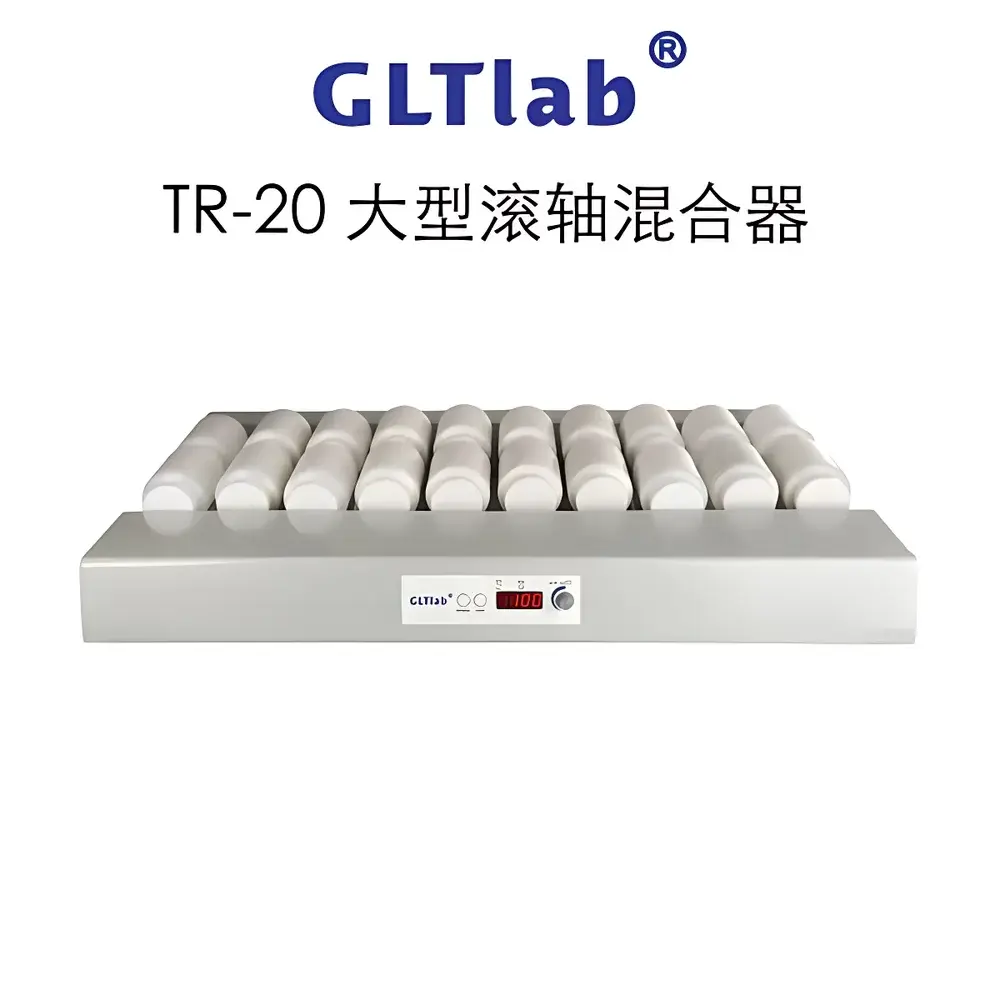
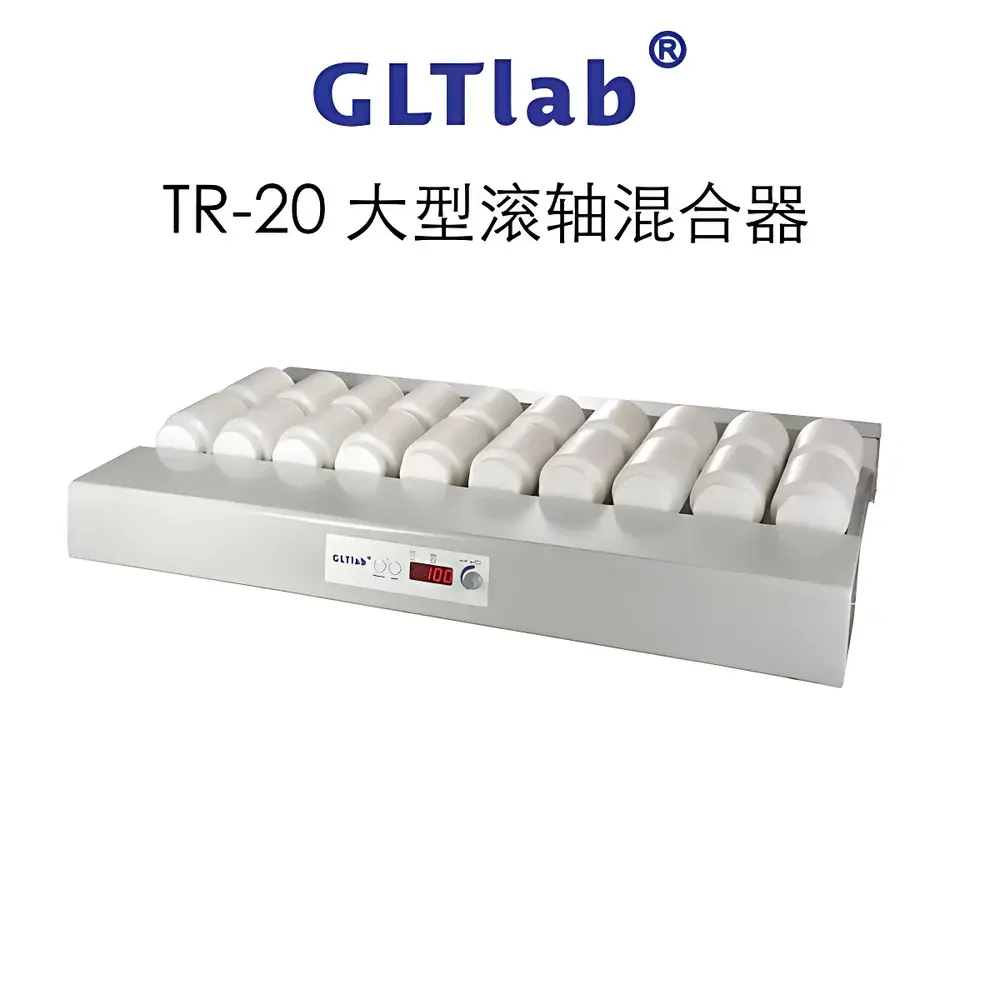
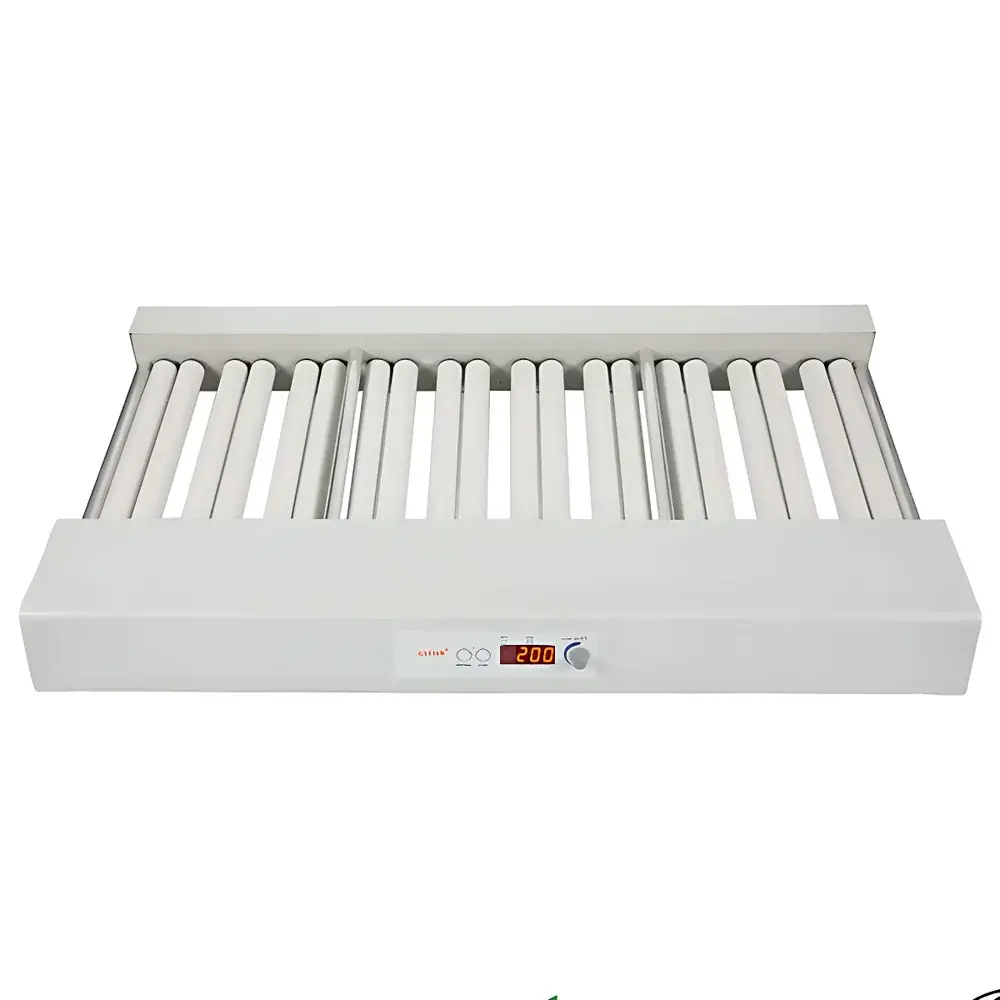
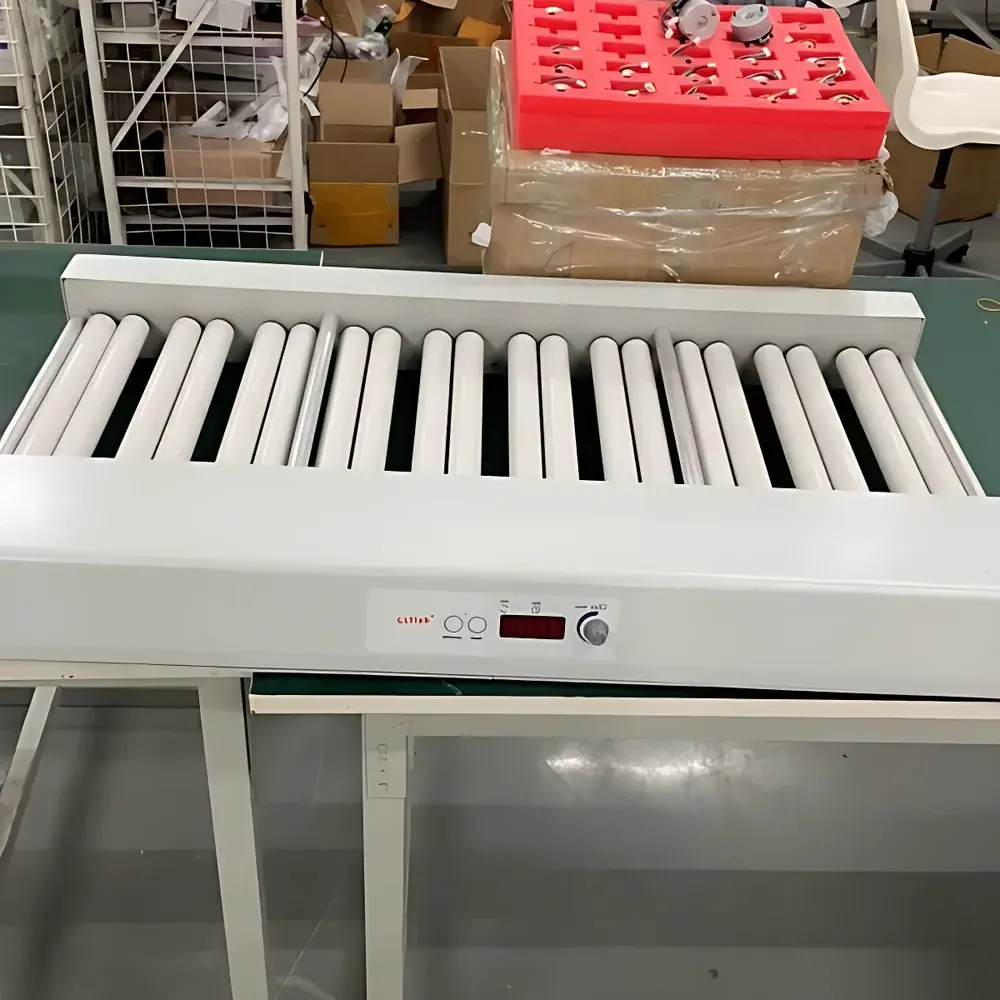
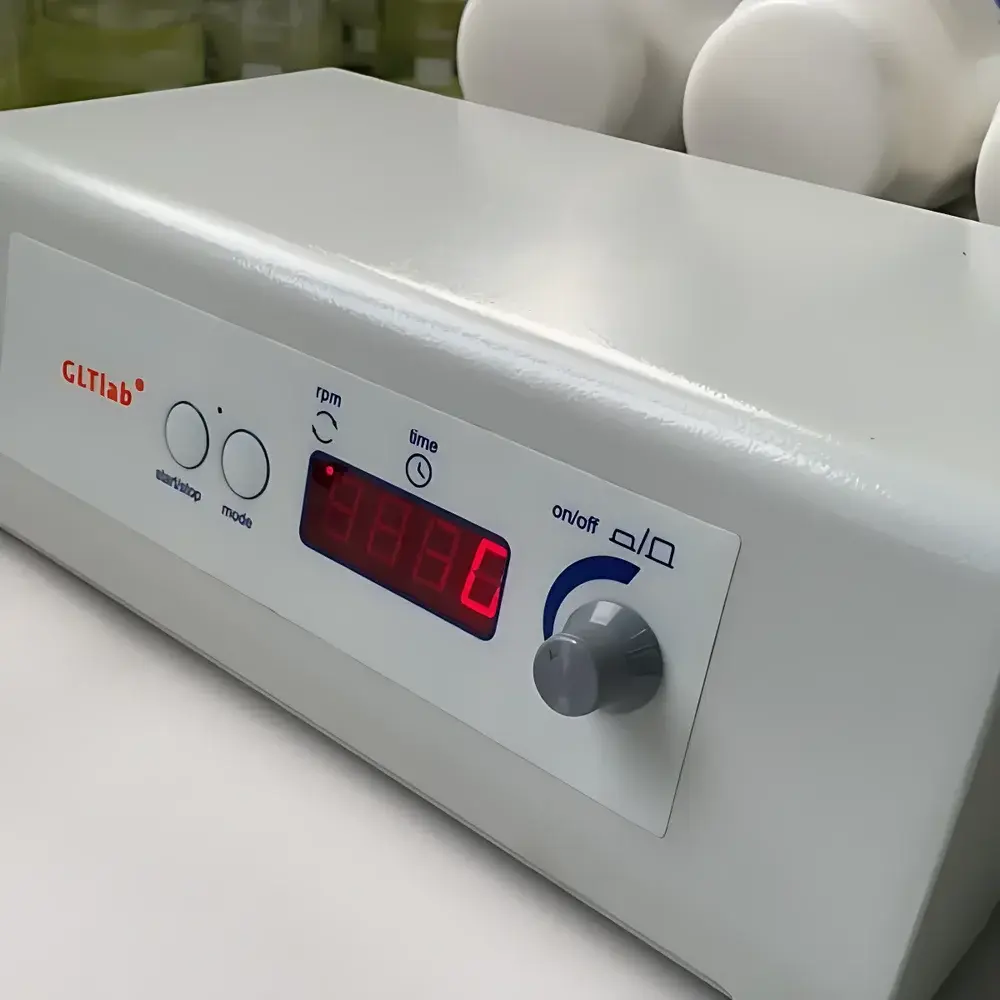
GLTlab TR-20 20-Axis Programmable Roller Mixer
| Brand | GLTlab |
|---|---|
| Origin | Guangdong, China |
| Manufacturer Type | Direct Manufacturer |
| Model | TR-20 |
| Dimensions (W×D×H) | 556 × 943 × 98 mm |
| Maximum Load Capacity | 20 kg |
| Sample Volume Capacity | 10 × 1 L bottles or 20 × 500 mL roller bottles |
| Speed Range | 5–300 rpm |
| Timer Range | Up to 200 hours |
| Roller Dimensions | Ø30 × 340 mm |
| Net Weight | 20 kg |
| Application Scope | Solid–solid, solid–liquid, and high-viscosity liquid mixing |
| Drive System | Dual-motor planetary gear transmission |
| Compliance | CE-marked design principles |
Overview
The GLTlab TR-20 20-Axis Programmable Roller Mixer is an industrial-grade, precision-engineered laboratory mixing system designed for reproducible, low-shear homogenization of heterogeneous and high-viscosity formulations. Operating on the principle of synchronous orbital rolling—where multiple independently driven rollers rotate in programmable bidirectional sequences—the TR-20 ensures uniform angular displacement and consistent mechanical energy input across all sample vessels. Unlike vortex or magnetic stirrers, this system avoids localized turbulence, air entrapment, or thermal gradients, making it particularly suitable for shear-sensitive battery electrode slurries, polymer composites, pharmaceutical suspensions, and catalyst precursors. Its robust aluminum-alloy frame and dual-motor planetary gear architecture support continuous operation under full 20 kg load without speed drift or positional deviation, meeting long-duration process requirements common in R&D scale-up and pilot-line validation.
Key Features
- 20 independently synchronized rolling axes with bidirectional programmability—enabling customizable rotation patterns (e.g., alternating forward/reverse intervals, staggered phase offsets) to prevent sedimentation and promote axial dispersion.
- Dual-motor planetary gear drive system delivering enhanced torque density and mechanical stability; eliminates belt slippage and maintains ±1 rpm speed accuracy across the full 5–300 rpm range.
- Programmable timer with 1-second resolution and up to 200-hour cumulative runtime—supports unattended overnight or multi-shift operation while retaining configuration memory after power interruption.
- Modular roller tray design accommodating either ten 1 L cylindrical bottles (OD ≤ 100 mm) or twenty 500 mL roller bottles (OD ≤ 75 mm); rollers feature chemically resistant silicone-coated surfaces (Shore A 60) for secure grip and minimal vibration transmission.
- Integrated safety interlock: automatic motor cutoff upon lid opening and real-time overload detection via current-sensing circuitry compliant with IEC 61000-6-2 EMC immunity standards.
Sample Compatibility & Compliance
The TR-20 is validated for use with glass, polypropylene, and fluoropolymer-lined containers conforming to ASTM D4291 (standard practice for handling laboratory plasticware) and ISO 8573-7 (purity classification for compressed air–assisted systems, where applicable). It supports mixing protocols aligned with USP (Performance Assessment of Mixing Devices) and meets mechanical design prerequisites referenced in ISO/IEC 17025:2017 Clause 6.4.1 (equipment suitability for intended use). While not a GMP-certified device per se, its deterministic motion control, non-volatile parameter storage, and audit-ready operational log (via optional RS-485 interface) facilitate integration into GLP-compliant workflows requiring traceable mixing parameters.
Software & Data Management
The TR-20 operates via an embedded 4.3-inch TFT-LCD HMI with capacitive touch interface, supporting local configuration of speed profiles, direction sequencing, dwell times, and total duration. Optional RS-485 Modbus RTU connectivity enables remote monitoring and parameter synchronization with LIMS or MES platforms. When interfaced with GLTlab’s optional LabLink™ Control Suite (v3.2+), users gain CSV-exportable timestamped logs—including actual rpm, elapsed time, direction state, and fault codes—for 21 CFR Part 11–aligned electronic recordkeeping. Firmware updates are performed via microSD card, ensuring version traceability and rollback capability during qualification.
Applications
- Battery materials R&D: Homogeneous dispersion of LiCoO₂, NMC, or silicon anode powders in PVDF/NMP slurries; validated for viscosity ranges from 2,000 to 25,000 mPa·s at 25 °C.
- Advanced ceramics: Uniform blending of alumina/zirconia nanopowders with organic binders prior to tape casting or injection molding.
- Pharmaceutical formulation: Reconstitution of lyophilized biologics in viscous excipient matrices without foaming or protein denaturation.
- Adhesives & sealants: Pre-dispersion of fillers (e.g., fumed silica, calcium carbonate) into silicone or epoxy base resins to minimize agglomeration pre-curing.
- Academic research: Controlled kinetic studies of solid-state diffusion in granular mixtures under defined rotational energy input.
FAQ
What is the maximum allowable viscosity for stable operation?
The TR-20 maintains rated torque and speed stability up to 30,000 mPa·s (measured at 25 °C using Brookfield LVDV-II+ with spindle #3 at 30 rpm), provided container geometry permits full immersion of the rolling surface.
Can the TR-20 be integrated into automated lab platforms?
Yes—via RS-485 Modbus RTU (standard) or optional Ethernet/IP module; protocol documentation and register maps are supplied with OEM integration kits.
Is calibration required before first use?
No factory calibration is needed; however, users must verify roller alignment and speed accuracy using a certified handheld tachometer per GLTlab Technical Bulletin TB-TR20-01 prior to critical applications.
Does the device support regulatory audit trails?
With LabLink™ Control Suite enabled, all parameter changes, run starts/stops, and error events are logged with ISO 8601 timestamps and user IDs—meeting ALCOA+ data integrity criteria for regulated environments.
What maintenance schedule is recommended?
Lubrication of planetary gear housings every 1,500 operating hours; inspection of roller surface wear and motor cooling fan clearance every 6 months—detailed in Maintenance Manual MM-TR20 Rev. 4.2.



