
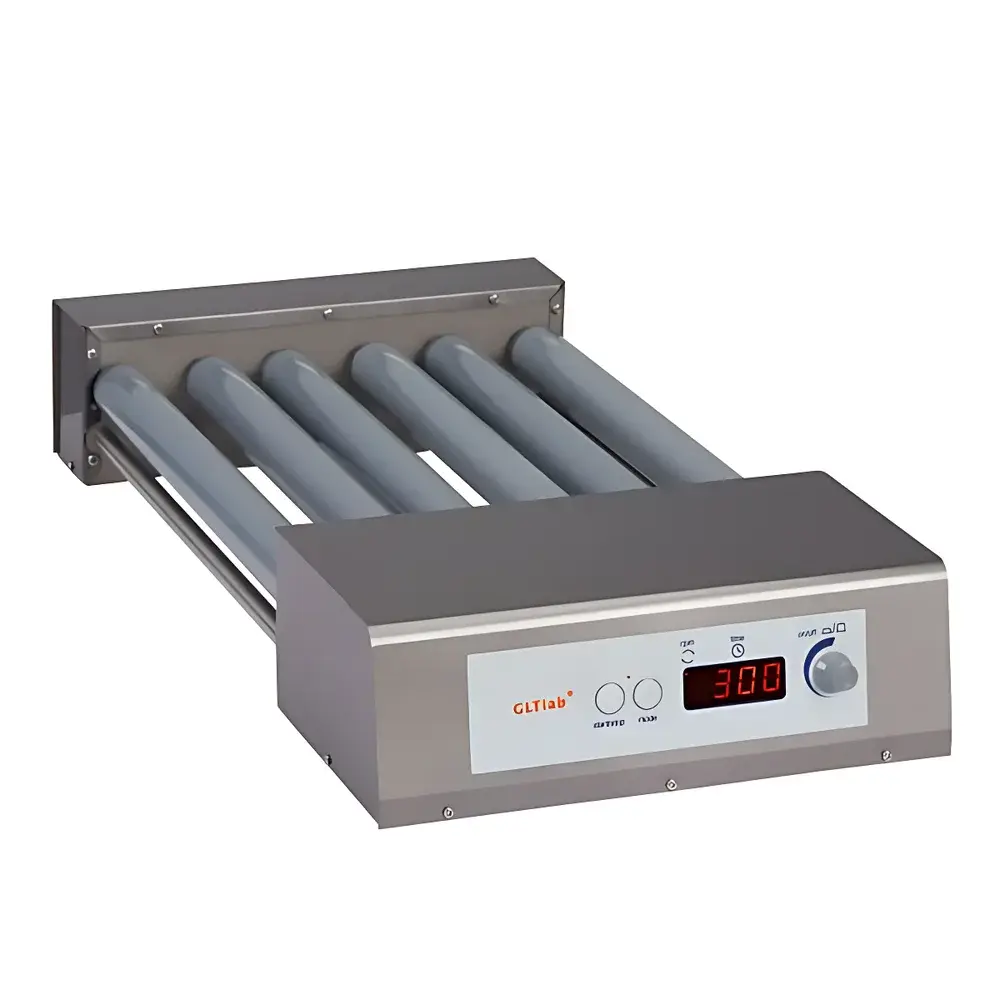
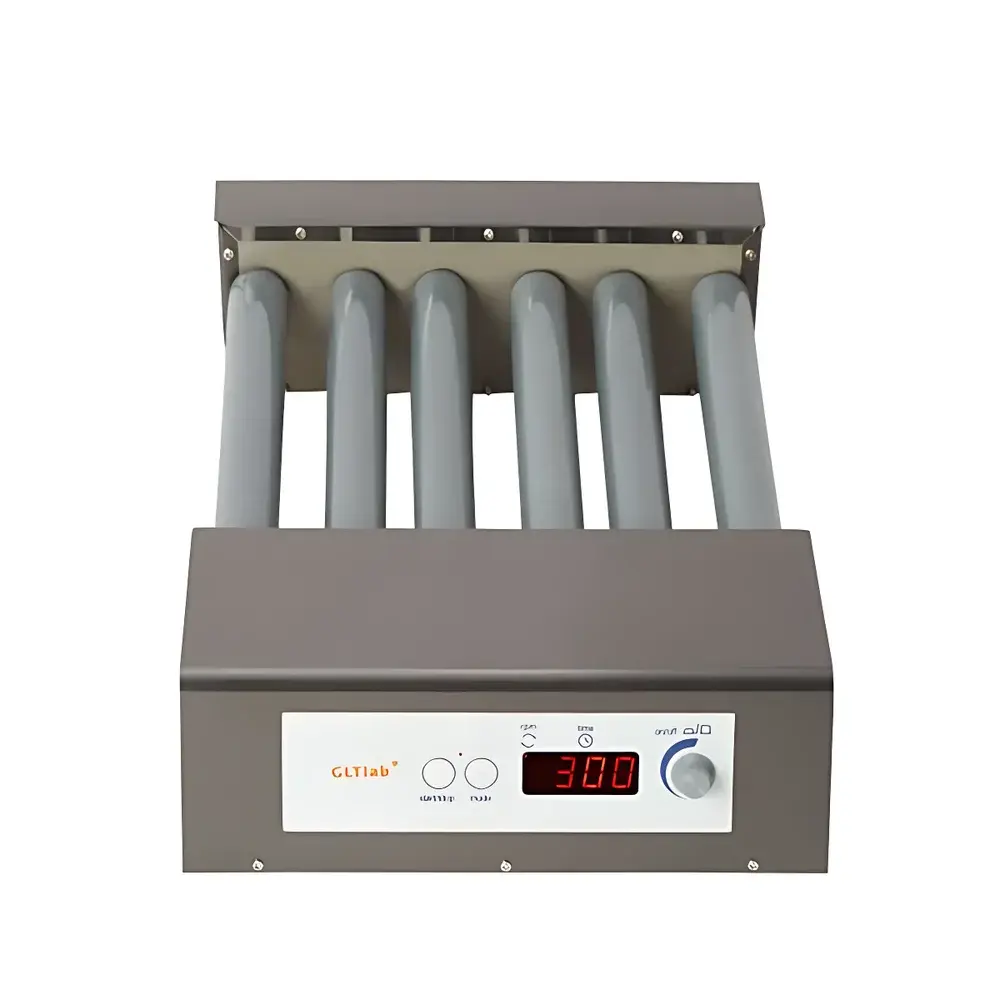
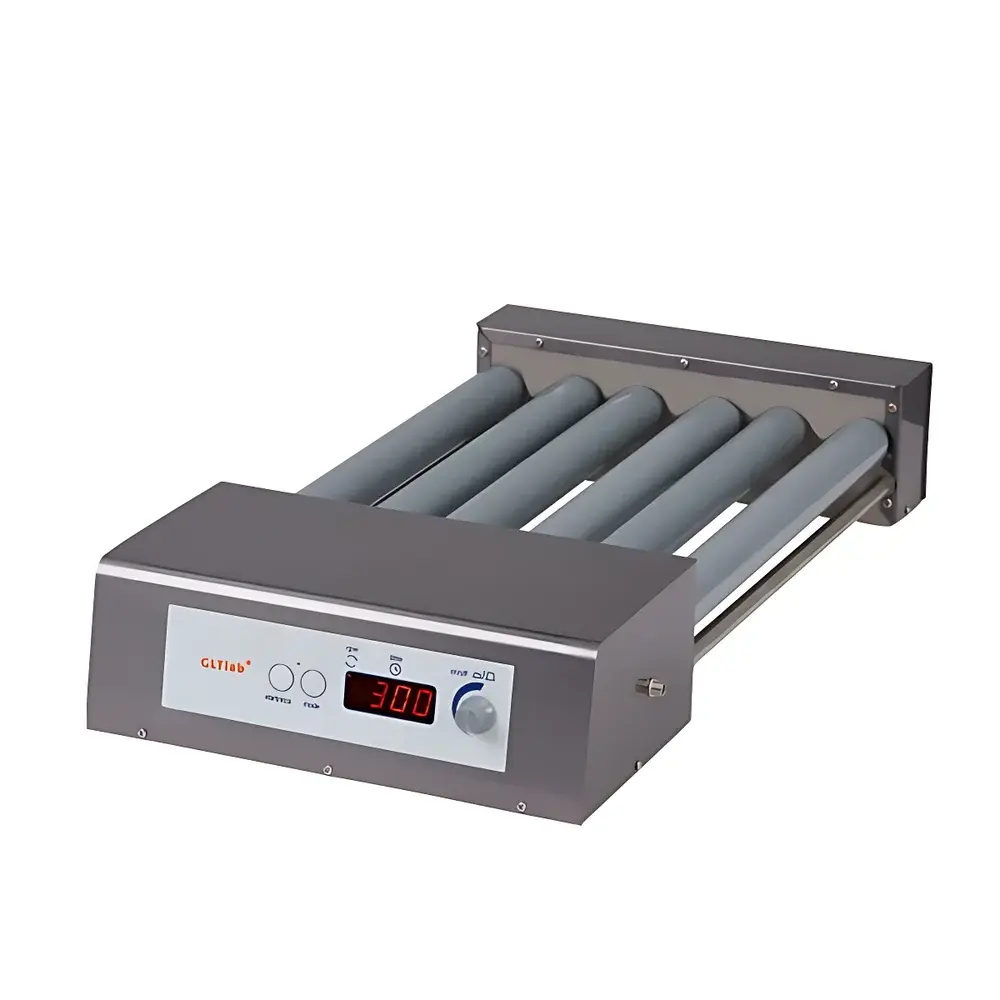
GLTLab TR-6C Stainless Steel Roller Mixer
| Brand | GLTLab |
|---|---|
| Origin | Guangdong, China |
| Manufacturer Type | Direct Manufacturer |
| Model | TR-6C |
| Rotational Axes | 6 |
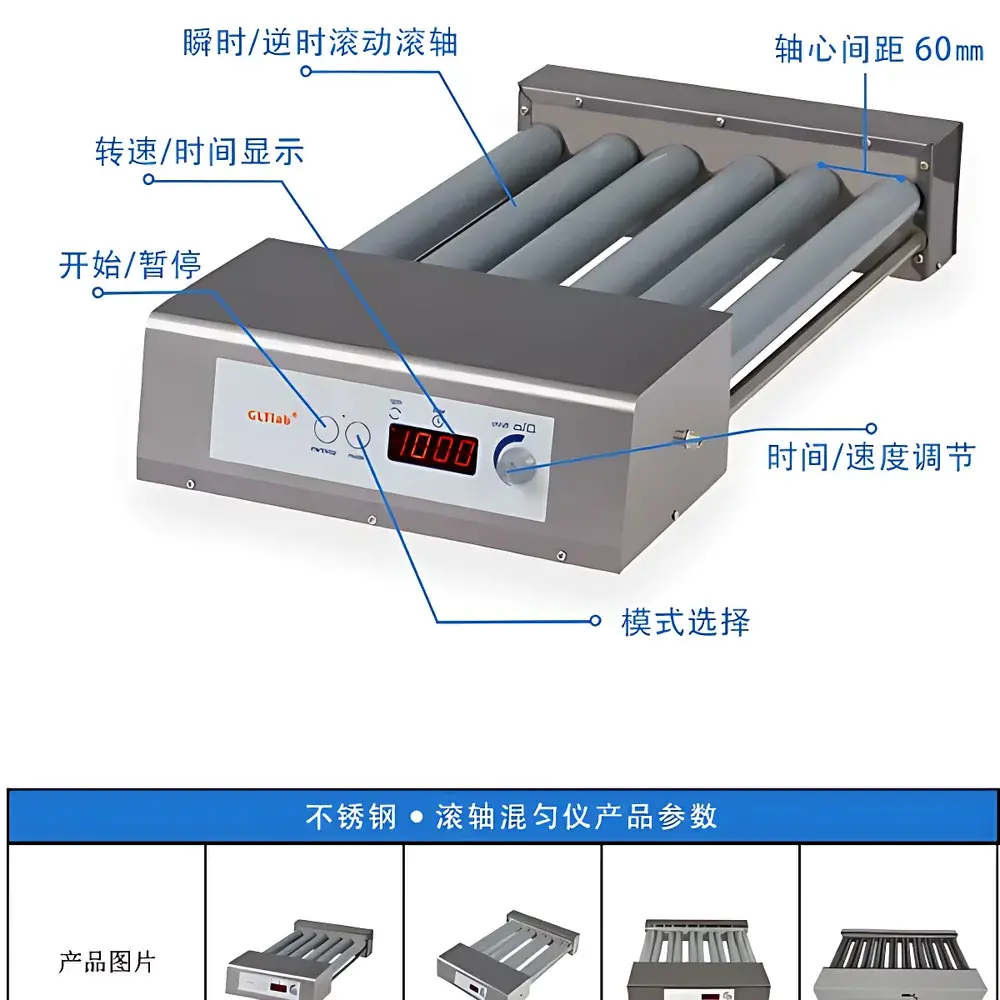
| Speed Range | 5–1000 rpm |
| Load Capacity | 10 kg |
| Control Mode | Digital Control |
| Timer Range | 0.1 h – 200 h |
| Roller Dimensions | 340 × 30 mm |
| Unit Dimensions (W×D×H) | 556 × 286 × 98 mm |
| Net Weight | 7 kg |
| Material | 304 Stainless Steel Body & Hardware |
| Environmental Resistance | Acid/Alkali Resistant |
| Surface Finish | Anti-Fingerprint Brushed Stainless Steel |
Overview
The GLTLab TR-6C Stainless Steel Roller Mixer is an industrial-grade, digitally controlled orbital roller mixer engineered for high-reproducibility blending of viscous and heterogeneous materials under demanding laboratory and pilot-scale production conditions. Based on the Couette flow principle—where rotational motion induces laminar shear between cylindrical surfaces—the TR-6C delivers uniform mixing across solid–solid, solid–liquid, and high-viscosity liquid–liquid systems without introducing air entrapment or thermal degradation. Its six independently aligned rollers rotate synchronously in either unidirectional or programmable bidirectional modes, enabling precise control over shear history, residence time, and mechanical energy input. Designed specifically for long-term operation in corrosive environments—including battery slurry preparation, fine chemical synthesis, and pharmaceutical excipient blending—the TR-6C eliminates a critical failure mode common in conventional carbon-steel mixers: electrochemical corrosion at fastener interfaces and PCB mounting points.
Key Features
- 304 stainless steel chassis, roller shafts, mounting hardware, and enclosure—fully passivated to ASTM A967 standards for chloride resistance and surface oxide stability
- Brushed anti-fingerprint finish minimizes surface contamination retention and facilitates ISO 14644-compliant cleaning protocols
- Dual-mode digital controller with adjustable ramp-up/down profiles, direction reversal scheduling, and real-time rpm feedback
- High-torque brushless DC motor coupled with hardened alloy gear train rated for continuous operation at 1000 rpm under full 10 kg load
- Thermally optimized housing design with integrated heat-dissipating fins; ambient operating range: 5–40°C, RH ≤ 80% non-condensing
- Modular roller configuration supports interchangeable roller lengths and diameters (standard: Ø30 mm × 340 mm), compatible with standard 10–500 mL glass or polymer roller bottles
Sample Compatibility & Compliance
The TR-6C accommodates a broad spectrum of container types—including borosilicate glass vials, HDPE/PETG roller bottles, and custom-lined stainless-steel vessels—enabling consistent dispersion of cathode active materials (e.g., NMC, LFP), conductive additives (carbon black, CNTs), and polymeric binders (PVDF, CMC/SBR) used in lithium-ion battery electrode slurry development. Its inert wetted surfaces comply with USP material safety requirements for pharmaceutical contact surfaces. The unit meets IEC 61000-6-2 (immunity) and IEC 61000-6-4 (emissions) for electromagnetic compatibility and carries CE marking per Machinery Directive 2006/42/EC. Optional documentation packages support GLP/GMP audit readiness, including factory calibration certificates traceable to NIST standards and equipment qualification templates aligned with ASTM E2500-22.
Software & Data Management
The embedded microcontroller supports local parameter storage (up to 99 user-defined protocols) with timestamped execution logs exportable via USB-C interface in CSV format. While the TR-6C operates as a standalone instrument, its serial communication protocol (RS-485 Modbus RTU) enables integration into centralized lab automation systems for remote monitoring, batch record generation, and electronic signature capture compliant with FDA 21 CFR Part 11 Annex 11 requirements. Audit trails record all parameter changes, start/stop events, and error codes with immutable timestamps—critical for quality system validation in regulated manufacturing environments.
Applications
- Battery R&D: Homogenization of aqueous and NMP-based cathode/anode slurries with viscosities up to 15,000 mPa·s; optimization of particle dispersion kinetics prior to coating trials
- Chemical Process Development: Blending of thixotropic catalyst suspensions, pigment dispersions, and silicone elastomer precursors where minimal shear-induced degradation is required
- Materials Science: Dry-mixing of ceramic powders, metal alloys, and MOF precursors under inert atmosphere glovebox integration (optional purge port)
- Biopharmaceutical Support: Gentle resuspension of lyophilized proteins and monoclonal antibody aggregates without foaming or denaturation
- Quality Control Labs: Standardized sample homogenization prior to rheological testing (e.g., Brookfield or TA Instruments), elemental analysis (ICP-OES), or particle size distribution (laser diffraction)
FAQ
What is the maximum viscosity this mixer can handle effectively?
The TR-6C maintains stable rotational torque and uniform shear distribution across Newtonian fluids up to 15,000 mPa·s and non-Newtonian pastes with yield stress ≤ 200 Pa when using standard 30 mm diameter rollers and appropriate bottle fill levels (40–60% volume).
Can the TR-6C be operated inside a nitrogen-purged glovebox?
Yes—the unit features a low-outgassing stainless steel construction and optional sealed feedthrough ports for power and data cabling, making it suitable for inert-atmosphere applications.
Is firmware update capability available?
Firmware updates are performed via USB-C using manufacturer-provided utility software; version history and release notes are published in the GLTLab Technical Documentation Portal.
Does the TR-6C include validation documentation for GMP use?
A complete IQ/OQ package—including dimensional verification, speed accuracy testing, timer deviation assessment, and environmental stress screening reports—is available upon request and conforms to ASTM E2500-22 guidance for equipment qualification.
How does the bidirectional rotation mode improve mixing efficiency?
Programmable direction reversal disrupts laminar boundary layers and prevents particle stratification, particularly beneficial for dense suspensions where sedimentation occurs during unidirectional operation.



