
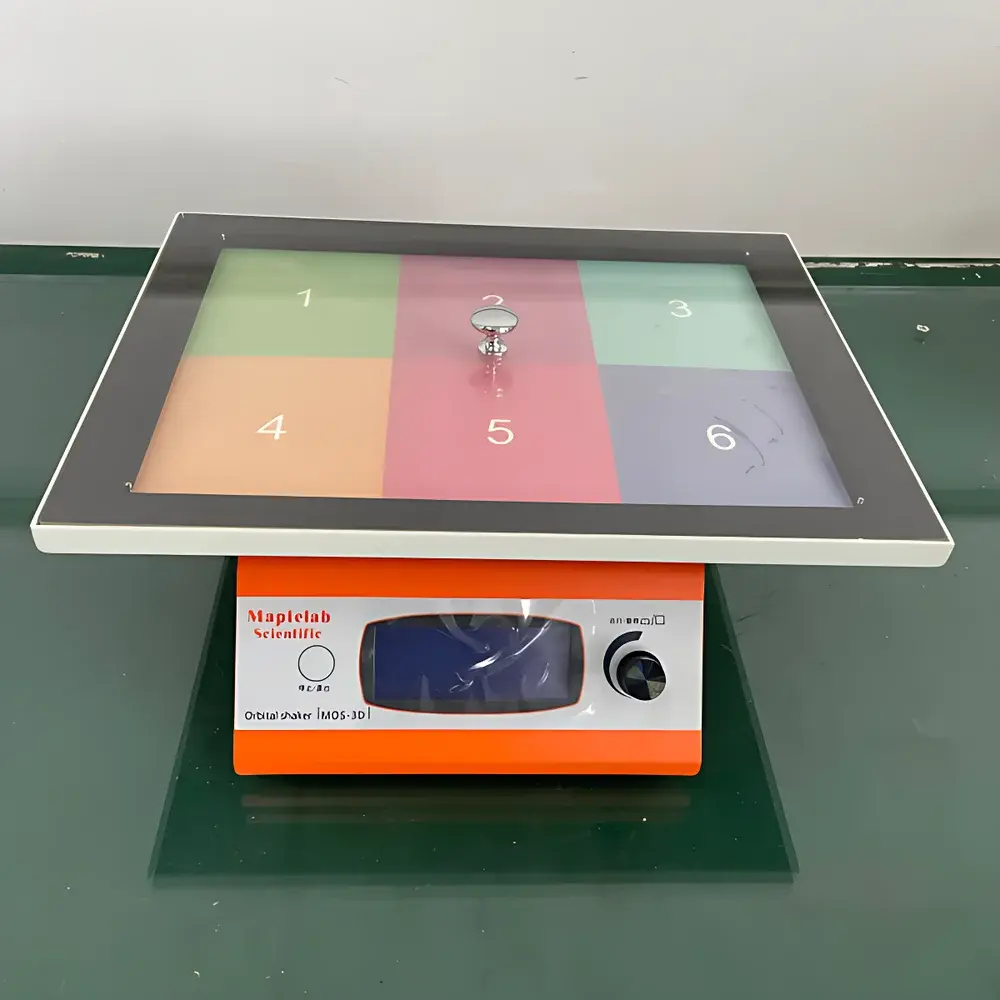
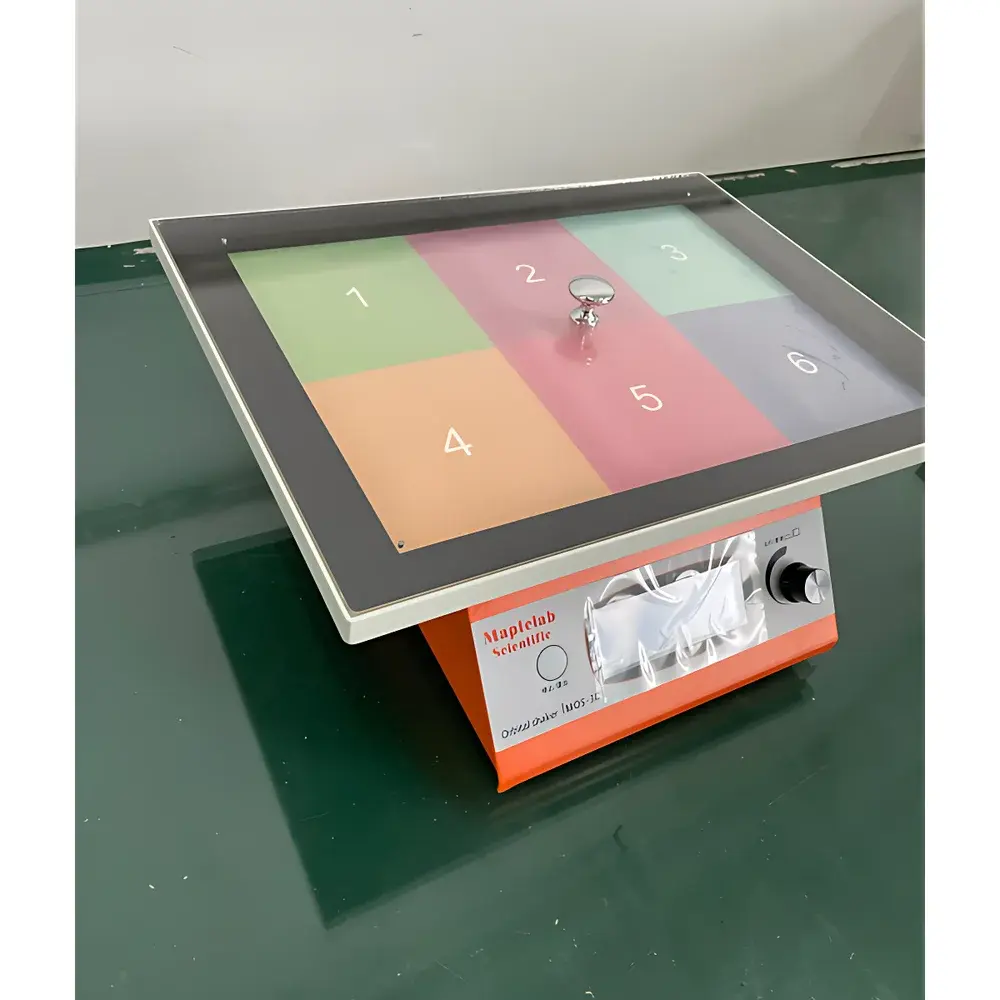
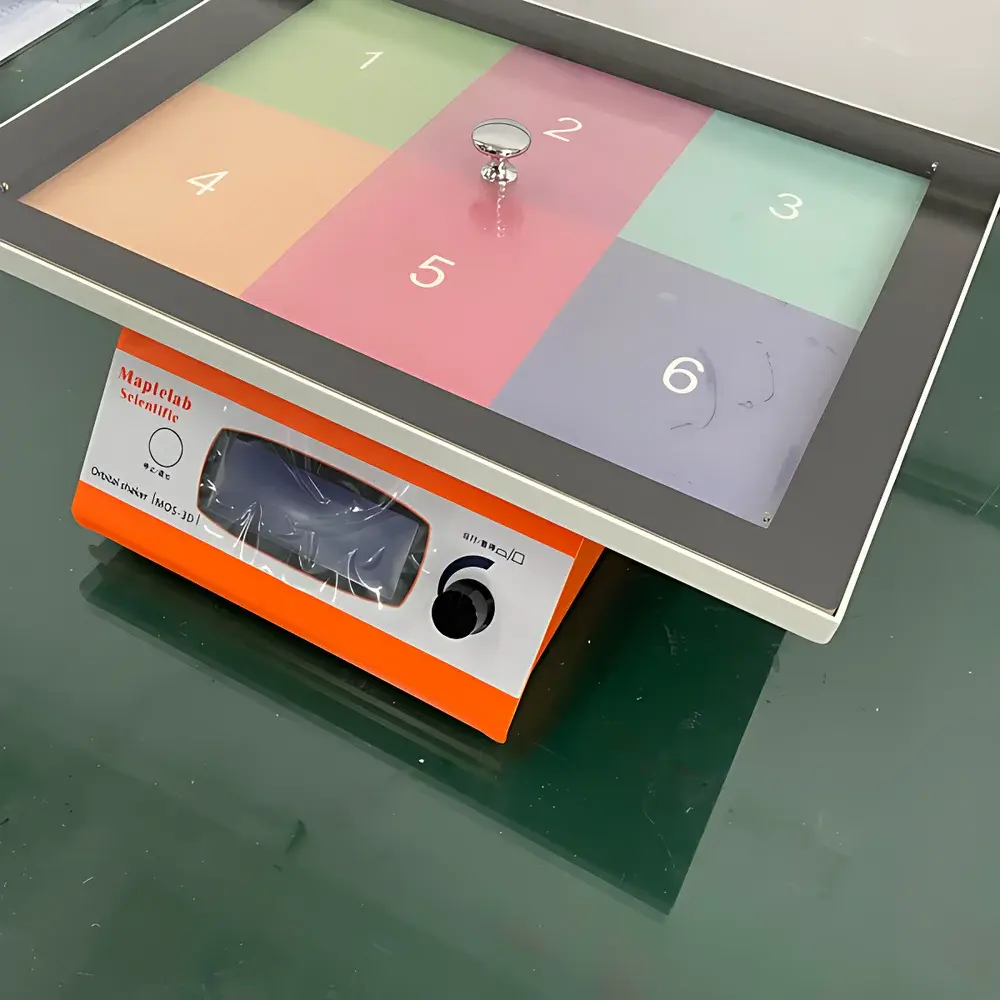
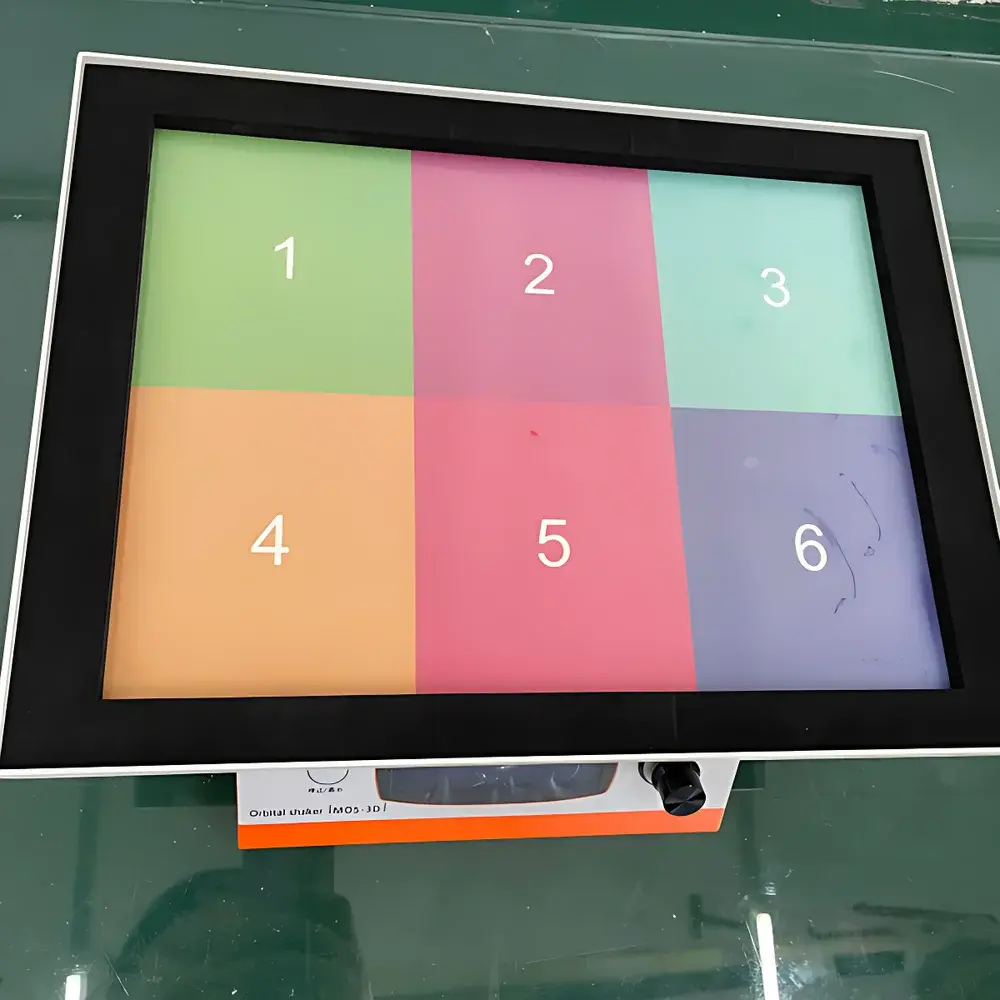
Maelab MOS-3D LCD Digital Planar Shaker
| Brand | GLTlab |
|---|---|
| Origin | Guangdong, China |
| Manufacturer Type | Direct Manufacturer |
| Instrument Category | Domestic |
| Model | MOS-3D |
| Price | USD 140 (converted from ¥999) |
| Instrument Type | Temperature-Controlled Orbital Shaker |
| Timer Range | 1 sec – 100 min (5 programmable segments) |
| Oscillation Frequency | 30–300 rpm |
| Temperature Range | Ambient +4 °C to 40 °C |
| Platform Configuration | Single flat platform |
Overview
The Maelab MOS-3D LCD Digital Planar Shaker is an engineered solution for precise, time-resolved orbital mixing in life science laboratories. Designed around a robust DC motor drive and microprocessor-based control architecture, the MOS-3D implements planar orbital motion—characterized by a consistent 20 mm horizontal displacement diameter—to ensure uniform suspension, resuspension, and gentle agitation of biological samples without shear-induced damage. Unlike fixed-speed or single-stage timers, this shaker integrates multi-segment timing logic (up to five independent phases), enabling protocol-driven workflows such as sequential reagent addition, staged incubation-mixing cycles, or kinetic assay preparation where variable agitation intensity and duration are required across discrete temporal windows. Its temperature-controlled variant supports applications requiring thermal stability during mixing—particularly relevant for enzyme assays, cell culture maintenance, immunoassay plate conditioning, and nucleic acid hybridization protocols where ambient drift could compromise reproducibility.
Key Features
- Five-segment programmable timer: Each segment supports independent settings from 1 second to 99 minutes 59 seconds, with automatic transition between phases upon completion.
- LCD graphical interface with real-time display of setpoint rpm, remaining time per segment, current temperature, and active segment number.
- Microprocessor-regulated speed control ensuring ±1 rpm stability over extended operation (≥24 h at 150 rpm, load ≤3 kg).
- Auto-restart function: Upon power recovery, the unit resumes operation at the exact rpm and remaining time of the interrupted segment—critical for unattended overnight protocols.
- Last-setting memory retention: All parameters—including rpm, temperature, and segment configuration—are retained after power-off without battery backup.
- Thermal regulation via Peltier-assisted heating/cooling system maintaining ±0.5 °C accuracy within the 4 °C above ambient to 40 °C range.
- Single flat aluminum platform (280 × 250 mm) with non-slip silicone mat; compatible with standard microplates (96-/384-well), test tubes (up to 50 mL), flasks (up to 2 L), and Petri dishes.
Sample Compatibility & Compliance
The MOS-3D accommodates diverse vessel formats common in molecular biology, clinical diagnostics, and pharmaceutical QC labs—including PCR plates, ELISA strips, centrifuge tubes, Erlenmeyer flasks, and glass vials—without requiring adapters. Its orbital motion profile minimizes foaming and splashing while maximizing homogeneity in low-viscosity aqueous solutions (e.g., buffers, sera, lysates). The device conforms to IEC 61010-1:2010 safety standards for laboratory electrical equipment and meets electromagnetic compatibility requirements per EN 61326-1. While not certified for ISO 13485 or FDA 21 CFR Part 11 out-of-the-box, its audit-trail-capable firmware (via optional RS-232/USB logging module) supports integration into GLP/GMP environments when paired with validated data acquisition software.
Software & Data Management
The MOS-3D operates autonomously via front-panel controls but supports external monitoring and parameter logging through optional serial (RS-232) or USB-C connectivity. When interfaced with compliant third-party software (e.g., LabVIEW-compatible drivers or custom Python scripts using PySerial), users can record timestamped rpm, temperature, and segment progression data for traceability. Firmware version 2.1+ enables CSV export of session logs—including start/stop timestamps, segment-wise durations, and deviation alerts—facilitating alignment with internal SOP documentation and regulatory review requirements. No cloud dependency or proprietary cloud service is embedded; all data remains under user control.
Applications
- Enzyme-linked immunosorbent assay (ELISA) plate washing and incubation agitation
- Cell suspension maintenance during transient transfection or passaging
- DNA/RNA hybridization in membrane-based blotting workflows
- Antibody-antigen binding kinetics under controlled thermal conditions
- Pre-analytical sample homogenization for clinical chemistry analyzers
- Quality control mixing of calibration standards and reference materials
- Staged dissolution testing in early-phase formulation development
FAQ
Does the MOS-3D support external temperature probes for chamber validation?
No—the integrated Pt100 sensor monitors platform surface temperature only; external probe input is not supported.
Can the shaker operate without temperature control enabled?
Yes—temperature regulation may be disabled to run as a room-temperature-only orbital shaker.
Is the platform removable for cleaning or replacement?
Yes—the aluminum deck is secured with four M4 screws and can be detached without tools beyond a standard hex key.
What is the maximum load capacity at 300 rpm?
3.0 kg evenly distributed; derating to 2.0 kg recommended for sustained operation ≥200 rpm.
Does the device include CE or UL certification marks?
CE marking is applied per Directive 2014/30/EU (EMC) and 2014/35/EU (LVD); UL listing is not available.




