Proton Beam Water Calorimeter Thermal Insulation System – 3D Water Tank Scanning System
| Brand | Not specified |
|---|---|
| Origin | Beijing, China |
| Manufacturer Type | Authorized Distributor |
| Country of Origin | Domestic (China) |
| Model | 3D Water Tank |
| Pricing | Upon Request |
Overview
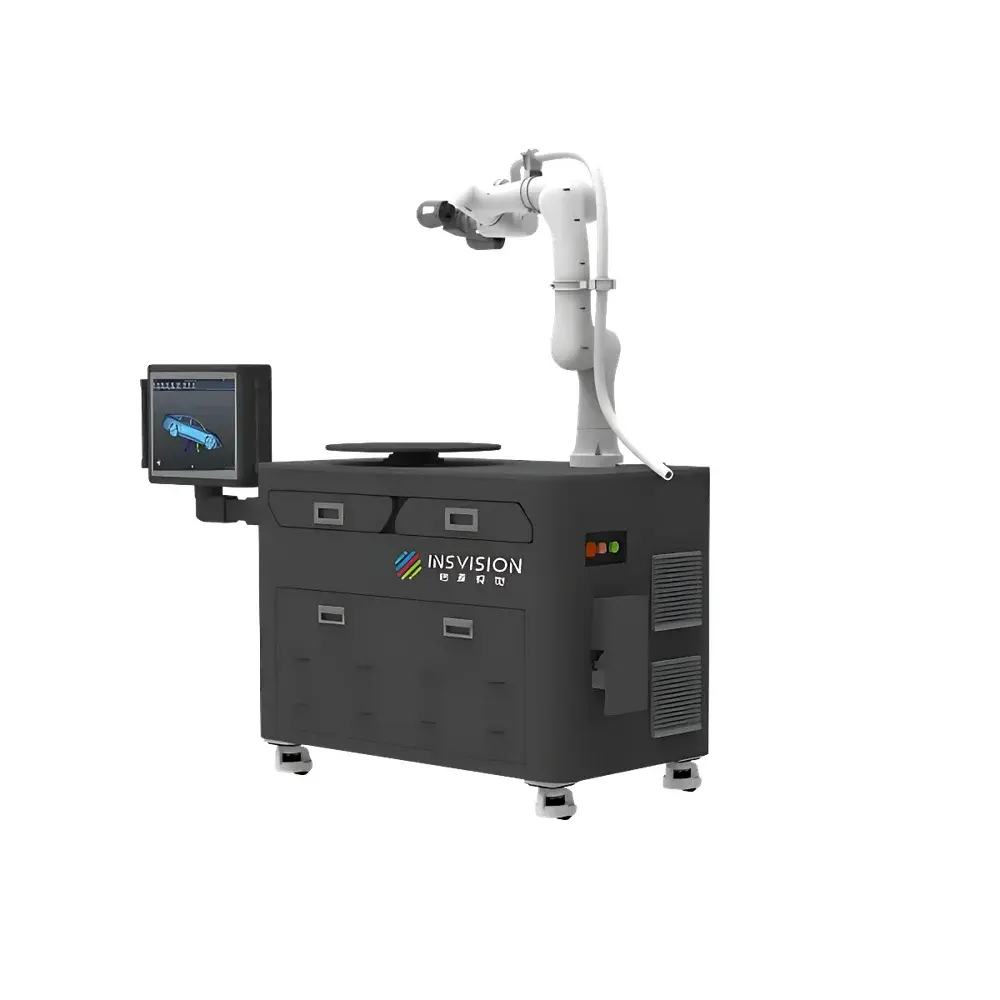
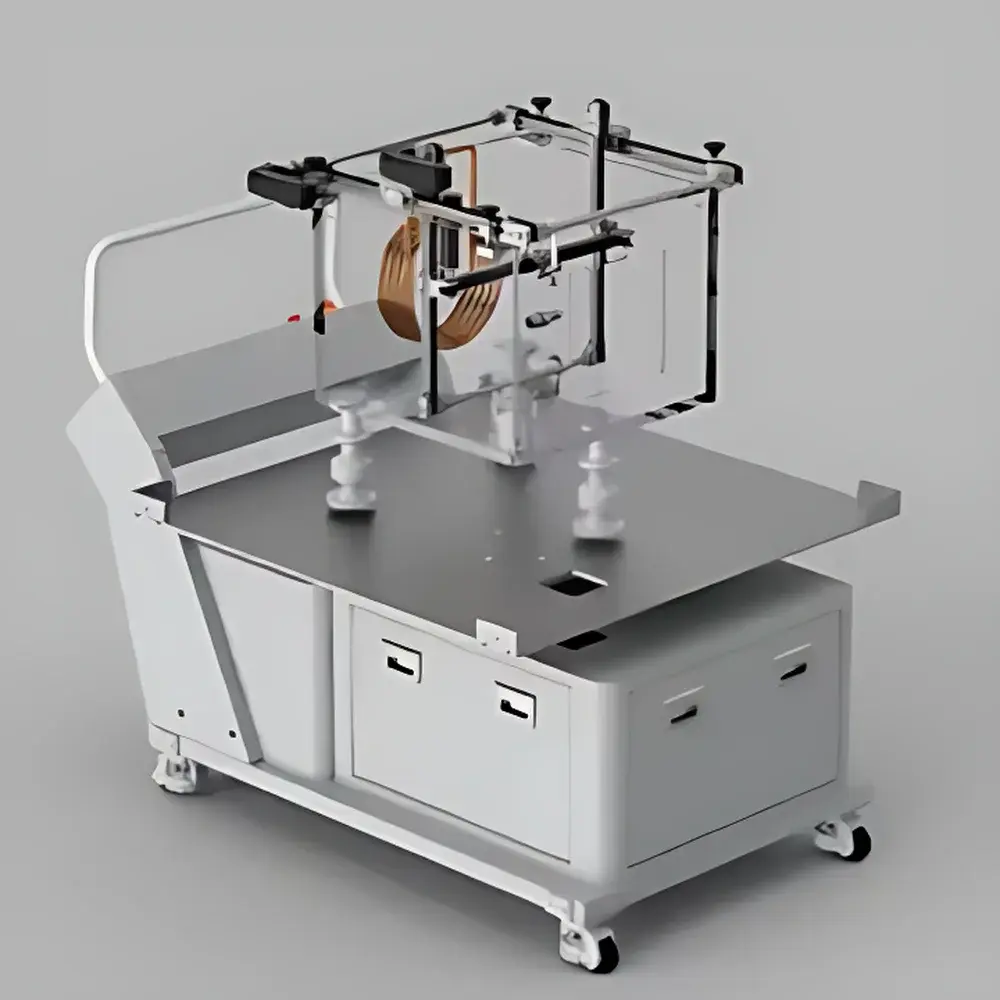
The Proton Beam Water Calorimeter Thermal Insulation System – 3D Water Tank Scanning System is a precision metrology platform engineered for absolute dosimetric characterization of proton therapy beams in water-equivalent phantoms. It operates on the fundamental principle of water calorimetry—measuring absorbed dose via temperature rise in a thermally isolated, high-purity water medium—integrated with high-resolution 3D spatial scanning. The system comprises four interoperable subsystems: (1) the 3D water tank (a rigid, corrosion-resistant stainless-steel or acrylic tank filled with deionized water and equipped with standardized mounting interfaces), (2) a closed-loop thermostatic control unit maintaining water temperature stability within ±0.02 °C over extended acquisition periods, (3) a motorized XYZ translation stage with sub-millimeter positioning repeatability (< ±5 µm) and backlash-free linear motion, and (4) a real-time acquisition and analysis software suite compliant with DICOM-RT and IEC 62220-1-1 data exchange protocols. Designed for clinical medical physics QA and accelerator commissioning, the system enables traceable, primary-standard-level beam profiling without reliance on ionization chamber calibration factors.
Key Features
- Statically stable mechanical architecture with vibration-damped base and reinforced frame to eliminate positional drift during multi-hour scans
- Corrosion-resistant tank construction using electropolished 316L stainless steel or optical-grade PMMA, validated for long-term exposure to deionized water and radiation environments
- High-precision XYZ scanning stage driven by stepper motors with microstepping resolution (≤ 1 µm per step) and integrated optical encoders for closed-loop position verification
- Thermal insulation enclosure with dual-layer vacuum-jacketed walls and active PID-controlled cooling/heating to suppress thermal convection and maintain uniform water temperature gradients (< 0.01 °C/cm)
- Modular detector interface supporting NIST-traceable plane-parallel ionization chambers, diamond detectors, or fiber-optic scintillators via standardized BNC/SMA connectors and HV bias control
- Real-time dose rate monitoring with synchronized data logging at up to 100 Hz sampling frequency, ensuring temporal correlation between beam pulse structure and spatial dose deposition
Sample Compatibility & Compliance
The system accommodates standard water phantoms conforming to IEC 60976 and AAPM TG-51 geometries, including cylindrical tanks (Ø30–40 cm) and rectangular tanks (30 × 30 × 30 cm³). Detector insertion ports comply with IEC 61223-3-5 mechanical tolerances. All hardware and firmware are designed to support GLP-compliant operation: audit trails record user actions, parameter changes, and calibration events; electronic signatures adhere to FDA 21 CFR Part 11 requirements when deployed with validated software versions. System documentation includes traceable calibration certificates for temperature sensors (NIST-traceable Pt100 RTDs), positioning encoders, and reference dosimeters.
Software & Data Management
The proprietary acquisition software provides automated scan sequencing (depth–profile, cross-plane, in-plane, and oblique angle acquisitions), real-time dose map rendering, and ISO/IEC 17025-aligned uncertainty propagation modeling. Raw data is stored in HDF5 format with embedded metadata (beam energy, modulation width, spot size, gantry angle, collimator setting). Export modules generate PDF reports conforming to IEC 62517 and AAPM TG-142 reporting templates—including penumbra (80%–20%), flatness (±3% over central 80% of field), symmetry (≤2% deviation), and PDD curves with depth resolution ≤1 mm. Software supports DICOM-RT plan import for direct comparison against TPS-generated dose distributions.
Applications
- Commissioning and annual QA of proton pencil-beam scanning (PBS) systems and double-scattering nozzles
- Validation of Monte Carlo-based treatment planning system (TPS) beam models under varying SOBP widths and energies (70–250 MeV)
- Reference dosimetry intercomparisons across national metrology institutes (NMIs) participating in EURAMET.QM-S1 or APMP.M.P-K1 key comparisons
- Development and testing of novel beam delivery techniques, including intensity-modulated proton therapy (IMPT) and FLASH proton delivery
- Research into relative biological effectiveness (RBE) variations through controlled depth–dose–LET mapping using stacked detector arrays
FAQ
What is the maximum usable water volume supported by the 3D tank?
Standard configuration supports a 40 × 40 × 40 cm³ water volume; custom configurations up to 50 × 50 × 50 cm³ are available upon request.
Does the system support automated multi-energy scanning sequences?
Yes—the software allows pre-programmed energy ramping with automatic repositioning and dwell time optimization per energy layer.
Is the thermal stabilization system compatible with pulsed proton beams?
Yes; the PID algorithm dynamically adjusts cooling power based on real-time thermal load estimation derived from beam current and pulse repetition frequency.
Can third-party detectors be integrated?
All analog input channels are calibrated for voltage ranges ±10 V with 24-bit ADC resolution; detector compatibility requires manufacturer-provided sensitivity coefficients and linearity validation reports.
What regulatory standards does the system meet for clinical use?
Hardware design complies with IEC 61010-1 (safety) and IEC 61326-1 (EMC); software validation follows IEC 62304 Class B requirements and supports GAMP 5 lifecycle documentation.