
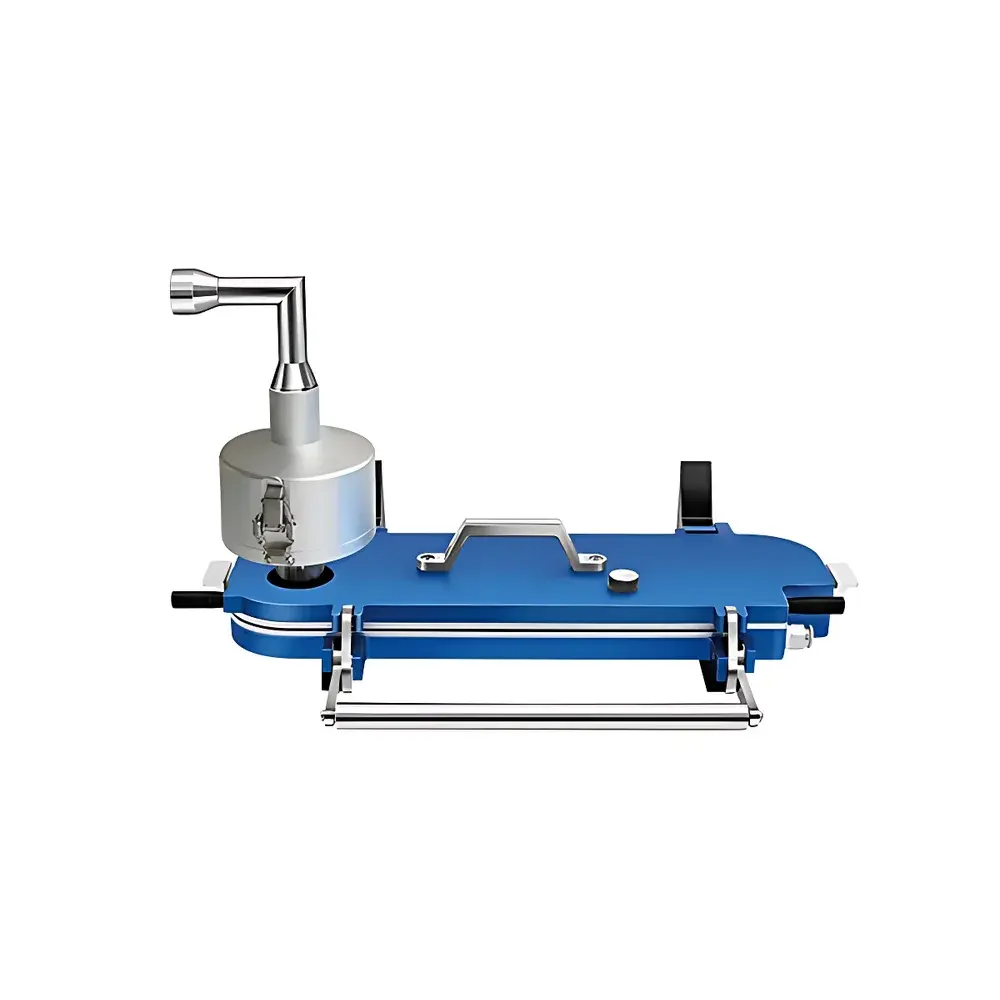
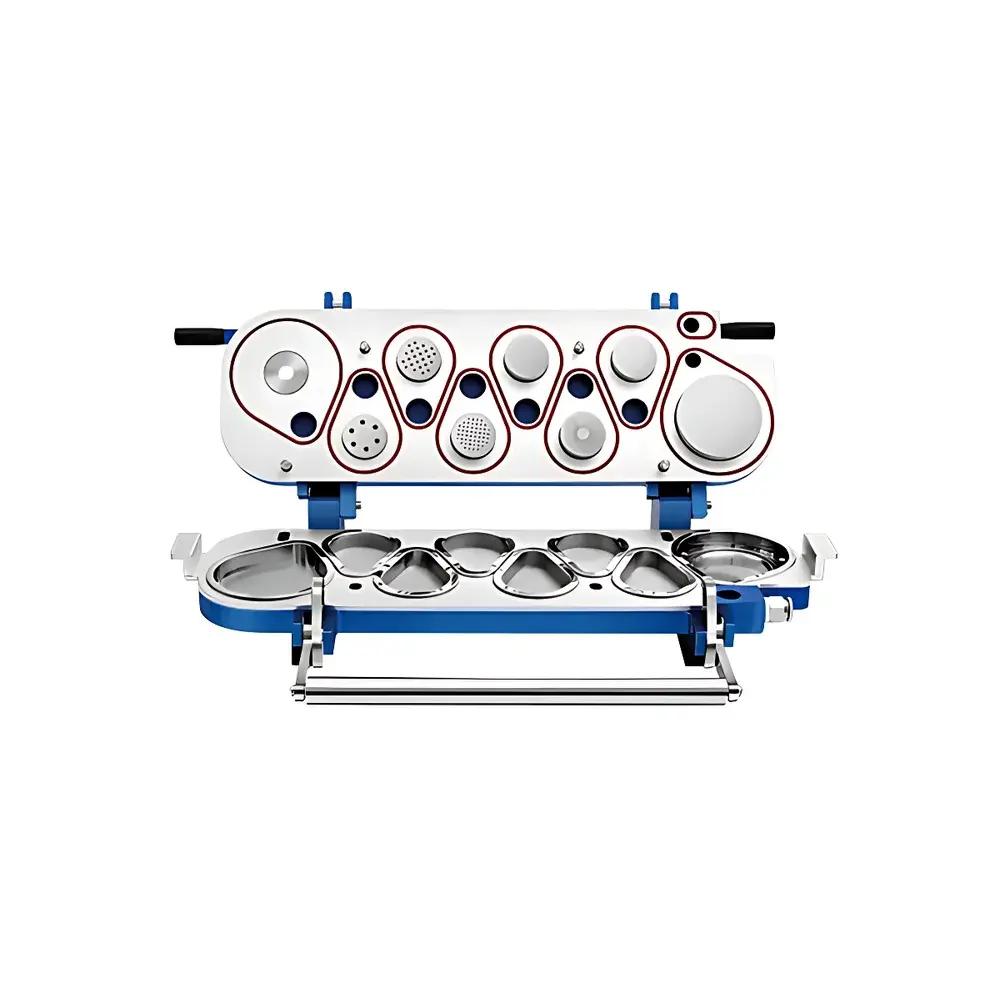
HRH-ZJQ160 Next-Generation Pharmaceutical Cascade Impactor
| Brand | Huironghe |
|---|---|
| Origin | Beijing, China |
| Manufacturer Type | Authorized Distributor |
| Country of Origin | China |
| Model | HRH-ZJQ160 |
| Pricing | Upon Request |
| Compliance | USP <601>, Ph. Eur. 2.9.18, ChP 2020 Vol. IV <0951> |
| Stage Configuration | 7-Stage Andersen-type with Micro-Orifice Collector (MOC) |
| Flow Rates Supported | 15–100 L/min |
| Nozzle Tolerances | ±0.01–±0.05 mm |
| MOC Effective Cut-Point | ≤0.07 µm at 100 L/min |
Overview
The HRH-ZJQ160 Next-Generation Pharmaceutical Cascade Impactor is an engineered aerodynamic particle sizer designed specifically for the quantitative assessment of fine particle fraction (FPF), mass median aerodynamic diameter (MMAD), and geometric standard deviation (GSD) of inhaled pharmaceutical aerosols. It operates on the principle of inertial impaction—where aerosol-laden air is accelerated through a series of progressively smaller nozzles, causing particles above stage-specific aerodynamic cut-off diameters to impact onto collection surfaces due to momentum differences. This cascade architecture enables precise, stage-resolved deposition profiling aligned with human respiratory tract deposition models. The system meets the mechanical, dimensional, and operational requirements defined in USP “Aerodynamic Particle Size Distribution”, Ph. Eur. 2.9.18 “Cascade Impactors”, and ChP 2020 Volume IV “Determination of Aerodynamic Particle Size Distribution of Inhalation Preparations”. Its modular configuration supports regulatory submissions under ICH Q5A(R2), Q5C, and FDA guidance for generic and novel inhalation products.
Key Features
- Seven-stage Andersen-type impactor with micro-orifice collector (MOC), enabling full-range aerodynamic sizing from >14 µm down to <0.1 µm at standard test flows.
- Precision-machined stainless-steel nozzles with certified tolerances (±0.01–±0.05 mm) ensuring reproducible cut-point accuracy across all flow rates (15–100 L/min).
- Modular, tool-free disassembly: each of the eight collection cups—including the MOC—is independently removable for gravimetric or analytical recovery (e.g., HPLC, UV-Vis) without cross-contamination.
- Integrated pre-separator compatible with pressurized metered-dose inhalers (pMDIs), soft-mist inhalers (SMIs), and dry powder inhalers (DPIs); removes coarse particles (>10–15 µm) prior to cascade entry to prevent overloading and wall loss.
- Configurable inlet assembly including USP-specified artificial throat (with 30° bend, 18 mm ID, 100 mm length) and optional induction port for standardized testing per pharmacopoeial protocols.
- Robust aluminum alloy housing with anodized finish, optimized for laboratory stability and long-term calibration retention under GMP-compliant environmental conditions.
Sample Compatibility & Compliance
The HRH-ZJQ160 is validated for use with all major inhalation dosage forms: pressurized aerosols (pMDIs), aqueous and propellant-based nasal sprays, nebulized solutions/suspensions, and dry powder formulations (DPIs). When coupled with the integrated pre-separator, it satisfies the particle size classification requirements for DPI testing outlined in USP Annex 1 and Ph. Eur. 2.9.18. All impactor stages and the MOC are compatible with common solvent extraction (e.g., methanol, isopropanol) and subsequent quantification methods—including high-performance liquid chromatography (HPLC), ultraviolet–visible spectrophotometry (UV-Vis), and mass balance gravimetry. The device conforms to ISO 21501-4:2018 for aerosol measurement instrumentation and supports audit-ready documentation for GLP and 21 CFR Part 11–compliant data workflows when paired with validated acquisition software.
Software & Data Management
While the HRH-ZJQ160 operates as a hardware platform requiring external flow control and pressure monitoring, it is fully interoperable with industry-standard data acquisition systems—including LabVIEW-based controllers, certified digital manometers (e.g., Validyne DP15), and volumetric flow meters traceable to NIST standards. Users may integrate the impactor into automated test benches supporting real-time flow stabilization, pressure drop logging, and stage-wise mass deposition tracking. Raw deposition data comply with ASTM D6915-21 for reporting FPF, MMAD, and GSD using log-probability regression. Export formats include CSV and XML for direct ingestion into statistical analysis packages (e.g., R, SAS, Phoenix WinNonlin) used in bioequivalence and quality-by-design (QbD) frameworks.
Applications
- Regulatory batch release testing of inhaled therapeutics per USP, Ph. Eur., and ChP monographs.
- Formulation development and optimization of DPIs, pMDIs, and SMIs targeting specific lung deposition profiles.
- Comparative aerodynamic characterization during generic product development and bioequivalence studies.
- In vitro deposition modeling correlating with regional lung deposition (extrathoracic, bronchial, alveolar) using ICRP 66 and MPPD v3.04 algorithms.
- Stability assessment of aerosol performance across storage conditions (temperature/humidity cycling, mechanical shock).
- Method validation per ICH Q2(R2) for precision, accuracy, linearity, and robustness of aerodynamic sizing protocols.
FAQ
Does the HRH-ZJQ160 require calibration against reference aerosols?
Yes—annual calibration using monodisperse polystyrene latex (PSL) spheres or sodium chloride aerosols is recommended per USP Annex 2 to verify stage cut-point fidelity at multiple flow rates.
Can the impactor be cleaned between runs without altering nozzle geometry?
Yes—collection cups and nozzles are ultrasonically cleanable in non-corrosive solvents; nozzle integrity is verified via optical interferometry or certified bore gauges before reinstallation.
Is the pre-separator included as standard equipment?
Yes—the DPI-compatible pre-separator is supplied with the base system and meets USP-specified dimensions and pressure drop limits for coarse particle removal.
What flow rate range is supported for pharmacopoeial compliance?
The impactor is validated for 15–100 L/min; 60 L/min is the default for pMDI/SMI testing per USP , while 28–30 L/min is used for DPIs with pre-separator per Ph. Eur. 2.9.18.
How is stage collection efficiency verified?
Efficiency is confirmed through multi-angle laser diffraction (MALD) upstream/downstream of each stage and by mass balance recovery ≥85% across total deposited mass (excluding losses in tubing and pre-separator).





