
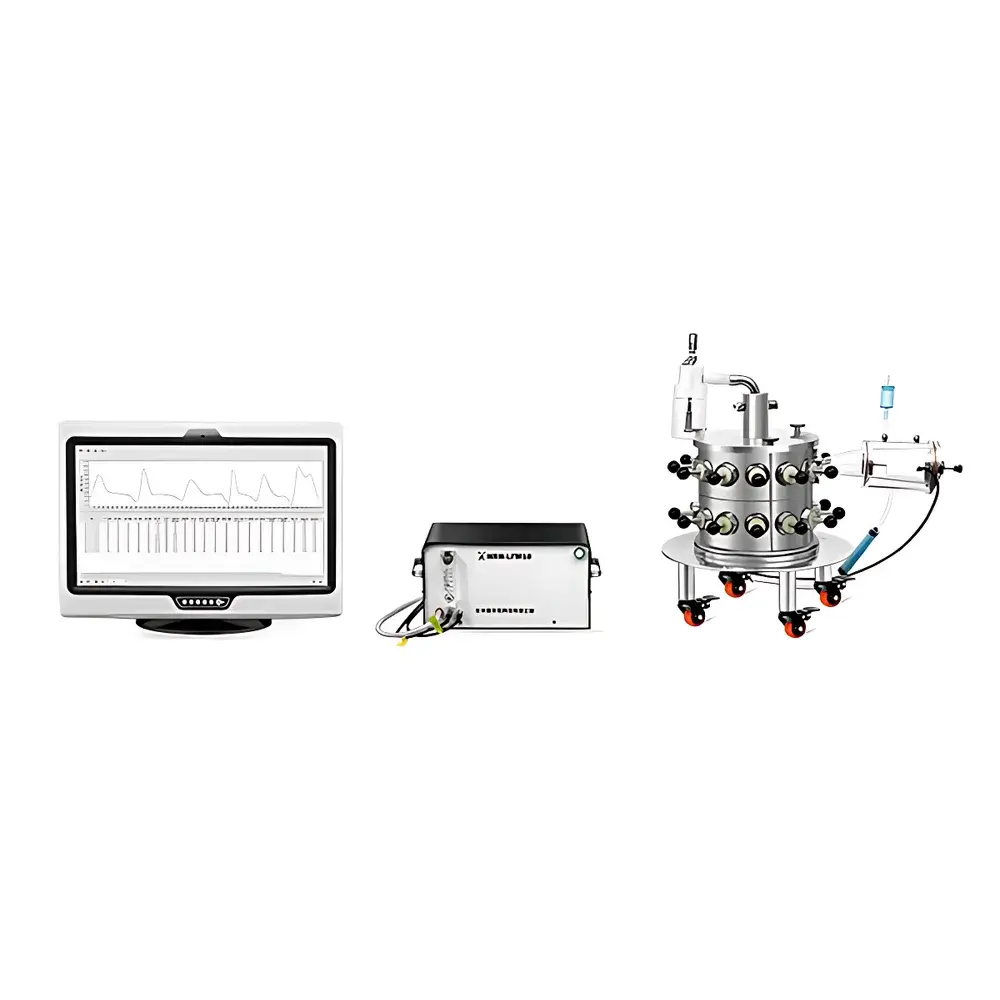
HRH-LFM10 Small Animal Online Pulmonary Function Monitoring System
| Brand | HRH |
|---|---|
| Origin | Beijing, China |
| Manufacturer Type | Authorized Distributor |
| Country of Origin | China |
| Model | HRH-LFM10 |
| Instrument Type | In Vivo Respiratory Function Analyzer |
| Application | Non-invasive, real-time pulmonary function assessment during nose-only exposure studies |
Overview
The HRH-LFM10 Small Animal Online Pulmonary Function Monitoring System is an in vivo, non-invasive respiratory physiology platform engineered for continuous, real-time quantification of pulmonary functional parameters in conscious, unrestrained rodents during nose-only inhalation exposure. It operates on the principle of differential pressure-based pneumotachography coupled with high-fidelity flow transduction and synchronized respiratory cycle detection algorithms. Unlike terminal or surgically implanted methods, the HRH-LFM10 interfaces directly with standard nose-only exposure chambers—enabling concurrent toxicant delivery and dynamic respiratory assessment without anesthesia, tracheostomy, or thoracotomy. This architecture supports longitudinal study designs where baseline, exposure-phase, and post-exposure respiratory trajectories are captured from the same subject across days or weeks, thereby minimizing inter-animal variability and enhancing statistical power in preclinical safety pharmacology and inhalation toxicology.
Key Features
- Real-time, synchronized acquisition of tidal volume (TV), respiratory rate (RR), peak inspiratory/expiratory flow (PIF/PEF), minute ventilation (MV), enhanced pause (Penh), and expiratory time constant (TauE) during active nose-only exposure
- Integrated hardware synchronization with commercial inhalation exposure systems (e.g., CH Technologies, Promech Lab, Inhalation Sciences) via TTL trigger and analog output interfaces
- No surgical preparation required: validated for use with conscious, acclimated mice (C57BL/6, BALB/c), rats (Sprague-Dawley, Wistar), and guinea pigs (Hartley)
- Subject-specific calibration protocol using standardized syringe-driven flow validation prior to each session, ensuring traceable volumetric accuracy per ISO 80601-2-80 (Respiratory equipment standards)
- Modular sensor head design compatible with adjustable chamber port configurations; supports up to 4 parallel animal monitoring channels with independent signal conditioning
- Ruggedized industrial-grade enclosure rated IP54 for laboratory environments with controlled humidity and temperature (18–26 °C, 30–70% RH)
Sample Compatibility & Compliance
The HRH-LFM10 is validated for use with murine models weighing 18–35 g (mice), 200–500 g (rats), and 300–800 g (guinea pigs). Its non-invasive interface conforms to the OECD Test Guideline 412 (Subacute Inhalation Toxicity) and supports study execution aligned with ICH S7A (Safety Pharmacology Studies) requirements for respiratory function endpoints. Data acquisition workflows comply with ALPACO (Association for Laboratory Animal Science) best practices for conscious animal monitoring and meet foundational expectations for GLP-compliant data integrity—including timestamped raw signal logging, operator ID tagging, and audit trail generation. While not FDA 21 CFR Part 11–certified out-of-the-box, the system’s software architecture supports integration with validated LIMS or electronic lab notebook (ELN) platforms for regulated submissions.
Software & Data Management
The HRH-LFM10 is operated via HRH-PulmoView™ v3.2, a Windows-based application built on .NET Framework 4.8 with deterministic real-time sampling at 1 kHz. The software provides synchronized waveform visualization (flow vs. time, pressure vs. time), automated breath-by-breath parameter extraction, and customizable reporting templates compliant with OECD and EMA formatting conventions. All raw data are stored in HDF5 format (Hierarchical Data Format version 5), enabling interoperability with MATLAB, Python (h5py), and R for secondary analysis. Export options include CSV (for Excel-based QC), PDF (for regulatory documentation), and XML (for CDISC SDTM mapping in clinical translation workflows). Audit logs record user login, parameter changes, calibration events, and export actions—retained for ≥36 months as recommended under GLP Principle 5.
Applications
- Preclinical assessment of bronchoconstrictive or bronchodilatory effects of inhaled therapeutics (e.g., β2-agonists, anticholinergics, biologics)
- Respiratory safety profiling of nanomaterials, combustion aerosols, and volatile organic compounds (VOCs) under subchronic exposure regimens
- Phenotyping of genetically modified mouse strains with asthma, COPD, or cystic fibrosis–related airway pathophysiology
- Validation of anti-inflammatory drug efficacy via Penh trajectory analysis across 7–28 day treatment windows
- Supporting ISO 10993-12 (Biological evaluation of medical devices — Sample preparation and reference materials) for inhaled device characterization
FAQ
Can the HRH-LFM10 be used with anesthetized animals?
No—it is specifically designed for conscious, spontaneously breathing subjects. Anesthesia alters respiratory drive, pattern, and airway resistance, invalidating Penh and other derived indices calibrated for awake physiology.
Is it possible to integrate this system with whole-body plethysmography data?
Yes, HRH-PulmoView™ supports time-synchronized import of external plethysmography signals (e.g., Buxco FinePointe) via analog input or TCP/IP streaming for multimodal respiratory phenotyping.
What maintenance is required for the flow sensor module?
The laminar flow element requires quarterly inspection for particulate accumulation; cleaning is performed using isopropyl alcohol and nitrogen purge per HRH Technical Bulletin TB-LFM-07. Sensor recalibration is recommended every 6 months or after 200 exposure sessions.
Does the system support Good Laboratory Practice (GLP) audit readiness?
Yes—when deployed with documented SOPs, trained operators, and configured audit log retention, the HRH-LFM10 meets core GLP data integrity criteria for respiratory endpoints in nonclinical safety studies.
How is tidal volume accuracy verified across different animal weights?
Each session begins with a 3-point syringe calibration (0.25, 0.5, and 1.0 mL) traceable to NIST-certified volumetric standards; deviation tolerance is ±3% full scale, consistent with ISO 80601-2-80 Annex D requirements.




