
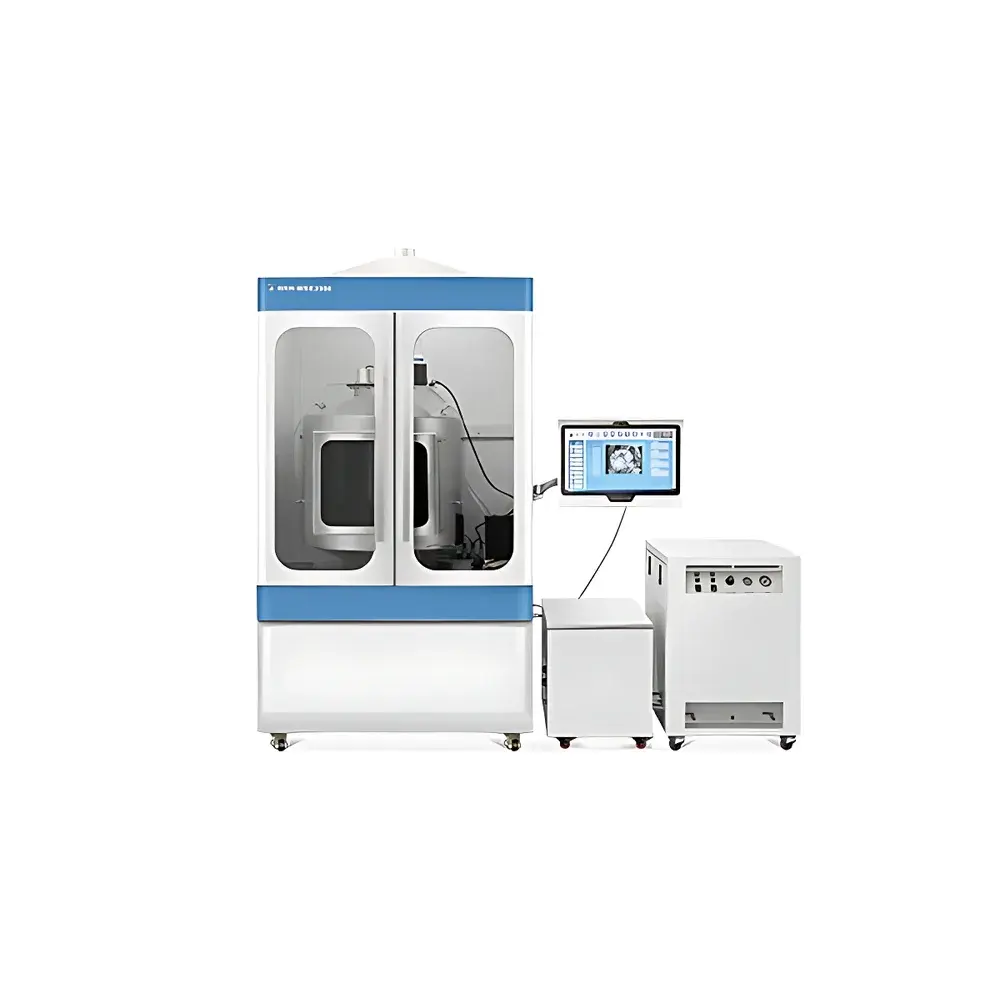
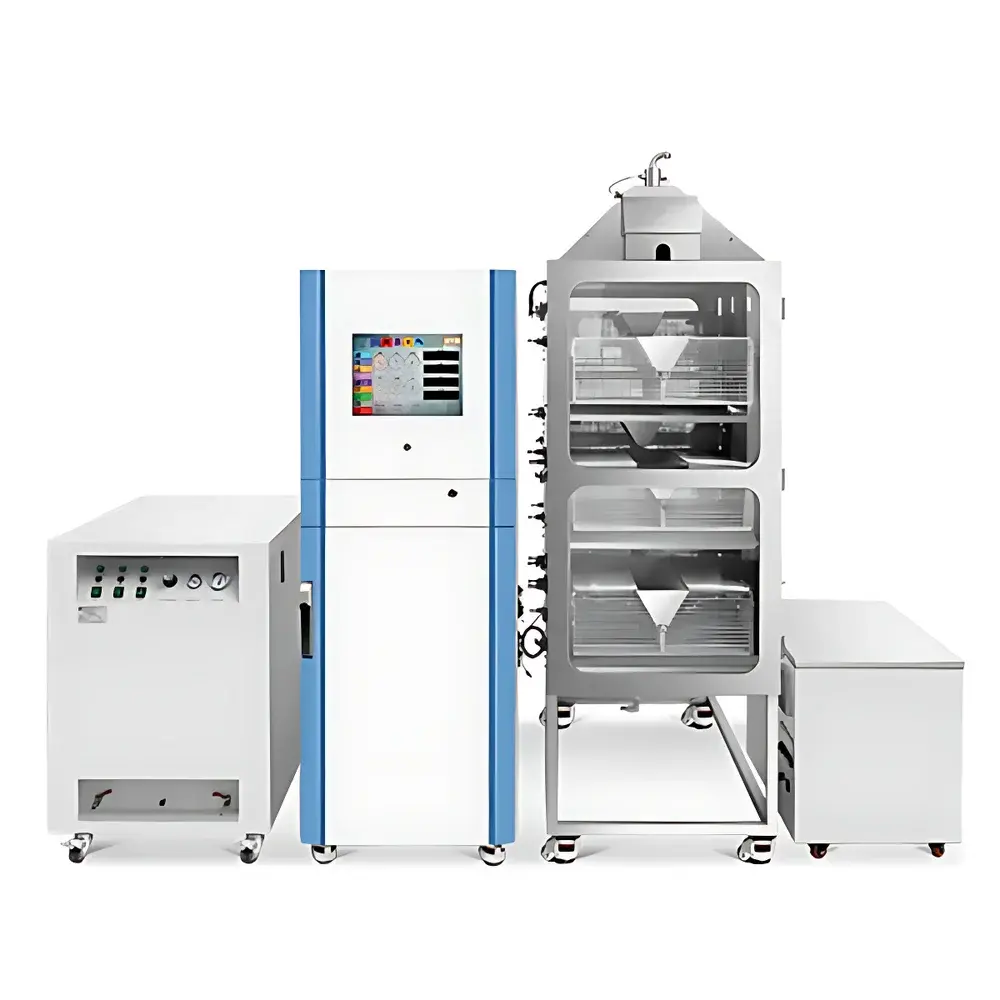
Huiron HRH-WBE3986 / HRH-WBE10786 Whole-Body Dynamic Inhalation Exposure System for Small Rodents
| Brand | Huiron |
|---|---|
| Origin | Beijing, China |
| Model | HRH-WBE3986 / HRH-WBE10786 |
| Animal Capacity | 20–80 rats (single-animal per cage) |
| Aerosol Uniformity | ±8% (gaseous), ±20% (liquid & particulate aerosols) |
| MMAD | 1–3 µm |
| GSD | 1.5–3 |
| Environmental Control | Real-time monitoring of temperature, relative humidity, O₂, CO₂, and chamber pressure differential |
| Flow Control | Independent regulation of inlet, dilution, sampling, and exhaust flow rates |
| Compliance | OECD TG 403, 412, 413, 436 |
Overview
The Huiron HRH-WBE3986 and HRH-WBE10786 Whole-Body Dynamic Inhalation Exposure Systems are engineered for precision-controlled, regulatory-compliant inhalation toxicology studies in small rodents—including rats, mice, and guinea pigs. These systems operate on the principle of whole-body dynamic exposure, where test animals reside in ventilated chambers while being continuously exposed to atmospheres containing gaseous analytes, liquid aerosols, dry powder aerosols, or engineered nanomaterials. Unlike nose-only exposure configurations, whole-body systems maintain natural respiratory behavior and minimize restraint-induced physiological stress—critical for immunotoxicity, chronic toxicity, and pharmacokinetic assessments. The system’s airflow architecture ensures laminar, well-mixed chamber conditions, enabling reproducible dose delivery across all animal positions within the exposure array. Designed specifically for GLP-certified laboratories, it supports acute (24–96 h), subacute (28-day), and subchronic (90-day) inhalation protocols aligned with internationally recognized test guidelines.
Key Features
- Dynamic exposure chamber with active ventilation control, maintaining constant air exchange rate and stable atmospheric composition throughout exposure duration.
- Integrated aerosol generation module capable of producing liquid droplets and solid particulates with aerodynamic mass median diameter (MMAD) between 1–3 µm and geometric standard deviation (GSD) of 1.5–3—optimized for deposition in the alveolar and bronchiolar regions of rodent lungs.
- Real-time environmental monitoring of chamber temperature (±0.5 °C), relative humidity (±3% RH), oxygen concentration (±0.2% O₂), carbon dioxide (±0.1% CO₂), and static pressure differential (±1 Pa).
- Multi-channel flow management system with independent PID-controlled regulation of inlet, dilution, sampling, and exhaust flows—ensuring precise dosimetry and traceable mass balance calculations.
- Modular cage configuration supporting up to 80 individually housed rats (1 animal per cage), preserving individual exposure integrity while enabling group-level statistical analysis.
- Automated exposure sequencing with programmable start/stop timing, elapsed/remaining time tracking, and event-triggered data logging—all synchronized with environmental and flow parameters.
Sample Compatibility & Compliance
The HRH-WBE series accommodates a broad spectrum of test agents: volatile organic compounds (VOCs), reactive gases (e.g., chlorine, ozone), nebulized pharmaceuticals, pesticide formulations, combustion-derived particulates, and engineered nanoparticles (e.g., TiO₂, SiO₂, carbon black). All exposure conditions—including chamber homogeneity, aerosol stability, and environmental parameters—are validated against OECD Test Guidelines 403 (acute), 412 (28-day), 413 (90-day), and 436 (tiered acute), as well as Chinese national standards GB/T 15670.6–2017 through GB/T 15670.26–2017. Chamber uniformity is verified per ISO 16882:2014 (inhalation toxicology—performance criteria for whole-body exposure systems), with gas-phase concentration variation ≤±8% and aerosol mass concentration variation ≤±20% across the animal zone. The system architecture supports full audit trails required under GLP (OECD Principles of Good Laboratory Practice) and facilitates alignment with FDA 21 CFR Part 58 and EU Directive 2004/10/EC.
Software & Data Management
Control and acquisition are managed via a dedicated Windows-based software suite compliant with ALCOA+ principles (Attributable, Legible, Contemporaneous, Original, Accurate, Complete, Consistent, Enduring, Available). The interface provides real-time visualization of all monitored variables, configurable alarm thresholds (e.g., O₂ 0.5%), and automated generation of electronic lab notebooks (eLN) formatted for regulatory submission. All raw sensor data, flow setpoints, exposure logs, and calibration records are stored in encrypted SQLite databases with role-based access control and immutable timestamps. Audit trail functionality captures user actions, parameter changes, and system events—fully satisfying requirements for 21 CFR Part 11 compliance when deployed in regulated environments.
Applications
- Regulatory safety assessment of industrial chemicals, agrochemicals, and consumer product vapors under OECD and national guideline frameworks.
- Inhalation immunotoxicity evaluation, including adjuvant effects, hypersensitivity responses, and mucosal immune modulation.
- Respiratory disease modeling (e.g., COPD, asthma, pulmonary fibrosis) using controlled allergen or irritant exposures.
- Pharmacokinetic and toxicokinetic profiling of inhaled therapeutics, including nanoparticle-based drug carriers.
- Radiological health studies involving radon progeny or radio-labeled aerosols under controlled containment conditions.
- Operational medicine research for military and aerospace applications—evaluating performance degradation and countermeasure efficacy under simulated battlefield or extraterrestrial atmospheric hazards.
FAQ
What species and sizes of animals can be accommodated?
The system is validated for rats (200–500 g), mice (18–35 g), and guinea pigs (300–700 g), with cage dimensions and airflow profiles optimized per species-specific respiratory physiology and activity patterns.
How is aerosol concentration measured and verified during exposure?
Real-time gravimetric sampling via quartz crystal microbalance (QCM) or filter-based collection coupled with offline gravimetric or elemental analysis (e.g., ICP-MS) is supported; chamber concentration homogeneity is confirmed using spatially distributed condensation particle counters (CPCs) and optical particle sizers (OPS) prior to each study.
Is the system compatible with biosafety level 2 (BSL-2) containment?
Yes—optional HEPA-filtered exhaust and negative-pressure isolation modules are available to meet BSL-2 engineering controls per CDC/NIH Biosafety in Microbiological and Biomedical Laboratories (BMBL) 6th Edition.
Can exposure parameters be exported for regulatory submission?
All operational metadata—including flow rates, environmental logs, aerosol characterization reports, and calibration certificates—are exportable in CSV, PDF/A-2, and XML formats compliant with eCTD (ICH M5) and OECD eSubmission specifications.
What maintenance and qualification protocols are recommended?
Annual IQ/OQ/PQ validation per ASTM E2500-13 is advised; daily pre-run checks include leak testing, flow verification, and sensor zero/span calibration using NIST-traceable reference gases and aerosols.






