
Leica Emspira 3 Digital Microscope
| Brand | Leica |
|---|---|
| Origin | Germany |
| Manufacturer Type | Authorized Distributor |
| Product Origin | Imported |
| Model | Emspira 3 |
| Price Range | USD 13,500 – 27,000 (est.) |
| Image Sensor | 12 MP CMOS |
| Maximum Field of View (FoV) | 76.1 mm (H) × 42.8 mm (V) |
| Frame Rate | Up to 60 fps at 3840 × 2160 (4K UHD) |
| Zoom Ratio | 8:1 (motorized, encoded) |
Overview
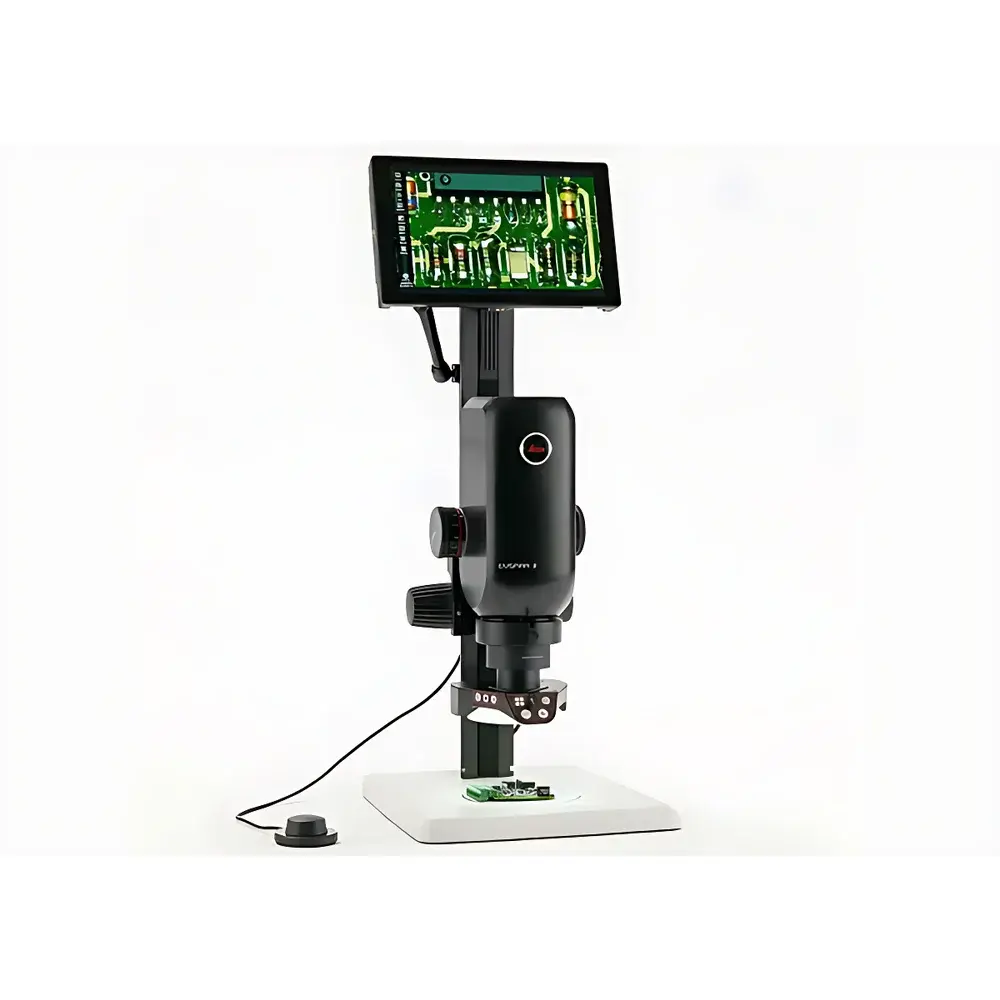
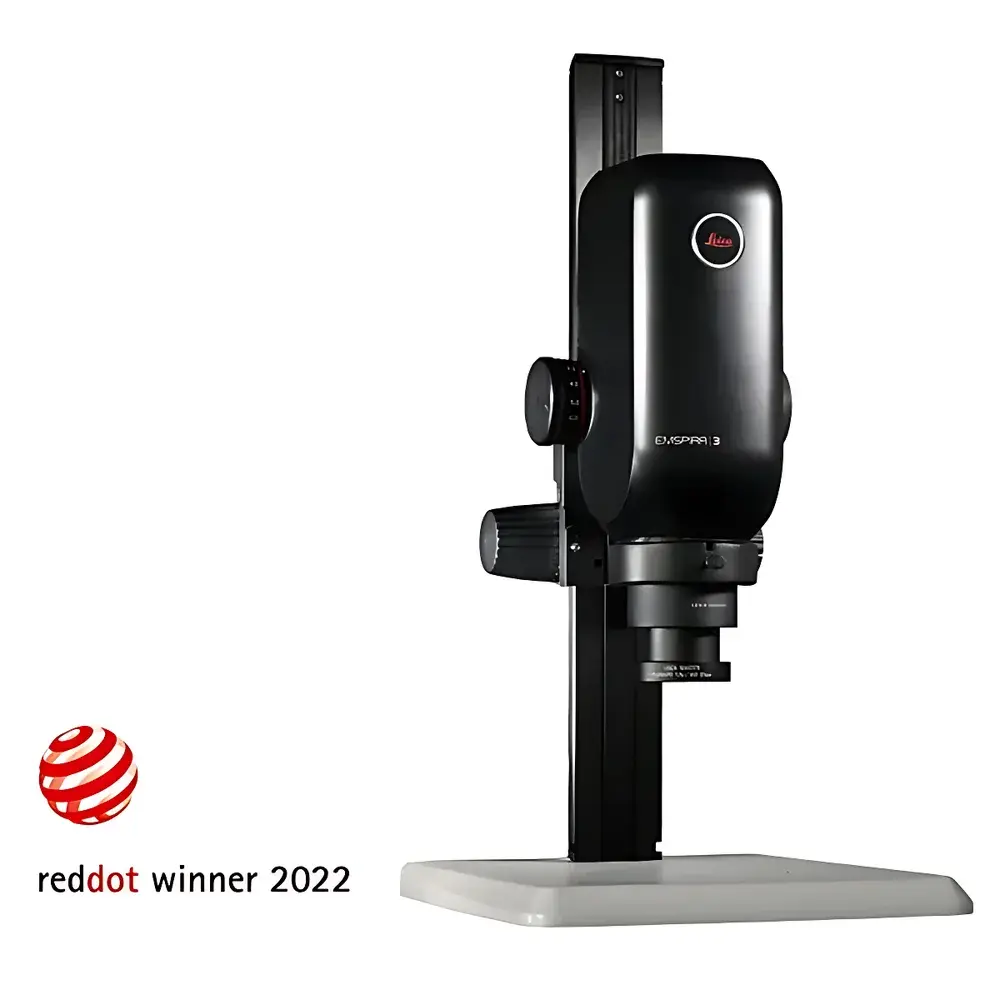
The Leica Emspira 3 Digital Microscope is an industrial-grade, all-in-one optical inspection system engineered for high-precision visual analysis in production, quality control, and laboratory environments. Unlike traditional compound or stereo microscopes requiring eyepieces and external imaging hardware, the Emspira 3 integrates a high-resolution 12-megapixel CMOS sensor, motorized encoded zoom optics, and an embedded 4K display interface into a single robust platform. Its core measurement principle relies on calibrated digital magnification combined with real-time geometric scaling—enabled by the 8:1 encoded zoom mechanism—which ensures traceable, repeatable dimensional analysis without reliance on external software or PC synchronization. Designed for ISO/IEC 17025-compliant labs and GMP-regulated manufacturing lines, the Emspira 3 delivers consistent image fidelity, low-latency 4K video streaming (up to 60 fps), and ergonomic operator interaction—eliminating ocular fatigue associated with prolonged eyepiece use.
Key Features
- Integrated 4K UHD imaging system with native 3840 × 2160 resolution and real-time frame rates up to 60 fps
- Encoded 8:1 motorized zoom lens assembly with automatic scale factor registration—ensuring metrological integrity across magnification ranges
- Large working FoV: up to 76.1 mm (horizontal) × 42.8 mm (vertical) at lowest magnification, enabling rapid area scanning of macro-scale components
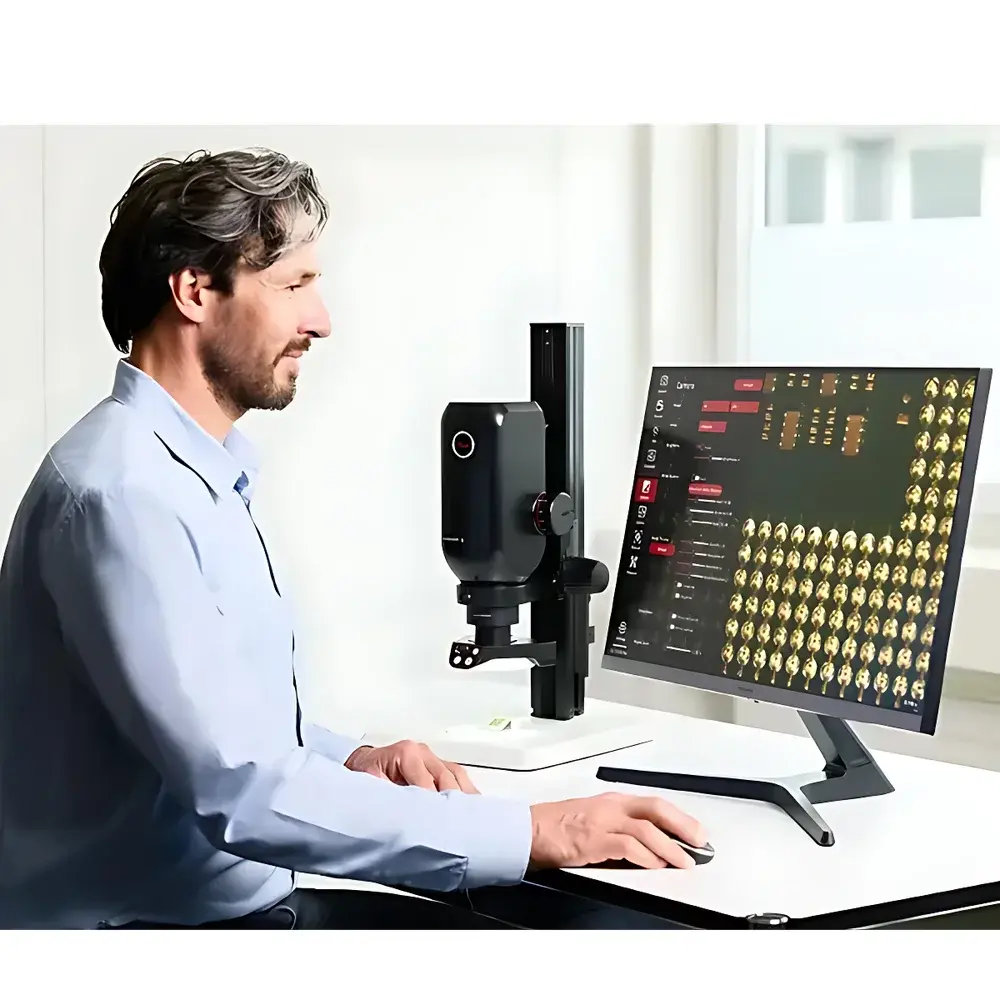
- On-device OSD (On-Screen Display) menu system supporting standalone operation—no PC required for measurement, annotation, comparison, or reporting
- IP21-rated enclosure with AgTreat™ antimicrobial surface treatment—designed for durability and hygiene in shared industrial workspaces
- Multi-modal input support: touchscreen, USB mouse/keyboard, and optional footswitch—enabling hands-free operation during repetitive inspection tasks
- User-customizable UI: non-essential functions can be hidden to reduce cognitive load and align interface complexity with operator proficiency level
Sample Compatibility & Compliance
The Emspira 3 accommodates a broad range of sample types—from printed circuit boards (PCBs) and machined metal parts to polymer components, solder joints, and biological specimens requiring low-magnification morphological assessment. Its modular illumination architecture supports coaxial LED, ring light, side-light, and transmitted base lighting configurations—allowing optimal contrast enhancement for reflective, translucent, or textured surfaces. The system complies with IEC 61000-6-2 (EMC immunity) and IEC 61000-6-4 (EMC emissions) standards. For regulated industries, its audit-ready data handling—including timestamped image capture, user ID logging, and immutable metadata embedding—supports alignment with FDA 21 CFR Part 11 requirements when deployed with network-based storage protocols. It also meets essential safety criteria per EN 60825-1 (laser product classification) and EN 61000-3-2 (harmonic current emissions).
Software & Data Management
While fully functional as a standalone instrument, the Emspira 3 supports seamless integration into enterprise workflows via Gigabit Ethernet and USB 3.0 interfaces. Captured images and annotated reports are saved directly to configurable network folders (SMB/CIFS), local USB drives, or internal storage with embedded EXIF and XMP metadata—including magnification value, timestamp, operator ID, and calibration status. All measurements adhere to ISO 10360-8 traceability guidelines through encoded zoom position feedback. Optional Leica Application Suite (LAS) X software enables advanced post-processing, multi-image stitching, automated defect detection scripting, and GLP/GMP-compliant electronic lab notebook (ELN) export. Audit trails—including parameter changes, measurement edits, and file exports—are retained with cryptographic hashing for regulatory review.
Applications
- Electronics manufacturing: solder joint inspection, component placement verification, and PCB trace continuity assessment
- Precision machining: surface finish evaluation, burr detection, and dimensional validation of turned/milled parts
- Materials science: coating thickness estimation, particle distribution analysis, and fiber orientation mapping
- Failure analysis labs: cross-section documentation, crack propagation tracking, and corrosion morphology characterization
- Educational and technical training: standardized visual assessment protocols with reproducible reference overlays and pass/fail templates
- Medical device QA: visual verification of laser-marked identifiers, edge integrity of stamped components, and packaging seal inspection
FAQ
Does the Emspira 3 require a computer to perform measurements?
No. All quantitative measurements—including length, angle, area, and profile analysis—are executed natively via the embedded processor and OSD interface.
Can measurement results be exported in CSV or PDF format?
Yes. Reports generated on-device can be exported as PDF (with embedded annotations) or CSV (for tabular measurement data) directly to USB or network storage.
Is the zoom calibration traceable to national standards?
Yes. The encoded zoom mechanism provides digitally registered magnification values; calibration certificates per ISO/IEC 17025 are available upon request from authorized Leica service centers.
What lighting options are supported out-of-the-box?
Standard configuration includes adjustable white LED ring light; optional accessories include coaxial illuminator, polarized light module, and transmitted base illuminator.
How is data security managed during network transfer?
All network communications use TLS 1.2 encryption; SMB shares support Active Directory authentication and role-based access control (RBAC) policies.



