
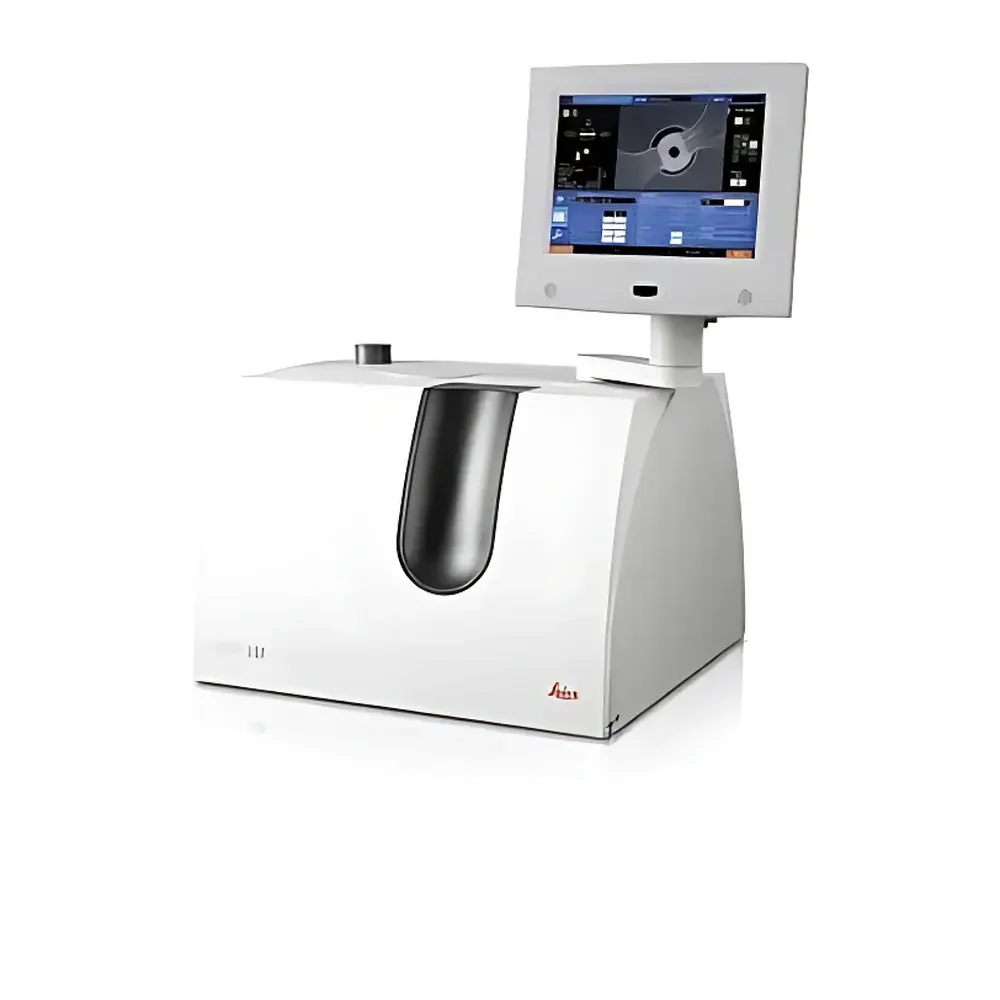
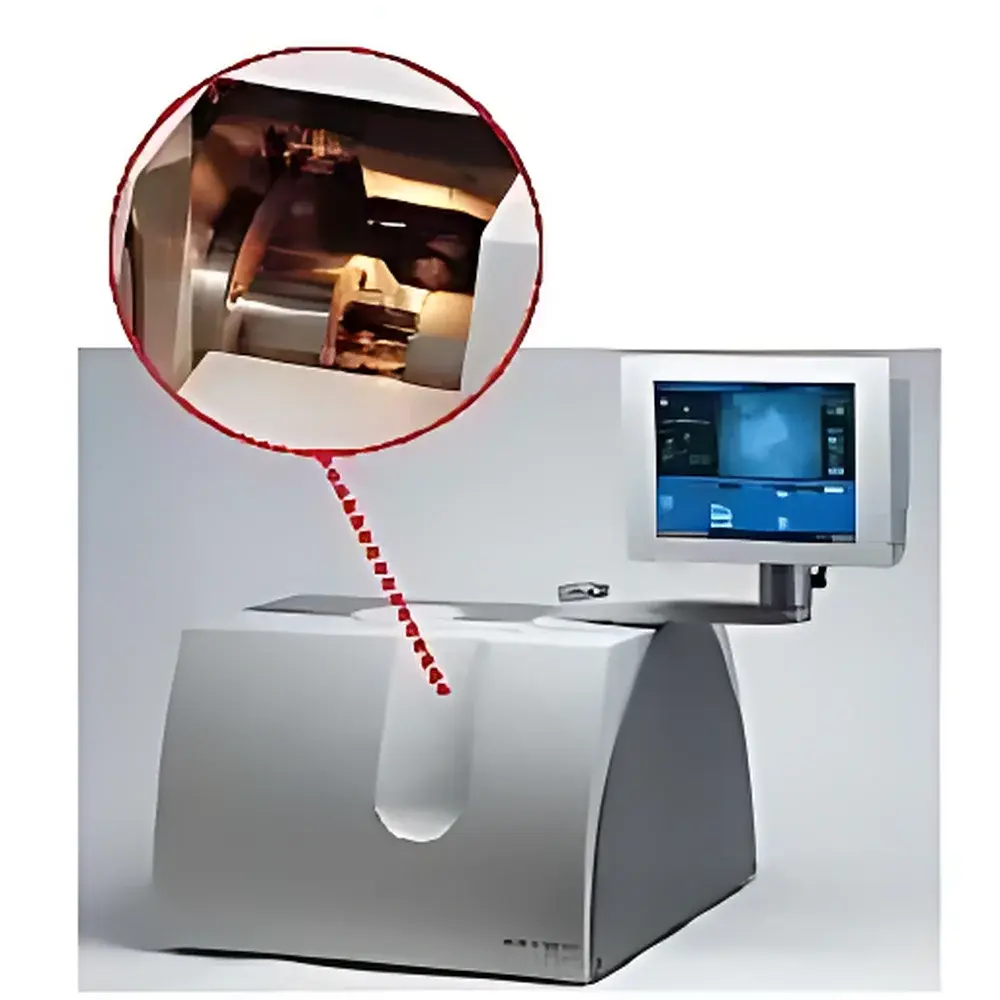
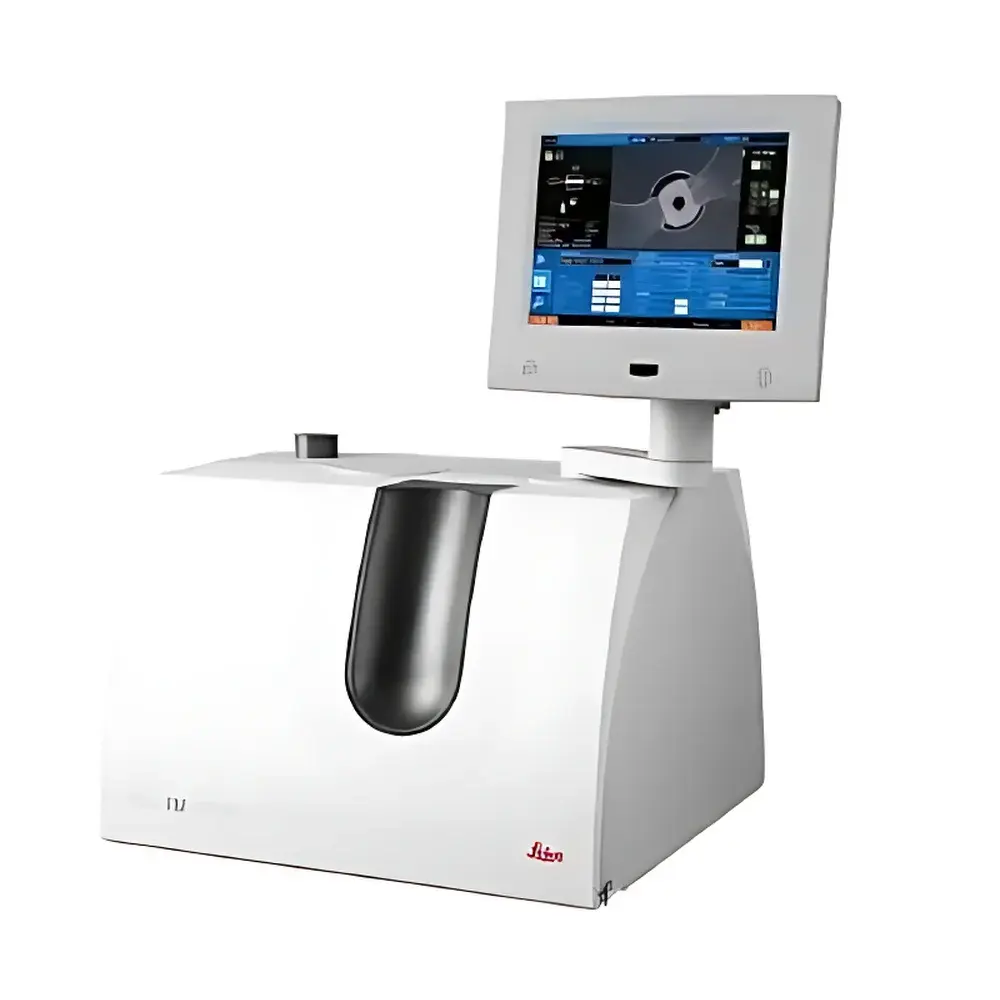
Leica EM RES102 Multi-Function Ion Milling System (Discontinued)
| Brand | Leica |
|---|---|
| Origin | Germany |
| Model | EM RES102 |
| Max Sample Size | Ø25 mm × 12 mm (height) |
| Ion Beam Angle | 0°–90° |
| Ion Energy | 0.8 keV–10 keV |
| Sample Stage Tilt | −120° to +210° |
| Beam Incidence Adjustment | ±45° per gun |
| Sample Rotation | <360° continuous |
| Vertical Sample Oscillation | ±5 mm |
Overview
The Leica EM RES102 Multi-Function Ion Milling System is a discontinued but historically significant high-precision ion beam sample preparation instrument engineered for advanced electron microscopy workflows. It operates on the principle of physical sputtering—using focused, accelerated noble gas ions (typically argon) to remove surface atoms from solid specimens through momentum transfer. This controlled material removal enables fabrication of electron-transparent thin sections for transmission electron microscopy (TEM), as well as high-fidelity surface modification—including cross-sectional polishing, beveling, and contaminant-free cleaning—for scanning electron microscopy (SEM) and focused ion beam (FIB)-correlative analysis. Designed and manufactured in Germany, the EM RES102 integrates dual independently adjustable ion guns, a highly versatile motorized sample stage, and an oil-free ultra-high vacuum (UHV) architecture—ensuring reproducible, contamination-minimized preparation under stringent laboratory conditions.
Key Features
- Dual ion gun configuration with independent angular alignment (±45° per gun), enabling asymmetric milling, differential etching, and simultaneous top/bottom surface processing.
- Wide-range ion energy control (0.8–10 keV), optimized for both gentle surface cleaning (low keV) and rapid bulk material removal (high keV), with fine-tuned voltage regulation for process stability.
- Motorized sample stage offering full rotational freedom (<360° azimuthal rotation), vertical oscillation (±5 mm), and extended tilt range (−120° to +210°), supporting complex geometries and multi-angle milling strategies.
- Ion beam incidence angle continuously adjustable from 0° (normal incidence) to 90° (grazing incidence), facilitating TEM lamella thinning, SEM cross-section polishing, and precision beveling at defined angles (e.g., 35° or 90°).
- Oil-free vacuum system with integrated load-lock pre-chamber, achieving sample exchange in less than 60 seconds while maintaining base pressure below 5×10⁻⁶ mbar—critical for minimizing hydrocarbon contamination during sensitive EM prep.
- Integrated high-resolution CCD video observation system with coaxial illumination, allowing real-time, in-situ monitoring of milling progression without breaking vacuum.
- Full computer control via intuitive touchscreen interface; all parameters—including beam energy, current, tilt, rotation, and dwell time—are programmable, recallable, and storable in user-defined protocols.
Sample Compatibility & Compliance
The EM RES102 accommodates a broad spectrum of inorganic and ceramic materials—including metals, alloys, oxides, semiconductors, geological specimens, and composite laminates—without requiring conductive coating. Its modular sample holder system supports multiple configurations: standard TEM grids (Ø3.0 mm or Ø2.3 mm), FIB-compatible stubs for post-FIB cleaning, large-diameter SEM holders (up to Ø25 mm × 12 mm height), and dedicated beveling stages for controlled-angle cross-sectioning. While no longer actively supported by Leica Microsystems, the system was originally designed and validated in accordance with ISO 14644-1 (cleanroom classification), IEC 61000-6-3 (EMC compliance), and adhered to mechanical safety standards per EN 61000-1-2. Its vacuum and control architecture meets foundational requirements for GLP-compliant documentation when paired with external audit-trail logging software.
Software & Data Management
The native control software provides a deterministic, parameter-driven workflow environment—not reliant on proprietary cloud services or subscription licensing. All milling sequences are saved locally in human-readable ASCII format, including timestamps, ion gun settings, stage positions, and video frame metadata. Protocol files can be archived, version-controlled, and shared across legacy installations. Although not natively compliant with FDA 21 CFR Part 11, the system’s deterministic operation, manual parameter logging, and absence of automated decision logic render it compatible with externally enforced electronic record systems when used within documented SOP frameworks.
Applications
- Preparation of electron-transparent thin foils from bulk inorganic samples for high-resolution TEM and STEM analysis.
- Ion-beam polishing of brittle or beam-sensitive materials (e.g., ceramics, intermetallics) to eliminate mechanical damage introduced during sectioning.
- Controlled-angle beveling for exposing subsurface interfaces, grain boundaries, or multilayer architectures in semiconductor devices and coatings.
- In-situ cleaning of FIB-milled surfaces to remove Ga+ implantation artifacts prior to TEM lift-out.
- Surface decontamination and amorphous layer removal from archaeological, geological, or nuclear materials prior to microanalysis.
- Facilitation of EBSD sample preparation through low-angle ion milling to produce strain-free, damage-free surfaces.
FAQ
Is the Leica EM RES102 still supported by Leica Microsystems?
No—Leica discontinued the EM RES102 in the early 2010s and replaced it with the EM TIC 3X series. Official technical support, spare parts, and firmware updates are no longer available directly from Leica.
Can the EM RES102 prepare biological samples?
It is not recommended for uncoated biological or polymeric specimens due to low thermal conductivity and susceptibility to beam-induced damage; its design targets inorganic, high-melting-point materials.
What vacuum level does the system achieve?
The oil-free pumping system maintains a base pressure of ≤5×10⁻⁶ mbar in the main chamber after pump-down, verified using a cold cathode gauge.
Are third-party service providers still available for maintenance?
Yes—several specialized EM service companies in North America and Europe maintain legacy knowledge and calibrated spares for the EM RES102, though availability is increasingly limited.
Does the system include automated endpoint detection?
No—the EM RES102 relies on operator judgment guided by real-time video feedback and predefined time/energy parameters; it lacks integrated electron yield or secondary ion monitoring for automatic endpoint recognition.



