
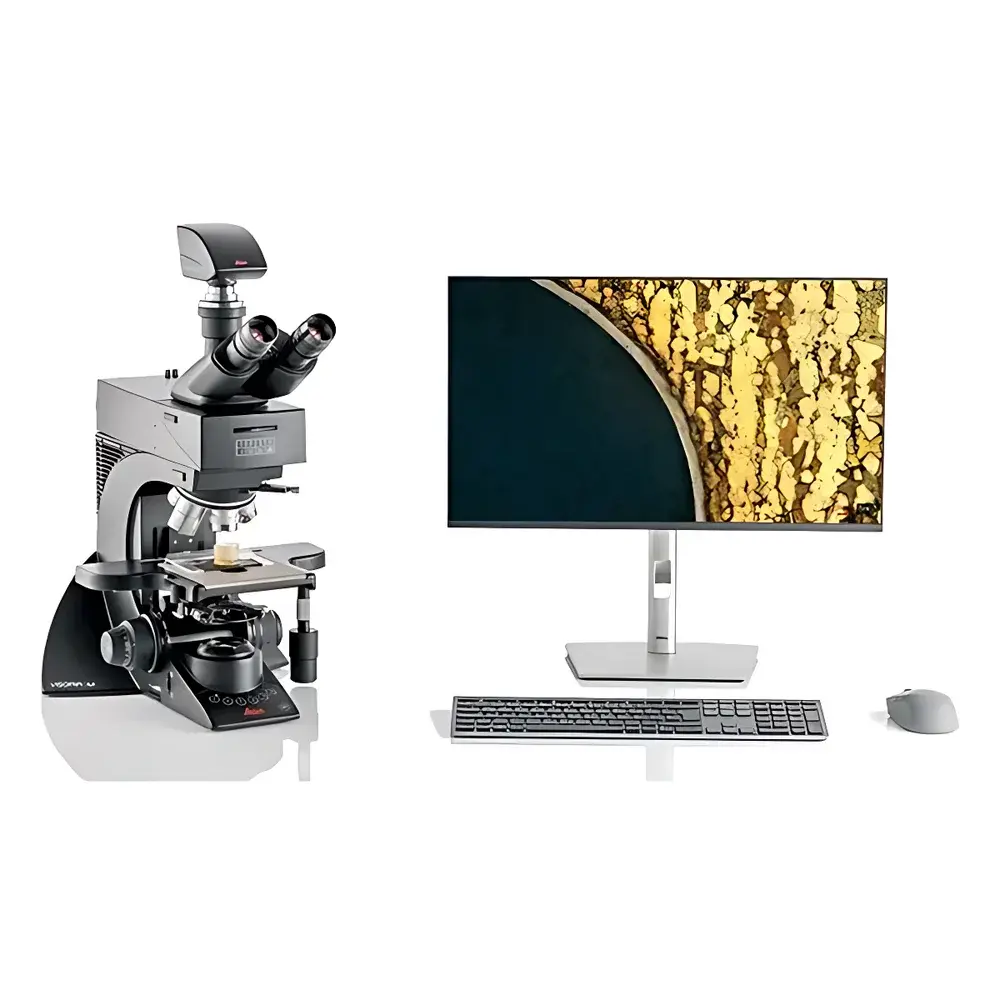
Leica Visoria M Metallurgical Microscope
| Brand | Leica |
|---|---|
| Origin | Germany |
| Model | Visoria M |
| Configuration | Upright |
| Integrated Image Analysis System | Yes |
| Eyepiece Field of View | 20 mm / 22 mm / 25 mm |
| Illumination Management | Automatic Brightness Compensation |
| Focus Mechanism | Three-Step Coaxial Fine Focus with Mechanical Stop |
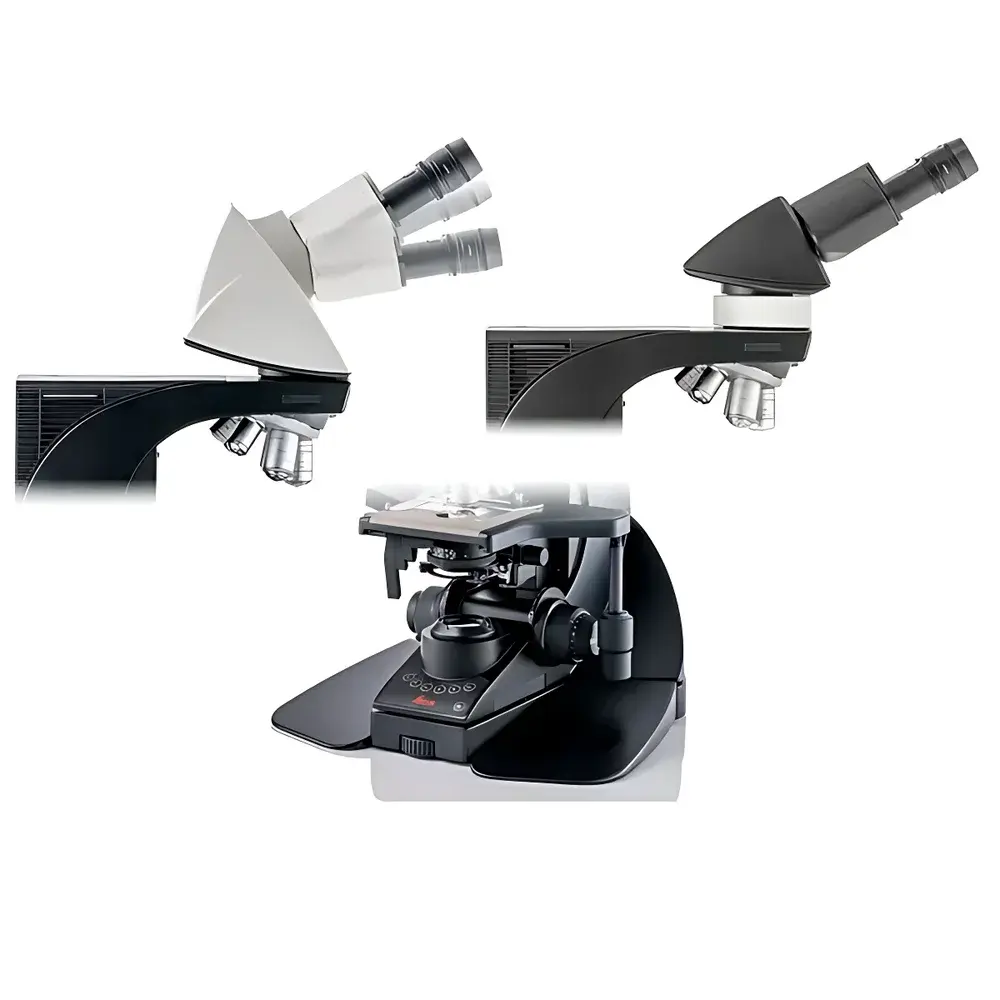
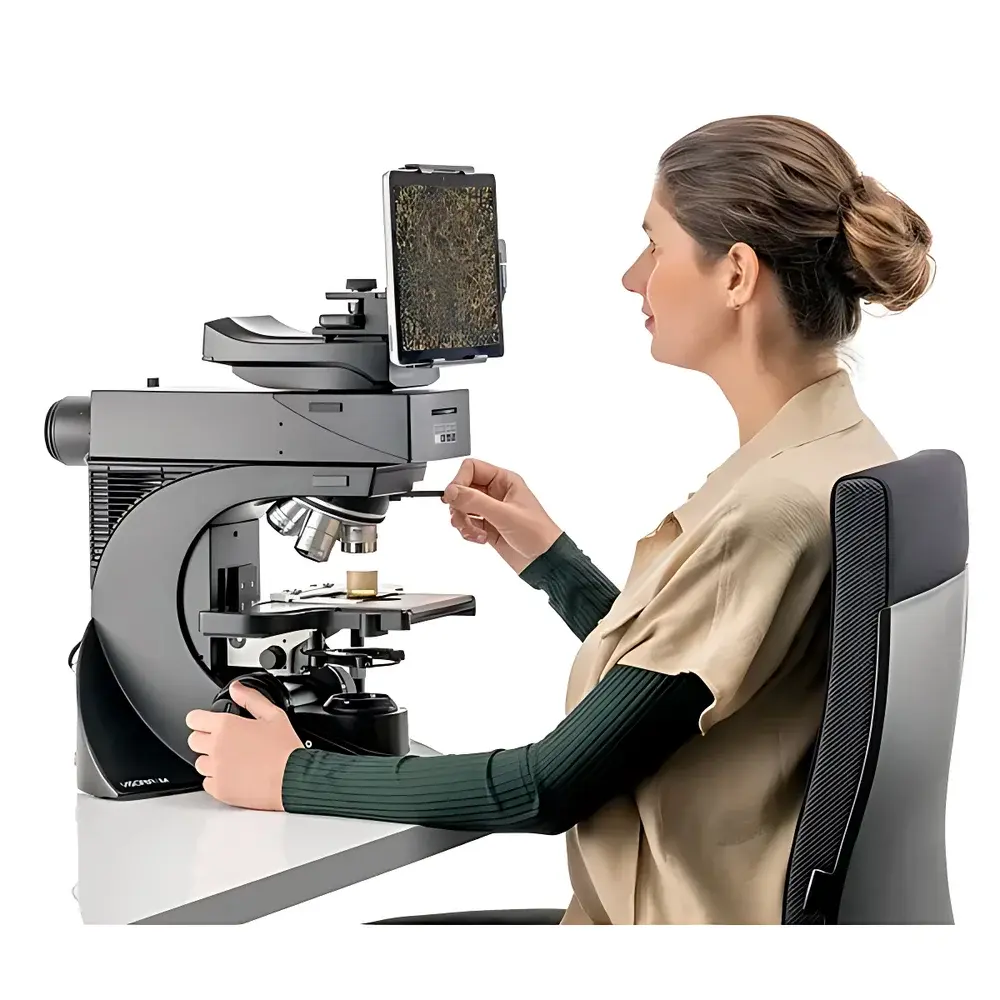
| Stage Control | Ergonomic, Height- and Torque-Adjustable XY Mechanical Stage |
| Handedness | Switchable Between Right- and Left-Hand Operation |
| Image Capture | One-Touch Acquisition with Embedded Metadata Logging |
Overview
The Leica Visoria M Metallurgical Microscope is an upright, research-grade optical instrument engineered for routine metallurgical, materials science, and industrial quality control applications. Designed specifically for reflected-light observation of opaque specimens—including metals, alloys, electronic components, ceramics, and polymer composites—the Visoria M employs Köhler illumination principles with integrated LED-based epi-illumination to ensure uniform, glare-free contrast across the entire field of view. Its optical path is optimized for high-resolution imaging at magnifications ranging from 50× to 1000× (with standard 10× eyepieces and 5×–100× objective lenses), supporting both brightfield and polarized light observation modes. The system adheres to ISO 9022-14 (optical instruments — environmental requirements) and conforms to IEC 61000-6-3 (EMC emission standards), ensuring stable performance in shared laboratory or production-floor environments.
Key Features
- Ergonomic Human-Centered Design: Adjustable stage control height and torque minimize repetitive motion stress; compliant with ISO 11228-3 (manual handling of loads — part 3: handling of low loads) and OSHA-recommended workstation guidelines for microscopy.
- Intelligent Illumination Management: Real-time brightness compensation automatically adjusts LED intensity when switching objectives or changing observation modes—eliminating manual re-balancing and preserving consistent photometric conditions across sessions.
- Color-Coded Optical Alignment System: Aperture diaphragms and objective lenses feature intuitive color coding for rapid, error-resistant configuration—reducing setup time and operator training overhead.
- Three-Stage Coaxial Focus Mechanism: Includes coarse, medium, and fine focus controls with a mechanical focus stop to prevent objective-lens or specimen collision during high-magnification work.
- Bilateral Operability: Fully reversible control layout enables seamless transition between right- and left-handed operation—critical in multi-user academic labs and contract testing facilities.
- Integrated Imaging Workflow: One-touch image capture stores raw TIFF/JPEG files alongside embedded metadata (objective used, magnification, illumination mode, exposure settings), satisfying basic audit-trail requirements under GLP and internal QA protocols.
Sample Compatibility & Compliance
The Visoria M accommodates standard 25 mm and 32 mm diameter metallographic specimens mounted in thermosetting resins or cold-mounting media. Its rigid, vibration-damped base and precision-ground stage support flatness tolerances ≤ 2 µm over 100 mm × 100 mm—meeting ASTM E3-22 (standard guide for preparation of metallographic specimens) dimensional stability criteria. All optical components are sealed against dust ingress (IP52-rated housing), and the microscope complies with EN 61326-1 (electrical equipment for measurement, control, and laboratory use) for electromagnetic compatibility in regulated manufacturing environments.
Software & Data Management
The Visoria M integrates with Leica Application Suite (LAS) X Core software (v4.13+), enabling automated image annotation, particle analysis, grain size quantification per ASTM E112, and phase fraction measurement via threshold-based segmentation. Data export supports CSV, XML, and DICOM-compliant formats for traceability. While the base configuration does not include FDA 21 CFR Part 11-compliant electronic signature modules, optional LAS X Validation Pack provides audit trail logging, user access control, and electronic record integrity verification—suitable for GMP-aligned materials characterization labs.
Applications
- Microstructural evaluation of heat-treated steels, aluminum alloys, and titanium-based aerospace components per ASTM E384 (microhardness testing) and ISO 643 (steel—micrographic determination of ferrite content).
- Failure analysis of solder joints, printed circuit board (PCB) traces, and wire-bond interfaces in electronics manufacturing.
- Quality assurance of additive-manufactured (AM) metal parts—including porosity mapping, melt pool morphology assessment, and interlayer fusion validation.
- Research-level polymer phase morphology studies using polarized light and differential interference contrast (DIC) accessories.
- Teaching laboratories requiring robust, low-maintenance instrumentation for undergraduate metallurgy and materials engineering curricula.
FAQ
Does the Visoria M support digital camera integration?
Yes—it features a C-mount port compatible with Leica DMC series cameras and third-party sensors meeting ISO 10977 (microscope photo-tubes) dimensional specifications.
Is motorized focusing available as an upgrade?
No—motorized Z-drive is not offered for the Visoria M platform; it is intentionally designed as a manually operated, cost-optimized solution for high-throughput routine inspection.
Can the Visoria M be used for fluorescence observation?
No—its optical design lacks excitation filter cubes and dichroic mirrors required for epifluorescence; it is strictly configured for reflected-light contrast techniques (brightfield, darkfield, polarization, DIC).
What is the maximum specimen height clearance?
The working distance allows specimens up to 45 mm in height when using the standard 10× objective; clearance reduces proportionally with higher-magnification objectives.
Are calibration certificates included with purchase?
A factory-issued optical alignment certificate is provided; NIST-traceable calibration for magnification accuracy and stage movement linearity is available upon request as a paid service option.





