
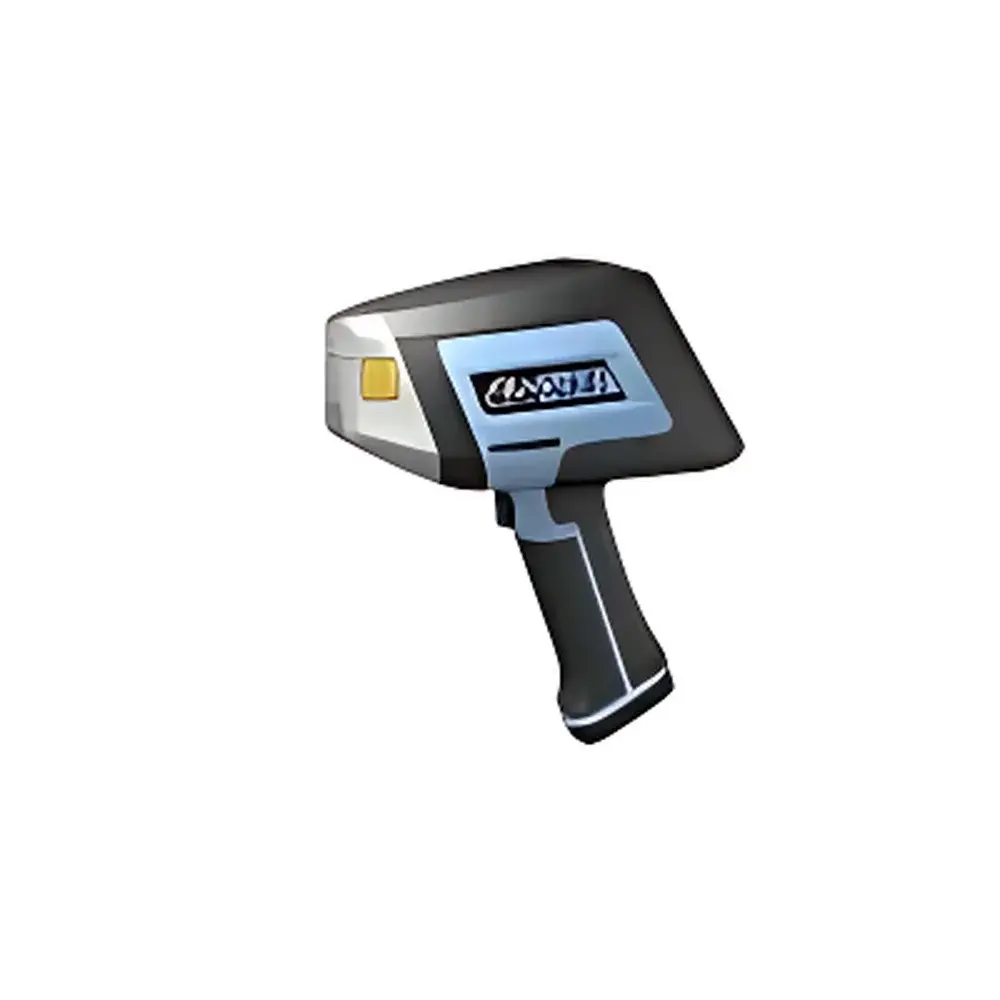
Calibus Handheld LIBS Spectrometer
| Origin | Guangdong, China |
|---|---|
| Manufacturer Type | Distributor |
| Origin Category | Domestic |
| Model | Calibus-1 |
| Price | Upon Request |
Overview
The Calibus Handheld LIBS Spectrometer is an industrial-grade, portable laser-induced breakdown spectroscopy (LIBS) instrument engineered for rapid, in-situ elemental analysis of metallic alloys and engineering materials. Unlike X-ray fluorescence (XRF) analyzers, which lack sensitivity to light elements (Z < 11), the Calibus platform leverages high-energy pulsed laser ablation to generate micro-plasma on the sample surface; emitted atomic/ionic spectral lines are dispersed and resolved across a broad UV–VIS–NIR range (190–900 nm). This enables direct detection of critical low-Z elements—including carbon (C), lithium (Li), beryllium (Be), and boron (B)—with quantitative capability down to sub-0.01 wt% levels under optimized calibration conditions. Designed for field deployment in scrap yards, foundries, pipeline maintenance, and QA/QC laboratories, the system operates without radioactive sources or vacuum requirements, complying fully with IEC 60825-1:2014 Class 4 laser safety standards and certified per GB/T 20937–2018 (Chinese national standard for handheld analytical instrumentation safety).
Key Features
- Broad Spectral Coverage: Full-range optical spectrometer (190–900 nm) with fixed grating and back-illuminated CMOS detector ensures simultaneous acquisition of emission lines from Li (I, 670.8 nm) through U (I, 385.9 nm), eliminating sequential scanning delays.
- High-Resolution Optical Architecture: Optimized Czerny–Turner monochromator with 0.1 nm optical resolution (FWHM) at 500 nm supports accurate peak deconvolution for overlapping transitions (e.g., Fe I 371.99 nm / Cr I 372.00 nm).
- Radiation-Free Operation: Non-ionizing 1064 nm Nd:YAG pulsed laser (≤ 5 mJ/pulse, 1–10 Hz repetition rate) eliminates regulatory constraints associated with XRF-based devices; certified per CNAS-accredited safety testing protocols.
- Single-Shot Material Identification: Automated alloy grade classification completes within ≤ 1 second using embedded multivariate algorithms (PLS-DA and SVM trained on >12,000 reference spectra from ISO 11573-compliant alloy libraries).
- Zero-Prep Sample Analysis: Capable of direct analysis on oxidized, painted, or rough surfaces; no electrical conductivity, grinding, polishing, or acid digestion required—ideal for large-diameter pipes, castings, and heat-affected zones.
Sample Compatibility & Compliance
The Calibus platform accommodates solid conductive and non-conductive samples ≥5 mm in thickness, including stainless steels, aluminum alloys, titanium grades, nickel superalloys, and tool steels. It meets ASTM E2926–22 (Standard Test Method for Determination of Carbon in Steel by LIBS) and supports traceability per ISO/IEC 17025:2017 for accredited testing laboratories. All firmware and calibration data are stored with timestamped audit logs, enabling GLP/GMP-aligned documentation for regulated industries. Device firmware conforms to IEC 62443-3-3 for industrial cybersecurity baseline requirements.
Software & Data Management
Embedded Android-based OS features a 5.5-inch capacitive touchscreen with glove-compatible UI and context-aware guidance. The Calibus Connect software suite (v3.2+) provides real-time spectral visualization, customizable reporting (PDF/CSV), and secure cloud synchronization via TLS 1.3 encrypted channels. Raw spectral data (.spc binary format) and processed results are exportable with full metadata (laser energy, ambient temperature/humidity, integration time, operator ID). Software complies with FDA 21 CFR Part 11 requirements for electronic records and signatures when deployed with optional server-side authentication modules.
Applications
- Positive material identification (PMI) for ASME B31.4/B31.8 pipeline integrity verification
- Scrap metal sorting and recycling stream optimization
- In-process verification of weld filler composition and heat-treat validation
- Quality assurance of additive manufacturing (AM) powder feedstock and build plates
- Failure analysis labs performing root-cause investigation of stress corrosion cracking (SCC) where carbon segregation or interstitial contamination is suspected
FAQ
Does the Calibus require annual radiation safety licensing?
No. As a laser-based, non-radioactive analyzer, it is exempt from nuclear regulatory oversight in the EU, US, Canada, and Australia.
Can it quantify carbon in austenitic stainless steel to ±0.02 wt% accuracy?
Yes—when calibrated against certified reference materials (CRMs) traceable to NIST SRM 2165 and operated under controlled ambient conditions (20–25°C, RH < 60%).
Is spectral library customization supported for proprietary alloys?
Yes. Users may import custom CRM spectra and train new classification models via the offline Calibration Studio desktop application.
What is the typical lifetime of the laser source?
The diode-pumped Nd:YAG module is rated for ≥1 million pulses (≥2 years at 5 Hz continuous use) with automatic energy monitoring and self-compensation.
Does the device support Bluetooth or Wi-Fi for remote diagnostics?
Yes—dual-band Wi-Fi (2.4/5 GHz) and Bluetooth 5.0 LE enable over-the-air firmware updates and remote expert assistance via secure VNC tunneling.
Related Products



