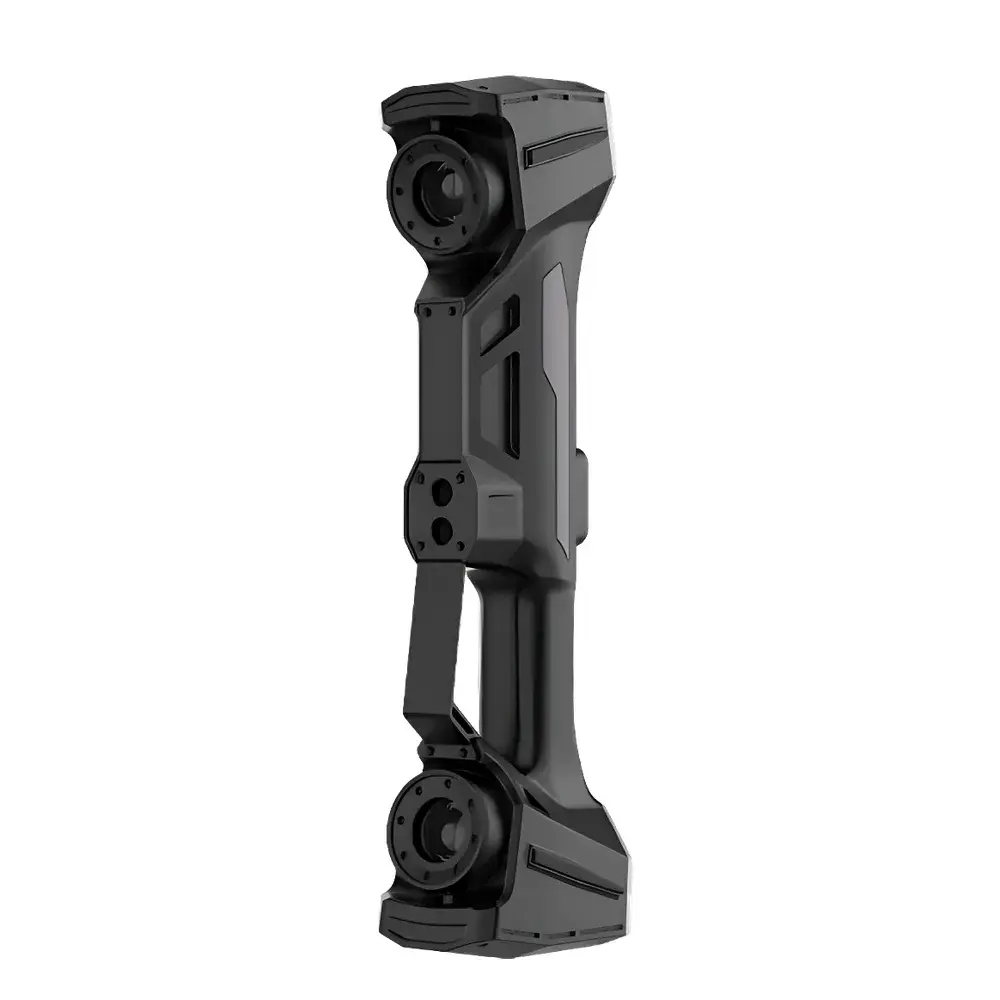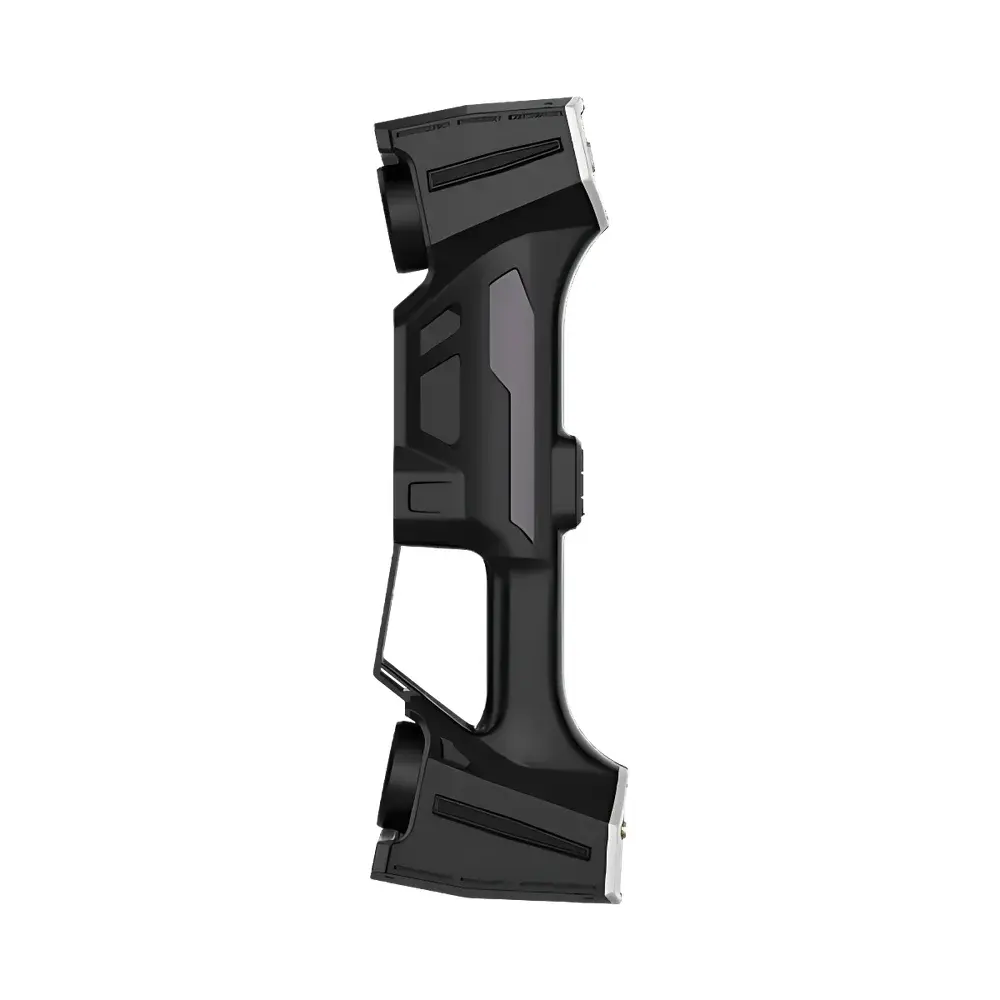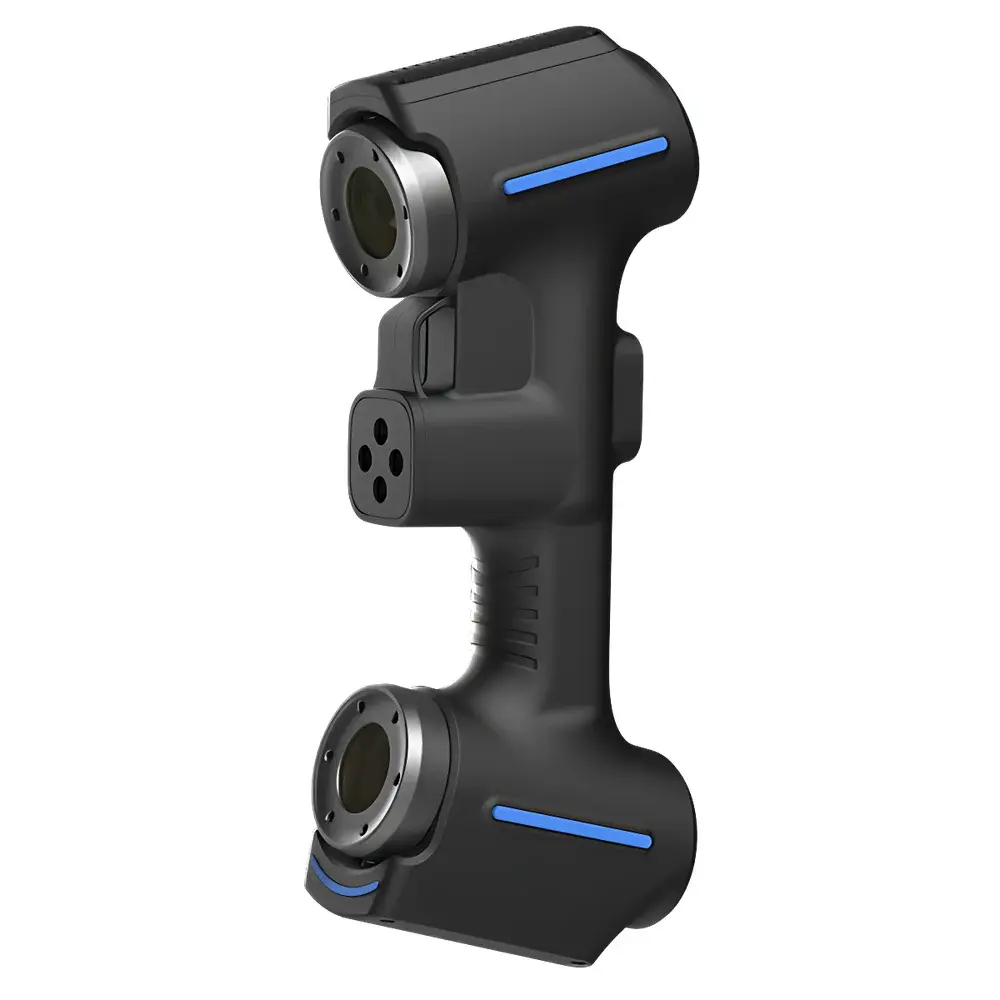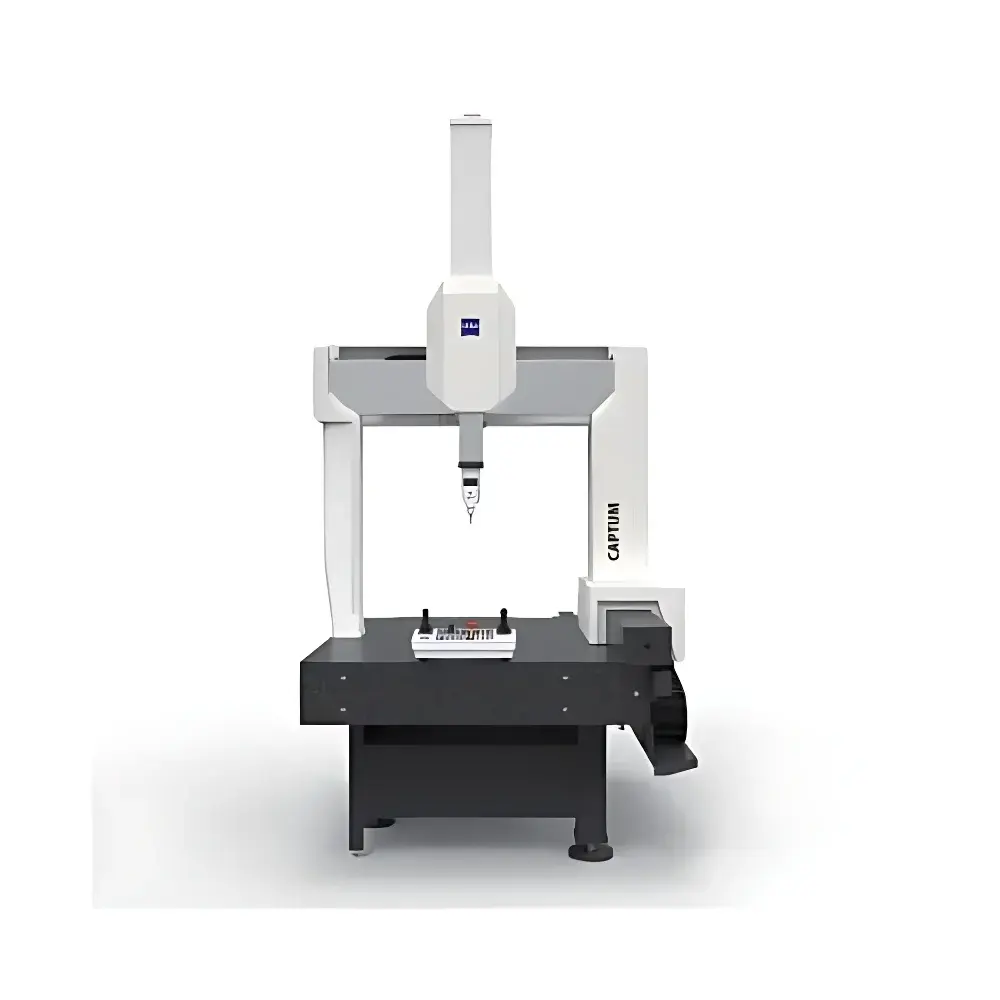
ZEISS CAPTUM Series Coordinate Measuring Machine (CMM)
| Brand | ZEISS |
|---|---|
| Origin | Germany |
| Model | CAPTUM |
| Configuration Options | direct XDT-S/VAST XXT-S or RDS-CR5 rotary probe |
| Available Sizes | 700 × 700 × 600 mm, 700 × 1000 × 600 mm, 900 × 1200 × 600 mm, 900 × 1800 × 600 mm |
| Measurement Principle | Cartesian coordinate metrology with tactile probing |
| Probe Types | Single-point (trigger) and continuous scanning (analog) |
| Environmental Compliance | Designed for ISO 10360-compliant verification environments |
| Sustainability Features | Reusable transport packaging with integrated IoT sensors, Air Saver compressed-air optimization, electrical safety interlocks, and modular shock-absorbing cradle system |
| Regulatory Alignment | Supports GLP/GMP audit trails via optional software modules |
Overview
The ZEISS CAPTUM Series is a high-precision, entry-to-mid-tier coordinate measuring machine engineered for dimensional verification of mechanical components in production-integrated and quality lab environments. Built upon ZEISS’s decades-long heritage in metrology, the CAPTUM platform implements a rigid granite base structure with air-bearing guideways and thermally stable carbon-fiber bridge design to ensure long-term geometric accuracy under variable workshop conditions. Its measurement principle follows ISO 10360-2:2020-defined Cartesian coordinate metrology—relying on calibrated tactile probing systems to determine point cloud data in three orthogonal axes (X, Y, Z). Unlike optical or laser-based CMMs, the CAPTUM prioritizes tactile repeatability and traceable uncertainty budgets for features requiring contact-based assessment: hole positions, thread profiles, GD&T callouts (e.g., position, concentricity, flatness), and form deviations in machined surfaces. The system is certified to meet ZEISS’s internal MPE (Maximum Permissible Error) specifications aligned with VDI/VDE 2617 and ISO 10360-2 standards, ensuring compliance for first-article inspection, supplier audits, and PPAP submissions.
Key Features
- Modular mechanical architecture supporting four standard envelope sizes: 700 × 700 × 600 mm, 700 × 1000 × 600 mm, 900 × 1200 × 600 mm, and 900 × 1800 × 600 mm—enabling scalability without redesigning inspection workflows.
- Dual-probe compatibility: Direct-mount XDT-S or VAST XXT-S scanning probes for high-density surface capture; optional RDS-CR5 rotating probe head for complex geometry access and automated multi-angle measurement.
- Air Saver technology reduces compressed-air consumption by up to 40% during probe actuation cycles—lowering operational cost and minimizing pneumatic noise in shared lab spaces.
- Integrated shock-absorbing transport cradle with reusable polymer composite frame and recyclable steel-reinforced brackets—certified for ≥50 return cycles per IEC 62474 material declaration requirements.
- Embedded IoT sensors within the transport packaging monitor vibration exposure, tilt angle, and ambient temperature during shipment—feeding pre-installation diagnostics into CALYPSO or ZEISS INSPECT software for predictive commissioning scheduling.
- Electrical safety interlock system compliant with EN 60204-1, preventing unintended axis motion during probe change or maintenance access.
Sample Compatibility & Compliance
The CAPTUM Series accommodates workpieces ranging from small CNC-machined inserts (<50 g) to large sheet-metal stampings (up to 1,200 kg, depending on configuration). Its open-structure design permits easy loading of irregularly shaped tooling, injection molds, and die-cast housings. Standard compatibility includes ISO 10360-5:2020-compliant verification using calibrated step gauges, sphere artifacts, and ring gauges. For regulated industries, the system supports traceability to national metrology institutes (e.g., PTB, NIST) through documented calibration certificates and uncertainty budgets. Optional software modules enable 21 CFR Part 11–compliant electronic signatures, audit trail logging, and user role-based access control—meeting FDA, ISO 13485, and IATF 16949 documentation requirements.
Software & Data Management
All CAPTUM systems ship with ZEISS CALYPSO v7.x or newer, offering full GD&T evaluation per ASME Y14.5-2018 and ISO 1101:2017. Measurement programs are exportable as XML or STEP AP242 for integration with PLM platforms (e.g., Teamcenter, Windchill). Raw point-cloud data can be archived in ZEISS-native .ZCP format or exported as ASCII CSV, IGES, or STL for third-party CAE analysis. Optional ZEISS INSPECT software provides real-time statistical process control (SPC) dashboards with Cp/Cpk calculation, trend analysis, and automated nonconformance reporting. All software modules adhere to ISO/IEC 17025:2017 clause 7.7 on measurement traceability and data integrity.
Applications
The CAPTUM Series serves Tier 1 and Tier 2 suppliers across automotive, aerospace, medical device manufacturing, and precision tooling sectors. Typical use cases include: verification of CNC-milled aluminum housings against nominal CAD models; positional tolerance validation of multi-hole patterns in stamped chassis components; profile deviation analysis of plastic injection-molded connectors; and first-article inspection of hardened steel mold inserts prior to production release. Its compact footprint and low floor-loading requirement (≤10 kN/m²) make it suitable for cleanroom-adjacent labs and shop-floor metrology cells—without requiring structural reinforcement.
FAQ
What environmental certifications apply to the CAPTUM transport packaging?
The reusable cradle system complies with ISO 14040/14044 life-cycle assessment guidelines and carries an EPD (Environmental Product Declaration) registered with IBU (Institut Bauen und Umwelt e.V.).
Can CAPTUM be integrated into automated production lines?
Yes—via standardized Ethernet/IP or PROFINET interfaces, enabling PLC-triggered measurement cycles and pass/fail signal output to MES systems.
Is thermal compensation available as standard or optional?
Thermal error mapping using ZEISS TTM (Temperature Tracking Module) is optional but recommended for environments with ±2°C diurnal variation.
Does CAPTUM support ISO 50001 energy management reporting?
Power consumption data (kW/h per measurement cycle) is logged in CALYPSO’s extended report module and exportable for EnMS integration.
What is the maximum permissible part weight for each size configuration?
Standard load capacity is 50 kg (700-series), 100 kg (900-series); heavy-duty variants support up to 1,200 kg with reinforced granite base and custom fixturing—subject to site survey approval.