
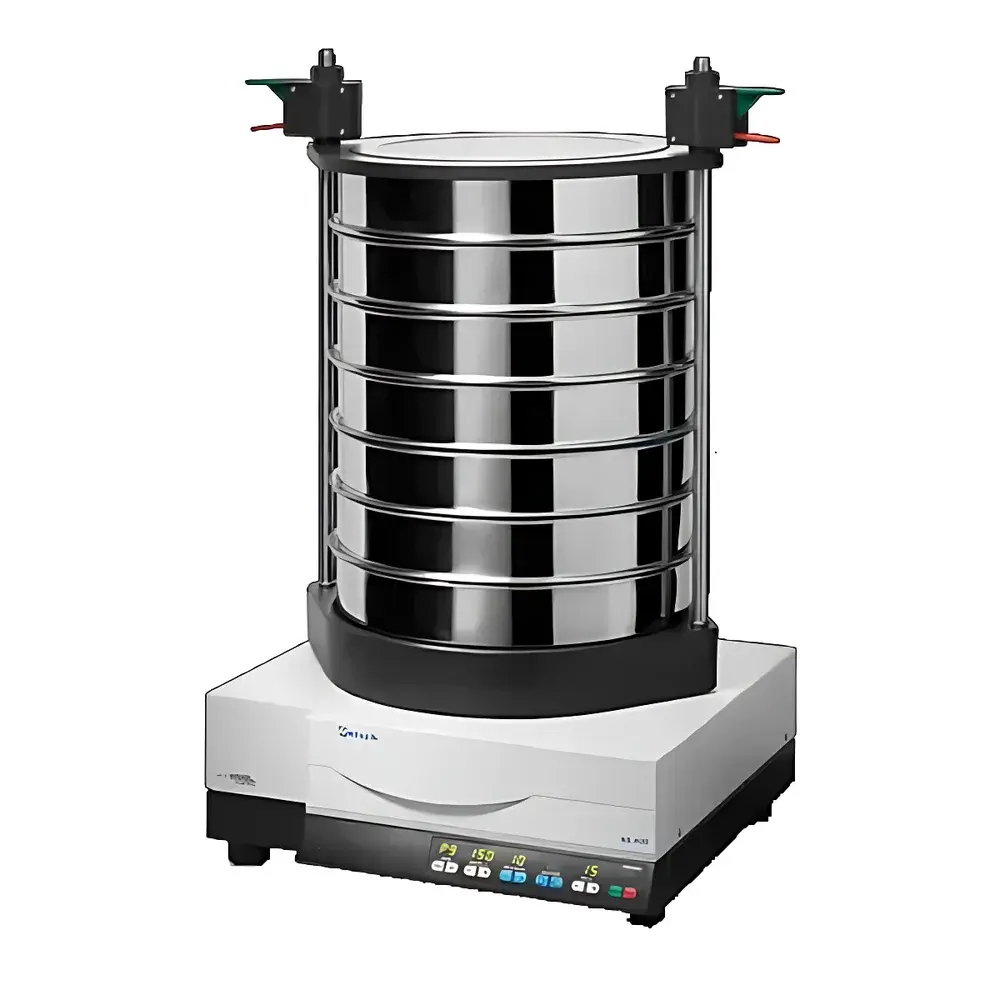
RETSCH AS 400 CONTROL Horizontal Circular Sieve Shaker
| Brand | RETSCH |
|---|---|
| Origin | Germany |
| Model | AS 400 CONTROL |
| Principle | Horizontal circular vibration sieving (DIN 53477 compliant) |
| Measurement Range | 45 µm – 63 mm |
| Max. Load | 5 kg |
| Max. Sieve Stack Height | 510 mm |
| Speed | 50–300 rpm (digital adjustment) |
| Time Setting | 1–99 min |
| Intermittent Mode Duration | 1–10 min |
| Programmable SOPs | 9 |
| Sieve Diameters Supported | 100 mm, 200 mm, 203 mm (8"), 305 mm, 315 mm, 400 mm |
| Max. Sieve Stages | 7 / 9 / 17 |
| Max. Sieve Stack Mass | 15 kg |
| Enclosure Rating | IP20 |
| Power Supply | 100–240 V, 50/60 Hz, single-phase |
| Dimensions (W×H×D) | 540 × 260 × 507 mm |
| Net Weight | ~70 kg |
| Compliance | CE, ISO 9001 measurement equipment requirements, GLP-ready with audit trail-capable software integration |
Overview
The RETSCH AS 400 CONTROL is a high-precision horizontal circular sieve shaker engineered for reproducible, standardized dry particle size analysis in quality control and R&D laboratories. Operating on the principle of horizontal circular vibration—strictly aligned with DIN 53477—it generates uniform, low-amplitude orbital motion that ensures consistent particle stratification and efficient separation across multi-layer sieve stacks. Unlike vertical or tapping-based systems, this motion minimizes particle agglomeration and avoids preferential orientation of anisotropic particles, thereby improving resolution and repeatability—particularly critical for irregularly shaped or cohesive powders. The instrument supports sieve diameters from 100 mm to 400 mm and accommodates up to 17 sieve levels in configurations optimized for either high-throughput screening or fine-resolution fractionation (down to 45 µm). Its robust cast-aluminum base and dynamically balanced drive mechanism ensure long-term mechanical stability and minimal energy transmission to the lab bench.
Key Features
- Digitally controlled horizontal circular vibration per DIN 53477, with adjustable speed (50–300 rpm) and time (1–99 min)
- Programmable intermittent mode (1–10 min intervals) to prevent over-sieving and thermal degradation of heat-sensitive samples
- Internal memory for up to 9 user-defined SOPs—including speed, duration, pause cycles, and acceleration profiles—enabling walk-away operation and cross-shift consistency
- Integrated EasySieve software via RS232 interface for automated data capture, real-time monitoring, and export of mass-per-fraction reports in CSV or PDF format
- Ergonomic tilt-adjustable control panel with intuitive LED display and tactile keypad; no tools required for sieve stack assembly or clamping
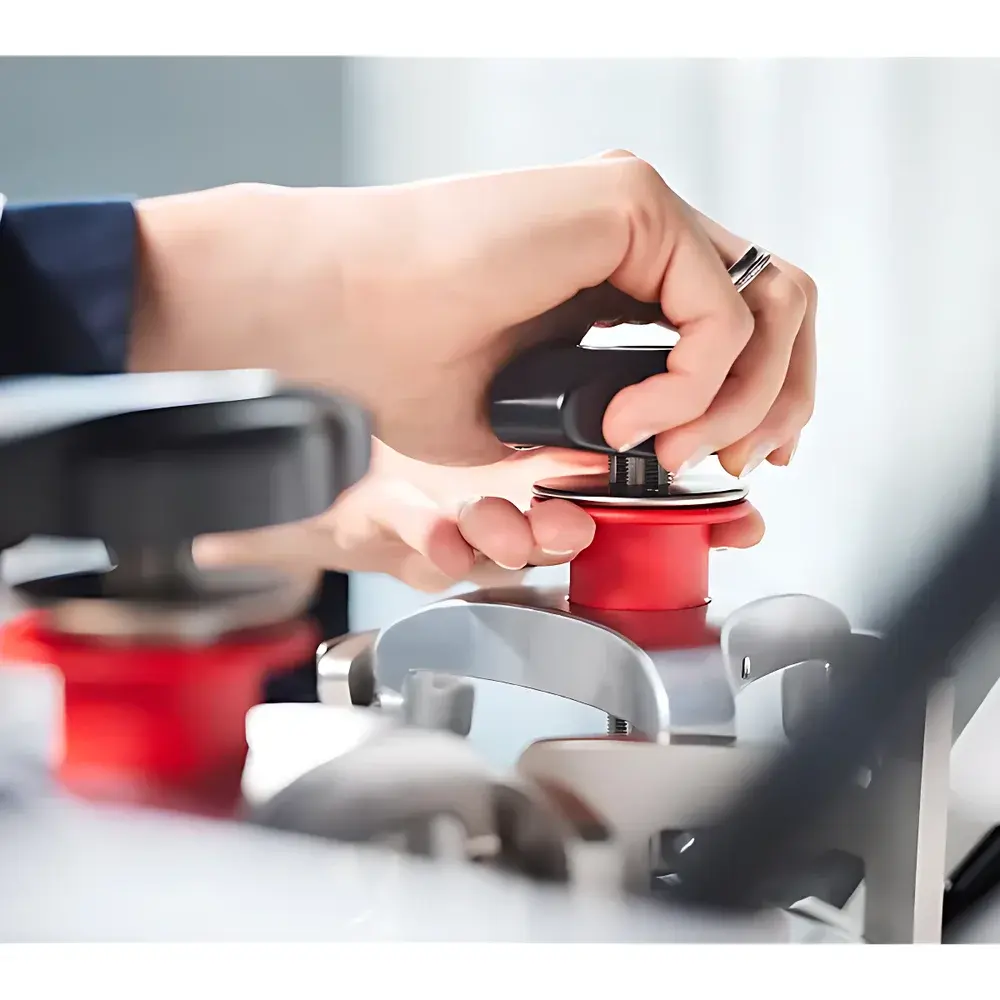
- Three clamping options (“Standard”, “Comfort”, and dry-sieving–specific variants) ensure secure fixation across diverse sieve frame geometries and material densities
- IP20-rated enclosure meets general laboratory environmental requirements; CE-marked and compliant with IEC 61000-6-2/6-3 for electromagnetic compatibility
Sample Compatibility & Compliance
The AS 400 CONTROL is validated for dry sieving of free-flowing and moderately cohesive powders, granules, crushed solids, and milled aggregates. It is routinely deployed in industries where regulatory traceability and method standardization are mandatory—including pharmaceutical manufacturing (aligned with USP and EP 2.9.31), construction materials testing (ASTM C136, EN 933-1), and catalyst quality assurance (ISO 13320:2020 reference methodology). All operational parameters—including runtime, rotational frequency, and intermission intervals—are digitally logged with timestamping, supporting GLP/GMP documentation requirements. Optional calibration certificates (traceable to national metrology institutes) and periodic verification protocols are available to satisfy ISO/IEC 17025 accreditation needs for accredited testing laboratories.
Software & Data Management
EasySieve software provides full remote control, real-time parameter visualization, and automated report generation. It records raw mass data per sieve fraction, calculates cumulative undersize/oversize distributions, and exports results compatible with LIMS and ELN platforms. Audit trail functionality logs all user actions—including parameter edits, SOP selections, and calibration events—with immutable timestamps and operator IDs. Data files adhere to FDA 21 CFR Part 11 compliance when deployed with electronic signature modules and system access controls. The RS232 interface ensures deterministic communication latency and backward compatibility with legacy lab infrastructure.
Applications
- Agriculture: Grain sizing, fertilizer granule distribution, soil aggregate stability assessment
- Pharmaceuticals: Excipient grading, API particle batch release testing, blend uniformity verification
- Materials Science: Ceramic powder classification, metal additive manufacturing feedstock qualification, battery cathode/anode material screening
- Environmental: Sediment grain-size analysis per ASTM D422, recycled aggregate gradation in circular economy workflows
- Food & Feed: Flour fineness testing (ISO 565), spice particle homogeneity, pet food kibble size distribution
- Geology & Mining: Rock fragment analysis, ore liberation studies, tailings characterization
FAQ
Is wet sieving supported on the AS 400 CONTROL?
No—this model is designed exclusively for dry sieving applications. Wet sieving requires specialized liquid-handling components, sealed drive housings, and corrosion-resistant materials not integrated into the AS 400 CONTROL platform.
Can the instrument be integrated into an automated laboratory workflow?
Yes—via RS232 serial command protocol, it supports trigger-based start/stop and status polling. Integration with PLC-controlled sample handling systems or robotic arms is feasible using custom script wrappers or LabVIEW drivers.
What sieve stack height tolerance is maintained during extended operation?
The rigid aluminum support column and precision-machined clamping flanges maintain ≤ ±0.1 mm axial runout over 10,000 hours of cumulative operation, ensuring consistent amplitude transmission across all sieve levels.
Does RETSCH provide validation documentation for GMP environments?
Yes—IQ/OQ documentation packages, including test protocols, acceptance criteria, and executed reports, are available upon request and align with Annex 15 and ASTM E2500 guidelines.
How frequently should performance verification be performed?
RETSCH recommends daily verification using certified reference sieves (e.g., ISO 565 glass microspheres) and annual full calibration by an accredited service provider per ISO/IEC 17025.



