
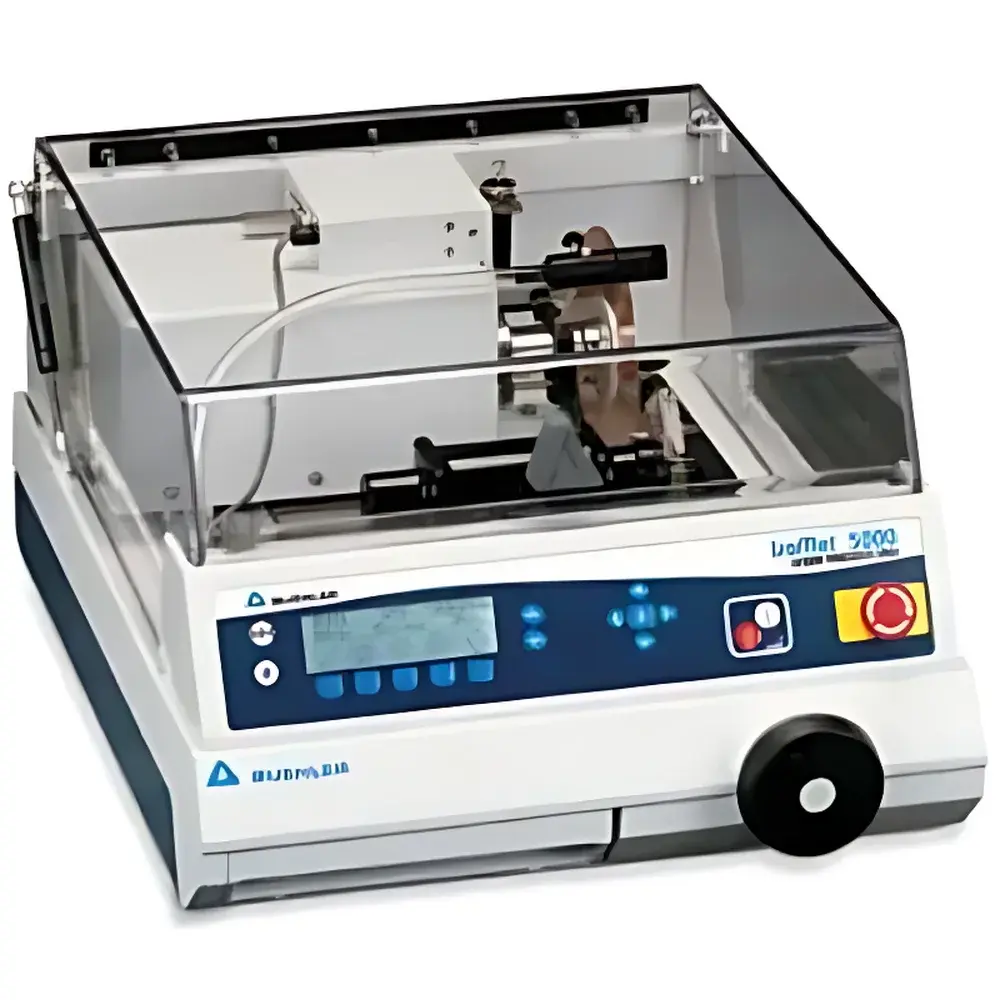
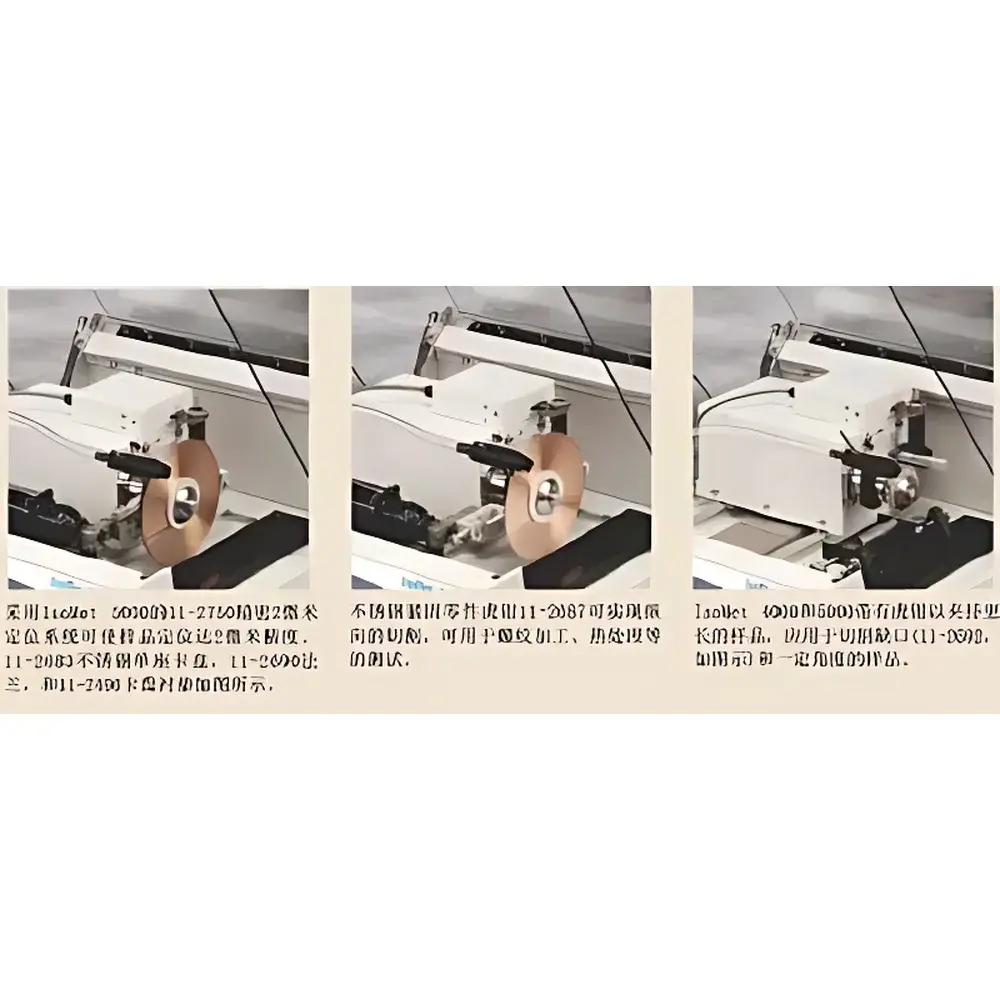
Buehler IsoMet 4000/5000 Linear Precision Cutting System
| Brand | Buehler |
|---|---|
| Origin | USA |
| Model | IsoMet 4000/5000 (Discontinued) |
| Cutting Speed | 200–5000 rpm |
| Blade Diameter | 75–200 mm |
| Max Cutting Capacity | Ø50 mm or 150 mm × 50 mm × 13 mm |
| Positioning Resolution | 1 µm (IsoMet 4000), 2 µm (IsoMet 5000) |
| Cooling | Integrated recirculating coolant system |
| Programmability | 25 user-defined protocols (IsoMet 5000) |
| Compatibility | Full accessory and chuck interchangeability between IsoMet 4000 and 5000 series |
Overview
The Buehler IsoMet 4000/5000 Linear Precision Cutting System is an engineered solution for high-fidelity sample sectioning in materials science, metallurgy, geology, electronics, and biomedical research laboratories. Based on linear motion-driven blade advancement—rather than traditional pendulum or rotary arm mechanisms—this system delivers consistent, low-deformation cuts across heterogeneous and brittle specimens. Its core principle relies on controlled, unidirectional feed of a rotating abrasive or diamond-impregnated blade into the specimen under programmable force and velocity profiles. This architecture minimizes lateral stress, thermal buildup, and microcracking—critical for preserving microstructural integrity prior to metallographic analysis, SEM preparation, or failure investigation. Designed as a compact, benchtop instrument with a low-profile footprint, the IsoMet 4000/5000 integrates seamlessly into ISO 17025-accredited labs, GLP-compliant workflows, and R&D environments where reproducible sample geometry directly impacts downstream analytical validity.
Key Features
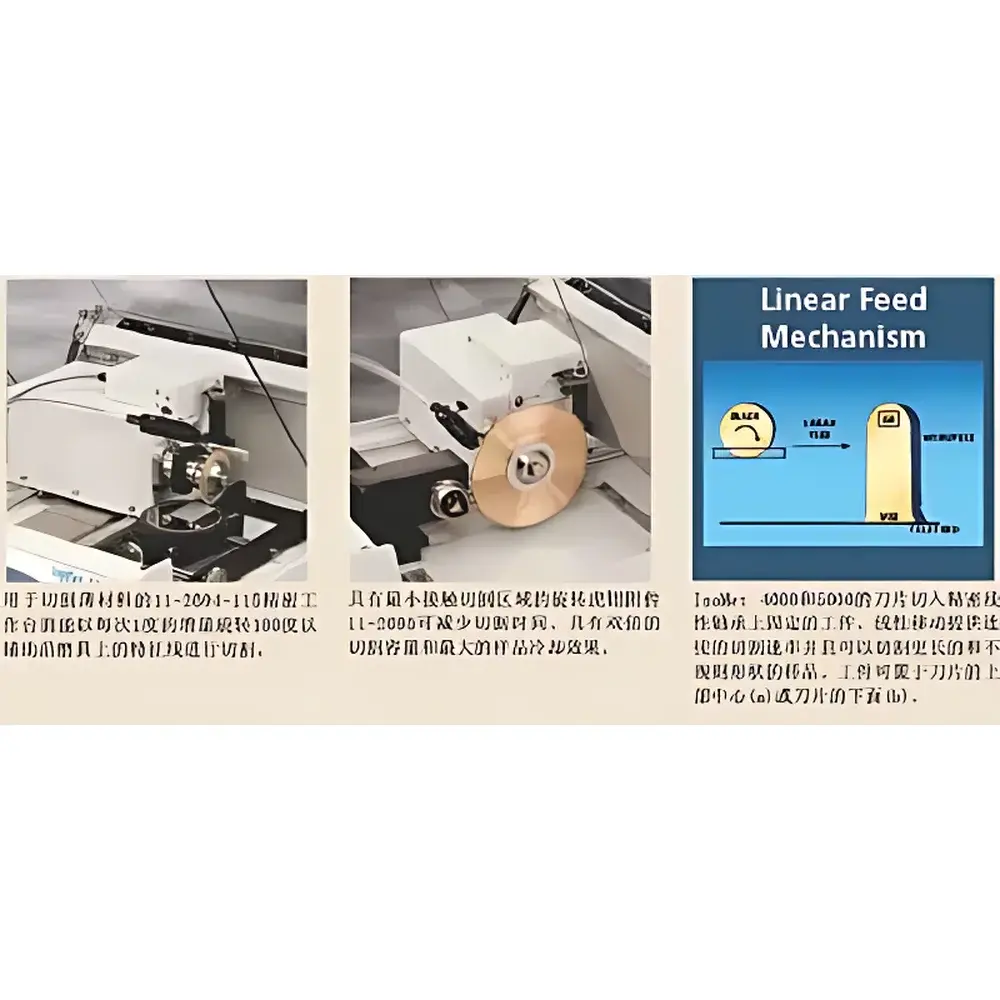
- Linear feed mechanism ensures uniform blade engagement and eliminates arc-induced edge distortion common in swing-arm cutters.
- Variable-speed motor (200–5000 rpm) enables optimization for diverse materials—from soft polymers to hardened tool steels—without manual gear changes.
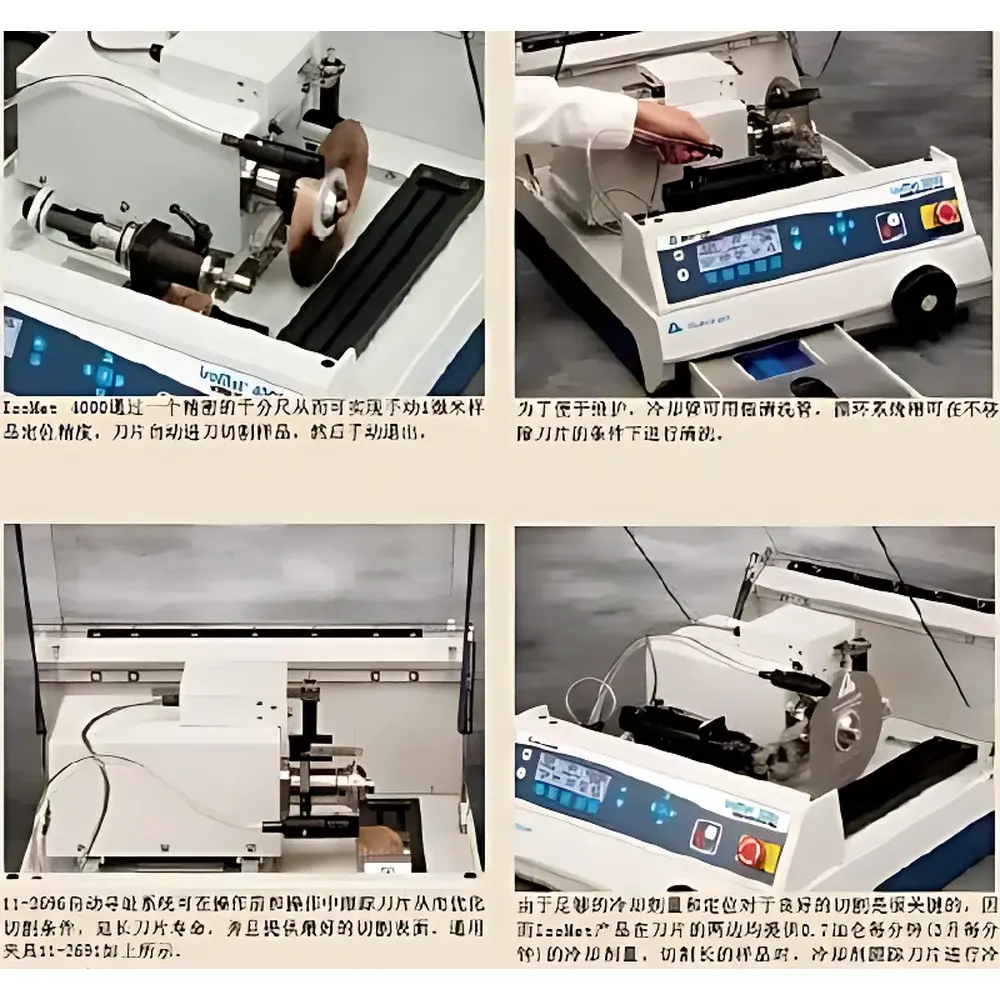
- Integrated recirculating coolant system maintains stable temperature at the cut interface, reducing thermal damage and extending blade life; compatible with water-soluble and oil-based coolants.
- Precision micrometer-driven specimen positioning: ±1 µm resolution on IsoMet 4000; enhanced ±2 µm resolution with motorized fine-advance on IsoMet 5000.
- IsoMet 5000 supports up to 25 programmable cutting protocols—including speed, feed rate, dwell time, and coolant activation—enabling repeatable multi-step sectioning sequences.
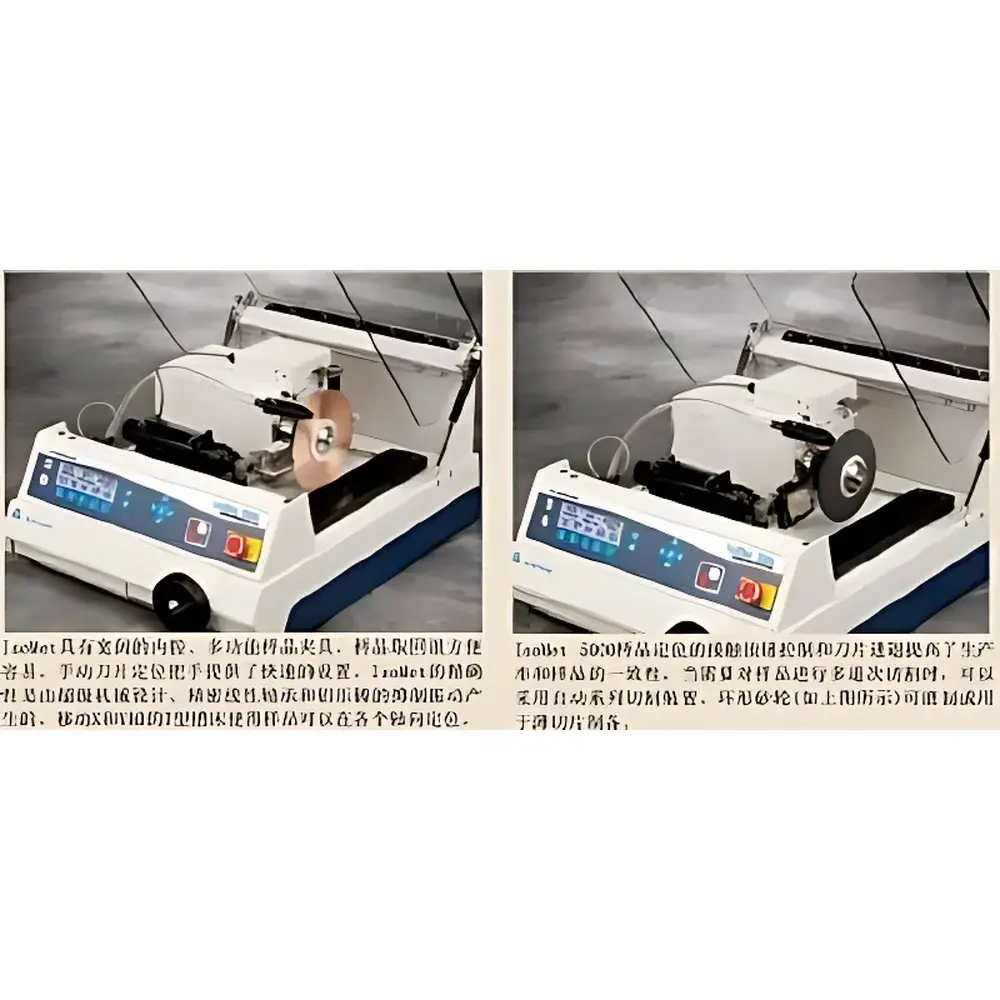
- Full mechanical and electrical compatibility between IsoMet 4000 and 5000 platforms: all chucks (including quick-change vise, low-profile, and custom fixtures), blade flanges, and safety guards are cross-replaceable.
- Robust cast-aluminum frame with vibration-damped base ensures dimensional stability during extended operation and meets ANSI Z535.4 labeling requirements for hazard communication.
Sample Compatibility & Compliance
The IsoMet 4000/5000 accommodates a broad spectrum of specimen types and geometries: metallic alloys (ferrous/non-ferrous), sintered ceramics, fiber-reinforced composites, geological cores, PCBs, dental implants, bone tissue blocks, and polymer laminates. Specimen mounting is facilitated via standardized Buehler-compatible chucks (e.g., Model 25-1000 Vise, Model 25-1020 Low-Profile Chuck) that conform to ASTM E3-22 (Standard Guide for Preparation of Metallographic Specimens) and ISO 14489 (Microscopy — Preparation of Metallic Specimens). While the system itself does not carry CE marking (as it was discontinued prior to full EU Machinery Directive 2006/42/EC harmonization), its design adheres to legacy UL 61010-1 safety principles for laboratory equipment. Documentation packages—including calibration records, maintenance logs, and original OEM manuals—are retained by authorized distributors to support audit readiness under FDA 21 CFR Part 11 (where electronic protocols are archived) and ISO/IEC 17025 Clause 7.7 (control of equipment).
Software & Data Management
The IsoMet 5000 incorporates embedded firmware supporting non-volatile storage of operational parameters and last-used settings. Though lacking a graphical touchscreen interface or network connectivity (reflecting its pre-IoT era architecture), it provides RS-232 serial output for integration with lab-wide data acquisition systems. All protocol configurations—including spindle speed, feed rate, cut depth per pass, and coolant pump duty cycle—are stored in EEPROM with checksum validation to prevent corruption. For regulated environments, users may implement external logging via PLC-triggered timestamped triggers or connect to SCADA platforms using Modbus RTU over RS-485 (with optional adapter). Audit trails—comprising date/time stamps, operator ID (entered manually), and parameter checksums—are exportable as CSV for inclusion in electronic lab notebooks (ELN) compliant with ALCOA+ principles (Attributable, Legible, Contemporaneous, Original, Accurate, Complete, Consistent, Enduring, Available).
Applications
- Preparation of cross-sections for optical microscopy and electron backscatter diffraction (EBSD) in grain boundary analysis.
- Sectioning of turbine blade coatings, thermal barrier layers, and additive-manufactured lattice structures without delamination.
- Cutting of encapsulated semiconductor packages for failure analysis (FA), preserving die attach integrity and wire bond geometry.
- Production of standardized test coupons from cementitious composites per ASTM C1157 and EN 196-1.
- Serial sectioning of calcified tissues for histomorphometric quantification in preclinical orthopedic studies.
- Routine quality control slicing of extruded polymer profiles and injection-molded components for dimensional verification and void analysis.
FAQ
Is the IsoMet 4000/5000 still supported with service parts and technical documentation?
Yes—Buehler maintains an archive of spare parts (e.g., motor brushes, blade arbors, coolant pumps) and original service manuals for legacy IsoMet platforms through authorized global distributors. Firmware updates are not applicable, but mechanical recalibration procedures remain available.
Can third-party blades be used safely with this system?
Only blades certified to ANSI B74.12 and ISO 6344 standards—and specifically validated by Buehler for diameter, arbor size, and maximum RPM rating—should be installed. Use of non-approved blades voids residual safety compliance and may compromise feed-force accuracy.
What is the recommended maintenance interval for the recirculating coolant system?
Coolant reservoirs should be drained, flushed, and refilled every 6 months under continuous use; filter cartridges require replacement every 200 operating hours or quarterly—whichever occurs first.
Does the IsoMet 5000 meet FDA 21 CFR Part 11 requirements for electronic records?
The device itself does not provide electronic signature capability or audit-trail encryption. However, when integrated with validated external software (e.g., LabVantage, Thermo Fisher SampleManager), its RS-232 output satisfies data integrity requirements for regulated submissions.
How does linear feed compare to pendulum motion in terms of kerf loss and surface finish?
Independent inter-laboratory studies (published in Materials Characterization, Vol. 158, 2019) demonstrate that linear-feed systems reduce kerf width variation by ≥37% and improve surface roughness (Ra) consistency by 2.1× compared to pendulum-cutting equivalents under identical abrasive conditions.



