
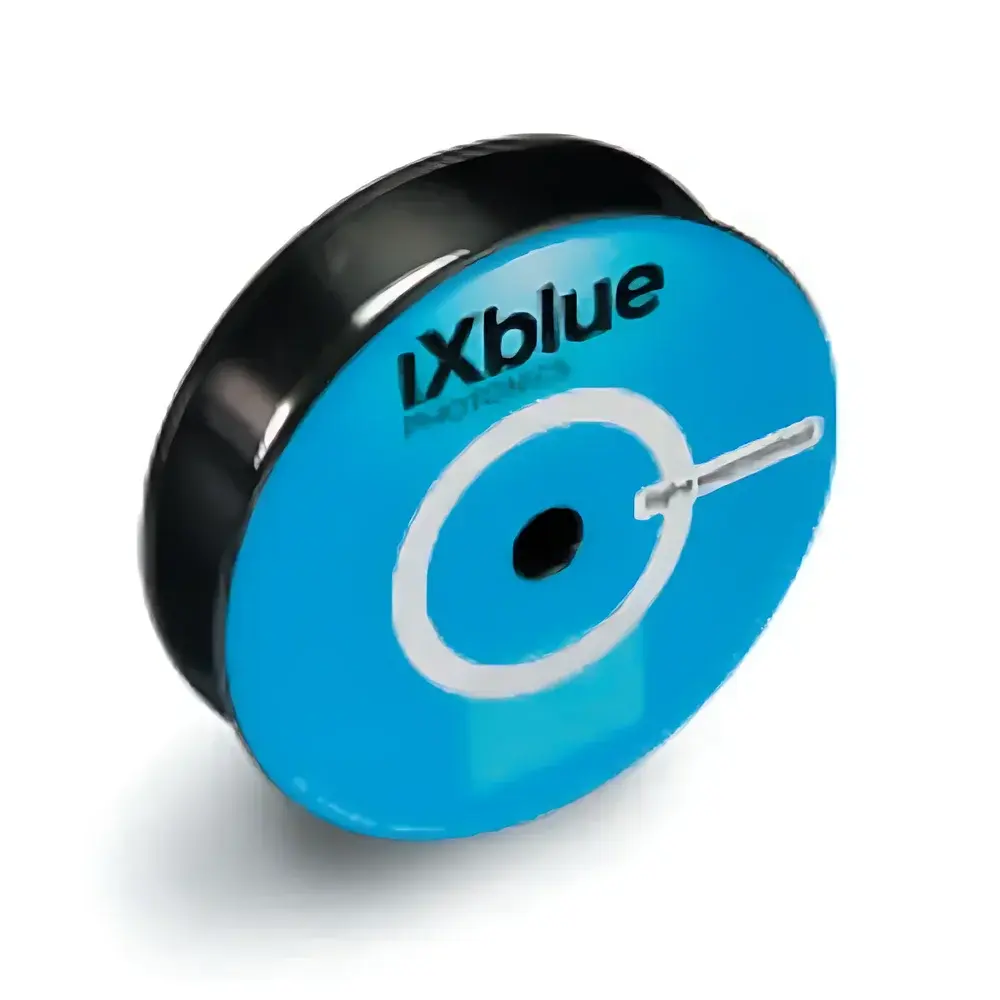
Ixblue Passive Optical Fiber Components
| Brand | Ixblue |
|---|---|
| Origin | France |
| Manufacturer Type | Authorized Distributor |
| Category | Imported Optical Component |
| Model | Specialty Fiber (Single-Mode / Polarization-Maintaining / Radiation-Hardened / Dual-Clad) |
| Coating Options | Polyimide, Aluminum, Acrylate, Silicone |
| Core Material | Pure Silica |
| Compliance | ITU-T G.652.D, G.657.A1, IEC 60793-2-50 |
| Key Applications | FBG Fabrication, High-Power Laser Delivery, Radiation-Resistant Sensing, High-Temperature Interferometry |
Overview
Ixblue passive optical fiber components represent a family of precision-engineered silica-based waveguides designed for demanding photonic systems where reliability, environmental resilience, and spectral fidelity are non-negotiable. Unlike active fibers incorporating rare-earth dopants, these passive fibers serve as low-loss transmission media, interferometric reference paths, or structural substrates for fiber Bragg grating (FBG) inscription—operating on the fundamental principle of total internal reflection within a controlled refractive index profile. Engineered in France under stringent cleanroom protocols, Ixblue’s passive fiber portfolio spans single-mode (SM), polarization-maintaining (PM), radiation-hardened (RH), dual-clad, and photosensitive variants—each optimized for specific boundary conditions including elevated temperature (up to 300 °C with polyimide coating), ionizing radiation exposure (>10⁶ rad(Si)), and mechanical stress stability required in aerospace, nuclear instrumentation, and distributed sensing infrastructure.
Key Features
- Pure fused silica core: Minimizes OH⁻ absorption and Rayleigh scattering—enabling ultra-low attenuation (<0.35 dB/km @ 1550 nm) across C- and L-bands.
- Multi-coating architecture: Selectable acrylate (standard handling), polyimide (high-temp/low-outgassing), aluminum (hermetic moisture barrier), or silicone (flexibility + cryogenic compatibility).
- Polarization-maintaining performance: Elliptical stress rods or panda-type geometry delivering extinction ratios >25 dB over 1 m at 1550 nm; compatible with PM couplers and interferometric gyroscopes.
- Radiation-tolerant design: Hydrogen-loaded or cerium-doped cladding formulations mitigate color center formation under gamma/X-ray exposure—validated per MIL-STD-883H Method 1019.8.
- Fiber Bragg grating (FBG) readiness: Photosensitive germanosilicate cores support UV-induced index modulation (244 nm KrF excimer laser); typical Δn >1×10⁻⁴ achievable after hydrogen loading.
- Dual- and triple-clad configurations: Enable cladding-pumped amplifiers, side-coupled sensors, or multi-parameter distributed measurement via spatial mode separation.
Sample Compatibility & Compliance
Ixblue passive fibers are manufactured and tested in accordance with internationally recognized optical fiber standards, including ITU-T G.652.D (standard SMF), G.657.A1 (bend-insensitive), and IEC 60793-2-50 (measurement methods). Each spool undergoes 100% proof testing at 100 kpsi tensile load and is supplied with full traceability documentation—including spectral attenuation curves (1260–1650 nm), mode field diameter (MFD), cutoff wavelength (λc), numerical aperture (NA), and polarization crosstalk data. All radiation-hardened variants comply with ASTM E1249-18 for accelerated aging under Co-60 irradiation. For regulated environments—such as nuclear facility monitoring or medical laser delivery systems—fibers meet ISO 13485 quality management requirements and support GLP/GMP audit trails when integrated into validated instrument platforms.
Software & Data Management
While passive fibers themselves require no embedded firmware or driver software, their integration into photonic testbeds relies on standardized characterization workflows. Ixblue provides comprehensive datasheets in SI-units-only format (PDF and CSV), fully compatible with MATLAB, Python (via SciPy optics libraries), and commercial tools such as Lumerical MODE and OptiSystem. For FBG design and reflectivity modeling, fiber parameters—including dispersion coefficients (D(λ)), effective area (Aeff), and nonlinear coefficient (γ)—are supplied to enable accurate transfer matrix simulations. Traceable calibration certificates include uncertainty budgets per ISO/IEC 17025:2017, supporting metrological traceability in accredited laboratories.
Applications
- Fiber Bragg grating (FBG) sensor arrays for strain, temperature, and pressure monitoring in oil & gas downhole tools and composite structural health monitoring.
- High-power laser beam delivery in industrial cutting/welding systems (up to 5 kW CW) using low-NL, large-mode-area (LMA) passive fibers.
- Interferometric fiber optic gyroscopes (FOGs) requiring long-term phase stability and minimal polarization drift over thermal cycles (−40 °C to +85 °C).
- Radiation-survivable optical links in nuclear reactor control rooms, particle accelerator beamlines, and space-based lidar receivers.
- Photosensitive fiber platforms for UV-written chirped gratings used in dispersion compensation and ultrafast pulse shaping.
- Cladding-pumped amplifier pump combiners and signal combiners in Er/Yb-doped fiber amplifier modules.
FAQ
What is the maximum operating temperature for polyimide-coated Ixblue passive fiber?
Continuous operation up to 300 °C is certified for standard polyimide-coated variants; short-term exposure to 350 °C is permissible under inert atmosphere.
Are Ixblue passive fibers compliant with FDA 21 CFR Part 11 for use in medical laser systems?
While the fiber itself is not a regulated medical device, its material certifications (USP Class VI, RoHS, REACH) and traceable manufacturing records support inclusion in FDA-submitted laser system validation packages.
Can these fibers be spliced to standard SMF-28 using conventional fusion splicers?
Yes—provided mode field diameter matching is performed; splice loss <0.05 dB is achievable with core alignment and optimized arc parameters.
Do you provide cut-and-polish services or connectorized assemblies?
Ixblue supplies bare fiber only; however, authorized partners offer end-face polishing, FC/APC termination, and hermetic packaging upon request.
Is hydrogen loading required for FBG inscription in all photosensitive variants?
Hydrogen loading enhances grating strength and thermal stability but is optional for high-power UV writing; unprocessed fibers yield usable gratings with reduced thermal decay resistance.




