
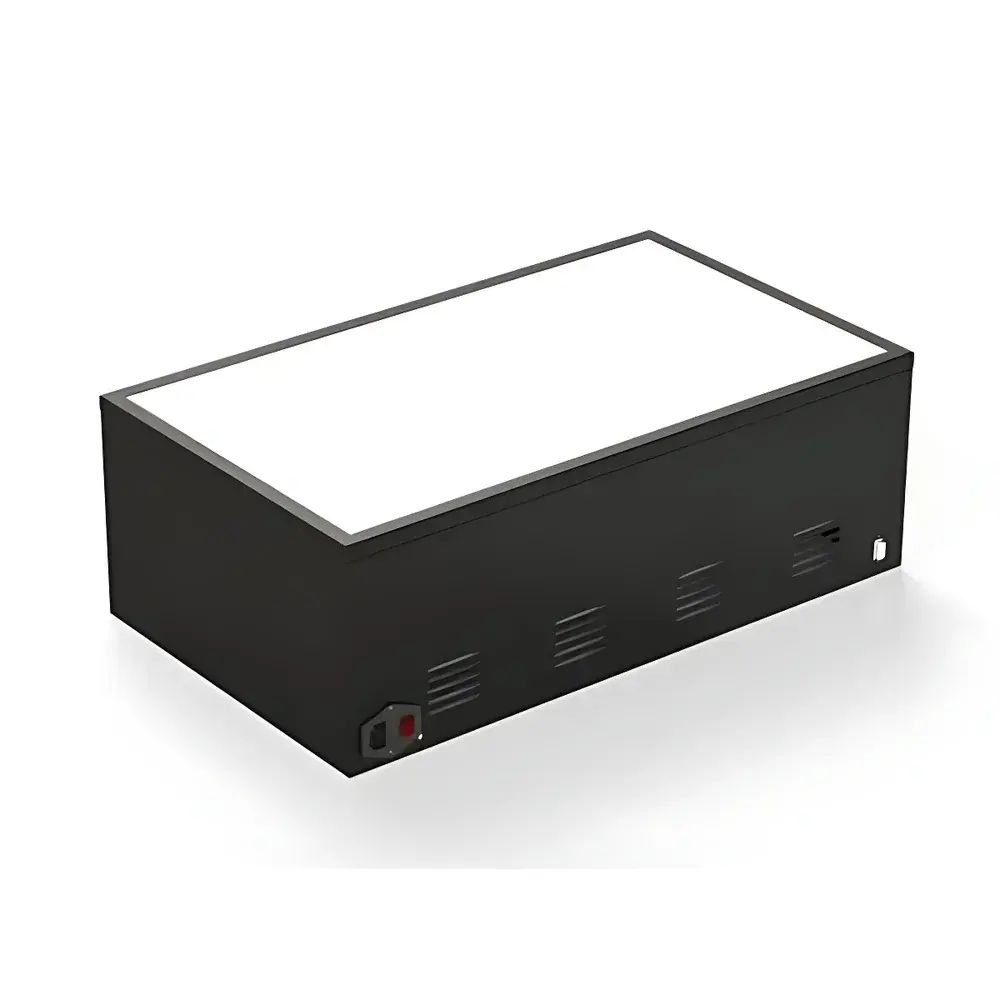
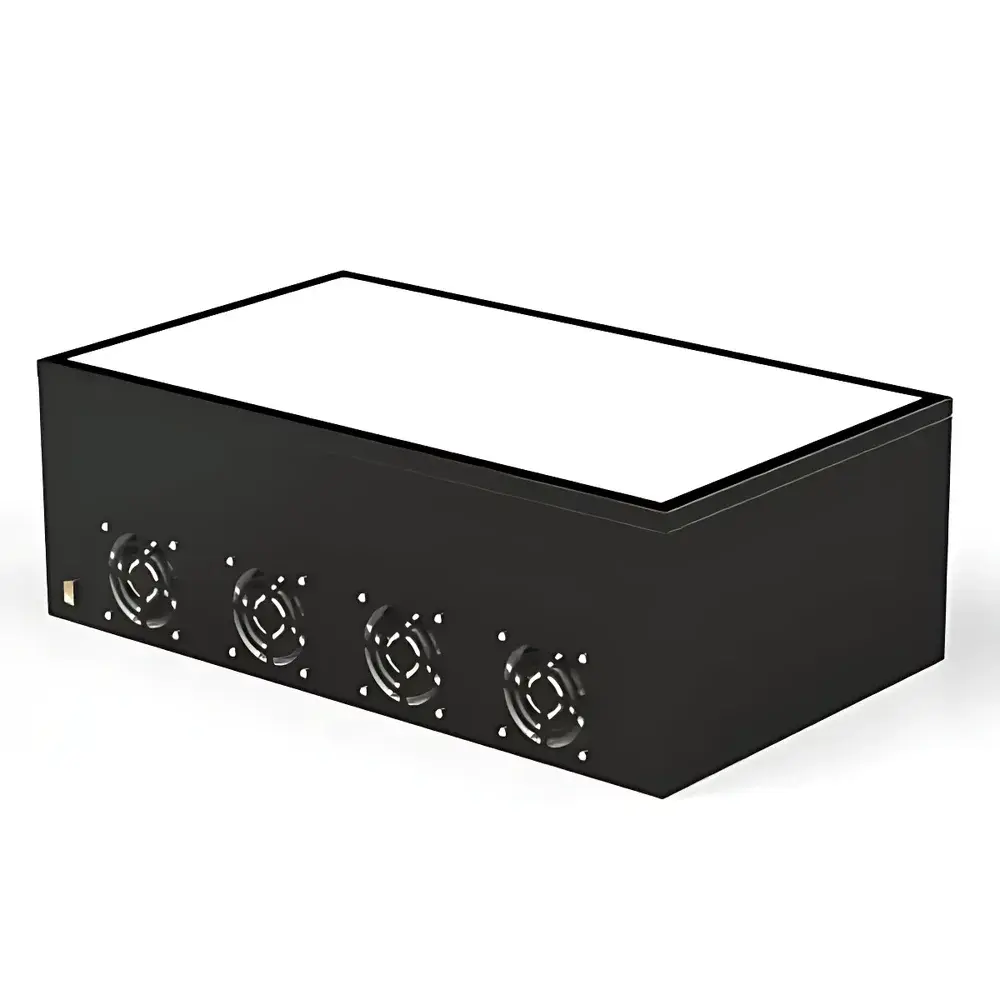
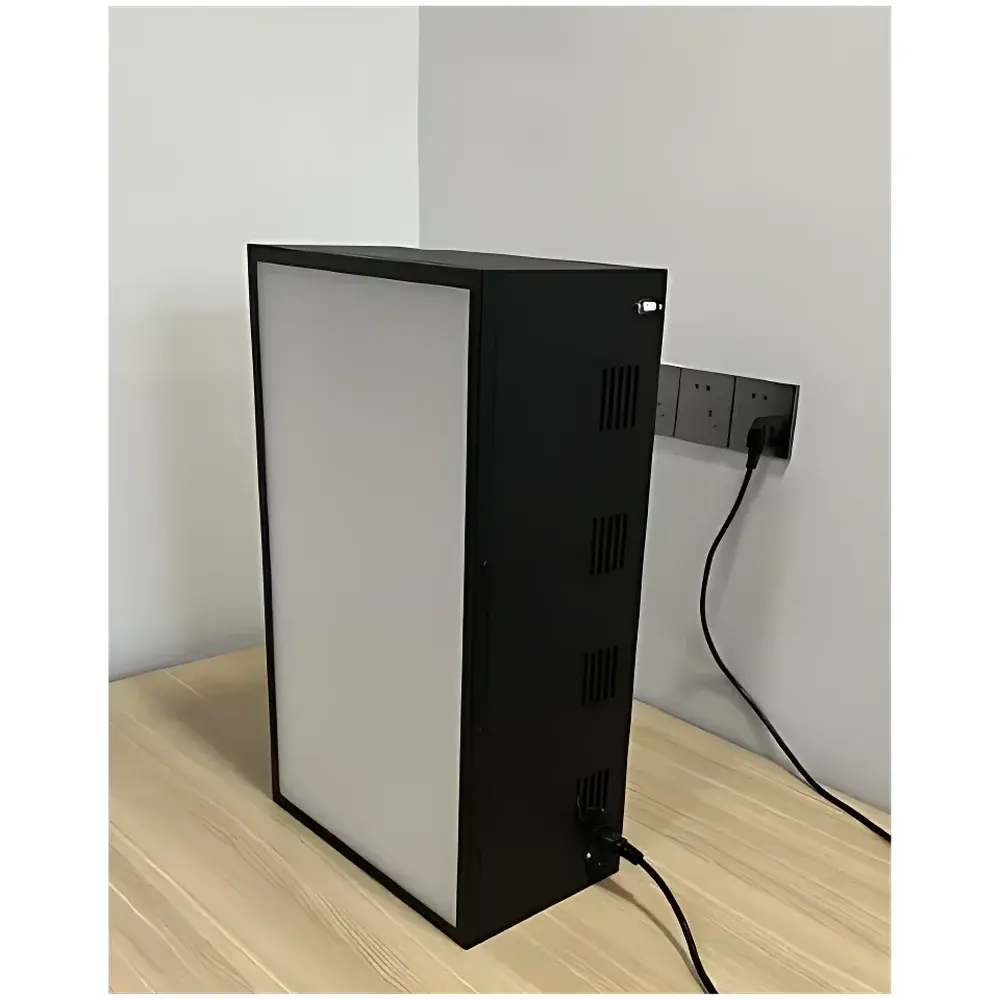
Auniontech LEDPanel Multi-Channel Calibration Light Source
| Brand | Auniontech |
|---|---|
| Origin | Shanghai, China |
| Manufacturer Type | Authorized Distributor |
| Product Category | Domestic |
| Model | LEDPanel |
| Light Source Type | Tunable Multispectral LED Array |
| Brightness Control Resolution | 12-bit (4096 levels per channel) |
| Color Temperature Range | 2000 K – 20000 K |
| Spectral Coverage | UV–Visible–NIR (customizable wavelength channels) |
| SPD Reproduction Capability | User-defined or imported spectral power distribution (SPD) |
| Control Interface | API-enabled (C/C++, Python, LabVIEW SDKs) |
| Flicker-Free Operation | Yes |
| Uniform Illumination | Engineered for spatial homogeneity across target plane |
| Mounting Options | Ceiling suspension, light booth integration, custom mechanical fixtures |
| Compliance | Designed to support ISO/CIE-standardized visual and photometric testing workflows |
Overview
The Auniontech LEDPanel Multi-Channel Calibration Light Source is a high-precision, spectrally programmable illumination system engineered for metrological-grade optical calibration and spectral characterization. Based on a modular array of individually addressable, high-stability LEDs spanning ultraviolet (UV), visible (VIS), and near-infrared (NIR) spectral regions, the LEDPanel enables dynamic synthesis of user-defined spectral power distributions (SPDs) with continuous color temperature control from 2000 K to 20000 K. Its core functionality relies on proprietary spectral modeling algorithms and calibrated photometric feedback loops—ensuring traceable SPD reproduction across laboratories and test environments. Unlike broadband arc lamps or filtered halogen sources, the LEDPanel eliminates spectral discontinuities, thermal drift, and temporal instability, making it suitable for applications demanding long-term repeatability and inter-laboratory spectral transferability—particularly in CIE-defined colorimetric evaluation, camera sensor characterization, and non-visual photobiological assessment.
Key Features
- Multi-channel spectral tuning: Up to 32 independently controllable LED channels (configurable per application), each with factory-calibrated radiometric output and narrow spectral half-width (FWHM < 25 nm).
- 12-bit digital intensity resolution (4096 steps per channel) enabling fine-grained luminance and chromaticity control with sub-0.1% relative stability over 8-hour operation.
- Flicker-free DC-driven operation compliant with IEEE 1789-2015 recommendations for low-risk visible light modulation.
- Uniform irradiance distribution: Optimized optical diffuser design delivers ±3% spatial uniformity over a 1 m × 1 m target plane at 1 m working distance (measured per CIE S 026/E:2018).
- Real-time closed-loop control: Optional integration with spectroradiometers (e.g., CAS series, PR-788) via USB/RS-485 enables automatic SPD verification and adaptive intensity correction.
- API-first architecture: Native support for C/C++, Python, and LabVIEW through documented SDK—including functions for SPD loading, time-resolved sequence programming, and hardware status polling.
- Modular mechanical design: Supports ceiling-mounting, integration into light booths (e.g., GretagMacbeth SpectraLight QC), custom optical benches, and large-scale visual evaluation chambers.
Sample Compatibility & Compliance
The LEDPanel is compatible with standardized photometric and colorimetric test objects including CIE standard illuminants (A, D50, D65, D75), Macbeth ColorChecker charts, BabelColor CC24 targets, and ISO 12233 resolution charts. It meets the spectral validation requirements outlined in ISO/CIE 11664-2:2019 (colorimetry), CIE 224:2017 (non-visual photobiological effects), and ASTM E308-22 (computation of color coordinates from SPD data). For regulated environments, the system supports audit-ready logging when paired with compliant software platforms—enabling GLP-aligned documentation of calibration events, SPD version history, and hardware configuration changes.
Software & Data Management
The included Auniontech LightControl Suite provides intuitive GUI-based SPD editing, preset library management (including CIE daylight series, blackbody loci, and legacy lamp spectra), and real-time spectral visualization. All SPD definitions are stored in open-format XML files compliant with IEC 62471 Annex B conventions. For automated test systems, the SDK enforces deterministic command-response timing and includes built-in error-checking protocols. Data export supports CSV, HDF5, and CIE 15:2018-compliant .spd file formats. Integration with MATLAB, Python (NumPy/Pandas), and NI TestStand is validated and documented.
Applications
- Camera and image sensor spectral responsivity mapping (per ISO 17321-1:2019)
- Display white point and gamut validation under variable illuminants (e.g., D50 vs. D65 for print proofing)
- Healthcare lighting validation: Circadian stimulus (CS), melanopic EDI, and scotopic/photopic ratio assessment
- Agricultural photobiology: PAR (Photosynthetically Active Radiation) and specific phytochrome action spectra simulation
- Material appearance evaluation: Metamerism analysis, whiteness index (CIE WH10), and color rendering fidelity (Rf, Rg per IES TM-30-20)
- Calibration transfer between photometric labs using identical SPD reference files
- Dynamic lighting research: Temporal SPD sequencing for intermediate vision and mesopic adaptation studies
FAQ
Can the LEDPanel reproduce CIE Standard Illuminant D65 with metrological accuracy?
Yes—when operated with factory spectral calibration data and verified using a NIST-traceable spectroradiometer, the LEDPanel achieves a CIE DE2000 color difference < 0.5 against the CIE D65 reference SPD over the 380–780 nm range.
Is spectral calibration data provided with each unit?
Each LEDPanel ships with individual channel spectral radiance curves measured at multiple drive currents, referenced to NIST SRM 2010, and delivered in IEC 62471-compliant format.
What is the expected lifetime and lumen maintenance profile?
LED channels are rated for 25,000 hours to L70 (70% initial radiant flux) under nominal operating conditions, with thermal management ensuring junction temperature remains below 65°C during continuous use.
Does the system support synchronization with external measurement triggers?
Yes—the rear-panel TTL input accepts external sync pulses (rising-edge triggered) to initiate SPD transitions or data capture sequences with < 10 µs jitter.
Can UV or NIR channels be added post-purchase?
Hardware expansion is supported via optional channel modules; firmware and calibration updates are performed remotely following installation and spectral re-characterization.






