
Auniontech Dualex Portable Nitrogen Balance–Chlorophyll–Anthocyanin–Flavonol Meter
| Brand | Auniontech |
|---|---|
| Origin | Shanghai, China |
| Manufacturer Type | Authorized Distributor |
| Product Category | Domestic |
| Model | Multispectral Leaf Sensor |
| Price | Upon Request |
| Measurement Area | 19.6 mm² |
| Measurement Time | <1 s |
| Data Storage Capacity | >10,000 records |
| Interface | USB |
| Dimensions | 205 × 65 × 55 mm |
| Weight | 220 g |
| Chlorophyll Index (Chl) | 5–80 µg/cm² |
| Flavonol Index (Flav) | 0–3 AU |
| Anthocyanin Index (Anth) | 0–1.5 AU |
| Nitrogen Balance Index (NBI) | Chl/Flav ratio |
Overview
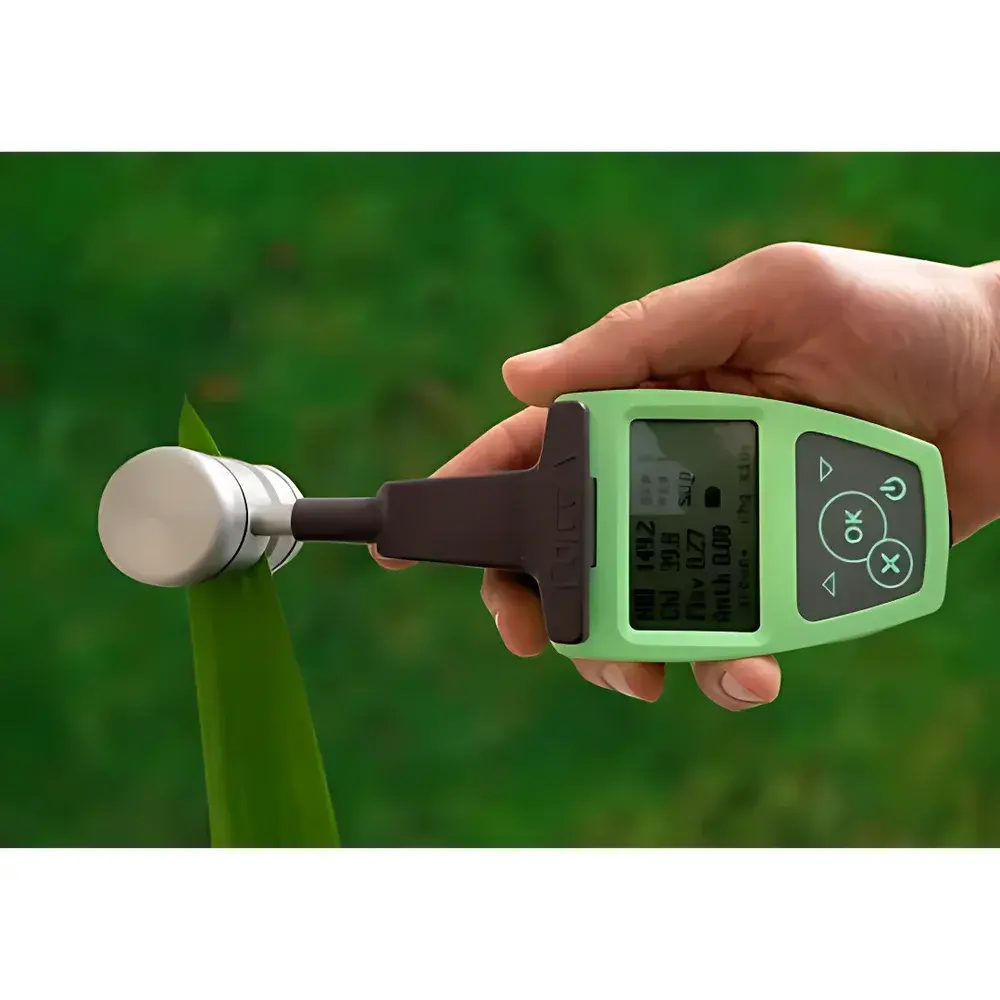
The Auniontech Dualex Portable Nitrogen Balance–Chlorophyll–Anthocyanin–Flavonol Meter is a field-deployable, non-destructive leaf sensor engineered for high-throughput physiological phenotyping in plant science and precision agriculture. It operates on dual-wavelength absorbance and chlorophyll fluorescence quenching principles: chlorophyll content is quantified via transmittance at 710 nm and 850 nm, while flavonol and anthocyanin indices are derived from their differential shielding effect on chlorophyll fluorescence emission under UV-A excitation (375 nm). This multispectral optical architecture enables simultaneous, real-time estimation of four biologically critical parameters—chlorophyll (Chl), flavonol (Flav), anthocyanin (Anth), and the nitrogen balance index (NBI)—without sample extraction, solvent use, or instrument calibration. The device is designed for robust operation across ambient light conditions (including direct sunlight) and temperature ranges typical of field environments (−5 °C to 45 °C), supporting both greenhouse and open-field deployment.
Key Features
- Non-invasive, contact-based measurement using a precision spring-loaded leaf clip ensuring consistent optical path length and pressure-independent readings
- Simultaneous acquisition of four independent spectral indices in under one second per leaf scan
- No pre-treatment, no reagents, no dark adaptation required—enabling rapid screening of hundreds of leaves per day
- Integrated micro-SD storage (expandable) and USB 2.0 interface for batch data export and firmware updates
- Onboard memory capacity exceeding 10,000 measurements with timestamp, GPS-ready metadata tagging (when paired with external GNSS module)
- Compact ergonomic design (205 × 65 × 55 mm; 220 g) optimized for handheld use during long-duration field surveys
- Self-diagnostic LED indicators and low-battery warning system ensuring measurement continuity and data integrity
Sample Compatibility & Compliance
The Dualex meter is validated for use across broadleaf monocot and dicot species—including cereals (wheat, rice, maize), legumes (soybean, alfalfa), horticultural crops (tomato, lettuce, grapevine), fruit trees (apple, citrus), and medicinal plants (Artemisia, Salvia). Its optical geometry accommodates leaf thicknesses from 0.1 mm to 0.8 mm and lamina widths ≥15 mm. All optical components comply with IEC 62471:2006 (Photobiological Safety of Lamps and Lamp Systems), and UV-A source intensity remains below Class 1 exposure limits. While not certified for regulatory GLP/GMP environments, its measurement traceability aligns with ISO 17025–recommended practices for field instrumentation used in agronomic research. Data output conforms to FAO CropWat-compatible CSV format, facilitating integration into national agricultural monitoring systems.
Software & Data Management
The Dualex is supported by the cross-platform Dualex Manager desktop application (Windows/macOS/Linux), which provides raw data visualization, batch statistical analysis (mean, SD, CV%), scatter plot generation (e.g., Chl vs. NBI), and export to Excel, R, or Python-compatible .csv. The software includes built-in quality control flags for outlier detection based on signal-to-noise thresholds and leaf insertion error alerts. Audit trails record operator ID, date/time stamp, and firmware version per measurement batch—supporting basic 21 CFR Part 11 compliance when deployed with user authentication protocols. Firmware updates are delivered via signed binary packages, ensuring integrity verification prior to installation.
Applications
- Nitrogen status monitoring and site-specific fertilizer prescription in cereal and vegetable production systems
- Early-stage stress detection (drought, UV-B exposure, heavy metal toxicity) via flavonol accumulation kinetics
- Cultivar screening for anthocyanin-rich traits in berry, brassica, and ornamental breeding programs
- Post-harvest quality assessment of leafy greens and tea leaves based on chlorophyll degradation profiles
- Phenological staging in perennial crops (e.g., budbreak, senescence onset) using longitudinal NBI trajectories
- Ecophysiological studies linking secondary metabolite dynamics to light environment, altitude, and CO₂ enrichment
- Validation of hyperspectral remote sensing indices (e.g., PRI, ANTH) through ground-truthing campaigns
FAQ
Does the Dualex require factory recalibration?
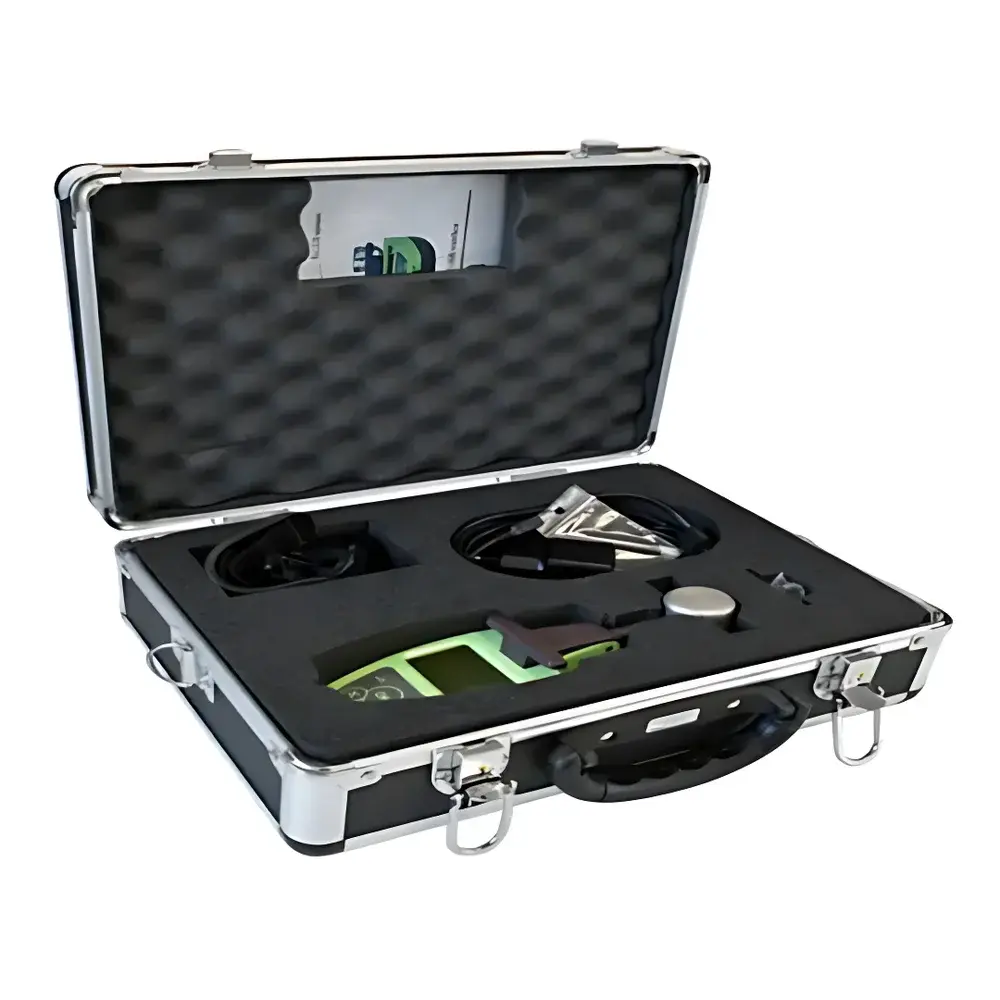
No. The optical path is factory-aligned and sealed; no user-accessible recalibration is needed. Periodic verification using the included reference leaf standard (certified Chl = 42.3 ± 1.1 µg/cm²) is recommended every 6 months.
Can it measure conifer needles or mosses?
Not reliably. The sensor is optimized for planar, translucent broadleaf tissues. Needle morphology and high cuticular wax content introduce significant scattering artifacts.
Is GPS geotagging natively supported?
The device lacks integrated GNSS but features a TTL serial port for external GPS module synchronization. Timestamped location data can be merged post-acquisition using third-party tools.
How does NBI improve nitrogen management over SPAD alone?
NBI detects nitrogen imbalance before visible chlorosis occurs—typically 3–7 days earlier than SPAD-based thresholds—by capturing the inverse relationship between chlorophyll synthesis and flavonol induction under nitrogen limitation.
What spectral bands does the instrument use?
Transmittance: 710 nm (chlorophyll absorption peak) and 850 nm (reference band); Excitation: 375 nm UV-A (flavonol/anthocyanin activation); Detection: 740 nm chlorophyll fluorescence emission.





