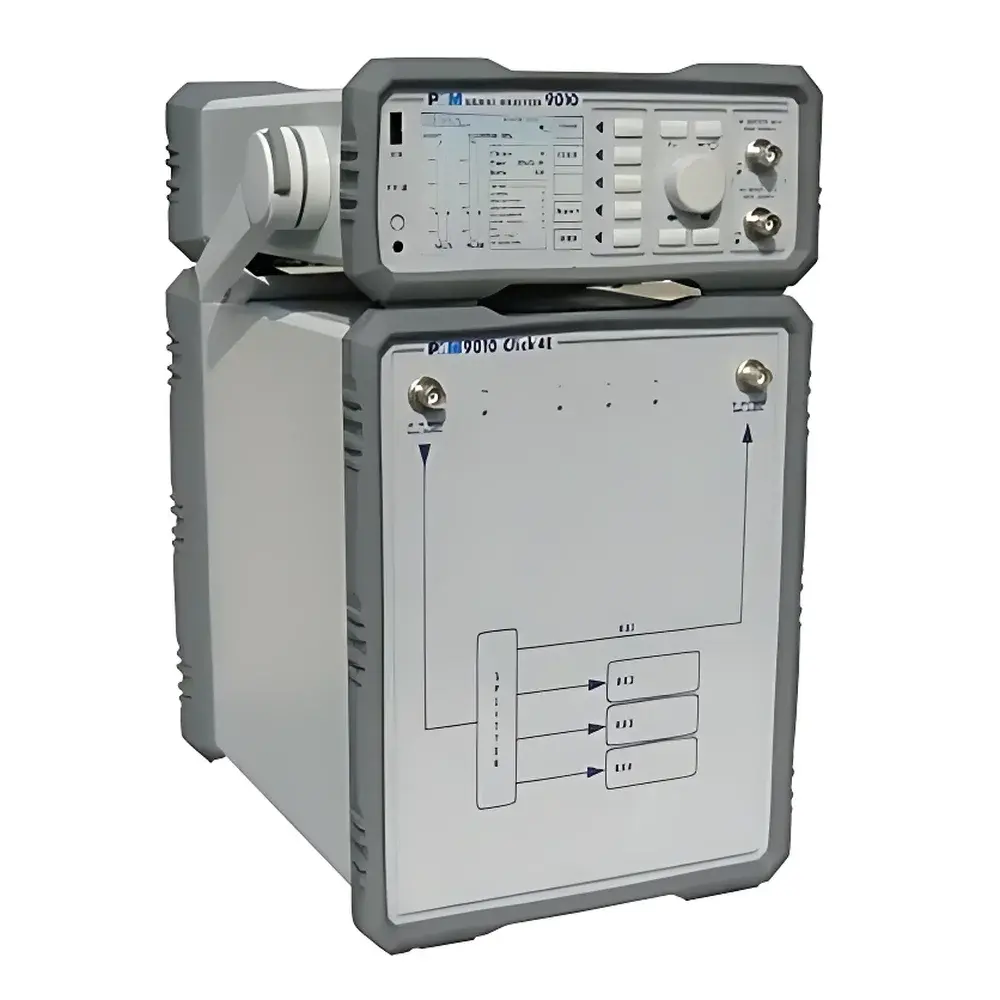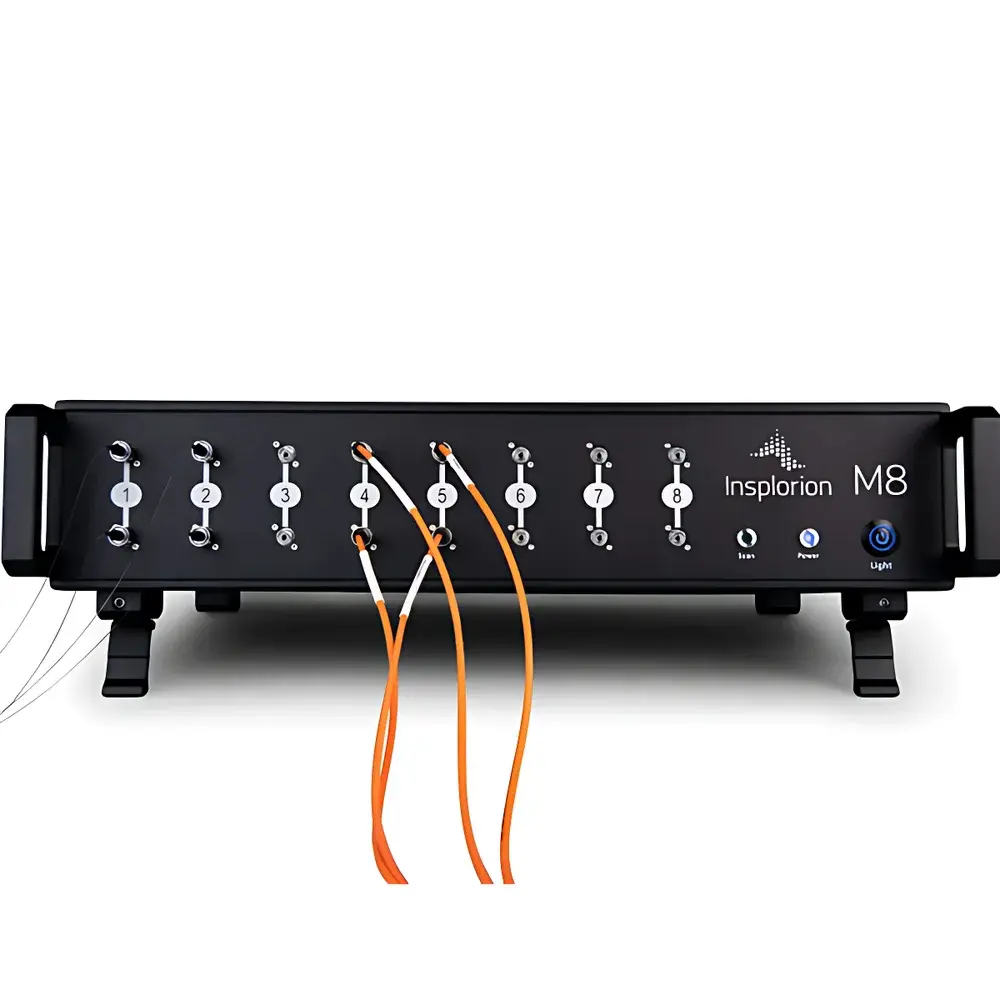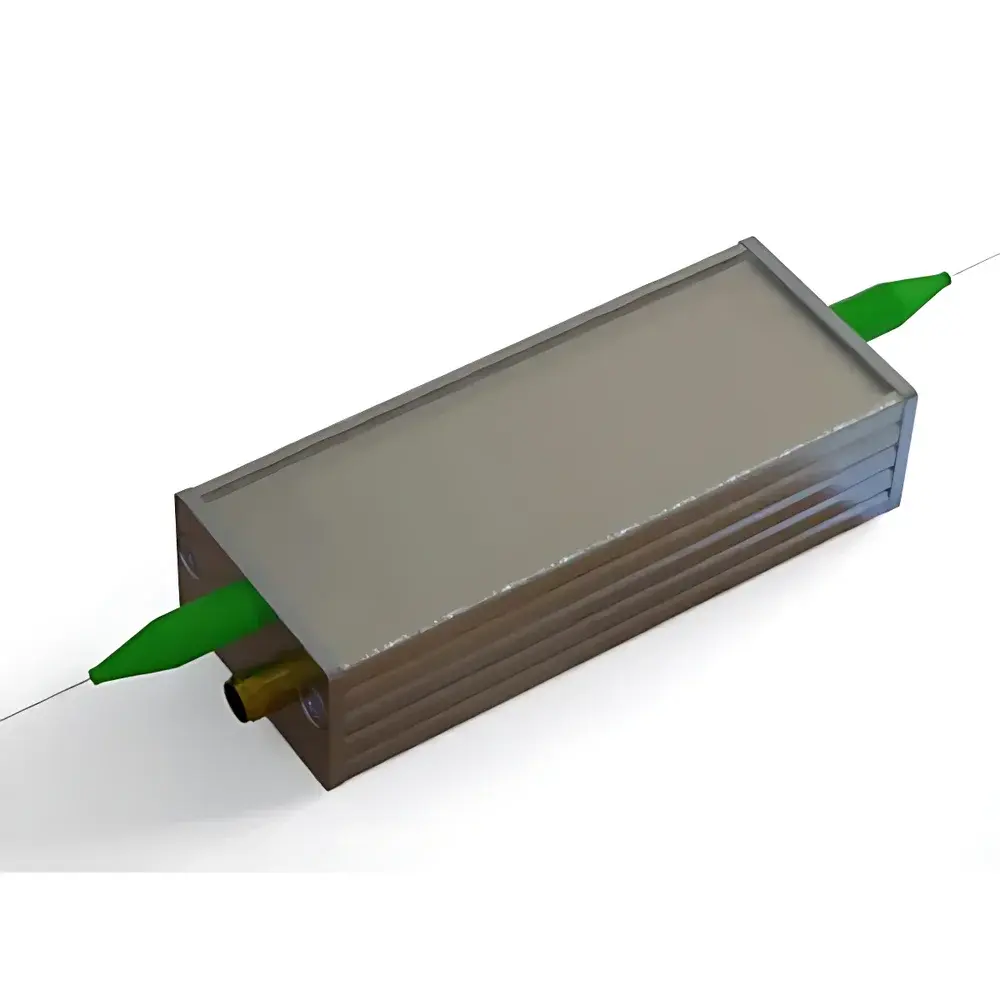
Auniontech F-P Cavity High-Speed Tunable Optical Filter with 30,000 Finesse
| Brand | Auniontech |
|---|---|
| Model | F-P Cavity Tunable Filter |
| Finesse (typ.) | 30,000 |
| Max. Tuning Speed | 10 kHz |
| Free Spectral Range (FSR) | 300 GHz – 15 THz |
| Center Wavelength Range | 500–2500 nm |
| Linewidth (min.) | 10 MHz (~0.1 pm) |
| Input Power Limit | < 2 mW |
| Compliance | RoHS-compliant optical module |
| Origin | Shanghai, China |
Overview
The Auniontech F-P Cavity High-Speed Tunable Optical Filter is a precision interferometric device engineered for dynamic wavelength selection in advanced photonic systems. Based on the Fabry–Perot (F–P) resonance principle, it operates as a tunable bandpass filter whose transmission peaks are determined by the optical path length between two highly reflective, parallel dielectric mirrors aligned within a fiber-pigtailed cavity. Unlike fixed filters or grating-based solutions, this device enables continuous, high-fidelity spectral scanning with sub-picometer resolution—critical for applications demanding real-time spectral agility and ultra-narrow linewidth discrimination. Its finesse of up to 30,000 ensures exceptional spectral contrast (>60 dB rejection outside passband) and high wavelength reproducibility across repeated sweeps. Designed for integration into fiber-optic testbenches, quantum photonics setups, and laser cavity control loops, the filter delivers stable performance under ambient thermal fluctuations and mechanical vibration—enabled by monolithic cavity alignment and low-thermal-expansion packaging.
Key Features
- High finesse (up to 30,000) enabling narrowest achievable linewidths down to 10 MHz (~0.1 pm at 1550 nm)
- Continuous electro-optic or piezoelectric tuning with scan rates up to 10 kHz—supporting real-time spectral acquisition and closed-loop laser stabilization
- Configurable free spectral range (FSR) from 300 GHz to 15 THz, allowing optimization for dense WDM channel spacing or broad-spectrum scanning
- Wide center wavelength coverage: 500–2500 nm—compatible with visible, NIR, and SWIR instrumentation platforms
- Fiber-coupled design with FC/APC or FC/PC connectors; polarization-maintaining (PM) and single-mode (SM) variants available upon request
- Low insertion loss (60 dB), minimizing signal degradation in cascaded optical systems
- Hermetically sealed, RoHS-compliant housing with integrated thermal stabilization for long-term drift suppression
Sample Compatibility & Compliance
The filter is compatible with standard single-mode fiber (SMF-28, HI1060, etc.) and polarization-maintaining fiber (PANDA, Bow-tie) configurations. It supports input optical power levels up to 2 mW—making it suitable for use with semiconductor lasers, fiber amplifiers, supercontinuum sources, and quantum light emitters without nonlinear distortion or thermal lensing. All units undergo factory calibration against NIST-traceable wavelength references and comply with IEC 61300-2-4 (fiber optic connector durability) and IEC 61290-1-3 (optical amplifier testing standards). While not certified for medical or aerospace safety standards, its design adheres to GLP-aligned documentation practices—including full traceability of cavity coating parameters, mirror reflectivity profiles, and temperature-dependent FSR characterization data.
Software & Data Management
The filter integrates seamlessly with industry-standard control environments via USB 2.0 or analog voltage interface (0–10 V). Aboard firmware supports linearized wavelength sweep modes, step-and-hold operation, and external trigger synchronization (TTL-compatible). A Windows/Linux-compatible SDK provides API access to real-time cavity length control, fine/coarse tuning coordination, and automated calibration routines. Raw spectral data output is timestamped and formatted in HDF5 or CSV for direct ingestion into MATLAB, Python (NumPy/Pandas), or LabVIEW-based analysis pipelines. Audit trails—including tuning history, temperature logs, and user-defined metadata—are retained per session in accordance with FDA 21 CFR Part 11–aligned logging protocols (when enabled via optional software license).
Applications
- ASE noise suppression in erbium-doped fiber amplifiers (EDFAs) and Raman amplifiers
- Dynamic channel selection and reconfiguration in reconfigurable optical add-drop multiplexers (ROADMs)
- Pulse shaping and spectral phase control in ultrafast fiber lasers and coherent communications
- High-resolution absorption spectroscopy for gas sensing (e.g., CH₄, CO₂, NH₃) in the 1.3–2.0 µm band
- Cavity-enhanced detection in quantum optics experiments—including heralded single-photon source filtering and entangled photon pair separation
- Calibration reference for optical spectrum analyzers (OSAs) and wavelength meters requiring sub-10 pm repeatability
FAQ
What is the minimum resolvable linewidth at 1550 nm?
At 1550 nm, the narrowest supported linewidth is 10 MHz (~0.1 pm), achieved at finesse ≈ 30,000 and FSR = 300 GHz.
Can this filter be used with pulsed lasers?
Yes—provided peak power remains below 2 mW average and pulse energy does not exceed 10 pJ per pulse to avoid mirror damage or nonlinear effects.
Is thermal drift compensated during extended scans?
The unit includes passive thermal stabilization; active temperature control is optional via external TEC driver interface.
Does the filter support bidirectional tuning (i.e., forward and reverse sweeps)?
Yes—firmware supports symmetric triangular and sawtooth waveforms with user-definable dwell times and direction reversal logic.
Are custom center wavelengths outside the 1460–1660 nm standard range available?
Yes—custom configurations covering 500–2500 nm are offered with lead times of 8–12 weeks and require cavity mirror coating redesign.