
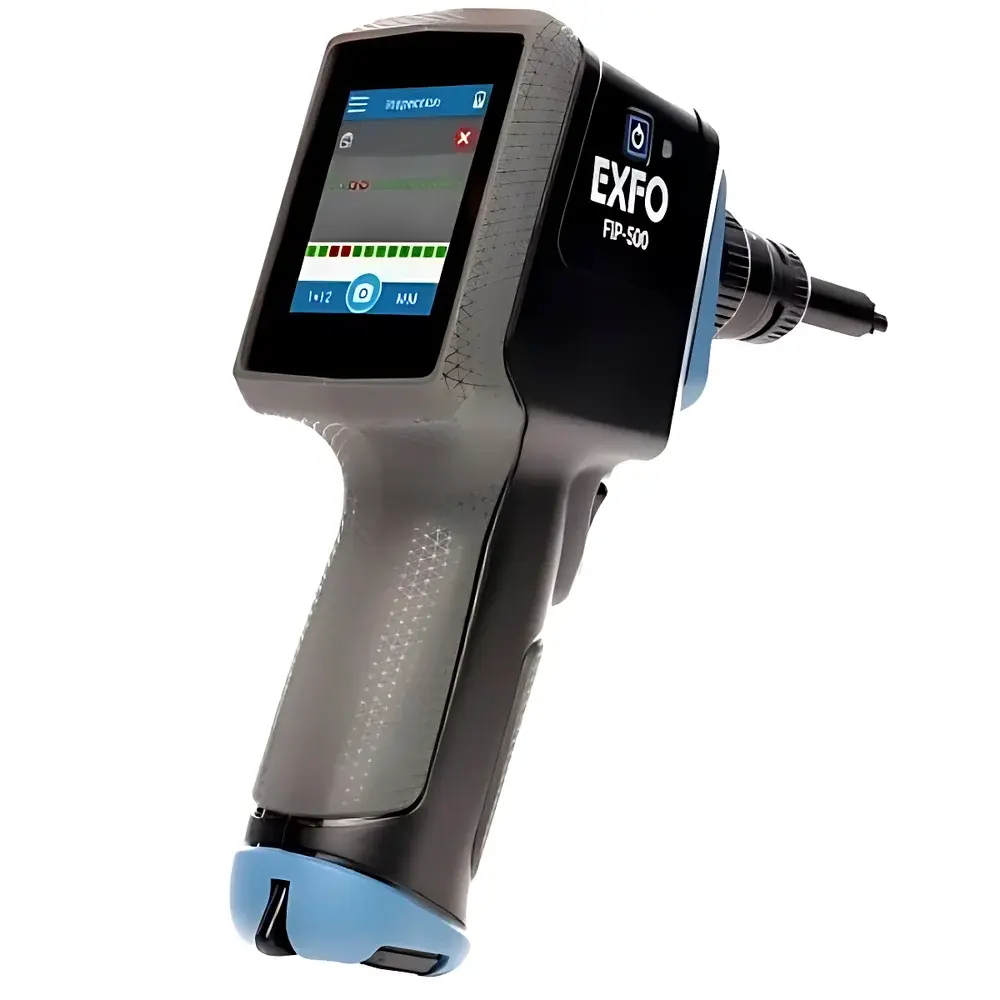
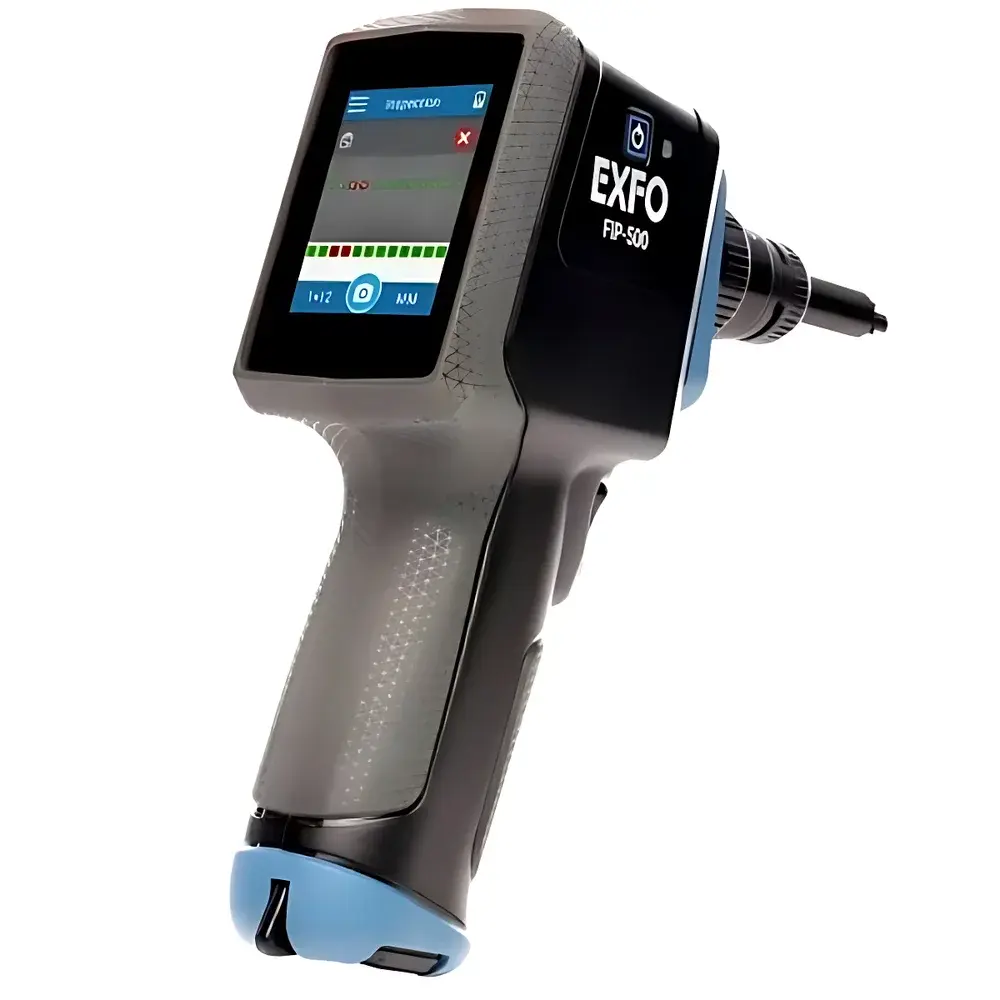
Auniontech Portable Fiber End-Face Inspection Analyzer
| Brand | Auniontech |
|---|---|
| Origin | Shanghai, China |
| Manufacturer Type | Authorized Distributor |
| Product Category | Domestic |
| Model | Portable Fiber End-Face Inspection Analyzer |
| Price | Upon Request |
Overview
The Auniontech Portable Fiber End-Face Inspection Analyzer is an AI-powered, handheld optical inspection system engineered for rapid, repeatable, and standards-compliant assessment of fiber optic connector end-faces. Unlike conventional microscopes or benchtop analyzers, this instrument implements coaxial pulsed illumination and dual 5-megapixel CMOS imaging to capture high-fidelity surface topography under variable lighting and contamination conditions. It operates on the principle of reflected-light digital microscopy combined with real-time machine learning–based defect classification—enabling automated pass/fail evaluation per IEC 61300-3-35 Ed.3 (2022) and legacy editions. Designed for field-deployed quality assurance in telecom infrastructure rollout, data center commissioning, and FTTH deployment workflows, the analyzer delivers lab-grade metrology without requiring external power, PC tethering, or operator interpretation.
Key Features
- First-in-industry AI-driven end-face analysis engine—trained on >10⁶ annotated images to classify scratches, pits, chips, epoxy residue, and contamination across single-fiber (LC/SC/ST), duplex, and multi-fiber (MPO-12/MPO-24/OptiTap®/OptiTip®) connectors—even under low-light or partially obscured conditions
- Zero-touch operation: fully autonomous workflow—from mechanical insertion to image acquisition, defect segmentation, IEC compliance scoring, and local storage—requiring no button presses or software interaction
- Sub-10-second inspection cycle for MPO-12 connectors; 4 seconds for single-fiber; 15 seconds for MPO-24—enabled by synchronized dual-sensor capture and on-device edge inference
- 2.4-inch IPS color LCD (166 dpi) with capacitive touch interface—optimized for gloved operation and sunlight-readable contrast
- Quick-swap adapter system: 90° rotational mount enables tool-less interchange between connector-specific adapters (LC, SC, ST, MPO, OptiTap®, OptiTip®)
- Integrated dual 415 ±15 nm violet LEDs with pulsed coaxial illumination—minimizing specular glare and enhancing contrast for sub-micron defect visibility
- Onboard non-volatile memory: stores up to 10,000 single-fiber records, 5,000 duplex records, or 2,000 MPO-12 records (1.2 GB user-accessible space within 2 GB total flash)
Sample Compatibility & Compliance
The analyzer supports physical contact (PC), ultra-physical contact (UPC), and angled physical contact (APC) polished ferrules across industry-standard connector types. Its measurement methodology aligns with IEC 61300-3-35 Ed.3 (2022), IEC 61300-3-35 (2015), and incorporates configurable pass/fail thresholds per customer-defined specifications. All inspection reports include timestamped metadata (date/time, GPS coordinates if enabled via paired mobile device), operator ID, connector type, and full-resolution image thumbnails—ensuring traceability for GLP/GMP-aligned environments. While not FDA 21 CFR Part 11–certified out-of-box, audit trails and export logs are structured to support internal validation protocols required in regulated telecom manufacturing and carrier maintenance operations.
Software & Data Management
Data export occurs via Bluetooth 5.0, Wi-Fi (802.11 b/g/n), or USB-C host mode—supporting CSV summary reports, JPEG/PNG image exports, and encrypted SQLite database dumps. The embedded firmware includes firmware-over-the-air (FOTA) update capability and supports multi-language UI (English, French, Simplified Chinese, German, Spanish, Korean, Japanese). No cloud dependency is required for core functionality; all AI inference runs locally on the dual-core 1.4 GHz ARM processor. Optional companion desktop software (Windows/macOS) enables batch report generation, statistical process control (SPC) charting, and integration with enterprise asset management (EAM) systems via RESTful API endpoints.
Applications
- Central office and ODF cabinet pre-acceptance testing prior to splicing or patch panel integration
- Data center interconnect (DCI) and hyperscale facility fiber verification during rack-level deployment
- 5G fronthaul/backhaul network build-out—including FTTA, DAA, and small cell site commissioning
- FTTH drop cable termination and distribution point validation in last-mile access networks
- R&D characterization of specialty fibers (e.g., hollow-core, multicore, radiation-hardened) and custom connector geometries
- Production line final test for fiber optic jumper manufacturers—supporting ISO 9001 and TL 9000 quality system documentation requirements
FAQ
Does the analyzer require calibration against traceable standards?
No routine calibration is required. The system uses fixed-focus optics and factory-characterized LED intensity profiles. Users may perform optional verification using NIST-traceable reference slides (sold separately) to confirm resolution and illumination uniformity.
Can inspection results be integrated into a LIMS or CMMS platform?
Yes—via USB-C mass storage mode or Wi-Fi export, raw data files conform to ASTM E2917-21 metadata schema for optical inspection records, enabling ingestion into most LIMS/CMMS platforms with minimal mapping.
What is the battery’s service life under continuous use?
The lithium-polymer battery sustains ≥11 hours of active testing at 25°C ambient temperature. Cycle life exceeds 500 full charge/discharge cycles before capacity degrades below 80% of nominal rating.
Is the device rated for outdoor use in harsh environments?
It meets IP54 ingress protection (dust-resistant and splash-proof) and operates reliably from –10°C to +40°C with 0–95% non-condensing humidity—suitable for rooftop, pole-mounted, and underground vault deployments.
How does the AI engine handle degraded or oxidized ferrule surfaces?
The convolutional neural network (CNN) architecture was trained on intentionally aged and corroded ferrule samples, enabling robust classification of oxidation-related defects (e.g., rust-like discoloration, pitting morphology) distinct from particulate contamination or mechanical damage.



