
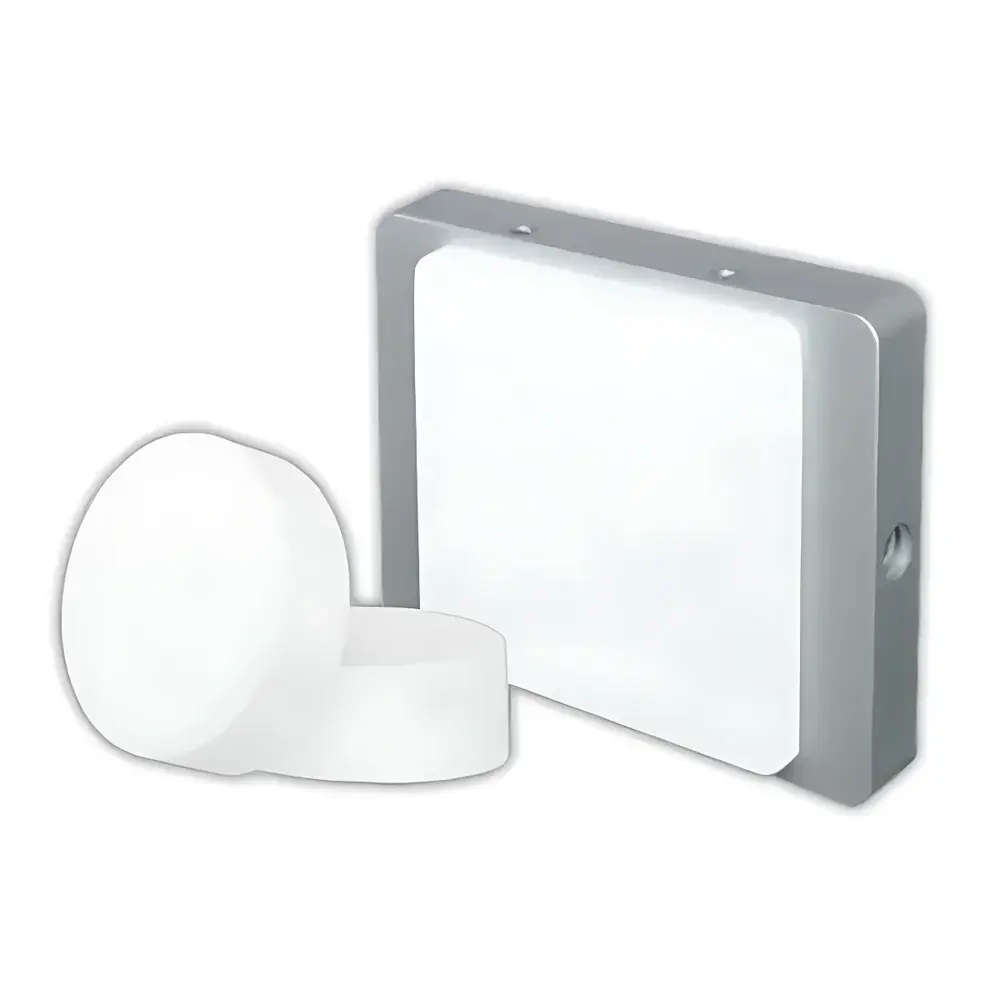
Gigahertz-Optik BN-Rxx-SQ Series Spectralon® Diffuse Reflectance Standards
| Brand | Gigahertz-Optik |
|---|---|
| Origin | Germany |
| Model | BN-R98-D2C, BN-R70-D2C, BN-R50-D2C, BN-R20-D2C, BN-R02-D2C (and SQ-series square variants) |
| Reflectance Values | 2%, 20%, 50%, 70%, 98% |
| Spectral Range | 250–2450 nm |
| Geometry | 8°/diffuse |
| Substrate Material | Spectralon® (ODM98 white, ODMP gray/black) |
| Diameter/Square Size | 50.8 mm (2"), 127 mm (5"), 254 mm (10"), 304.8 mm (12") |
| Housing | Anodized aluminum with protective cap |
| Certifications | Individual NIST-traceable calibration certificate included |
Overview
The Gigahertz-Optik BN-Rxx-SQ Series Spectralon® Diffuse Reflectance Standards are precision-calibrated optical reference targets engineered for high-fidelity radiometric and photometric calibration across ultraviolet, visible, and near-infrared spectral regions. These standards employ certified Spectralon® materials—ODM98 (white) and ODMP (gray-to-black)—which exhibit near-Lambertian reflectance behavior and exceptional spectral stability over time. Each unit is calibrated in an ISO/IEC 17025-accredited laboratory at Gigahertz-Optik GmbH against primary standards traceable to the Physikalisch-Technische Bundesanstalt (PTB), Germany’s national metrology institute. The 8°/diffuse measurement geometry ensures compatibility with industry-standard spectroradiometers, integrating spheres, and bidirectional reflectance distribution function (BRDF) instruments. Designed for long-term use in both laboratory and field environments—including outdoor exposure, thermal cycling, and UV-intensive applications—the BN-Rxx-SQ series delivers reproducible reflectance values from 250 nm to 2450 nm with minimal degradation under rigorous operational conditions.
Key Features
- Traceable calibration across 250–2450 nm with individual certificate per unit, compliant with ISO/IEC 17025 and traceable to PTB
- Five discrete reflectance levels: 2%, 20%, 50%, 70%, and 98% — enabling full-system linearity verification and gain normalization
- Spectralon® ODM98 substrate provides >98% reflectance and near-perfect Lambertian scattering up to 2500 nm; ODMP enables stable, low-reflectance gray-scale performance
- Mechanically robust anodized aluminum housing with threaded protective cap ensures physical integrity during handling, transport, and repeated mounting
- Multiple form factors: circular (D2C: Ø50.8 mm) and square (SQ2C to SQ12C: 50.8 × 50.8 mm to 304.8 × 304.8 mm) to accommodate diverse optical path geometries and sensor footprints
- No outgassing or spectral shift under ambient UV exposure — validated for multi-year deployment in solar simulation, remote sensing, and aerospace test environments
Sample Compatibility & Compliance
The BN-Rxx-SQ standards are compatible with all major optical measurement platforms requiring diffuse reflectance references, including spectroradiometers (e.g., Ocean Insight QE Pro, Avantes AvaSpec), hyperspectral imagers, integrating sphere-based systems (e.g., Labsphere RSA series), and laser distance sensors requiring absolute reflectance validation. Their spectral response meets requirements for ASTM E275, ISO 13406-2, and CIE S 014/E:2006 for reflectance standardization. Calibration data is provided in standard ASCII format (.csv) and conforms to NIST SP 800-53 security controls for data integrity when integrated into GLP/GMP-compliant workflows. Units comply with RoHS Directive 2011/65/EU and are free of hazardous substances per IEC 63000:2018.
Software & Data Management
Each BN-Rxx-SQ standard ships with a unique calibration certificate containing wavelength-resolved reflectance data at 1 nm intervals (250–2450 nm), uncertainty budgets per ISO/IEC Guide 98-3 (GUM), and PTB traceability documentation. Data files are structured for direct import into common analysis environments including MATLAB, Python (NumPy/Pandas), and commercial optical software such as LightTools, FRED, and OpticStudio. Optional API integration is available via Gigahertz-Optik’s CalDataLink™ interface for automated calibration database synchronization in enterprise QA/QC systems. All certificates support audit-ready metadata logging, including operator ID, environmental conditions at time of calibration, and instrument serial numbers used in verification.
Applications
- Radiometric calibration of satellite-based Earth observation sensors (e.g., Sentinel-2 MSI, Landsat OLI)
- Linearity verification and gain adjustment of spectrophotometers, colorimeters, and multispectral cameras
- Validation of BRDF models in material appearance simulation and computer graphics rendering pipelines
- Reference target for UAV-mounted hyperspectral survey systems operating under variable solar illumination
- Baseline characterization of optical coatings, paints, and camouflage materials in defense R&D
- Traceable reflectance reference for ISO 11664-7 (CIE) and ASTM E308-compliant color measurement protocols
FAQ
Are these standards suitable for UV-VIS-NIR spectrophotometer calibration?
Yes — each BN-Rxx-SQ unit is calibrated from 250 nm to 2450 nm with <±0.3% relative uncertainty (k=2) in the VIS-NIR range and <±0.8% in the deep UV region, meeting ASTM E927-21 requirements for working standards.
Can I use the same standard for both absolute reflectance and linearity testing?
Yes — the availability of five discrete reflectance levels (2% to 98%) allows simultaneous verification of detector linearity, dynamic range, and zero-offset correction within a single setup.
How often should recalibration be performed?
Gigahertz-Optik recommends recalibration every 24 months under controlled lab conditions; however, units deployed in outdoor or high-UV environments should be verified annually using a secondary transfer standard.
Is the Spectralon® surface susceptible to contamination or cleaning damage?
Spectralon® is chemically inert but micro-scratch sensitive. Cleaning must follow ISO 10110-7:2018 guidelines using filtered deionized water and lint-free optical tissue; no solvents or abrasives are permitted.
Do square-format standards maintain the same angular reflectance uniformity as circular ones?
Yes — all BN-Rxx-SQ variants undergo identical BRDF mapping during calibration; square edges are chamfered and masked during measurement to eliminate edge effects, ensuring uniform 8°/diffuse response across active area.




