
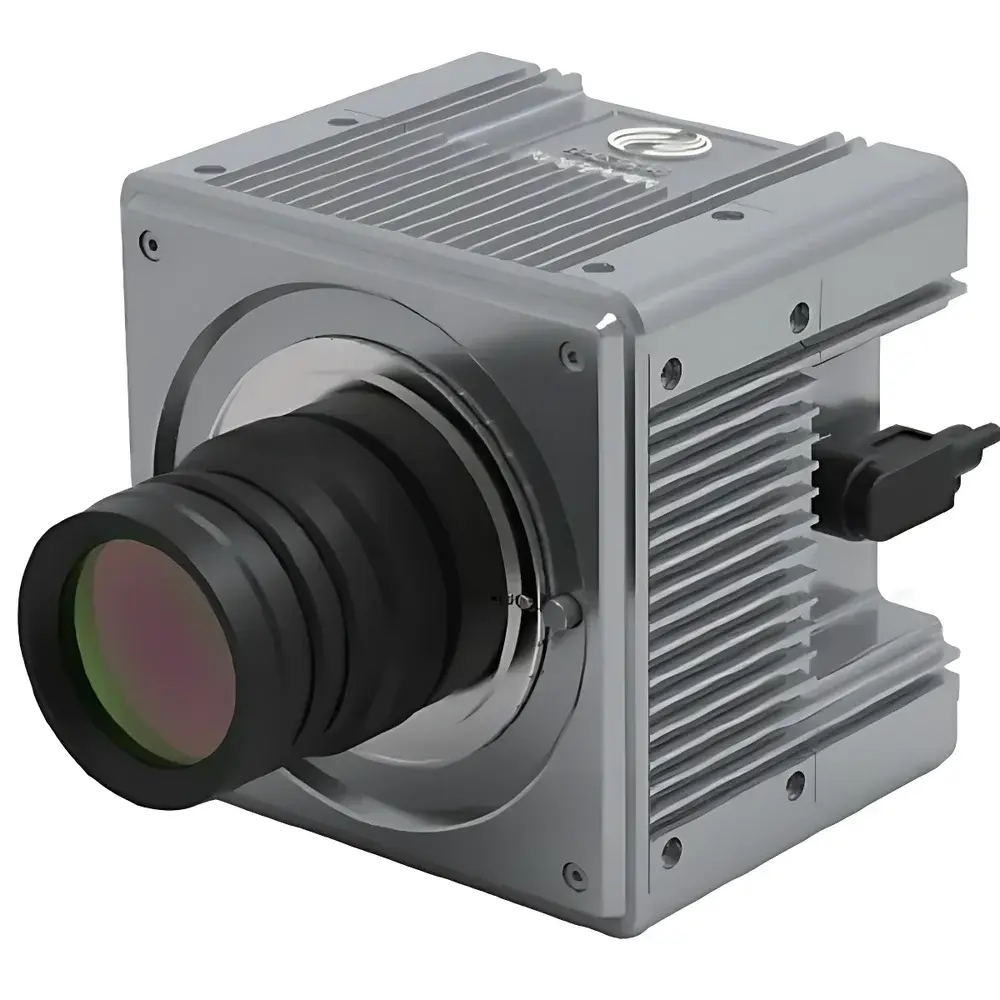
Auniontech LCTF-Based Staring Hyperspectral Imaging Camera
| Brand | Auniontech |
|---|---|
| Origin | Shanghai, China |
| Manufacturer Type | Authorized Distributor |
| Product Category | Domestic |
| Model | Staring Hyperspectral Imager |
| Pricing | Upon Request |
Overview
The Auniontech LCTF-Based Staring Hyperspectral Imaging Camera is an advanced, non-scanning spectral imaging system engineered for high-fidelity, frame-by-frame acquisition of hyperspectral data cubes (x, y, λ) across visible-to-shortwave infrared (VNIR–SWIR) bands. Unlike push-broom or whisk-broom architectures, this instrument employs a liquid crystal tunable filter (LCTF) integrated into a fixed optical path—enabling true staring-mode operation with no moving parts. The core measurement principle relies on electrically controlled birefringence modulation in nematic liquid crystal layers, allowing precise, stepwise selection of narrow spectral bands without mechanical actuation. This architecture delivers exceptional temporal stability, spatial registration fidelity, and immunity to motion-induced artifacts—critical for field-deployable, laboratory-grade, and process-integrated applications where sample integrity and measurement repeatability are paramount.
Key Features
- Staring-Mode Architecture: Eliminates scanning mechanisms—ensures pixel-perfect spatial co-registration across all spectral bands and enables snapshot-capable dynamic scene capture.
- Multi-Band Spectral Coverage: Configurable modules support three distinct spectral ranges: 420–750 nm (VNIR), 400–1000 nm (extended VNIR), and 920–1700 nm (SWIR), each optimized for detector quantum efficiency and optical throughput.
- High Spectral Resolution: 1 nm wavelength tuning resolution with thermal stabilization and active temperature compensation to maintain spectral calibration stability under ambient fluctuations.
- Narrow Bandpass Control: Full-width at half-maximum (FWHM) of 10 nm @ 550 nm (VNIR) and 15 nm @ 1200 nm (SWIR), ensuring high spectral discrimination for subtle material signatures.
- Fast Spectral Tuning: Electro-optic response time of 10–200 ms per band—enabling rapid sequential acquisition of full spectral stacks within seconds for time-resolved analysis.
- Scientific-Grade Imaging Sensors: Back-illuminated CMOS sensors (2048 × 2046, 6.5 µm pixels, 12-bit depth) for VNIR variants; InGaAs focal plane array (640 × 512, 15 µm pixels, 14-bit depth) for SWIR—both cooled for low dark current and high signal-to-noise ratio.
- Compact & Low-Power Design: Modular form factor (< 1.2 kg, < 12 W typical power draw) supports integration into UAV payloads, portable field kits, and OEM instrumentation platforms.
Sample Compatibility & Compliance
The system is designed for non-contact, reflectance/transmission-based spectral analysis of solid, semi-solid, and liquid samples—including biological tissues, agricultural specimens, cultural heritage objects, industrial materials, and environmental media. It operates without sample preparation in most cases and maintains spatial integrity across spectral acquisitions—making it suitable for GLP-compliant documentation workflows. While not certified as a medical device or FDA 510(k)-cleared instrument, its spectral output conforms to ASTM E131 (Standard Terminology Relating to Molecular Spectroscopy) and ISO/IEC 17025 traceability frameworks when used with calibrated reference standards (e.g., NIST-traceable reflectance tiles). Data acquisition protocols can be configured to meet audit trail requirements aligned with 21 CFR Part 11 principles (user authentication, electronic signature support, and immutable metadata logging) via optional software licensing.
Software & Data Management
The camera is delivered with Auniontech’s proprietary Hyperspectral Acquisition & Analysis Suite (HAAS), a Windows-based application supporting real-time preview, spectral cube acquisition, radiometric correction, and basic spectral unmixing. HAAS exports data in ENVI-compatible BIL/BIP formats (.hdr/.dat), HDF5, and TIFF stacks—ensuring interoperability with MATLAB, Python (scikit-image, spectral), and commercial platforms such as Specim INSIGHT or Malvern Panalytical’s Hyperscan. SDKs (C/C++, Python APIs) are provided for custom integration into automated inspection systems, machine vision pipelines, or cloud-based analytics infrastructure. All raw and processed datasets retain embedded metadata—including timestamp, LCTF voltage calibration map, sensor temperature, exposure parameters, and lens distortion coefficients—for reproducible scientific reporting.
Applications
- Forensic Science: Detection of erased or altered inks, latent fingerprints, accelerant residues, and counterfeit document features via spectral absorption and scattering anomalies.
- Geoscience & Remote Sensing: Mineral identification, lithological mapping, and vegetation stress assessment using diagnostic absorption features (e.g., chlorophyll-a at 680 nm, cellulose at 2100 nm).
- Agricultural Monitoring: Quantification of leaf nitrogen content, water status (NDVI, PRI), and early-stage disease detection through spectral indices derived from contiguous bands.
- Pharmaceutical Quality Control: Spatial mapping of API distribution and excipient homogeneity in tablet cross-sections using SWIR absorption bands (e.g., C–H, O–H overtones).
- Food Safety Inspection: Identification of surface contaminants (e.g., fecal matter, mold), pesticide residues, and spoilage indicators based on characteristic reflectance spectra.
- Cultural Heritage Analysis: Pigment identification, underdrawing visualization, and varnish degradation assessment without physical sampling.
- Environmental Monitoring: Discrimination of algal species in water bodies, hydrocarbon contamination in soil, and atmospheric aerosol typing via multi-spectral scattering profiles.
FAQ
What spectral resolution is achievable across the full operating range?
Spectral tuning resolution is 1 nm across all configured bands; however, effective spectral resolution is defined by the FWHM—10 nm in VNIR and 15 nm in SWIR—as determined by LCTF optical design and detector response.
Can the system acquire data in real time during dynamic processes?
Yes—frame rates up to 30 Hz per spectral band are achievable depending on exposure time and sensor readout mode; full 100-band cubes can be acquired in under 4 seconds with optimized settings.
Is radiometric calibration included with the system?
Each unit ships with factory-applied relative spectral response (RSR) calibration and optional NIST-traceable reflectance calibration kits for absolute quantification.
Does the camera support synchronization with external triggers or lighting sources?
Yes—the system provides TTL-compatible trigger I/O for hardware-synchronized acquisition with strobed illumination, motion stages, or other lab equipment.
What is the typical working distance and field of view?
FOV depends on lens selection: standard configurations offer 25° HFOV (f = 25 mm) or 7° HFOV (f = 100 mm); working distances range from 300 mm to infinity, with macro options available for sub-millimeter spatial sampling.






