Auniontech Aut-S700 Fiber Bragg Grating (FBG) Accelerometer
| Brand | Auniontech |
|---|---|
| Model | Aut-S700 |
| Sensing Principle | Fiber Bragg Grating (FBG) Interrogation |
| Measurement Range | 0–2 g / 0–50 g / 0–200 g (selectable) |
| Accuracy | ±5% FS |
| Bandwidth | 1 dB flat response up to 600 Hz or 1000 Hz (configurable) |
| Resolution | 0.1% FS |
| Sensitivity | 8–400 pm/g |
| Operating Temperature | −40 °C to +250 °C |
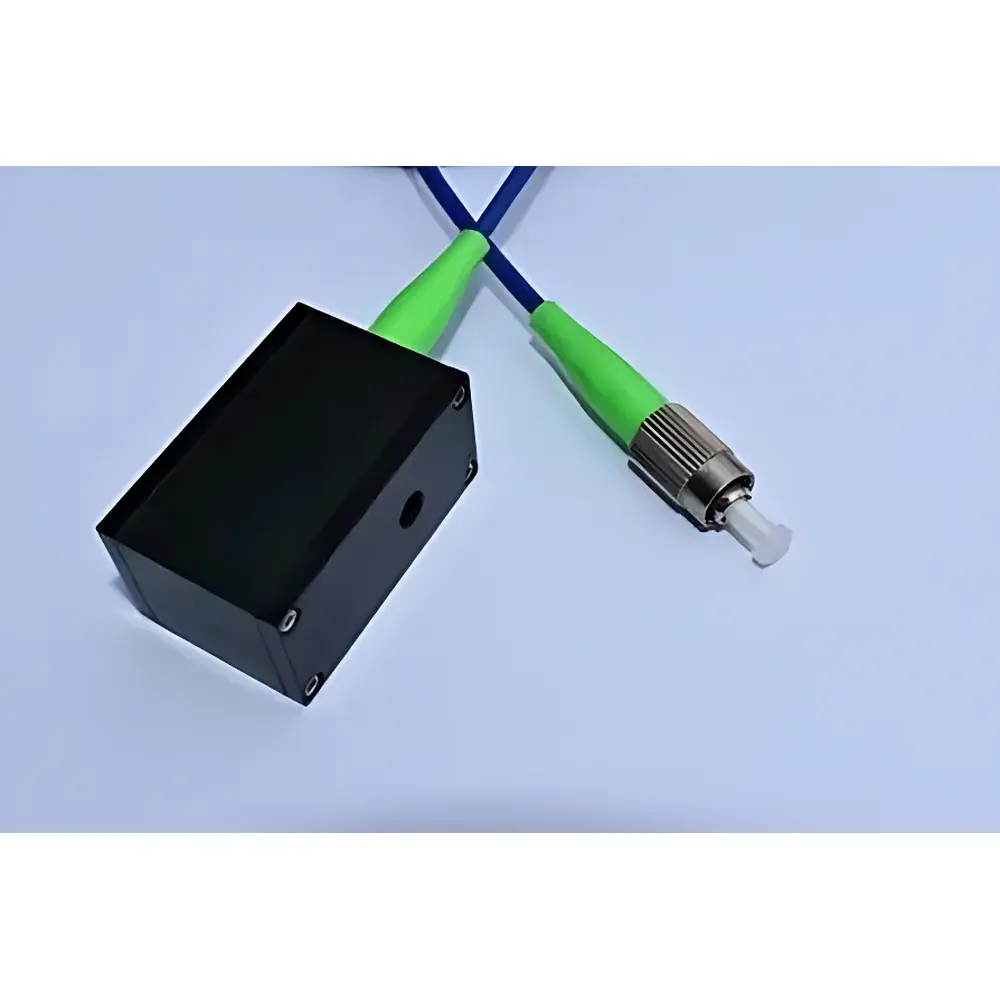
| Package Options | Ceramic or metal hermetic housing |
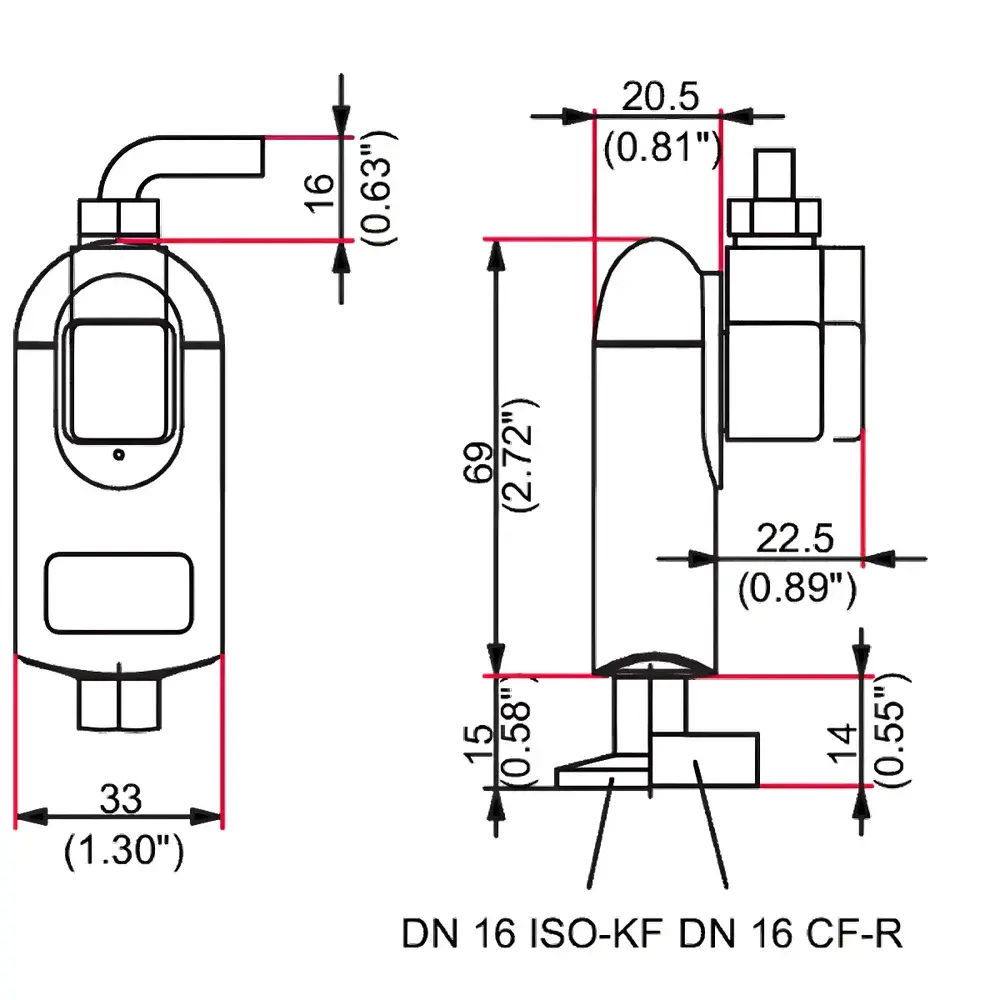
| Dimensions | 40×20×3 mm / 35×25×30 mm / 33×18×3 mm / 40×20×14 mm (model-dependent) |
| Fiber Connector | FC/APC |
| Cable Protection | PTFE-coated armored fiber |
| Electromagnetic Immunity | Immune to EMI/RFI, lightning-resistant, corrosion-resistant |
Overview
The Auniontech Aut-S700 Fiber Bragg Grating (FBG) Accelerometer is a high-stability, passive optical sensor engineered for long-term structural health monitoring (SHM) in electromagnetically hostile or thermally demanding environments. Unlike piezoelectric or MEMS-based accelerometers, the Aut-S700 operates on wavelength-encoded interrogation of strain-induced spectral shifts in embedded FBG elements—eliminating electrical signal paths and enabling intrinsic galvanic isolation. Its core architecture integrates a precisely tensioned FBG within a seismic mass-spring system, where dynamic acceleration induces axial strain on the grating, resulting in a linear, repeatable shift in Bragg wavelength (ΔλB). This optical encoding ensures immunity to electromagnetic interference (EMI), radio-frequency interference (RFI), high-voltage transients, and corrosive atmospheres—making it suitable for deployment in power substations, wind turbine nacelles, offshore platforms, and aerospace vehicle skins. With configurable bandwidths up to 1 kHz and operational capability from −40 °C to +250 °C, the Aut-S700 supports both transient vibration analysis and low-frequency modal identification across civil, marine, and defense infrastructure.
Key Features
- Fully passive, all-dielectric sensing element—no onboard electronics or power required at the sensing point
- EMI/RFI-immune operation validated per IEC 61000-4-3 (radiated immunity) and IEC 61000-4-4 (electrical fast transient)
- Hermetically sealed ceramic or stainless-steel housing with IP68-rated ingress protection
- PTFE-jacketed, armored single-mode fiber (SMF-28e+) with FC/APC connector; crush- and bend-resistant design
- Multi-range configuration support: 2 g, 50 g, and 200 g full-scale options with consistent linearity and hysteresis <0.3% FS
- Thermal compensation integrated at grating level and package interface to minimize cross-axis sensitivity and thermal drift
- Compatible with standard FBG interrogators (e.g., Micron Optics sm130, HBM FiberSensing FS22, or Luna ODiSI platforms)
Sample Compatibility & Compliance
The Aut-S700 is designed for direct surface mounting via adhesive bonding, stud mounting, or custom fixture integration (including dual-axis and triaxial configurations using orthogonal mounting blocks). It complies with ISO 5347-12 (vibration and shock transducer calibration—accelerometers with optical output) and meets requirements for long-term monitoring under ASTM E2923 (Standard Guide for Structural Health Monitoring Systems). Its non-conductive construction satisfies IEEE Std 1158 (underground cable monitoring) and EN 50121-3-2 (railway applications). For regulated industries—including nuclear facility instrumentation and aviation structural testing—the sensor’s traceable calibration certificate (NIST-traceable reference standards) and material compliance documentation (RoHS, REACH) are provided upon request. No internal batteries or active components ensure compliance with intrinsic safety requirements in Zone 0/1 hazardous areas when paired with appropriate explosion-proof interrogators.
Software & Data Management
Data acquisition relies on industry-standard FBG interrogation systems that output wavelength shift data (in picometers) synchronized with timestamp and temperature reference channels. The Aut-S700 is fully compatible with vendor-neutral software frameworks including MATLAB® Data Acquisition Toolbox, Python-based PyOptik libraries, and LabVIEW™ drivers supporting NI CompactRIO or PXI platforms. Raw wavelength data can be converted to acceleration units (m/s² or g) using factory-provided polynomial calibration coefficients (order ≥3) stored in sensor-specific metadata files. All interrogation platforms support audit-trail logging, data encryption (AES-256), and export to HDF5 or CSV formats compliant with ISO/IEC 17025 documentation requirements. For GxP-regulated deployments, optional FDA 21 CFR Part 11-compliant software modules provide electronic signatures, role-based access control, and immutable change history.
Applications
- Continuous vibration monitoring of concrete bridges, cable-stayed towers, and hydroelectric dam abutments
- Modal analysis and fatigue life assessment of composite aircraft fuselages and rotor blades
- Real-time seismic response tracking in high-rise buildings equipped with base-isolation systems
- Vibration signature analysis of high-speed rail bogies and maglev guideway segments
- Condition monitoring of rotating machinery in high-EMI industrial plants (e.g., arc furnace facilities, MRI suites)
- Launch vehicle stage separation dynamics and payload bay micro-vibration characterization
FAQ
What interrogation systems are compatible with the Aut-S700?
The sensor is interoperable with any FBG interrogator supporting C-band (1525–1565 nm) scanning, resolution ≤1 pm, and sampling rates ≥2 kHz—such as Micron Optics sm125/sm130, HBM FiberSensing FS22, or Luna ODiSI 6100 series.
Can multiple Aut-S700 sensors be multiplexed on a single fiber?
Yes—up to 20 sensors per fiber line using wavelength-division multiplexing (WDM), provided their Bragg wavelengths are spaced ≥1.2 nm apart and fall within the interrogator’s scan range.
Is temperature compensation included?
Each unit includes a co-located FBG temperature reference channel; dual-grating compensation algorithms are supported in all major interrogation software platforms.
What is the expected service life under continuous operation?
Rated for >15 years in static load conditions and >10⁷ cycles at rated full-scale amplitude, per accelerated life testing per Telcordia GR-1221-CORE.
Do you provide calibration certificates with NIST traceability?
Yes—each sensor ships with a certificate documenting sensitivity, linearity, frequency response, and thermal drift, traceable to NIST Standard Reference Material (SRM) 2821.