
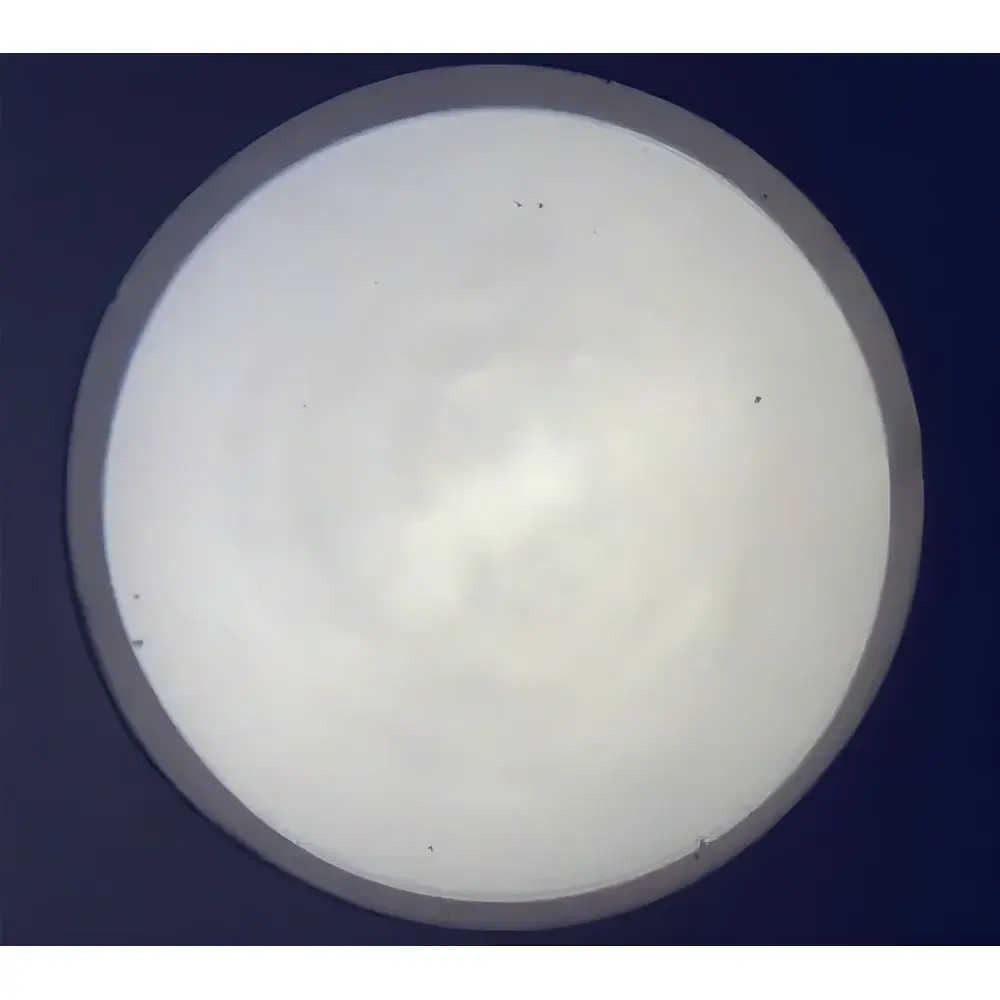
Auniontech GeO₂ Infrared Transmitting Fiber for 2.7–3.0 µm Wavelength Range
| Brand | Auniontech |
|---|---|
| Core Material | Germanium Dioxide (GeO₂) |
| Transmission Window | 2.0–3.0 µm |
| Typical Attenuation | < 300 dB/km @ 2.78 µm |
| Fresnel Reflectance (Air Interface) | 8.6% |
| Coating | Polyimide + Hytrel® |
| Operating Temperature | –180 to +150 °C |
| Laser Compatibility | Er:YAG (2.94 µm), Er:YSGG (2.79 µm) |
| Damage Threshold | High (Suitable for Pulsed & CW Medical Lasers) |
| Customization | Length, Termination, Connectorization, and Cladding Options Available |
Overview
Auniontech GeO₂ infrared transmitting fiber is a specialty solid-core optical fiber engineered for high-fidelity power delivery in the mid-infrared spectral region spanning 2.0–3.0 µm. Unlike silica-based fibers—which exhibit strong multiphonon absorption beyond 2.2 µm—germanium dioxide (GeO₂) possesses an extended infrared transparency window due to its lower phonon energy. This intrinsic material property enables low-loss guidance of intense laser radiation from clinically established sources such as Er:YAG (2.94 µm) and Er:YSGG (2.79 µm), both of which emit precisely within water’s strongest vibrational absorption band. The fiber operates on the principle of total internal reflection, with a high-purity GeO₂ core surrounded by a lower-index GeO₂-based cladding or specialized polymer overclad. Its design prioritizes thermal stability, mechanical robustness under bending, and resistance to hydrolytic degradation—critical attributes for integration into Class IV medical laser systems requiring regulatory compliance and long-term reliability.
Key Features
- Optimized transmission across 2.0–3.0 µm, with peak performance at 2.78 µm (attenuation < 300 dB/km)
- High laser-induced damage threshold (LIDT) for nanosecond-pulsed and continuous-wave operation at therapeutic power levels
- Chemically inert core composition—resistant to acids, bases, and organic solvents encountered in sterilization and clinical environments
- Dual-layer protective coating: inner polyimide layer for thermal resilience (–180 °C to +150 °C) and outer Hytrel® thermoplastic elastomer for mechanical abrasion resistance and flexibility
- Low Fresnel back-reflection (8.6% at air–fiber interface), minimizing feedback-induced instability in laser cavities and enabling compatibility with active monitoring schemes
- Customizable configurations including FC/PC, SMA-905, or bare-fiber termination; length options from 1 m to >10 m; optional metal-sheathed or armored variants for endoscopic integration
Sample Compatibility & Compliance
This GeO₂ fiber is validated for use with FDA-cleared and CE-marked Er:YAG and Er:YSGG laser platforms operating under IEC 60601-2-22 (Medical Electrical Equipment – Particular Requirements for the Basic Safety and Essential Performance of Laser Equipment for Surgery, Diagnosis and Monitoring). Its material composition and coating system comply with ISO 10993-5 (biological evaluation of medical devices – cytotoxicity tests) and USP Class VI requirements for implantable-grade polymers where applicable. The fiber does not contain halogenated flame retardants or heavy metals restricted under RoHS Directive 2011/65/EU. Batch traceability, certificate of conformance (CoC), and material test reports (MTRs) are supplied with each delivery to support GMP-aligned quality documentation workflows.
Software & Data Management
While the fiber itself is a passive optical component, its integration into laser delivery systems often interfaces with OEM control software supporting IEC 62304-compliant firmware architecture. Auniontech provides detailed optical coupling specifications—including numerical aperture (NA ≈ 0.20–0.25), mode field diameter (~35–50 µm depending on wavelength), and alignment tolerances—to facilitate seamless integration with beam-shaping optics and real-time power monitoring modules compliant with FDA 21 CFR Part 11 electronic record and signature requirements. Traceable calibration data for insertion loss and return loss is archived per batch for audit readiness in GLP and ISO 13485-certified environments.
Applications
- Dentistry: Precise ablation of enamel and dentin with minimal thermal necrosis; compatible with contact and non-contact handpieces for caries removal and cavity preparation
- Dermatology: Fractional resurfacing and vascular lesion treatment leveraging water-selective photothermolysis at 2.94 µm
- Ophthalmology: Corneal sculpting and lamellar keratectomy where micron-level incision control and minimal collateral damage are essential
- Cardiology: Ablation of arrhythmic myocardial tissue using catheter-based delivery systems incorporating flexible GeO₂ fiber probes
- Research: Pump-probe spectroscopy, gas sensing (e.g., CO, CH₄, NH₃ detection), and nonlinear frequency conversion experiments in the molecular fingerprint region
FAQ
Is this fiber suitable for use with Q-switched Er:YAG lasers?
Yes—its high LIDT and low dispersion profile support nanosecond pulse durations typical of Q-switched Er:YAG systems (e.g., 50–200 ns FWHM).
Can the fiber be spliced or connectorized in-house?
Standard fusion splicing is not recommended due to GeO₂’s high melting point and thermal expansion mismatch. We supply pre-terminated fibers with industry-standard connectors or offer factory-based cleaving, polishing, and epoxy-free physical contact (PC) termination services.
What is the minimum bend radius for safe operation?
The recommended static bend radius is ≥30 mm; dynamic bending during procedure must remain above 50 mm to avoid microcrack formation and attenuation increase.
Does the fiber meet biocompatibility requirements for intraoperative use?
The polyimide/Hytrel® coating system has passed ISO 10993-5 cytotoxicity testing and USP Class VI extraction assays. However, direct tissue contact classification requires final device-level validation per ISO 10993-1.
Are spectral attenuation curves available for specific wavelengths?
Yes—full spectral loss characterization (2.0–3.2 µm) with ±0.5 nm resolution is provided in the technical datasheet for each production lot.






