
Auniontech LingMou OCT-3D High-Precision Optical Coherence Tomography Imaging System
| Brand | Auniontech |
|---|---|
| Origin | Shanghai, China |
| Manufacturer Type | Authorized Distributor |
| Product Category | Domestic (PRC-Made) |
| Model | OCT-3D Imaging System |
| Pricing | Available Upon Request |
Overview
The Auniontech LingMou OCT-3D High-Precision Optical Coherence Tomography Imaging System is a non-invasive, label-free, micron-scale 3D structural imaging platform engineered for quantitative depth-resolved analysis of transparent and semi-transparent materials. Based on the physical principle of low-coherence interferometry, the system measures backscattered or reflected light interference signals from multiple depths within a sample using broadband or tunable laser sources. This enables axial sectioning—akin to optical biopsy—with no physical contact or sample preparation required. Unlike conventional surface inspection methods (e.g., brightfield microscopy or 2D profilometry), the LingMou OCT-3D delivers volumetric tomographic data sets with defined axial and lateral resolution, supporting true 3D reconstruction, cross-sectional slicing (XY, XZ, YZ), and quantitative thickness mapping. It is optimized for applications demanding sub-micron axial fidelity, high-speed volumetric acquisition, and robust signal-to-noise performance across variable optical path lengths.
Key Features
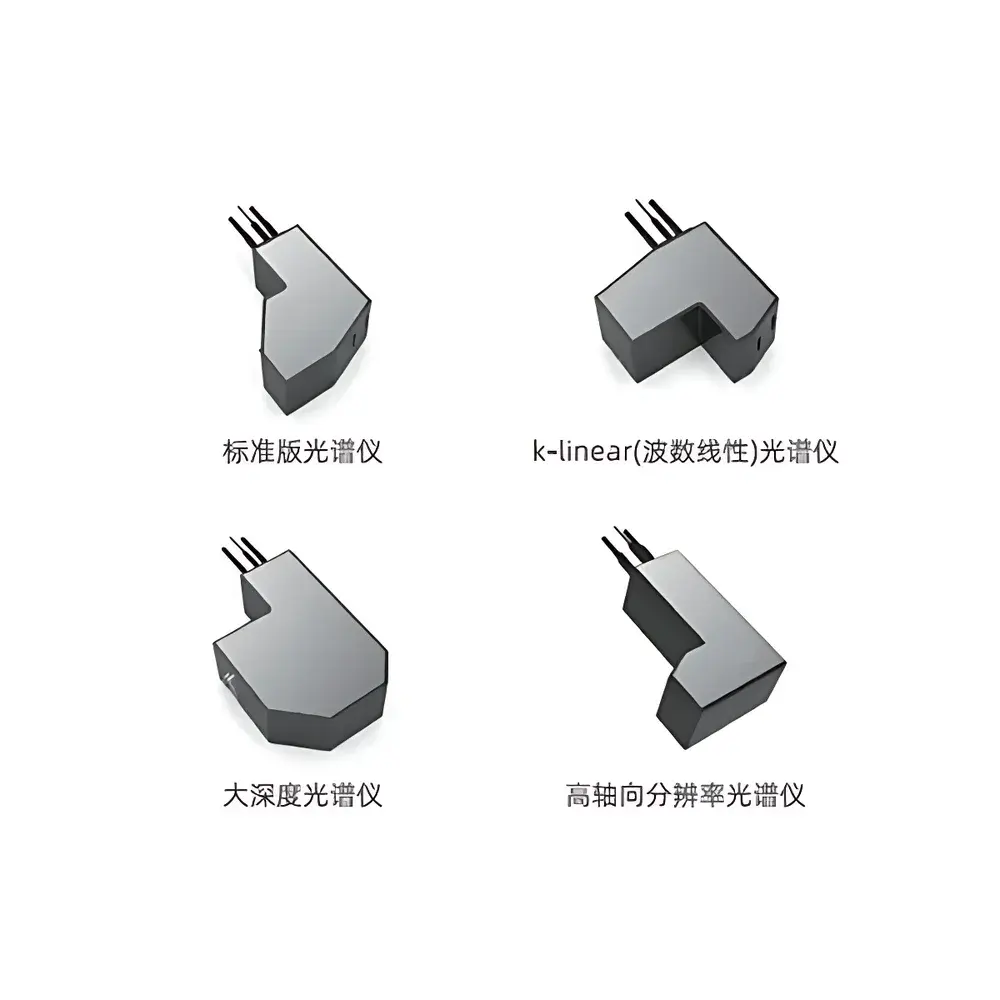
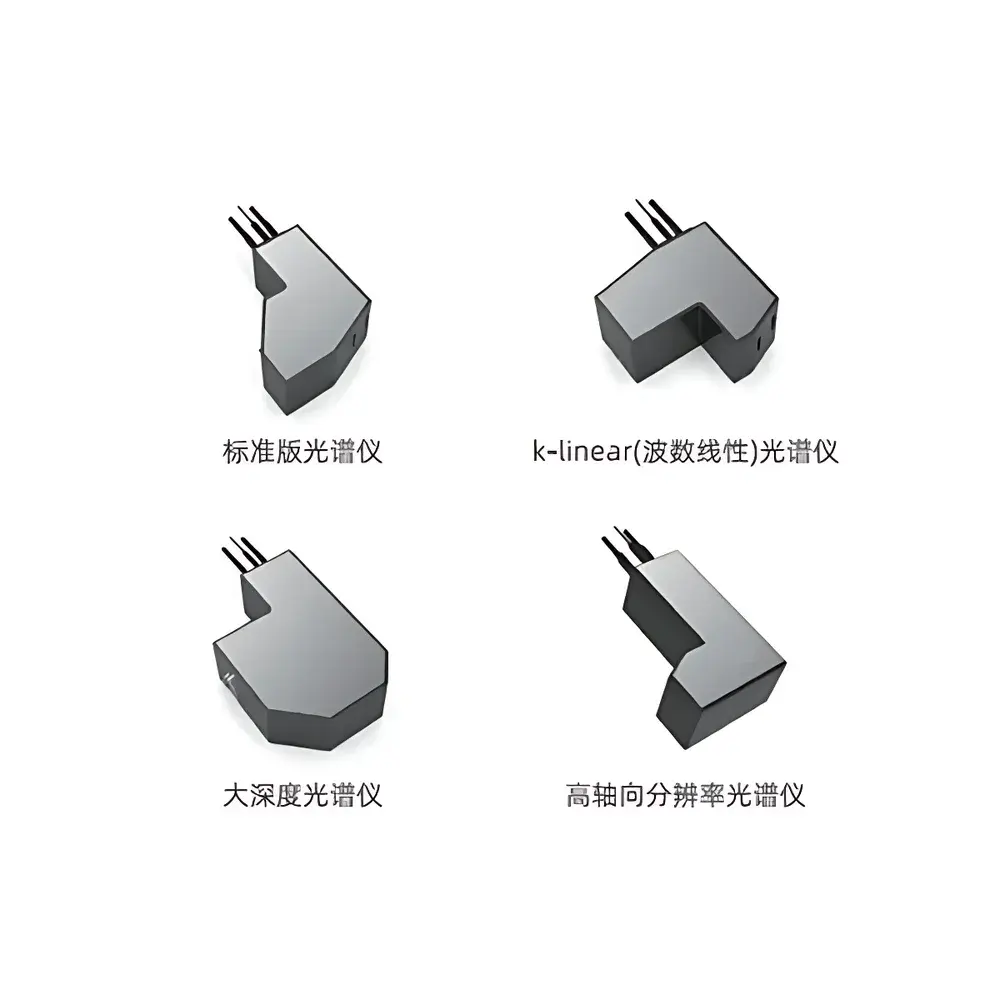
- Two modular OCT architectures: Spectral-Domain OCT (SD-OCT) with point-scanning configuration and Full-Field Swept-Source OCT (FF-SS-OCT) with parallel en-face detection—enabling selection based on speed–resolution–depth trade-offs.
- SD-OCT variants operate at center wavelengths of 840 nm and 870 nm; FF-SS-OCT systems use 775 nm swept lasers—each selected for optimal penetration and scattering contrast in specific material classes (e.g., polymer films, ophthalmic lenses, pharmaceutical coatings).
- A-scan rates up to 248 kHz (SD-OCT) and frame rates up to 2099 Hz (FF-SS-OCT), supporting real-time volumetric rendering and dynamic process monitoring.
- Axial resolution ranging from <3.2 µm to 16 µm (air-equivalent), with lateral resolution down to 3.5 µm—achievable via interchangeable objective optics and scan lens configurations.
- Imaging depth in air up to 11.3 mm (SD-OCT) and 4.2 mm (FF-SS-OCT), with 6-dB roll-off depths specified per configuration to ensure quantifiable signal fidelity across the usable range.
- Integrated high-performance computing workstation with proprietary LM® OCT software suite for live 3D visualization, multi-planar reformatting, contrast adjustment, and export of raw interferogram data (complex-valued or intensity-only) in standard formats (e.g., HDF5, TIFF stack).
Sample Compatibility & Compliance
The LingMou OCT-3D system is validated for non-destructive evaluation of optically accessible layered structures, including but not limited to: glass substrates, multilayer thin-film stacks (LCD/LED displays, AR/VR optics), polymeric coatings (drug-eluting stents, tablet film coatings), ceramic composites, carbon fiber laminates, and biological tissues ex vivo. Its measurement methodology aligns with principles outlined in ISO 13588 (non-destructive testing — ultrasonic testing — characterization and verification of equipment), adapted for optical coherence techniques. While not an FDA-cleared medical device, its quantitative depth profiling capability supports GLP-compliant documentation workflows when integrated into regulated R&D environments (e.g., pharmaceutical coating uniformity assessment per USP <1059>). Data integrity features—including timestamped acquisition logs, user-access controls, and audit-trail-enabled software—facilitate alignment with 21 CFR Part 11 requirements for electronic records in quality-controlled manufacturing settings.
Software & Data Management
The LM® OCT software provides a deterministic, deterministic acquisition pipeline—from raw spectral interferogram capture to complex-domain resampling, dispersion compensation, Hilbert transform-based envelope detection, and volumetric rendering. All processing steps are fully parameterized and scriptable via Python API. The software supports batch-mode acquisition, region-of-interest (ROI) gating, and automated layer segmentation using gradient-threshold algorithms. Export options include volumetric NIfTI files for downstream analysis in ImageJ/Fiji or MATLAB, as well as calibrated 2D B-scan matrices for statistical thickness distribution reporting. Raw interferogram data retains full k-space sampling metadata, enabling advanced post-processing such as numerical dispersion correction, adaptive deconvolution, or machine-learning–based defect classification (when trained on domain-specific datasets).
Applications
- Industrial Quality Assurance: Thickness metrology of conformal coatings on electronics; delamination detection in bonded optical assemblies; void and inclusion mapping in fused silica lenses; edge profile analysis of micro-machined cavities.
- Pharmaceutical Development: Quantitative measurement of enteric film coating thickness and uniformity on oral solid dosage forms; real-time monitoring of dissolution-induced layer erosion kinetics.
- Advanced Materials Characterization: Interfacial roughness quantification in multilayer photovoltaic stacks; porosity estimation in aerogel-based thermal barriers; crystallinity gradients in printed polymer electronics.
- Academic & Translational Research: Structural phenotyping of zebrafish embryos; corneal epithelial thickness mapping in murine models; scaffold degradation dynamics in tissue-engineered constructs.
FAQ
What is the primary difference between SD-OCT and FF-SS-OCT configurations in this system?
SD-OCT uses line-scan spectrometers and point-by-point depth scanning, delivering superior axial resolution and deeper penetration—ideal for high-precision metrology. FF-SS-OCT employs a swept laser source and area camera, enabling faster en-face acquisition over larger fields—suited for dynamic or wide-area inspection.
Can the system be integrated into automated production lines?
Yes. The system supports hardware triggering (TTL I/O), Ethernet-based remote control (TCP/IP), and programmable API access—allowing synchronization with motion stages, PLCs, or vision-guided robotic handlers.
Is calibration traceable to national standards?
Axial calibration is performed using NIST-traceable step-height standards (e.g., VLSI calibrators); lateral scale is verified via certified grating targets. Calibration certificates are provided upon installation and annually during preventive maintenance.
Does the system support polarization-sensitive OCT (PS-OCT)?
Not natively; however, the optical engine architecture allows for optional integration of polarization-diverse detection paths and retardance calibration modules—subject to custom engineering engagement.
What level of technical support is available outside China?
Auniontech partners with regional distributors offering localized engineering support, application consulting, and on-site service contracts in EMEA, North America, and APAC regions—backed by Shanghai-based R&D escalation.






