ViALUX BodyLux® 3D Human Body Scanner
| Brand | ViALUX |
|---|---|
| Origin | Imported |
| Manufacturer Type | Authorized Distributor |
| Model | BodyLux® |
| Measurement Speed | 6–8 s per full-body scan |
| Scanning Distance | ≥1.5 m |
| Light Source | Safe White Light (IEC 62471-compliant) |
| Medical Classification | Class I / Class Im (EU MDR 2017/745) |
| Output Format | Registered Point Cloud & Watertight Mesh (OBJ, STL, PLY, FBX) |
| Software Interface | Graphical User Interface (GUI) with Automated Anthropometric Algorithm Suite |
| Data Management | Built-in Database with Longitudinal Tracking & Delta Analysis |
Overview
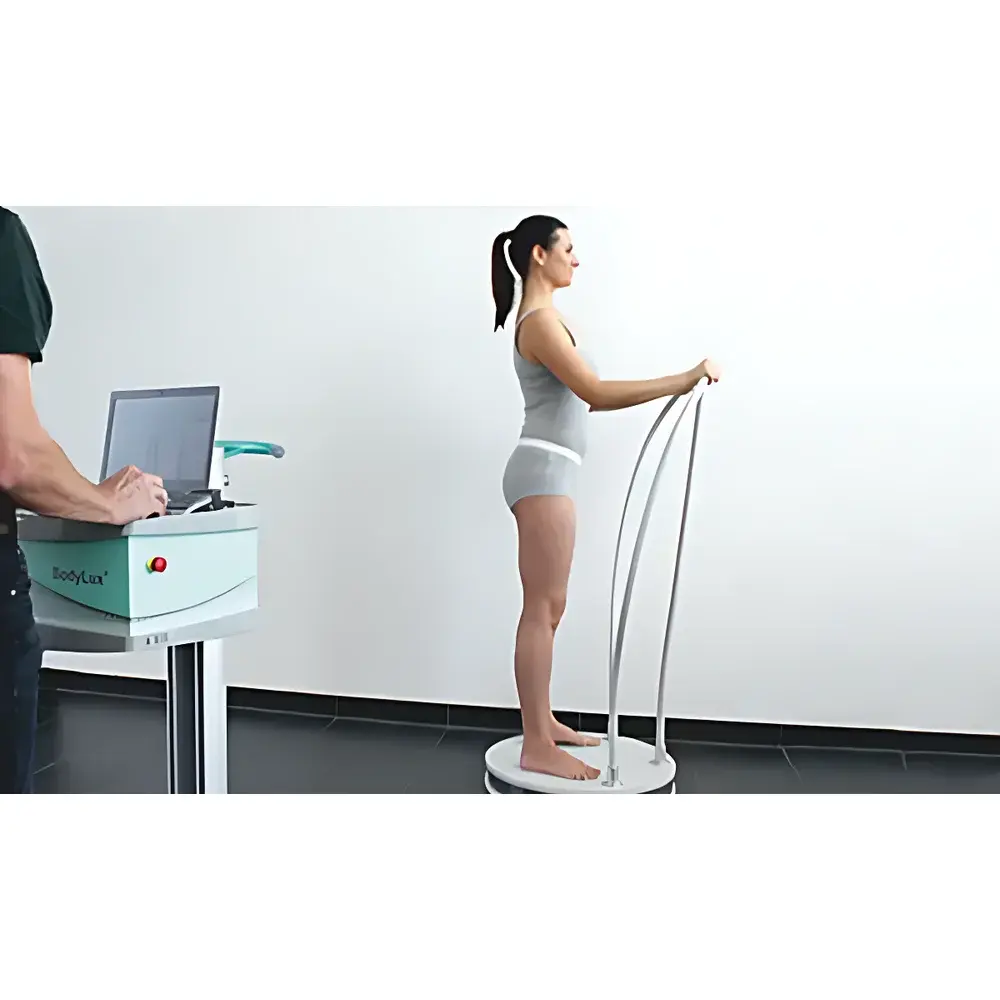
The ViALUX BodyLux® 3D Human Body Scanner is a non-contact, optical-based anthropometric measurement system engineered for high-fidelity acquisition of human surface geometry. It employs structured white-light projection combined with multi-view stereo photogrammetry to reconstruct dense, sub-millimeter-accurate point clouds of the human torso, limbs, and head in under eight seconds. Unlike laser-based systems, the BodyLux® uses medically certified white-light illumination compliant with IEC 62471 (Photobiological Safety), eliminating retinal hazard concerns and enabling safe repeated use in clinical, research, and commercial environments. Designed specifically for static pose capture—typically in standardized T-pose or relaxed stance—the system delivers geometrically registered 3D models traceable to SI units via factory calibration against NIST-traceable reference manikins. Its primary function is not diagnostic imaging but quantitative morphometric analysis: extraction of precise circumferences, lengths, volumes, surface curvatures, and symmetry indices directly from the mesh geometry.
Key Features
- Full-body 3D acquisition in 6–8 seconds at stand-off distance ≥1.5 m—no physical contact, no compression garments required
- Class I / Class Im medical device certification per EU MDR 2017/745, validated for repeated use in health-related applications
- Automated anthropometric algorithm suite: computes >120 standardized body dimensions (e.g., bust/waist/hip circumference, shoulder width, thigh girth, seated height) without manual landmark annotation
- Integrated GUI with real-time visualization of point cloud registration, mesh topology, and dimensional overlays—designed for operator-independent operation
- Built-in longitudinal database supporting cohort-level tracking: time-series delta analysis of volume change, segmental fat distribution trends, and posture-derived asymmetry metrics
- Export-ready output formats including OBJ, STL, PLY, and FBX—fully compatible with CAD platforms (e.g., SolidWorks, Fusion 360), biomechanical simulation tools (AnyBody, OpenSim), and garment pattern software (CLO, Browzwear)
Sample Compatibility & Compliance
The BodyLux® accommodates subjects aged 6–85 years, with height range 1.2–2.1 m and BMI up to 45 kg/m². It requires minimal subject preparation: barefoot, form-fitting clothing (e.g., spandex or cotton base layer) and removal of reflective accessories. No skin markers, calibration suits, or pose correction are needed. All hardware and firmware comply with EN 60601-1 (medical electrical equipment safety), EN 55032 (EMC), and EN 62366-1 (usability engineering). The system supports audit trails and electronic signatures in accordance with FDA 21 CFR Part 11 when deployed in GLP/GMP-regulated workflows—though its Class Im designation indicates it is intended for monitoring, not diagnosis or therapeutic decision-making.
Software & Data Management
The proprietary BodyLux® Acquisition & Analysis Suite runs on Windows 10/11 (64-bit) and includes three core modules: Scan Control (real-time alignment diagnostics), AutoMeasure (ISO 8559-1–aligned anthropometric engine), and CohortManager (relational SQL database with role-based access control). Each scan generates a timestamped record containing raw point cloud, reconstructed mesh, computed dimensions, and metadata (subject ID, date, technician, environmental conditions). Data export supports batch processing and API integration (RESTful endpoints available under enterprise license) for interoperability with LIMS, EHR, or PLM systems. All stored measurements are cryptographically hashed; revision history preserves original and edited values per ALCOA+ principles.
Applications
- Ergonomics & Occupational Health: Quantification of workplace posture strain indices, seat/cockpit fit validation, and PPE sizing optimization per ISO 11226 and ANSI/HFES 100
- Sports Science: Longitudinal tracking of lean mass distribution, joint angle kinematics (via markerless pose estimation add-on), and swimwear/dynamic apparel drag coefficient modeling
- Clinical Nutrition & Rehabilitation: Objective assessment of edema progression, post-surgical contour changes, and sarcopenia screening using volumetric segmentation algorithms
- Apparel & Fit Technology: Generation of personalized avatars for virtual try-on, automated grading of size charts against national anthropometric databases (e.g., CAESAR, SizeUK), and 3D pattern adaptation
- Digital Twin Development: Input geometry for physics-based soft-tissue simulation, surgical planning rehearsal, and prosthetic socket design validation
FAQ
What is the measurement uncertainty for circumferential dimensions?
Typical expanded uncertainty (k=2) is ±2.3 mm for trunk circumferences under controlled lighting and standardized pose—validated per ISO/IEC 17025 accredited inter-laboratory study.
Can BodyLux® integrate with existing hospital IT infrastructure?
Yes—DICOM SR export module and HL7 v2.5 interface are available under HIPAA-compliant deployment configuration.
Is motion compensation supported during scanning?
No. BodyLux® requires static pose acquisition. For dynamic capture, ViALUX recommends synchronized integration with Vicon or Qualisys motion capture systems.
How often does the system require recalibration?
Factory calibration is valid for 24 months; annual verification using supplied traceable phantoms is recommended per ISO 10360-5.
Does the software support custom dimension definitions?
Yes—users may define and validate new anthropometric landmarks and derived metrics via Python scripting interface (API documentation included).