
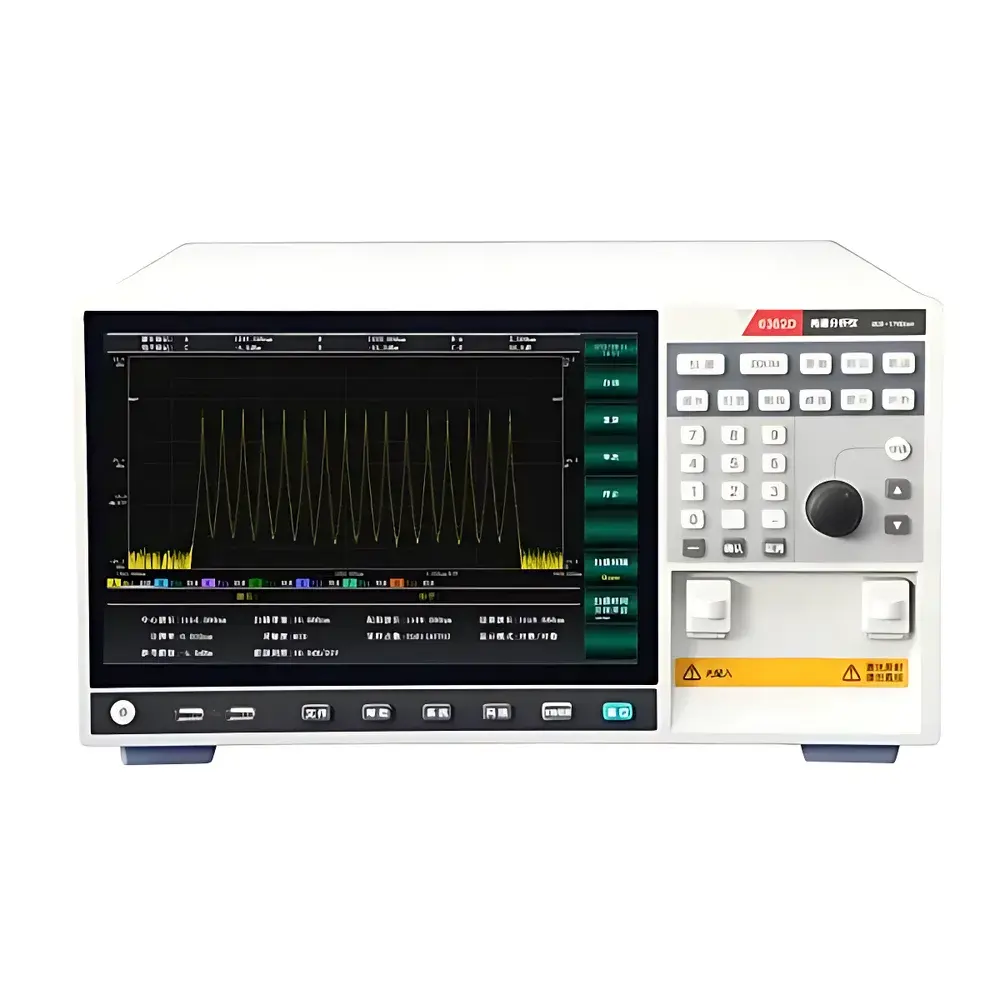
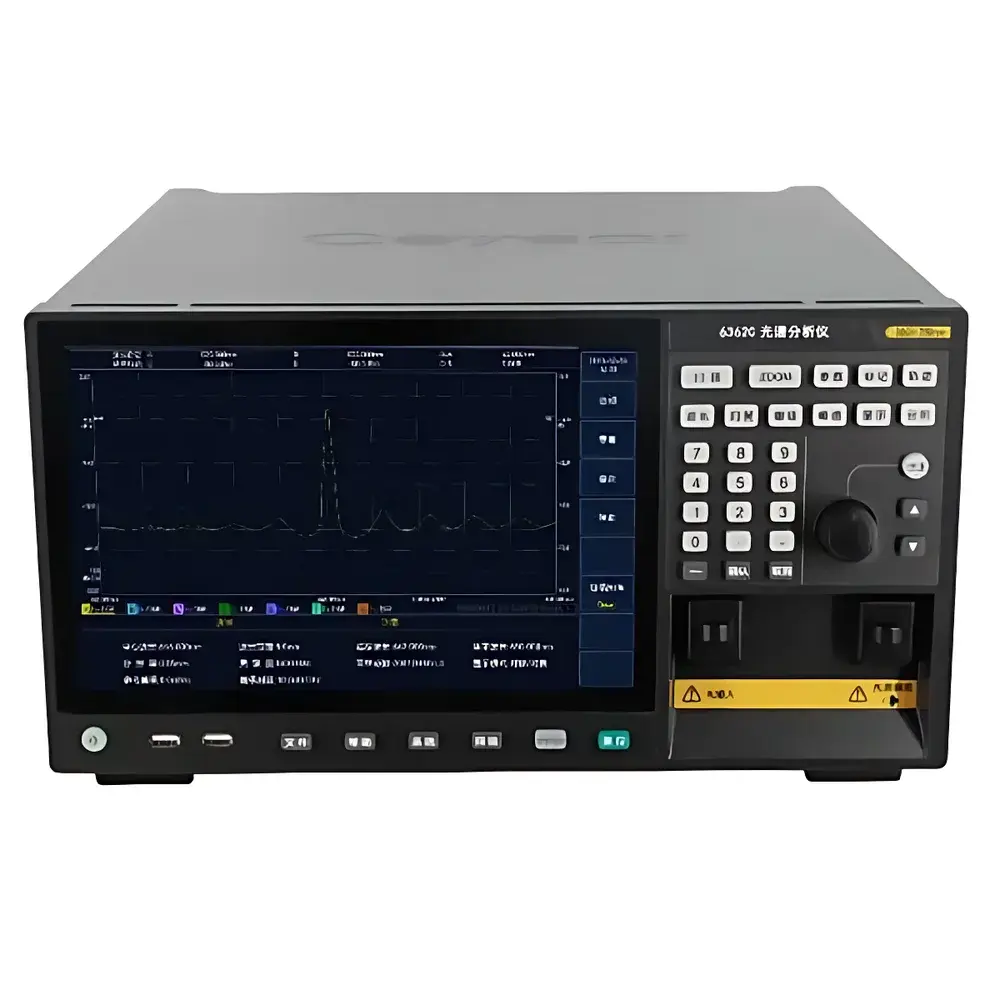
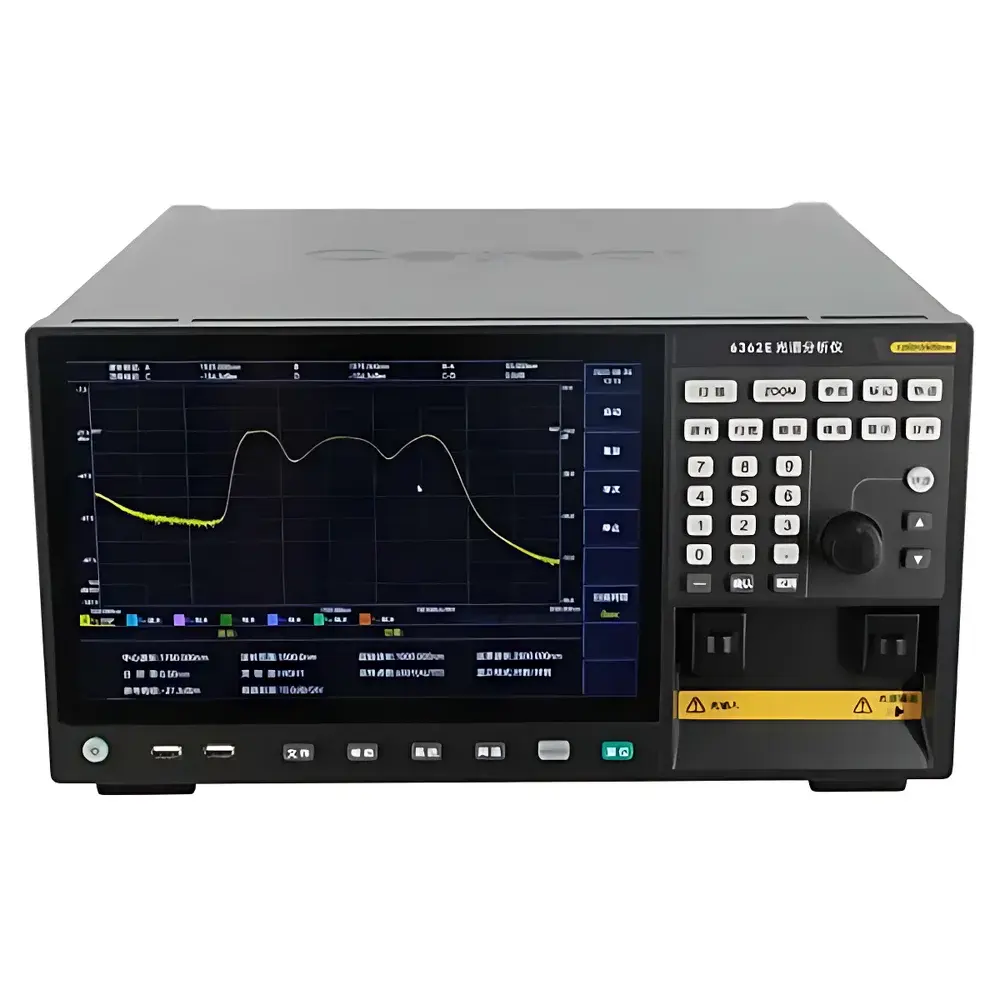
Auniontech 6362D Ultra-High-Resolution Optical Spectrum Analyzer (600–1700 nm, 20 pm Resolution)
| Brand | Auniontech |
|---|---|
| Origin | Shanghai, China |
| Model | 6362D |
| Spectral Range | 600–1700 nm |
| Minimum Spectral Resolution | 20 pm |
| Wavelength Accuracy | ±0.02 nm (1520–1620 nm) |
| Dynamic Range | 73 dB (at 0.05 nm resolution, peak ±1.0 nm) |
| Sensitivity | –90 dBm (1300–1620 nm, HIGH3 mode) |
| Input Interface | Free-space and fiber-coupled (SM/GI/large-core) |
| Display | 12.1″ capacitive touchscreen |
| Data Interfaces | USB, Ethernet, RS232C, VGA |
| Dimensions | 426 × 221 × 450 mm |
| Weight | 19 kg |
| Power | 100–240 VAC, 50/60 Hz, ≤100 W |
Overview
The Auniontech 6362D Ultra-High-Resolution Optical Spectrum Analyzer is an engineered solution for precision spectral characterization across the full telecommunications and photonics development lifecycle. Based on high-fidelity diffraction grating monochromator architecture with optimized thermal and mechanical stability, the instrument delivers sub-picometer spectral resolution and metrological-grade wavelength fidelity in the 600–1700 nm range — fully covering O-, E-, S-, C-, L-, and U-bands. Its optical design employs a double-pass Czerny-Turner configuration with thermally compensated gratings and active wavelength referencing, enabling robust operation under laboratory and manufacturing floor conditions. The analyzer operates on the principle of sequential scanning via precision motorized grating rotation, coupled with low-noise InGaAs and Si photodiode array detection, supporting both free-space and fiber-optic input modalities. It is calibrated traceably to NIST-traceable standards and validated per IEC 61280-2-9 and Telcordia GR-1073-CORE requirements for optical component testing.
Key Features
- 20 pm minimum spectral resolution (FWHM), configurable down to 0.02 nm with <0.001 nm sampling step
- Full spectral coverage from 600 nm to 1700 nm in a single scan — no manual grating exchange required
- 73 dB dynamic range at 0.05 nm resolution (typ. 76 dB), achieved via dual-stage signal averaging and stray-light suppression optics
- –90 dBm sensitivity in C/L-band (HIGH3 mode), enabled by thermoelectrically cooled InGaAs detector and optimized optical throughput
- Wavelength accuracy of ±0.02 nm (1520–1620 nm), verified using internal He-Ne reference or external gas-cell calibration
- Integrated tunable DFB source (1550 ±5 nm, optional wavelength variants) for built-in calibration and insertion loss measurement
- Real-time adaptive peak detection algorithm with sub-pixel centroiding for >99.9% peak retrieval reliability across SNR ≥20 dB
- 12.1″ industrial-grade capacitive touchscreen with GLP-compliant UI, supporting multi-user profiles and audit trail logging
Sample Compatibility & Compliance
The 6362D supports direct coupling to single-mode (SMF-28, 9/125 µm), multimode (50/125 µm, 62.5/125 µm), and large-core fibers (up to 200 µm core diameter) via FC/APC or FC/PC adapters. Free-space input is accommodated via adjustable collimator alignment stage with integrated power meter feedback. All optical paths comply with IEC 61300-3-35 (connector return loss) and maintain polarization-dependent loss (PDL) < ±0.08 dB at 1550 nm. The system meets electromagnetic compatibility per EN 61326-1:2013 and safety requirements per IEC 61010-1:2010. Firmware implements FDA 21 CFR Part 11-compliant electronic signatures, audit trails, and role-based access control for regulated environments (e.g., ISO 13485, GMP).
Software & Data Management
Embedded firmware runs on a real-time Linux OS with deterministic acquisition timing. The proprietary AunionSpectra™ software suite provides comprehensive spectral analysis modules including: SMSR (side-mode suppression ratio) calculation per ITU-T G.694.1; n-dB bandwidth, envelope, and RMS spectral width evaluation per IEC 61280-2-11; PMD and PDL estimation via polarization-scanned acquisition; WDM channel power flatness and isolation mapping; and automated pass/fail reporting against user-defined limits. Data export supports CSV, SDF, and XML formats compliant with ASTM E1382-18. Remote control is implemented via SCPI over TCP/IP or VXI-11, enabling integration into automated test systems (ATE) and LabVIEW, Python (PyVISA), or MATLAB environments. All measurement configurations are saved with metadata (timestamp, operator ID, environmental conditions) to internal 128 GB SSD.
Applications
The 6362D serves as a primary characterization tool in R&D and production for: dense wavelength division multiplexing (DWDM) transceivers and filters; semiconductor laser diodes (DFB, FP, VCSEL) requiring sub-10 pm linewidth verification and SMSR validation; erbium-doped fiber amplifiers (EDFAs) and Raman gain modules; fiber Bragg gratings (FBGs) and arrayed waveguide gratings (AWGs); LED spectral radiance and colorimetric analysis (CIE 1931 xy, CCT); and photonic integrated circuit (PIC) spectral response mapping. It is routinely deployed in telecom equipment qualification labs (per GR-468-CORE), laser manufacturer QC lines, university photonics research facilities, and national metrology institutes performing inter-laboratory comparisons.
FAQ
What wavelength calibration standards does the 6362D support?
The instrument supports internal DFB reference, external He-Ne laser (632.8 nm), and acetylene (C₂H₂) or hydrogen cyanide (HCN) gas absorption cells for absolute wavelength traceability.
Can the 6362D measure optical phase or chirp?
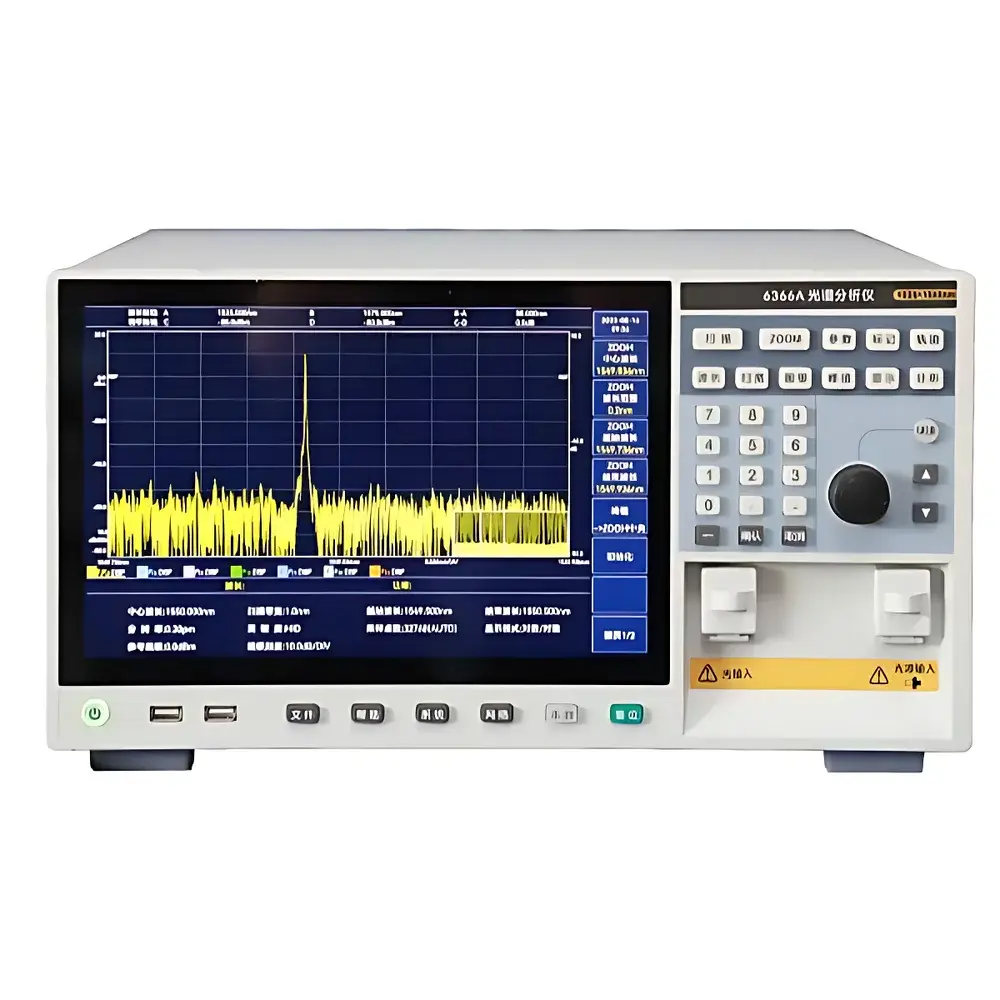
No — it is an intensity-based spectrometer. For phase-resolved measurements, Auniontech recommends pairing with the 6366A coherent spectrum analyzer or external interferometric setups.
Is firmware upgrade available remotely?
Yes — secure over-the-air (OTA) updates are supported via HTTPS with SHA-256 signature verification and rollback capability.
Does the system support automated calibration routines?
Yes — built-in self-alignment and wavelength/power calibration sequences execute in <90 seconds, with results logged and exportable.
What is the warm-up time required for specified accuracy?
Minimum 60 minutes at stable ambient temperature (18–28 °C); full metrological performance is guaranteed only after internal thermal equilibrium is confirmed by onboard sensors.
Related Products







