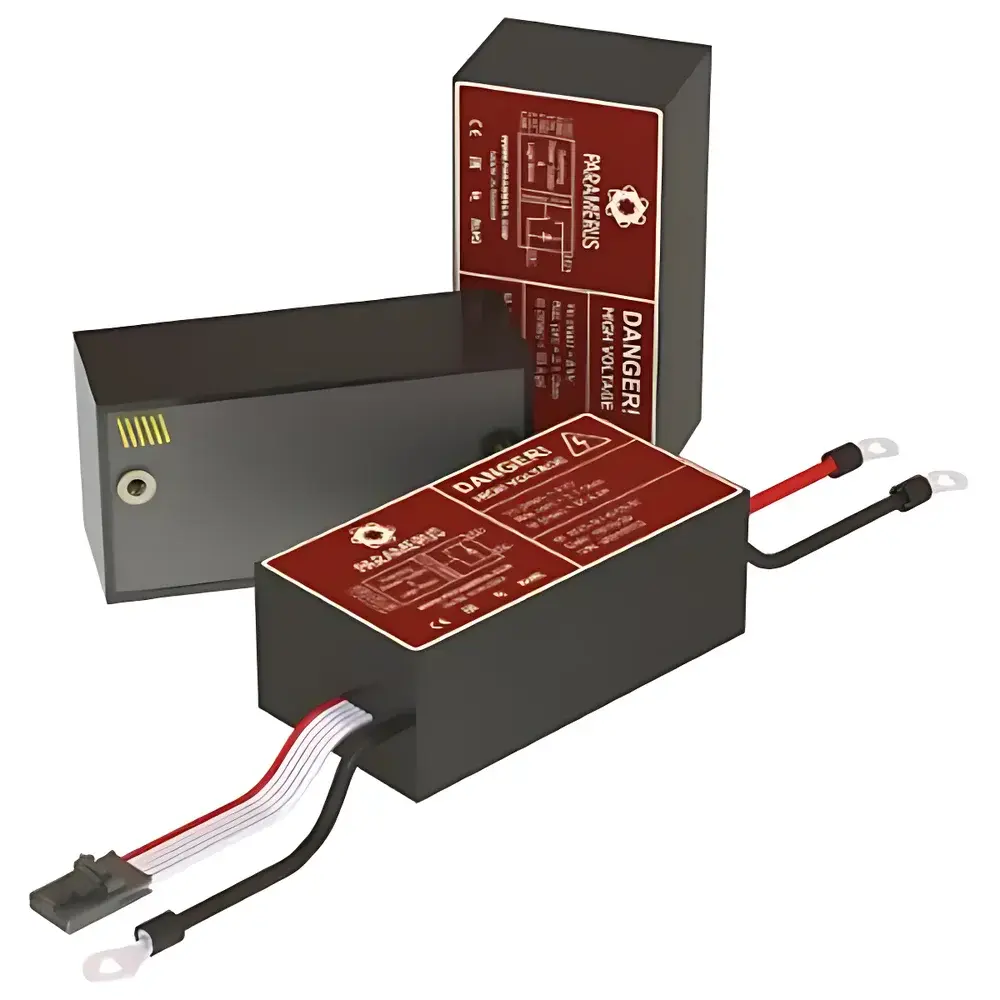
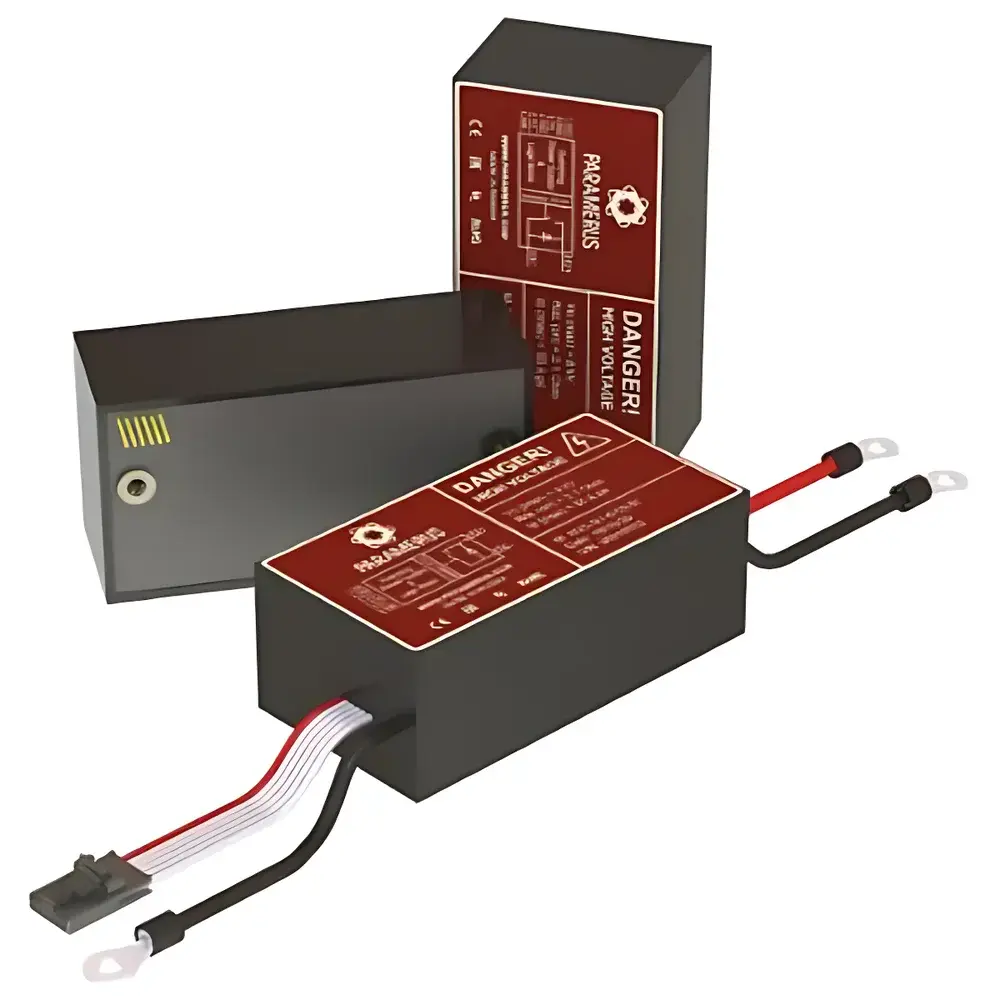
Auniontech AWG Series High-Speed High-Voltage Pulse Switch
| Brand | Auniontech |
|---|---|
| Origin | Shanghai, China |
| Model | AWG Series |
| Voltage Range | 500 V to 12 kV (selectable by model) |
| Peak Current | 6.5 A to 1200 A |
| Pulse Width | 100 ns to DC |
| Rise Time | 3 ns to 100 ns |
| Fall Time | 5 ns to 200 ns |
| Repetition Rate (CW) | up to 500 kHz |
| Burst Mode Frequency | up to 2 MHz |
| Control Interface | TTL-compatible |
| Open-Circuit Resistance | 60 mΩ to 61 Ω (model-dependent) |
| Turn-On/Turn-Off Delay | ≤ 200 ns |
| MTTF @ 1 kHz | ≥ 80,000 hours |
| Compliance | Designed for GLP/GMP-aligned lab environments |
Overview
The Auniontech AWG Series High-Speed High-Voltage Pulse Switch is an engineered solid-state switching platform optimized for precision timing-critical applications requiring rapid, repeatable, and highly reliable high-voltage pulse delivery. Unlike traditional gas-discharge or thyratron-based switches, the AWG series employs proprietary silicon carbide (SiC) and high-density insulated-gate bipolar transistor (IGBT) topologies to achieve sub-10 ns rise times, nanosecond-level jitter control, and >80,000-hour mean time to failure (MTTF) under continuous 1 kHz operation — a performance benchmark exceeding conventional spark-gap or vacuum tube alternatives by two orders of magnitude. The device operates on a fundamental principle of controlled avalanche-free voltage commutation, enabling deterministic turn-on/turn-off behavior across wide load impedance ranges (resistive, capacitive, and reactive). Its architecture supports both single-ended (HVS-B/C), half-bridge (HVS-HB), and low-capacitance optimized (HVS-ONQ) configurations — each calibrated for distinct pulse fidelity requirements in laser driver, radar modulator, and pulsed power conditioning systems.
Key Features
- Multi-configuration platform: HVS-B (compact single-ended), HVS-C (high-current single-ended), HVS-HB (push-pull half-bridge), and HVS-ONQ (capacitive-load-optimized) variants
- Voltage scalability from 500 V to 12 kV peak, with model-specific current ratings spanning 6.5 A to 1200 A
- Sub-10 ns typical rise/fall times (3–100 ns range), verified via calibrated 20 GHz oscilloscope validation
- TTL-compatible digital control interface with ≤200 ns total propagation delay (input-to-output edge)
- Integrated protection circuitry including overvoltage clamping, thermal shutdown, and current limiting with analog feedback output
- Open-circuit resistance as low as 60 mΩ (HVS-C-1.2-1200), minimizing conduction losses during high-duty-cycle operation
- Robust mechanical design compliant with IEC 60950-1 insulation and creepage distance requirements for Class II equipment
Sample Compatibility & Compliance
The AWG series is validated for use with electro-optic Pockels and Kerr cells, piezoelectric actuators, RF cavity biasing networks, pulsed gas discharge lamps, and electron beam deflection grids. It meets essential electromagnetic compatibility (EMC) criteria per IEC 61000-4-2 (ESD), -4-4 (EFT), and -4-5 (surge) standards. While not certified as medical or aerospace-grade hardware, its design adheres to test methodologies referenced in MIL-STD-461G and IEEE C37.90.1 for transient immunity. For regulated laboratory environments, the switch supports audit-ready operational logging when integrated with compatible data acquisition systems — enabling alignment with GLP documentation requirements for pulse parameter traceability. No intrinsic safety certification (e.g., ATEX, IECEx) is claimed; end-user responsibility applies for hazardous location deployment.
Software & Data Management
The AWG series operates without embedded firmware or host software dependency — it functions as a deterministic hardware signal path responsive solely to TTL logic transitions. However, it is fully interoperable with industry-standard pulse pattern generators (e.g., Keysight 81110A, Tektronix AWG70000 series) and LabVIEW, MATLAB, or Python-controlled DAQ systems via isolated digital I/O modules. Analog feedback outputs (e.g., current sense voltage, temperature monitor) are provided for real-time health monitoring and closed-loop synchronization. All models support timestamped pulse logging when paired with high-speed digitizers (≥1 GS/s), facilitating compliance with FDA 21 CFR Part 11 requirements for electronic records where system-level validation is performed by the end user.
Applications
- Pulsed laser systems: Q-switching drivers for Nd:YAG, Ti:sapphire, and fiber lasers; electro-optic shutter control in ultrafast pump-probe setups
- Radar and EW subsystems: Modulator stages for magnetron and klystron tubes; solid-state T/R switching in phased array transceivers
- Materials processing: Plasma initiation in dielectric barrier discharges (DBD); pulsed electric field (PEF) treatment for food sterilization and cell electroporation
- Scientific instrumentation: Biasing of microchannel plates (MCPs), time-of-flight mass spectrometer ion gates, and particle accelerator kicker magnets
- Test & measurement: Generation of calibrated high-voltage transients for immunity testing of power electronics and sensor front-ends
FAQ
What is the maximum safe operating voltage for the HVS-C series?
The HVS-C series is rated for continuous operation up to 12 kV peak, with derating recommended above 85% of rated voltage under sustained thermal load.
Can the AWG switch drive purely capacitive loads such as Pockels cells?
Yes — the HVS-ONQ variant is specifically engineered for low-capacitance (<100 pF), fast-rise applications with minimal ringback; other variants require external snubbing for optimal capacitive load performance.
Is optical isolation available for the TTL input?
No built-in optocoupler is included, but the control interface is galvanically isolated at ≥1.5 kV RMS; external isolation modules (e.g., ADuM1201) may be added per system-level safety requirements.
How is pulse timing jitter characterized?
Jitter is measured as RMS deviation of leading-edge crossing time relative to trigger input, typically <150 ps over 10,000 pulses at 100 kHz repetition rate using a 20 GHz real-time oscilloscope.
Does the device support analog modulation of pulse amplitude or width?
No — the AWG series is a binary switch; amplitude and width control must be implemented upstream via variable HV supply or programmable pulse generator.