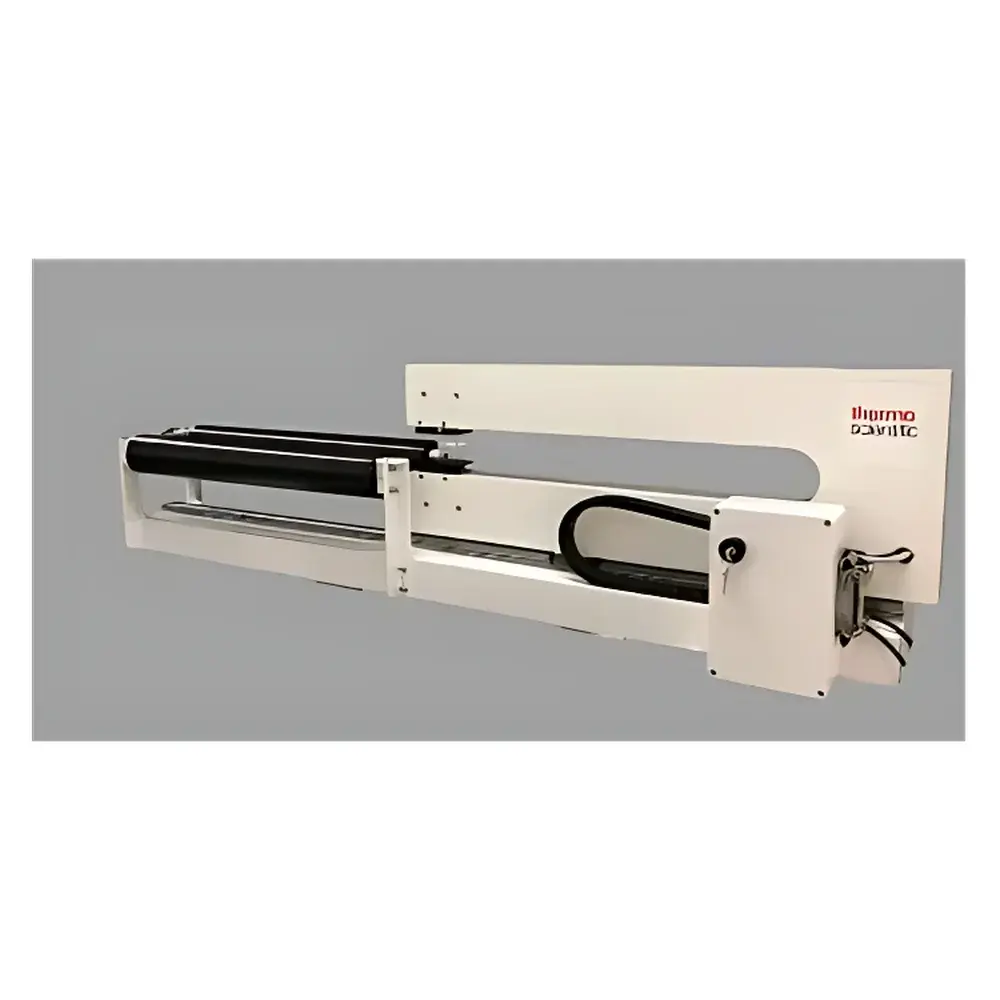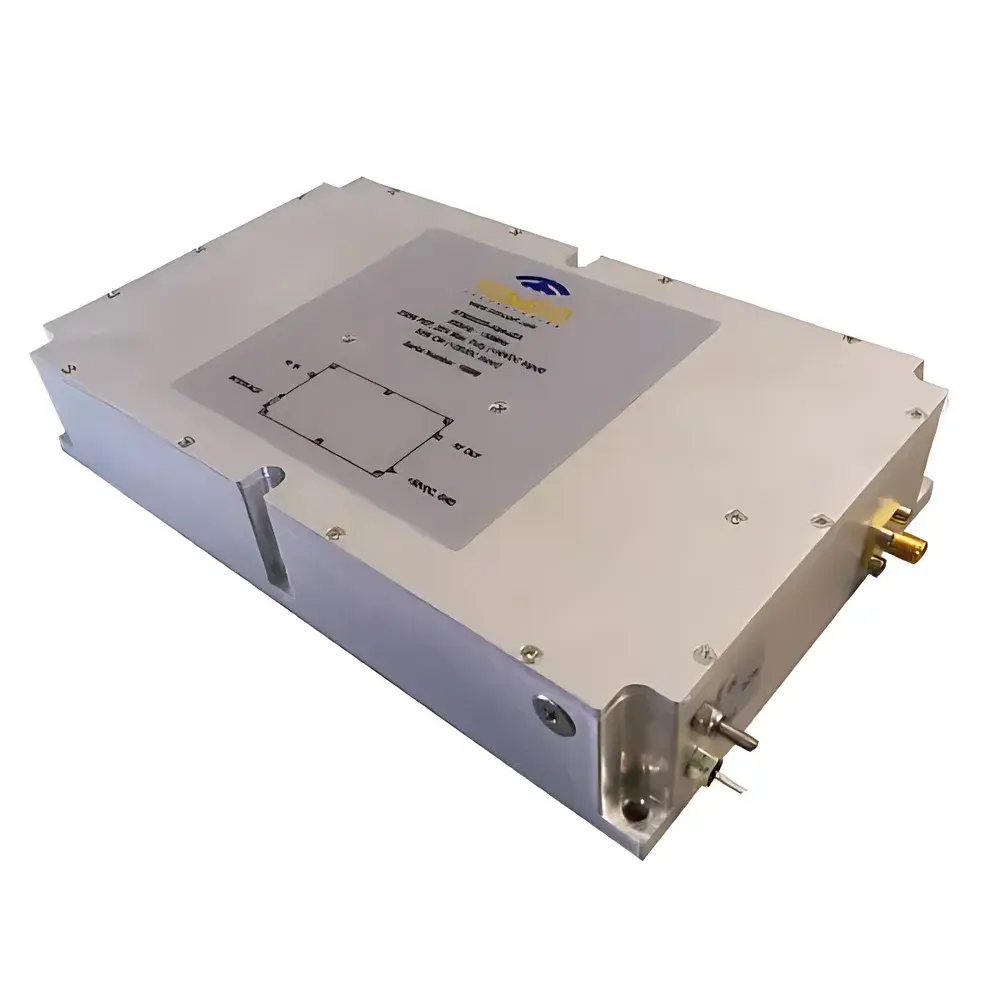
Tomco Technologies NMR/EPR RF Power Amplifier System
| Brand | Tomco Technologies |
|---|---|
| Model | NMR/EPR Series |
| Frequency Range | 10 kHz – 1.3 GHz |
| Output Power | 50 W – >100 kW |
| Pulse Rise/Fall Time | <100 ns (typ.) |
| Inter-Pulse Noise Floor | <–120 dBc/Hz |
| Linearity (AM/PM) | ±0.2 dB / ±0.5° over full dynamic range |
| VSWR Tolerance | 10:1, non-destructive |
| Input Drive Handling | +10 dBm max (safe overdrive) |
| Cooling | Forced-air or liquid-cooled variants |
| Warranty | 36 months |
| Compliance | CE, RoHS, IEC 61000-6-3/6-4, EN 61326-1 (EMC for lab equipment) |
| Software Interface | RS-232, Ethernet (TCP/IP), optional LabVIEW & MATLAB drivers |
Overview
The Tomco Technologies NMR/EPR RF Power Amplifier System is a high-fidelity, broadband solid-state amplifier platform engineered specifically for demanding magnetic resonance applications—including nuclear magnetic resonance (NMR), electron paramagnetic resonance (EPR), electron spin resonance (ESR), electron-nuclear double resonance (ENDOR), and nuclear quadrupole resonance (NQR). Operating across a continuous frequency band from 10 kHz to 1.3 GHz, these amplifiers deliver stable, low-noise RF excitation with precise amplitude and phase control—critical for pulsed sequence fidelity in time-domain spectroscopy. Unlike general-purpose RF amplifiers, the NMR/EPR series integrates pulse-specific design optimizations: ultra-low inter-pulse noise ensures minimal baseline contamination in echo decay measurements; sub-100 ns rise/fall times preserve pulse shape integrity for short τp sequences; and rapid post-pulse recovery (<1 µs) enables high-duty-cycle experiments without signal distortion. The architecture employs GaN-on-SiC power transistors and multi-stage impedance-matched output networks, enabling robust operation under mismatched load conditions common in resonator-tuned NMR probes.
Key Features
- Ultra-low inter-pulse noise floor (<–120 dBc/Hz at 1 MHz offset), essential for quantitative T2 and relaxation mapping
- High linearity (±0.2 dB amplitude, ±0.5° phase deviation over 40 dB dynamic range) ensuring faithful reproduction of complex pulse envelopes
- Sub-100 ns pulse rise/fall times, validated via calibrated step-response measurement per IEEE Std 1528
- Full VSWR tolerance up to 10:1 without performance degradation or component stress—eliminates need for external circulators in many probe configurations
- Overdrive resilience: accepts input signals up to +10 dBm without latch-up or permanent damage
- Modular chassis design with hot-swappable RF modules, supporting field-replaceable gain stages and cooling units
- Integrated thermal management with dual-mode cooling (forced-air standard; liquid-cooled option for >500 W continuous operation)
- 36-month limited warranty covering parts, labor, and calibration traceability to NIST standards
Sample Compatibility & Compliance
The amplifier system interfaces directly with standard NMR/EPR probe assemblies (e.g., Bruker, JEOL, and custom-built solenoid/birdcage coils) via 50 Ω coaxial connections. It supports both continuous-wave (CW) and pulsed modes, with built-in trigger synchronization (TTL-compatible) for precise timing alignment with spectrometer control systems. All units comply with electromagnetic compatibility requirements for laboratory instrumentation: EN 61326-1 (electrical safety and EMC), IEC 61000-6-3 (emission limits), and IEC 61000-6-4 (immunity testing). For regulated environments—including GLP-compliant analytical labs and FDA-audited MRI development facilities—the system supports optional audit-trail-enabled firmware (21 CFR Part 11 compliant) with user-access logging, configuration change history, and electronic signature capability.
Software & Data Management
Control and monitoring are implemented via ASCII-based SCPI commands over RS-232 or TCP/IP Ethernet. Standard drivers are provided for LabVIEW (2015+), MATLAB (R2018a+), and Python (PyVISA-compatible). The embedded web interface allows real-time visualization of forward/reflected power, temperature gradients, DC supply voltages, and fault logs. All operational parameters—including gain setting, frequency band selection, and protection thresholds—are programmable and stored in non-volatile memory with checksum validation. Firmware updates are performed via secure HTTPS upload with SHA-256 signature verification. Data export supports CSV and HDF5 formats for integration into spectral processing pipelines (e.g., TopSpin, Mnova, or custom Python analysis stacks).
Applications
- High-field NMR spectrometers (≥400 MHz) requiring broadband excitation for multinuclear experiments (¹H, ¹³C, ¹⁵N, ³¹P, ¹⁹F)
- Pulsed EPR/ESR systems for distance measurements (DEER/PELDOR), spin relaxation studies (T1ρ, Tm), and time-resolved spectroscopy
- Benchtop NQR analyzers for explosive and pharmaceutical compound detection
- Preclinical MRI RF transmit chains operating at 1.5T–7T field strengths
- Plasma physics experiments requiring high-power RF coupling into magnetized plasmas
- Accelerator RF cavities for beam diagnostics and kicker magnet drivers
FAQ
What frequency bands are supported for NMR versus EPR configurations?
The same hardware platform covers both domains: NMR operation typically spans 4–1000 MHz (depending on static field strength), while EPR uses 9–300 GHz bands—however, Tomco’s amplifiers operate up to 1.3 GHz; higher-frequency EPR requires harmonic generation or separate mm-wave sources.
Can the amplifier be integrated into an existing Bruker AVANCE or JEOL ECZ spectrometer?
Yes—standard TTL trigger inputs, analog power level control (0–10 V), and SCPI command sets ensure plug-and-play compatibility with major OEM spectrometer controllers.
Is remote monitoring supported during long-duration relaxation experiments?
Yes—Ethernet connectivity enables continuous telemetry streaming (forward power, temperature, VSWR) to a central data acquisition server with configurable alarm thresholds.
Do you provide calibration certificates traceable to national standards?
Each unit ships with a factory calibration report referencing NIST-traceable RF power sensors and spectrum analyzers, valid for 12 months from shipment date.
Are custom frequency or power specifications available for OEM integration?
Yes—Tomco offers design collaboration for application-specific variants, including narrowband high-efficiency modules, dual-band simultaneous-output configurations, and rack-mount form factors compliant with 19″ EIA-310-D standards.