
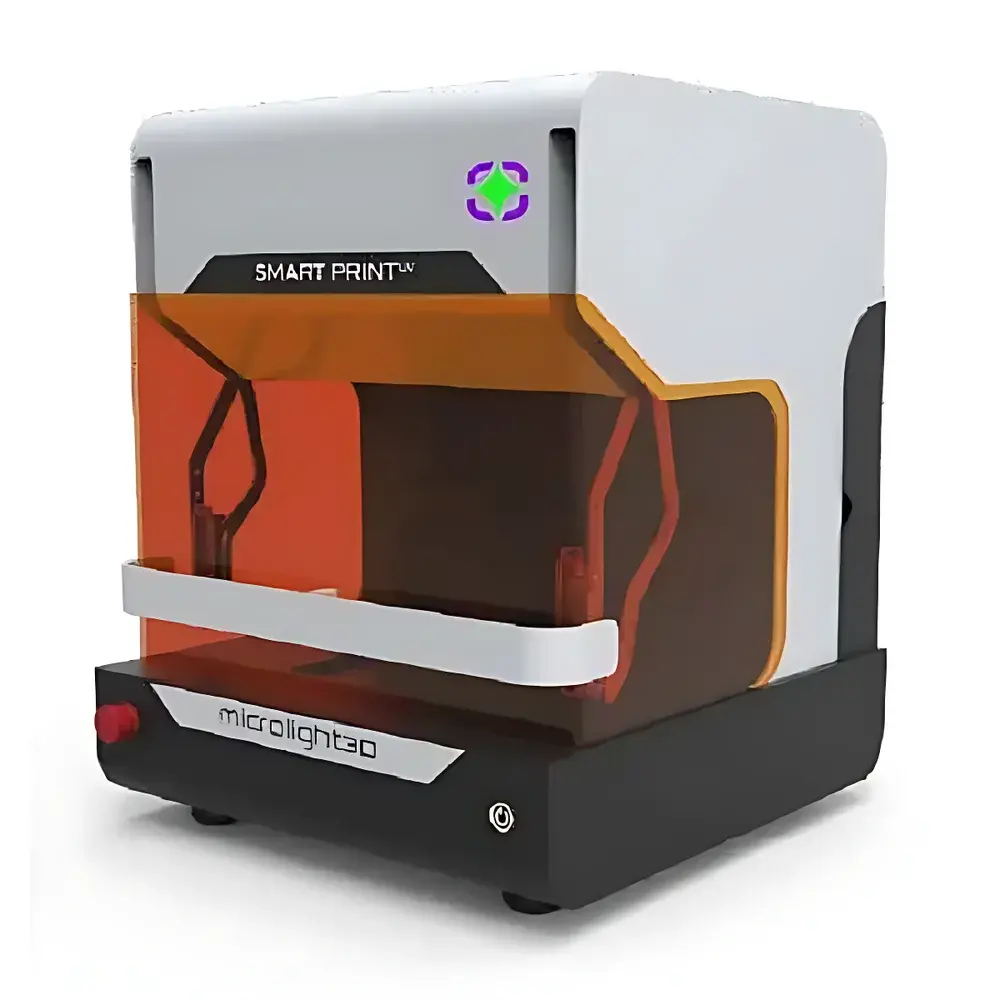
Auniontech PALET Maskless Photolithography System
| Brand | Auniontech |
|---|---|
| Origin | Germany |
| Manufacturer Type | Authorized Distributor |
| Product Category | Imported Optical Instrument Component |
| Model | Aunion_Maskless_Photo_Lithography_PALET |
| Light Source | 385 nm LED |
| Compatible Photoresists | i-line, h-line, g-line (e.g., SU-8, AZ® 1500 series) |
| Working Distance | Up to 30 mm |
| Maximum Sample Area | 5 in² (≈127 × 127 mm) |
| Minimum Feature Resolution | 1.5 µm |
| Alignment Method | Integrated Feedback Camera + 590 nm Collimated Alignment Beam |
| Objective Lens Configuration | Interchangeable Long-Working-Distance Objectives |
| Application Domain | Microfluidics, Biotechnology, MEMS, Flexible Electronics, Academic R&D |
Overview
The Auniontech PALET Maskless Photolithography System is a compact, high-precision digital direct-write lithography platform engineered for rapid prototyping and low-to-medium volume fabrication of microscale patterns without physical photomasks. It leverages Digital Micromirror Device (DMD) spatial light modulation technology coupled with a stabilized 385 nm UV LED illumination source to project user-defined patterns onto photosensitive substrates with sub-micron positional fidelity. Unlike conventional mask-based photolithography, the PALET system operates on a pixel-level exposure principle grounded in digital light processing (DLP®-compatible architecture), enabling real-time pattern modification, grayscale exposure control, and arbitrary 2D geometry definition directly from CAD or bitmap files. Its optical design follows Köhler illumination principles to ensure uniform intensity distribution across the field of view, while the collimated UV beam path minimizes chromatic aberration and diffraction-limited spot size degradation—critical for achieving consistent 1.5 µm feature resolution under standard alignment and focus conditions.
Key Features
- DMD-based maskless patterning with 1.5 µm minimum resolvable feature size at full-field exposure
- 385 nm high-stability UV LED source optimized for broad compatibility with i-line, h-line, and g-line photoresists—including SU-8, AZ® 1500 series, and other commercially available negative/positive resists
- Long-working-distance objective lens options (up to 30 mm), supporting non-planar, flexible, thick, or topographically complex substrates without mechanical contact
- Four selectable resolution modes via software-controlled DMD pixel binning and magnification switching—enabling trade-offs between speed, resolution, and field size
- Integrated dual-channel alignment subsystem: real-time CMOS feedback camera overlaid with a 590 nm collimated alignment beam for precise maskless overlay registration
- Compact benchtop footprint (W × D × H ≈ 450 × 400 × 320 mm) designed for integration into cleanroom-adjacent lab environments or shared instrumentation facilities
Sample Compatibility & Compliance
The PALET system accommodates substrates up to 5 in² (127 × 127 mm) in area and up to 15 mm in thickness, including silicon wafers, glass slides, PDMS, PET, PI, and metal-coated foils. Its non-contact exposure methodology eliminates risk of substrate damage or cross-contamination, making it suitable for reusable molds and soft lithography masters. The system complies with IEC 61000-6-3 (EMC emission standards) and IEC 62471 (photobiological safety classification for UV LEDs). While not certified for GMP manufacturing, its repeatable exposure dosage control (±2% dose uniformity over full field) and traceable parameter logging support GLP-aligned academic and preclinical research workflows. All firmware and exposure logs are timestamped and exportable in CSV/JSON formats for audit readiness.
Software & Data Management
Controlled via PALET LithoSuite™—a Windows-based application supporting industry-standard file imports (GDSII, OASIS, SVG, DXF, BMP, PNG). The software includes real-time exposure simulation, dose calibration wizardry, multi-layer alignment registration tools, and batch job queuing with error recovery. Exposure parameters—including LED intensity, exposure time per frame, DMD refresh rate, and focus offset—are stored with each pattern file. Audit-trail functionality records operator ID, timestamp, system configuration, and environmental sensor data (optional external temperature/humidity feed). Exported datasets conform to FAIR principles (Findable, Accessible, Interoperable, Reusable), facilitating integration with LIMS or ELN platforms in regulated academic and industrial labs.
Applications
- Microfluidic device prototyping: rapid fabrication of master molds for PDMS replication with integrated microvalves, mixers, and droplet generators
- Biosensor development: patterning of electrode arrays, antibody-functionalized zones, and nanostructured plasmonic surfaces on flexible substrates
- MEMS and NEMS research: fabrication of cantilevers, resonators, and actuator geometries requiring iterative design-test cycles
- Organic electronics: direct-write patterning of conductive polymer traces and OLED pixel architectures on PET or PEN substrates
- Education and training: hands-on instruction in photolithography fundamentals, maskless process integration, and microfabrication workflow optimization
FAQ
What photoresists are validated for use with the PALET system?
SU-8 2000 series, AZ® 1500 series, Shipley S1800 series, and MicroChem’s IP-L 780 are routinely qualified. Resist thicknesses from 0.5 µm to 100 µm have been successfully processed.
Is vacuum chucking or substrate clamping required?
No—non-contact operation eliminates mechanical fixation. Optional vacuum backside hold-down is available for vibration-sensitive applications.
Can the system perform multi-layer alignment?
Yes. Using the integrated 590 nm alignment beam and camera overlay, registration accuracy of ≤ ±1.0 µm (3σ) has been demonstrated across three successive layers.
Does the system support grayscale lithography?
Yes. Through temporal dithering and frame-rate modulation, variable dose deposition enables controlled resist development depth for quasi-3D topographies.
What maintenance is required for long-term stability?
Annual recalibration of LED output power and DMD pixel response uniformity is recommended; no consumables beyond standard optical cleaning supplies are needed.



