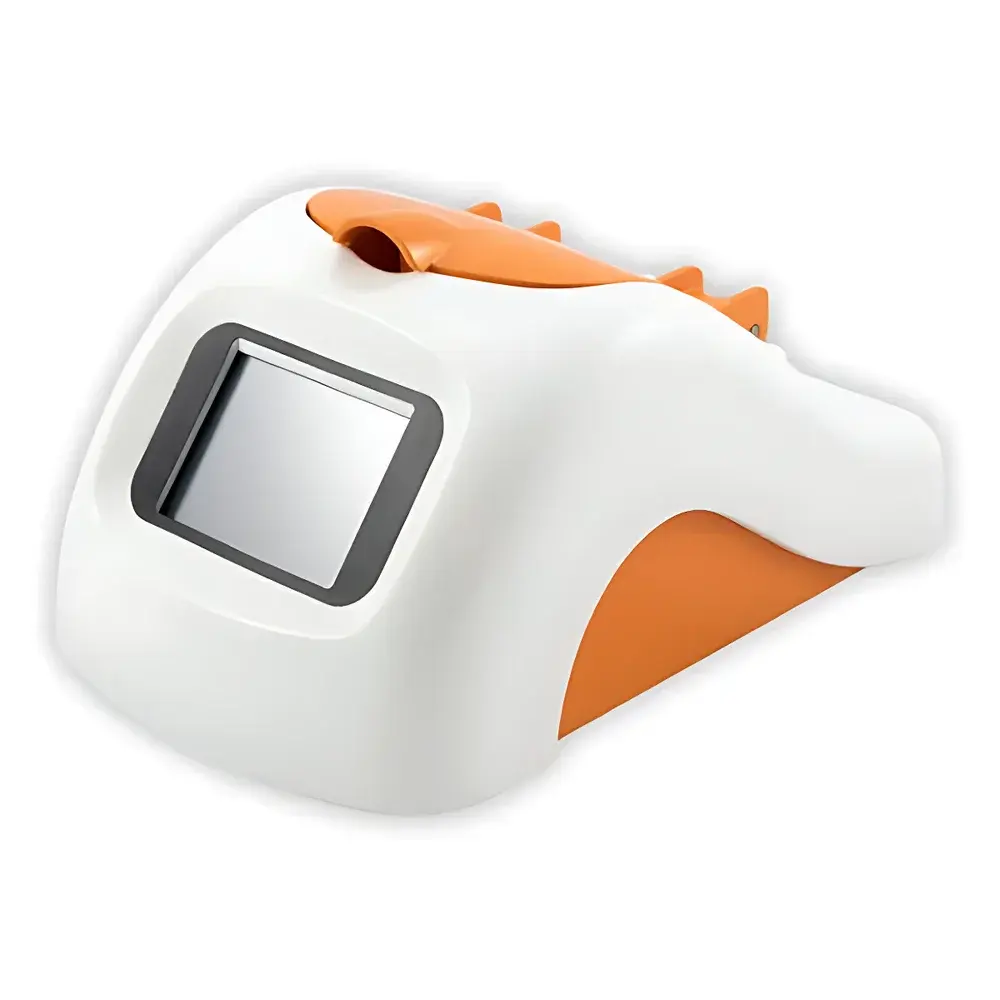
Auniontech Lu-mini Portable Fluorescence Detector
| Brand | Auniontech |
|---|---|
| Origin | United Kingdom |
| Manufacturer Type | Authorized Distributor |
| Product Category | Imported Medical Diagnostic & Analytical Instrument |
| Model Classification | In Vitro Diagnostic (IVD) Fluorometer |
| Pricing | Available Upon Request |
Overview
The Auniontech Lu-mini Portable Fluorescence Detector is an engineered-in-the-UK compact fluorometer developed by Vitl Life Science Solutions. Designed for high-sensitivity luminescence and fluorescence quantification, the Lu-mini operates on the principle of photonic signal detection via a solid-state photodiode coupled with optimized optical path geometry and temperature-stabilized electronics. It delivers laboratory-grade performance in a field-deployable form factor—ideal for rapid ATP bioluminescence assays, reporter gene analysis, enzymatic activity monitoring, and immunoassay validation under non-ideal environmental conditions. Its measurement architecture conforms to the fundamental requirements of quantitative luminometric detection: linear dynamic range, low dark current, and minimal photonic cross-talk between sequential readings. The device is not intended for clinical diagnosis per se but serves as a validated analytical tool for research-grade IVD development, environmental hygiene surveillance, and QC/QA applications aligned with ISO 17025 and CLIA-equivalent workflows.
Key Features
- Ultra-low detection limit: 1.7 fM ATP (1.7 × 10⁻¹⁵ mol) under standardized luciferase–luciferin assay conditions
- Integrated 3.5-inch capacitive LCD touchscreen with intuitive icon-driven interface—no external PC required for basic operation
- Direct compatibility with common sample vessels: round tubes (10–15 mm OD), standard 10 mm square cuvettes, and microcentrifuge tubes (with optional adapter)
- Measurement modes: single-point, dual-point (background subtraction), peak detection, and kinetic time-course acquisition (up to 999 data points per run)
- Onboard memory capacity: 1,000 assay records with timestamp, sample ID, and protocol metadata
- USB-powered operation (5 V DC, 1.0 A)—compatible with portable power banks, lab bench USB hubs, or AC adapter (100–240 V, 50–60 Hz)
- Rugged ABS housing with IP20-rated enclosure; operational temperature range: 10–40 °C; relative humidity ≤80% non-condensing
Sample Compatibility & Compliance
The Lu-mini supports a broad spectrum of luminescent and fluorescent chemistries without optical filters or wavelength selection modules—relying instead on broadband photodiode sensitivity (350–650 nm typical spectral response). Validated applications include ATP-based hygiene verification (per ISO 22000 and HACCP protocols), firefly luciferase reporter assays (e.g., NF-κB, CREB), bacterial viability testing, mycoplasma detection via nucleic acid probes, and luminogenic immunoassays (LIA). While not CE-marked as an IVD device under IVDR 2017/746, the instrument meets essential performance criteria outlined in ISO 15197:2013 (for analytical accuracy) and ASTM E2626-18 (standard guide for bioluminescence assay validation). Data integrity complies with ALCOA+ principles when used with the supplied software and configured for audit-trail-enabled sessions.
Software & Data Management
The Lu-mini PC Application (v3.2+, Windows 10/11 compatible) provides secure bidirectional synchronization, customizable assay templates, and export to CSV, Excel, and PDF formats. It supports multi-instrument fleet management—enabling centralized configuration, firmware updates, and aggregated report generation across distributed labs or field units. All data transfers are encrypted via TLS 1.2; user access control includes role-based permissions (Operator, Supervisor, Administrator). Audit trail functionality logs all critical events—including parameter changes, result deletions, and calibration actions—in tamper-evident format, satisfying GLP and FDA 21 CFR Part 11 requirements when deployed in regulated environments.
Applications
- Environmental hygiene monitoring (surface ATP swab testing in food processing, pharmaceutical cleanrooms, and hospital facilities)
- Water quality assessment (microbial load estimation in potable water, wastewater, and aquaculture systems)
- Gene expression profiling using luciferase-, GFP-, or NanoLuc-based reporter constructs
- Enzyme kinetics and inhibitor screening (e.g., proteases, kinases, phosphatases with luminogenic substrates)
- DNA hybridization and probe-based detection (molecular beacons, TaqMan-style assays with appropriate gain calibration)
- Cell viability and cytotoxicity assays (ATP-dependent metabolic activity in mammalian, bacterial, and yeast cultures)
- Luminogenic immunoassay (LIA) development and method transfer for point-of-need diagnostics
FAQ
Is the Lu-mini compliant with FDA 21 CFR Part 11 for electronic records and signatures?
Yes—when used with the validated Lu-mini PC Application and configured with enabled audit trails, electronic signatures, and system access controls.
Can the Lu-mini measure fluorescence intensity (e.g., FITC, TRITC) as well as luminescence?
It is optimized for luminescence (e.g., luciferase, glow-type substrates); fluorescence quantification is possible only with high-intensity, narrow-band emitters and requires manual gain calibration—no built-in excitation source or filter wheel is included.
What is the maximum kinetic sampling frequency?
Up to one reading per second over 999-second duration, with automatic interpolation for intermediate timepoints.
Does the device support external triggering or integration with automated liquid handlers?
No native TTL or RS-232 interface is provided; integration requires third-party USB HID emulation or custom API scripting via the SDK (available under NDA).
Is routine calibration required, and what standards are recommended?
Factory calibration is stable for 12 months under normal use; users may perform verification using certified ATP standard solutions traceable to NIST SRM 1950 (Metabolites in Frozen Human Plasma).