
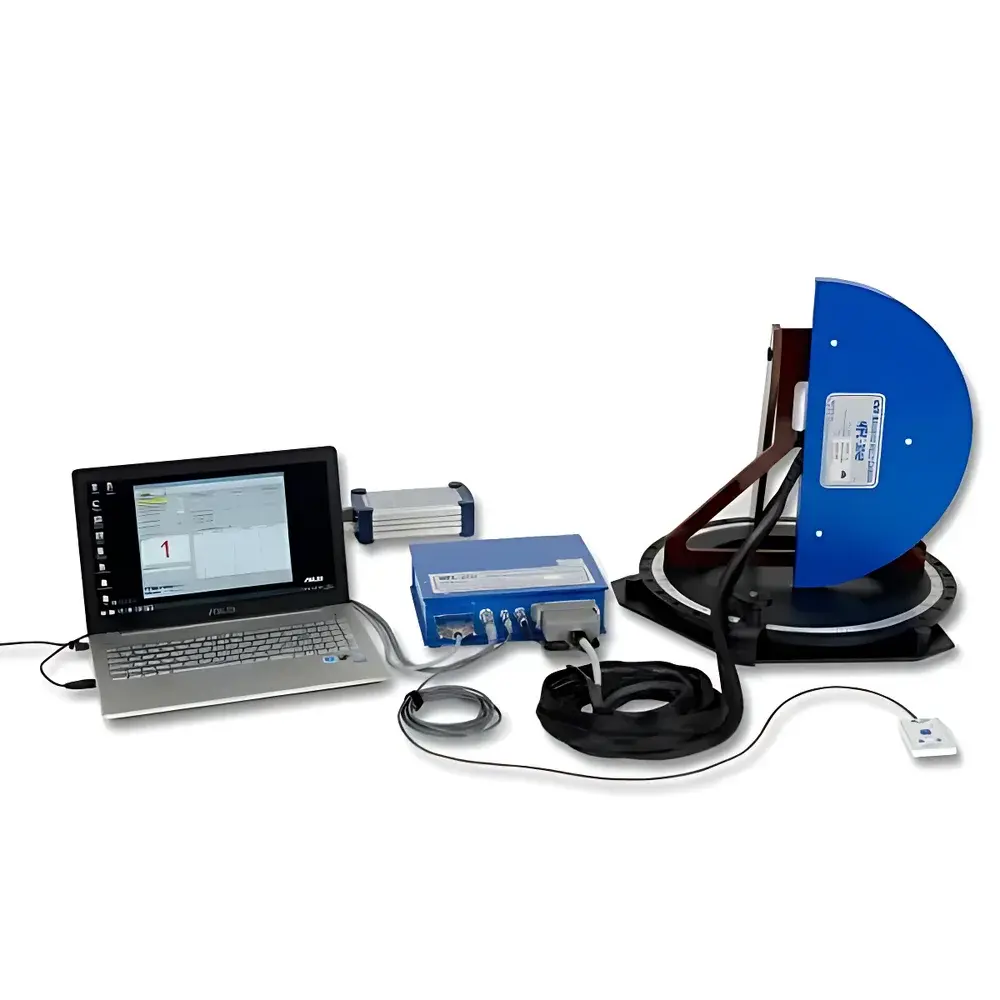
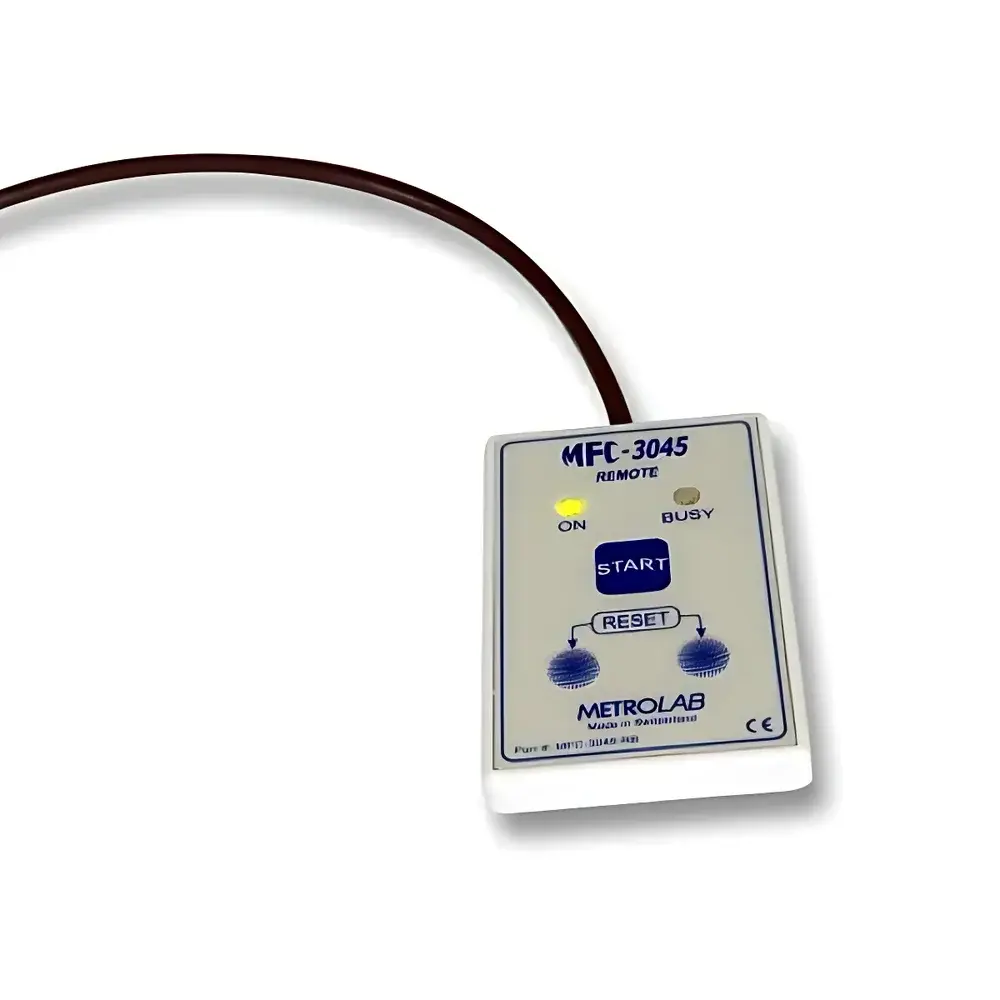
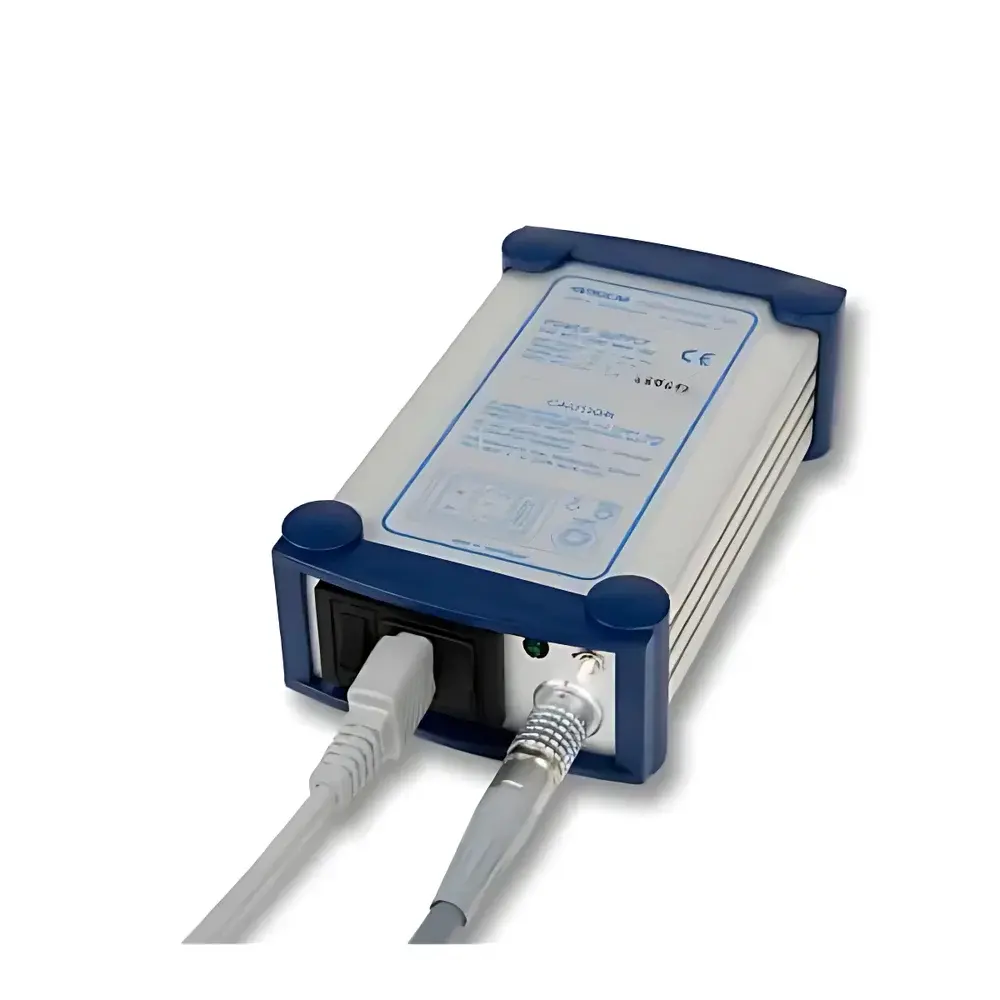
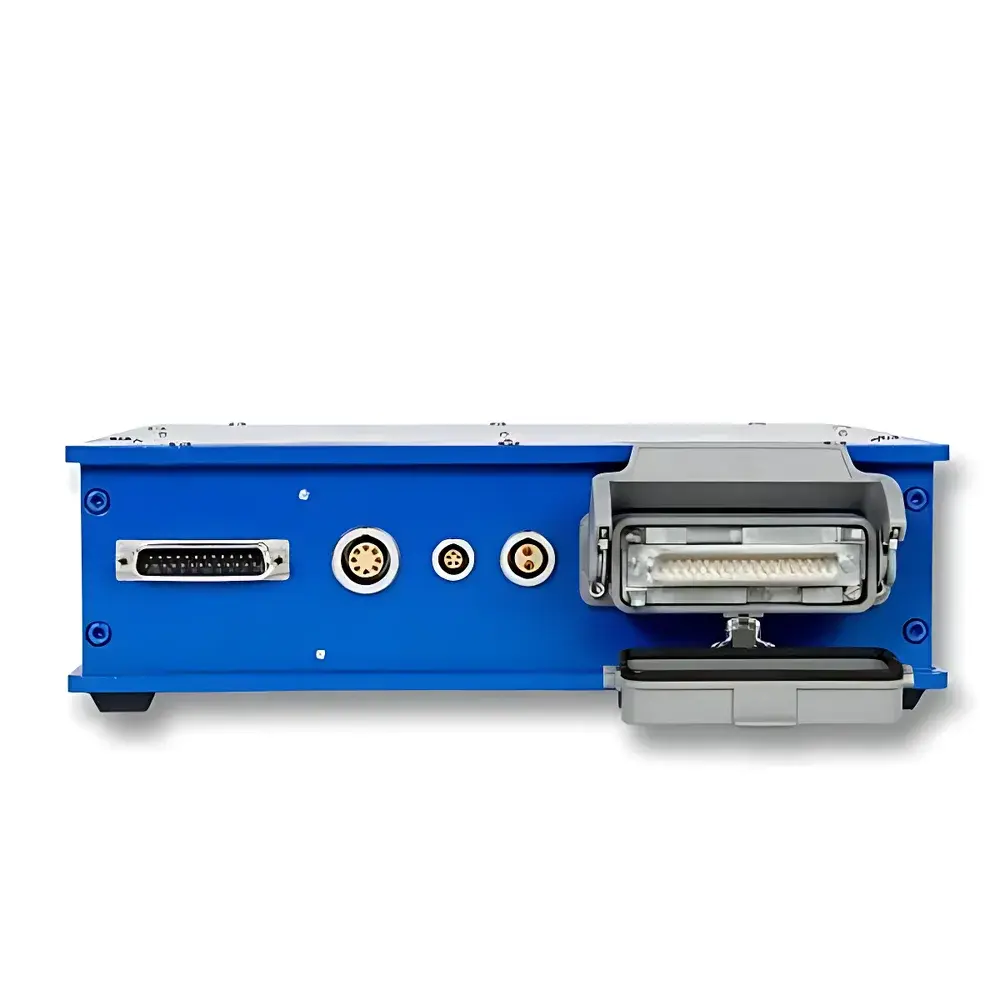
Metrolab MFC3045 Magnetic Field Camera
| Brand | Metrolab |
|---|---|
| Model | MFC3045 |
| Type | NMR-based Magnetic Field Mapping System |
| Measurement Principle | Continuous-Wave Proton NMR (CW-NMR) |
| Field Range | 0.2–7 T |
| Relative Accuracy | < 0.2 ppm |
| Resolution | 0.01 ppm (at RF > 10 MHz) or 0.1 Hz (at RF ≤ 10 MHz) |
| Reference Clock | Oven-Controlled Crystal Oscillator (OCXO), stability < ±0.1 ppm over −25 to +70 °C, < ±1 ppb/day |
| Channel Capacity | Up to 32 parallel NMR channels |
| Probe Array | Custom-configurable MFC3048 probe array with precision-machined composite substrate and magnetic shielding |
| Mechanical Positioning | Manual MFC3039 (horizontal) or MFC3040 (vertical/horizontal) fixtures, positional accuracy ±1 mm |
| Software Platform | WinMFC v5.x (Windows-based, compliant with GLP audit trail requirements) |
| Compliance | Designed for ISO/IEC 17025-accredited MRI magnet qualification |
Overview
The Metrolab MFC3045 Magnetic Field Camera is a high-precision, multi-channel nuclear magnetic resonance (NMR)-based field mapping system engineered specifically for rapid, quantitative characterization of static magnetic fields in MRI magnet development, commissioning, and quality assurance. Unlike conventional single-point Gauss meters or scanning Hall probe arrays, the MFC3045 employs continuous-wave proton NMR as its primary transduction mechanism—leveraging the intrinsic linearity and absolute frequency-to-field relationship of water-proton Larmor precession (ν = γHB/2π, where γH = 42.576 MHz/T). This physical principle enables traceable, ppm-level absolute field measurement without calibration drift, making it the de facto standard for ISO 10974–compliant MRI magnet homogeneity verification and long-term superconducting magnet stability monitoring. The system maps spatial field variations across cylindrical or planar volumes in minutes—not hours—by simultaneously acquiring phase-coherent NMR signals from up to 32 independently referenced probes arranged in a rigid, geometrically defined array.
Key Features
- Multi-channel CW-NMR architecture supporting up to 32 parallel acquisition channels with synchronized RF excitation and phase-sensitive detection
- Sub-ppm relative accuracy (< 0.2 ppm) and 0.01 ppm resolution at high field (≥1.5 T), validated against primary NMR standards
- Integrated OCXO reference clock with thermal stability < ±0.1 ppm across −25 °C to +70 °C and aging rate < ±1 ppb/day, ensuring long-term measurement integrity
- Modular probe array (MFC3048) fabricated on flat, non-magnetic composite substrates; custom geometry, probe count, and field-range optimization available per magnet design
- Rugged aluminum chassis housing for EMI-shielded signal processing, power regulation, and real-time FFT-based spectral analysis
- Manual positioning fixtures (MFC3039 horizontal cradle and MFC3040 vertical/horizontal gimbal) enabling repeatable rotational scanning with ±1 mm mechanical repeatability
Sample Compatibility & Compliance
The MFC3045 is designed exclusively for static (DC) magnetic field mapping of superconducting and resistive magnets used in clinical and preclinical MRI systems. It operates within a field range of 0.2 T to 7 T and requires only a small volume (~1 mL) of proton-rich fluid (e.g., distilled water or doped saline) within each NMR probe’s active region. No ferromagnetic components are introduced into the measurement volume, preserving field integrity during acquisition. The system conforms to key international standards governing MRI magnet qualification: IEC 62353 (routine testing), ISO 10974 (MRI device safety), and ASTM F2503 (MR safety labeling). When deployed with WinMFC’s optional audit-trail and electronic signature modules, the MFC3045 supports compliance with FDA 21 CFR Part 11 for regulated environments requiring data integrity, user accountability, and change control.
Software & Data Management
WinMFC v5.x is the native Windows-based application for instrument control, real-time visualization, and post-processing. It provides full parameter configurability—including pulse sequence timing, spectral window width, averaging count, and baseline correction algorithms. All raw time-domain FID data and processed frequency spectra are stored in HDF5 format with embedded metadata (timestamp, operator ID, magnet ID, temperature, probe positions). Export options include ASCII, CSV, and DICOM-SR for integration into PACS or QA databases. The software supports automated generation of ISO-defined homogeneity metrics (e.g., peak-to-peak variation over DSV, spherical harmonic decomposition up to order 4), and includes tools for temporal drift trending and quench-induced field decay analysis. Audit logs record every configuration change, measurement start/stop event, and user login/logout with cryptographic hashing for tamper-evident archiving.
Applications
- Final acceptance testing of MRI main magnets prior to clinical installation
- Shim coil current optimization using iterative field map feedback
- Longitudinal monitoring of persistent mode stability in superconducting magnets
- Verification of passive shimming effectiveness after magnet assembly
- Characterization of fringe field profiles for MR-safety zoning (IEC 60601-2-33)
- Research-grade field mapping in NMR spectrometer magnet development and particle accelerator dipole calibration
FAQ
Is the MFC3045 still in production?
No—the MFC3045 reached end-of-life in Q4 2022. Metrolab now offers the MFC3045-R2 as its direct replacement, featuring enhanced channel synchronization, improved thermal management, and backward-compatible probe and fixture interfaces.
Can the MFC3045 be used for time-varying field measurements?
No—it is strictly a DC field mapper. Dynamic field changes (e.g., gradient switching) fall outside its design envelope; for transient field analysis, complementary systems such as search-coil arrays or fast Hall sensors are recommended.
What is required to customize a probe array?
Customers must provide magnet bore geometry, target field strength, desired spatial sampling density, and mechanical mounting constraints. Metrolab performs electromagnetic simulation and mechanical design review before fabrication, with NRE engineering fees applying for non-standard configurations.
Does WinMFC support automated report generation?
Yes—templates for ISO 10974 Annex C, IEC 62353 Clause 7.3, and internal QA forms can be configured and exported as PDF with embedded digital signatures and watermarking.
How is measurement traceability maintained?
Each MFC3045 unit ships with a NIST-traceable calibration certificate referencing primary NMR standards at 1.5 T and 3.0 T. Annual recalibration is recommended and performed by Metrolab-certified service centers using certified reference magnets and OCXO validation protocols.





