
Auniontech Single-Crystal Yttrium Iron Garnet (YIG) Spheres and Cubes
| Brand | Auniontech |
|---|---|
| Origin | Shanghai, China |
| Manufacturer Type | Authorized Distributor |
| Product Category | Domestic |
| Model Designation | Magnetic Material Reference Standards |
| Price | Available Upon Request |
| FMR Linewidth (ΔH) | < 1.5 Oe (FWHM) |
| 4πMs | 1600 ± 80 G |
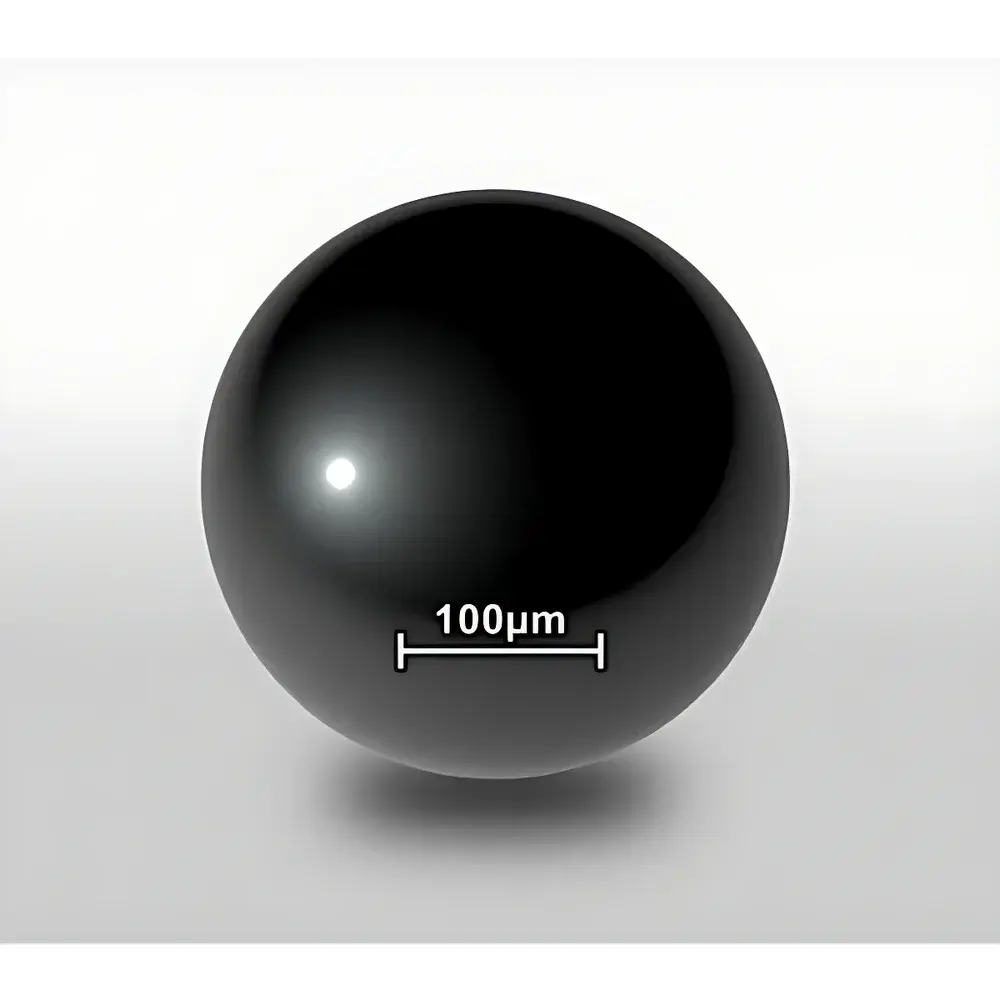
| Sphere Diameter | 0.25 mm |
| Cube Edge Length | 0.5 mm |
Overview
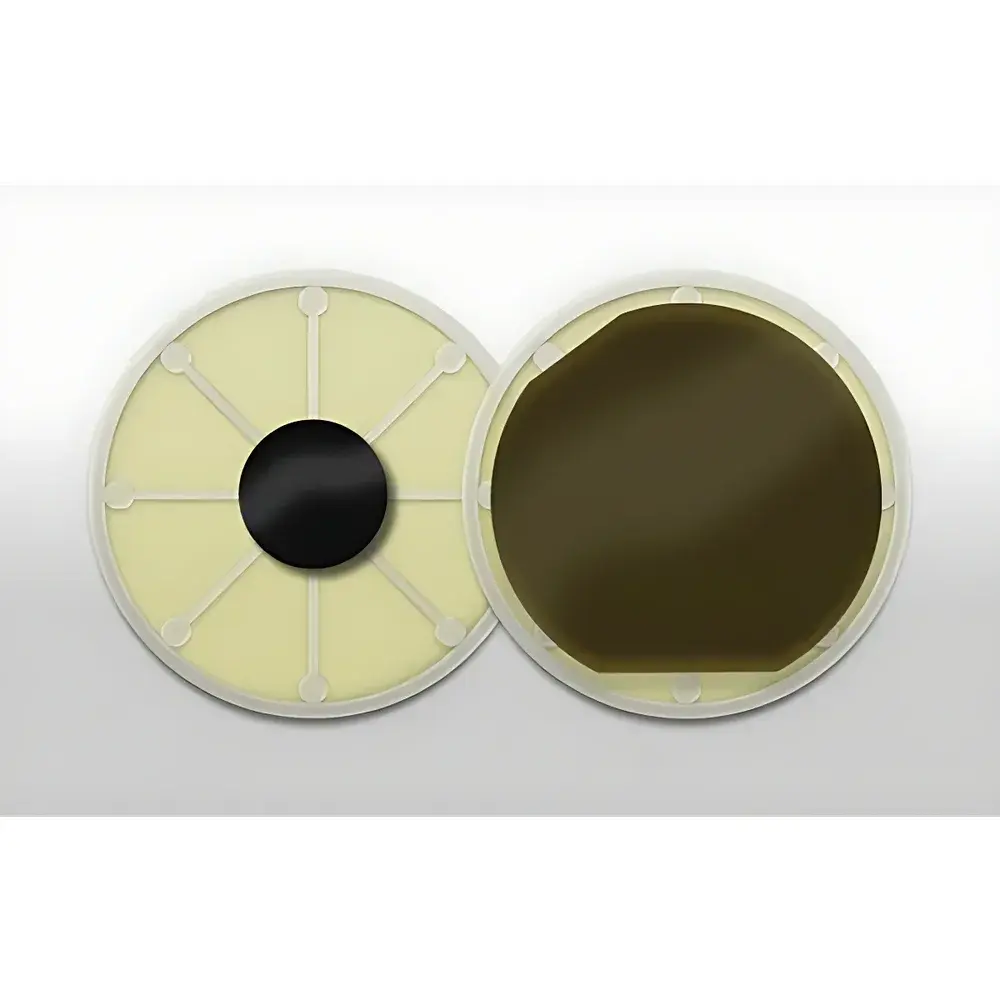
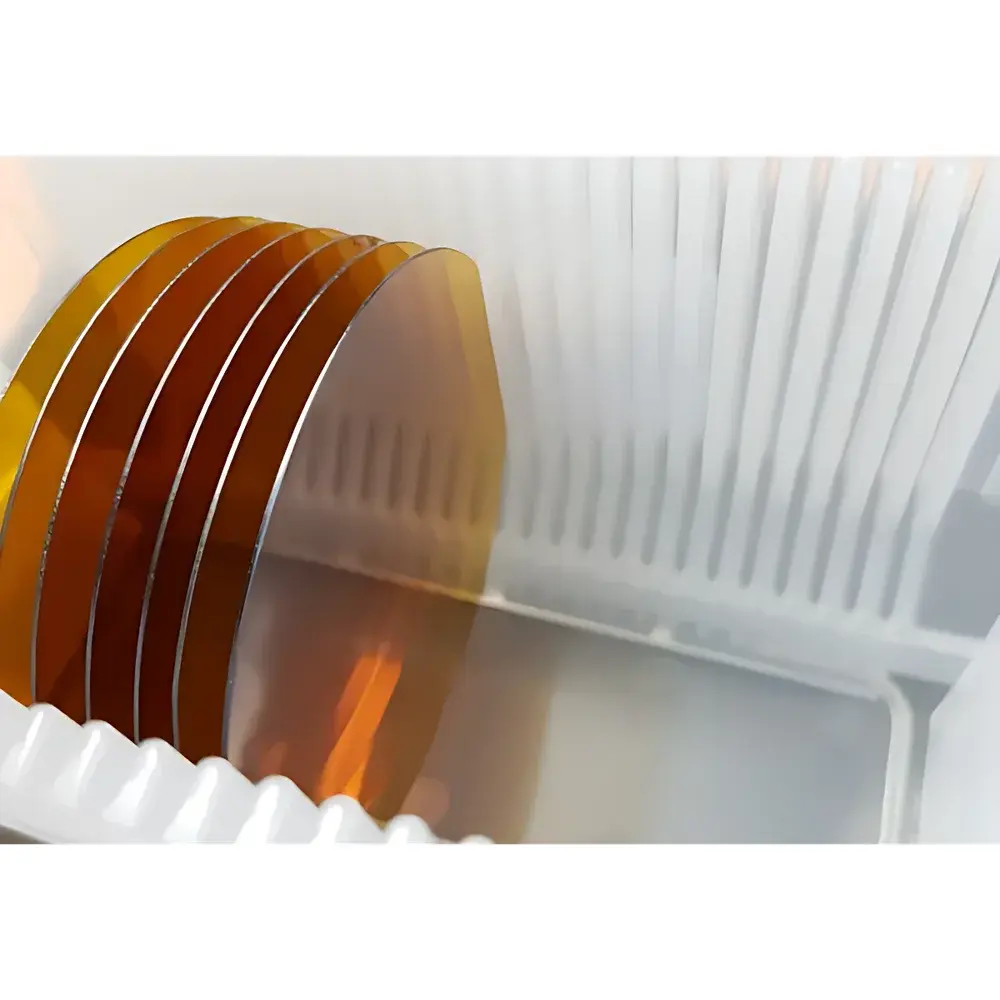
Auniontech’s single-crystal yttrium iron garnet (YIG) spheres and cubes are precision-engineered magnetic reference standards designed for high-frequency microwave resonance applications. These monocrystalline specimens operate on the fundamental principle of ferromagnetic resonance (FMR), where a static magnetic bias field induces precession of the net magnetization vector in response to a perpendicular RF excitation field. The exceptionally narrow FMR linewidth (ΔH < 1.5 Oe, FWHM) and well-defined saturation magnetization (4πMs = 1600 ± 80 G) enable precise calibration and performance validation of microwave cavity resonators, YIG-tuned oscillators (YTOs), and bandpass filters operating in the 1–50 GHz range. Unlike polycrystalline or sintered alternatives, these specimens are grown via high-temperature flux solution (flux melt) method—ensuring atomic-level crystallinity, minimal lattice defects, and uniform magnetic anisotropy across each unit. Their optical-grade surface finish (< λ/10 surface irregularity) minimizes scattering losses and supports reproducible coupling with TE011-mode cylindrical cavities.
Key Features
- Single-crystal structure grown by controlled flux-melt synthesis, verified by Laue X-ray diffraction and rocking curve analysis
- Optically polished spherical surfaces (diameter: 0.25 mm ± 0.005 mm) and cube faces (edge length: 0.5 mm ± 0.003 mm), achieving RMS roughness < 0.5 nm
- Consistent 4πMs value of 1600 ± 80 G, traceable to NIST-correlated SQUID-VSM calibration protocols
- Ferromagnetic resonance linewidth ΔH < 1.5 Oe (FWHM) at 9.5 GHz under 3 kOe bias field — indicative of low two-magnon scattering and minimal impurity-induced damping
- Low intrinsic magnetic loss tangent (tan δ < 2 × 10⁻⁴), supporting quality factors (Q) exceeding 3,000 in standard TE011 cavities
- Individually serialized and certified with batch-specific FMR spectra and M-H loop data
Sample Compatibility & Compliance
These YIG specimens are compatible with industry-standard microwave test fixtures including WR-90 waveguide mounts, coaxial probe stations, and dielectric resonator cavity assemblies. Each lot undergoes full magnetic characterization per ASTM D7799-22 (“Standard Practice for Ferromagnetic Resonance Measurement of YIG Crystals”) and ISO/IEC 17025-accredited laboratory procedures. Documentation includes traceable uncertainty budgets for 4πMs and ΔH measurements, aligned with GLP-compliant reporting requirements. While not intended for direct integration into medical or aerospace-certified subsystems, the materials comply with RoHS Directive 2011/65/EU and REACH Annex XVII restrictions on heavy metals and halogenated compounds.
Software & Data Management
Raw FMR transmission (S21) and reflection (S11) data acquired using vector network analyzers (e.g., Keysight PNA-X series) can be processed using open-source tools such as PyFMR and MATLAB-based FMR fitting suites. Auniontech provides standardized .csv and .mat file templates containing calibrated field-swept resonance traces, derivative peak identification, and Lorentzian line-fitting parameters. All delivered datasets include embedded metadata tags compliant with the HDF5 format (H5PY schema v1.3), facilitating interoperability with laboratory information management systems (LIMS) and electronic lab notebooks (ELN) that support FAIR (Findable, Accessible, Interoperable, Reusable) data principles. Audit trails for measurement conditions—including temperature (23.0 ± 0.2 °C), ambient humidity (< 40% RH), and magnetic shielding integrity—are recorded in accordance with ISO/IEC 17025 clause 7.7.
Applications
- Calibration reference for ferromagnetic resonance spectrometers used in academic and industrial magnetics labs
- Active frequency-determining element in tunable YIG oscillators (YTOs) for signal generation in radar front-ends and satellite transponders
- Resonant core in miniature microwave bandpass/bandstop filters requiring sub-MHz tuning resolution
- Model system for studying spin-wave propagation, magnon-photon coupling, and cavity optomagnonics in hybrid quantum platforms
- Benchmark substrate for thin-film YIG deposition process development (e.g., PLD, sputtering) where interfacial strain and stoichiometry must be validated against bulk single-crystal behavior
FAQ
What is the typical storage condition for YIG spheres and cubes?
Store in a clean, dry nitrogen-purged desiccator at room temperature (18–25 °C); avoid exposure to strong DC fields (>50 Oe) or mechanical shock.
Can these YIG specimens be mounted directly onto PCB substrates?
Yes—compatible with conductive epoxy bonding (e.g., EPO-TEK H20E) or laser-assisted micro-welding; thermal expansion mismatch with alumina or quartz carriers is negligible below 120 °C.
Is batch-to-batch 4πMs variation controlled?
Yes—each production run is qualified via SQUID-VSM cross-validation against a master reference sphere calibrated annually at a national metrology institute.
Do you provide custom sizes or doping variants (e.g., Gd-substituted YIG)?
Custom geometries (down to 150 µm spheres) and rare-earth doped compositions (e.g., Gd:YIG, Bi:YIG) are available under NRE agreement with minimum order quantities of 50 units.
Are safety data sheets (SDS) available for handling YIG crystals?
YIG is chemically inert and non-toxic; however, SDS compliant with GHS Rev. 8 is provided upon request, covering dust inhalation precautions during polishing or cleaving operations.
Related Products



