
Auniontech Custom Polymer Optical Components – CNC-Machined Aspheric Lenses
| Brand | Auniontech |
|---|---|
| Origin | USA |
| Manufacturer Type | Authorized Distributor |
| Origin Category | Imported |
| Model | Aspheric Lens |
| Component Category | Optical Element |
| Material Options | PMMA, Polycarbonate, COP (Zeonex), PS, OKP |
| Processing Method | Precision CNC Machining & Diamond Turning |
| Compliance | ISO 10110-7, MIL-PRF-13830B (scratch-dig), ASTM D1003 (haze/transmittance) |
Overview
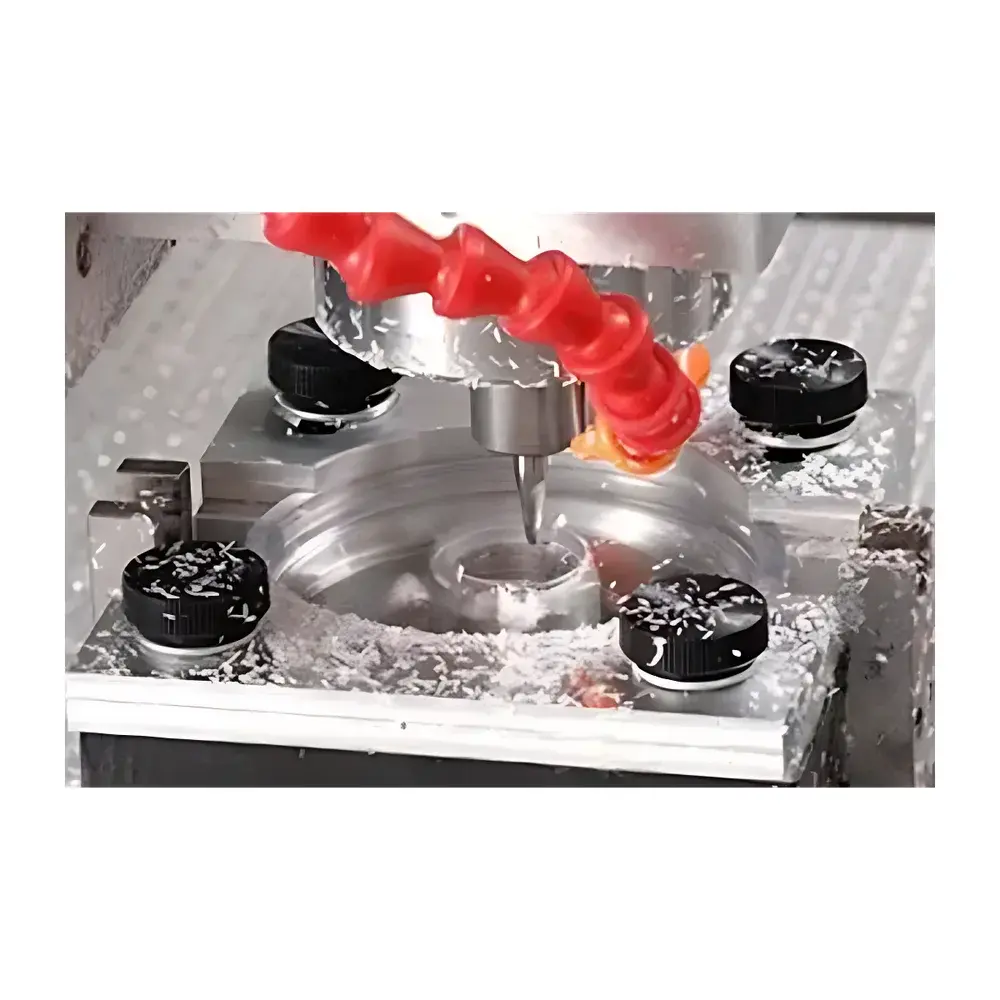
Auniontech Custom Polymer Optical Components are precision-engineered optical elements fabricated via high-accuracy CNC machining and single-point diamond turning (SPDT), specifically optimized for aspheric, freeform, and complex surface geometries in polymer substrates. Unlike conventional molded optics—limited by tooling constraints and thermal stress-induced birefringence—CNC-machined polymer optics deliver deterministic surface form accuracy (< λ/4 @ 633 nm), low residual stress, and exceptional repeatability across small-to-medium batch production. These components are engineered for applications where weight reduction, thermal stability, design freedom, and cost-effective prototyping are critical—particularly in medical endoscopy, machine vision systems, defense night-vision housings, and compact imaging modules. The process begins with optically grade cast or extruded polymer blanks (e.g., Zeonex® E48R, PMMA, or high-Tg polycarbonate), followed by iterative metrology-guided machining, sub-aperture polishing (where required), and ISO-compliant surface inspection. All parts comply with surface quality standards per ISO 10110-7 and visual defect limits per MIL-PRF-13830B.
Key Features
- Precision CNC machining and diamond turning capability for aspheric, toroidal, and off-axis surfaces with surface irregularity < ±0.1 µm PV and roughness < 5 nm RMS
- Material versatility: PMMA (high transmission, low cost), polycarbonate (impact resistance, -137°C to +124°C operational range), COP (Zeonex®/Topas®; <0.01% water absorption, low birefringence, Tg ≈ 138°C), PS (cost-effective achromat pairing), and OKP (high refractive index nD ≈ 1.64, low dispersion)
- No mold tooling investment—ideal for rapid prototyping, design iteration, and low-volume production (NRE minimized)
- Edge geometry customization: bevels, chamfers, light traps, mounting grooves, and kinematic mounts integrated directly into the optic
- Coating-ready substrates: compatible with AR, HR, bandpass, and dichroic thin-film coatings deposited via ion-assisted e-beam evaporation
- Traceable metrology: surface form verified via Zygo Verifire™ interferometry; dimensional verification via Mitutoyo CMM with calibrated tactile probes
Sample Compatibility & Compliance
These polymer optics are validated for integration into regulated environments. Materials meet USP Class VI biocompatibility requirements for short-term contact in endoscopic and arthroscopic devices. PMMA and COP variants comply with ISO 10993-5 cytotoxicity testing. All finished components undergo environmental stress screening per MIL-STD-810G (thermal cycling, humidity exposure, vibration). Surface cleanliness adheres to IEST-STD-CC1246D Level 100 (≤100 particles ≥0.5 µm per cm²). Documentation packages include full traceability (batch lot numbers, raw material certs, interferometric maps, and coating spectral data), supporting GLP/GMP audit readiness and FDA 21 CFR Part 11–compliant data archiving when paired with optional software modules.
Software & Data Management
Each custom order includes a digital twin package: STEP AP214 CAD model, Zemax-compatible .ZRD surface file, interferogram (.tif), and measurement report in PDF/A-1b format. Optional integration with Auniontech’s Optical Design Portal enables real-time tolerance stack-up analysis, sensitivity studies, and coating performance simulation against specified spectral bands (UV-VIS-NIR). For enterprise clients, secure API access supports automated PO ingestion, revision-controlled BOM synchronization, and audit-log-enabled change tracking aligned with ISO 9001:2015 Clause 8.5.2.
Applications
- Medical Endoscopy: Lightweight, sterilizable aspheric lenses for laparoscopes and cystoscopes—reducing chromatic aberration when hybridized with BK7 or SF10 glass elements
- Machine Vision: Wide-FOV lenses for AGV navigation, barcode readers, and 3D time-of-flight (ToF) sensors—leveraging COP’s low moisture-induced focal shift
- Defense & Aerospace: Helmet-mounted display (HMD) combiners and lightweight night-vision objective assemblies—minimizing mass while maintaining MTF > 40% at 50 lp/mm
- Consumer Imaging: Compact camera modules for video conferencing systems and biometric authentication sensors—optimized for LED illumination spectra and low f-number performance
- Industrial Sensing: Optical windows for smoke detectors, automatic faucet IR emitters, and lab-grade spectrophotometer cuvette holders—selected for UV stability (PMMA) or chemical resistance (COP)
FAQ
What is the typical lead time for CNC-machined polymer optics?
Standard lead time is 3–4 weeks from drawing approval for quantities ≤10 units; expedited options (2-week delivery) available with priority scheduling.
Can you achieve λ/10 surface figure on polymer substrates?
Yes—λ/10 PV is routinely achieved on Zeonex® and PMMA using stabilized SPDT platforms with in-situ interferometric feedback; achievable tolerance depends on part diameter, sag depth, and aspect ratio.
Do you support hybrid optical designs combining polymer and glass elements?
Yes—our optical design team provides co-optimization of polymer-glass doublets for achromatism, field flattening, and thermal defocus compensation, including mechanical mounting interface definition.
Are material certifications and RoHS/REACH documentation provided?
All materials ship with full RoHS 2015/863, REACH SVHC, and UL94 V-0 (where applicable) compliance certificates, plus manufacturer-specific optical homogeneity reports.
What surface coatings are standard or optional?
Standard: MgF₂ broadband AR (400–700 nm, R<0.5% avg); optional: NIR AR (700–1100 nm), VIS-NIR dual-band, laser-line HR (1064 nm), or hydrophobic topcoats per ISO 15063.



