
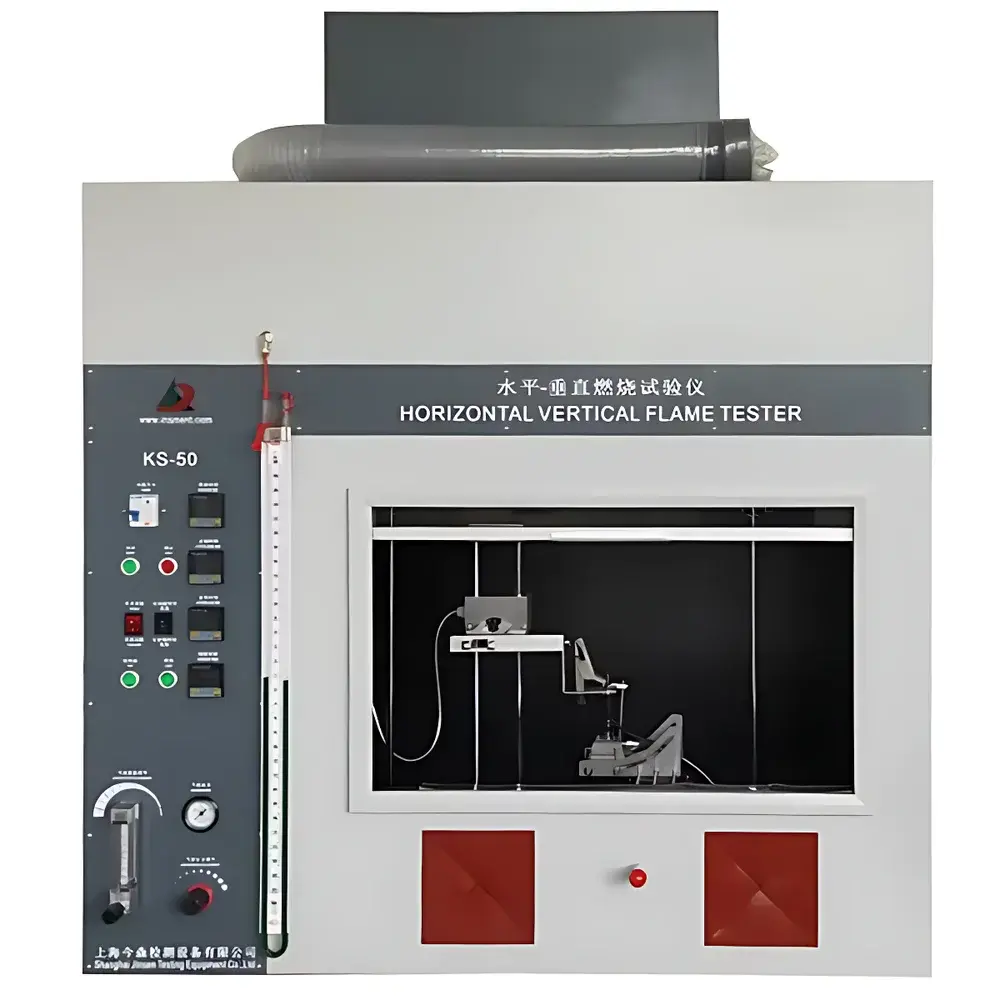
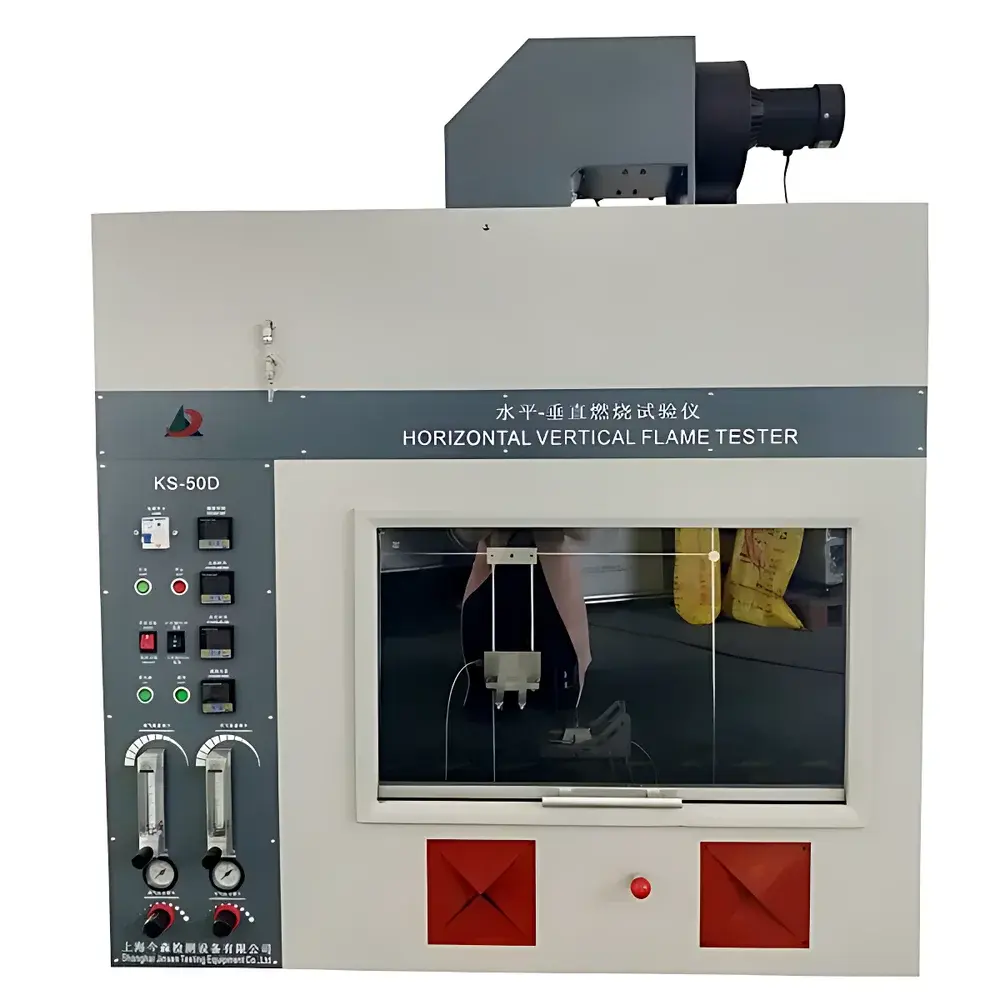
Insment KS-50C Horizontal & Vertical Flame Retardancy Tester
| Brand | Insment |
|---|---|
| Origin | Shanghai, China |
| Model | KS-50C |
| Burner Tube Diameter | 9.5 ± 0.5 mm |
| Burner Vertical Travel | ~150 mm |
| Adjustable Burner Angles | 0°, 20°, 45° |
| Flame Application Time | 1–999.9 s (digital preset) |
| Afterflame Time Measurement | 1–999.9 s (digital readout) |
| Repetitive Ignition Cycles | 1–9999 (digital preset) |
| Test Chamber Volume | >0.75 m³ |
| Background Color | Matte Black |
| Power Supply | 0.5 kVA, 220 V, 50–60 Hz |
| Fuel Gas | ≥98% methane (reference gas) or natural gas (37 ± 1 MJ/m³) |
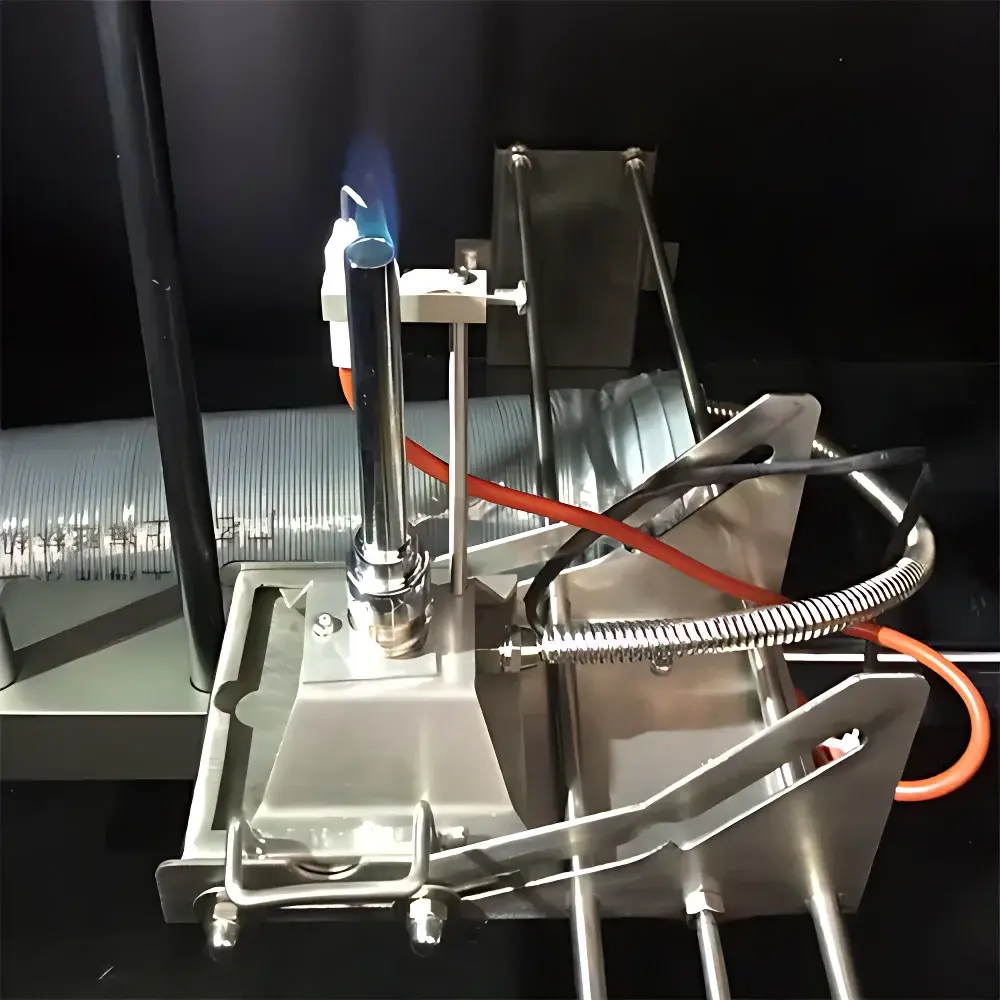
| Burner Tip Options | Round orifice and stainless-steel fish-tail tip (interchangeable) |
Overview
The Insment KS-50C Horizontal & Vertical Flame Retardancy Tester is a precision-engineered benchtop combustion testing system designed to evaluate the flammability characteristics of solid polymeric materials, electrical enclosures, foams, films, and insulating components under standardized ignition conditions. It operates on the principle of controlled flame exposure using a calibrated Bunsen burner—compliant with the fundamental thermal ignition methodology defined in UL 94, IEC 60695-11 series, ISO 1210, and GB/T 2408. The instrument delivers repeatable, traceable flame application via precise mechanical positioning, digitally timed gas flow control, and thermally stable burner geometry. Its dual-axis burner carriage enables rapid switching between horizontal (HB) and vertical (V-0/V-1/V-2/5V/VTM/HF) test orientations without manual realignment, ensuring strict adherence to specimen orientation requirements specified in international fire safety standards.
Key Features
- Interchangeable burner tips: Standard round orifice (9.5 ± 0.5 mm ID) and stainless-steel fish-tail nozzle for optimized flame profile in HF and VTM tests.
- Dual-angle burner positioning: Motor-assisted, repeatable angular adjustment at 0° (horizontal), 20°, and 45°—mechanically locked for zero drift during flame application.
- High-resolution digital timing: Independent presettable flame-on duration (1–999.9 s) and measured afterflame time (1–999.9 s) with 0.1 s resolution and auto-stop logic.
- Modular ignition cycle programming: Up to 9999 sequential flame applications per test sequence, supporting multi-cycle protocols such as UL 94 V-2 conditioning or ISO 9773 VTM-0 verification.
- Large-volume test chamber (>0.75 m³) with non-reflective matte black interior walls to eliminate ambient light interference and ensure accurate visual assessment of flaming droplets and afterglow.
- Integrated gas pressure regulation and flow stabilization circuitry for consistent methane or natural gas delivery across varying line pressures (37 ± 1 MJ/m³ calorific value compliance).
Sample Compatibility & Compliance
The KS-50C accommodates specimens up to standard UL 94 dimensions (125 × 13 mm for rigid plastics; 125 × 13 × thickness mm for foams and films) and supports mounting fixtures for enclosures, housings, and laminated assemblies weighing ≤18 kg. It is validated for use in regulatory testing environments requiring documented conformance to:
- UL 94: HB, V-0, V-1, V-2, 5V, VTM-0/VTM-1/VTM-2, HF-1/HF-2/HBF
- IEC 60695-11-2, -11-3, -11-4, -11-10, -11-20
- ISO 1210, ISO 9770, ISO 9772, ISO 9773
- GB/T 2408, GB/T 5169.17, GB/T 8332
All test procedures align with GLP-compliant laboratory practices. While the system itself does not embed electronic audit trails, its digital timers and mechanical repeatability support full traceability when integrated into a documented quality management system (e.g., ISO/IEC 17025 accredited labs). Calibration certificates for burner geometry, timer accuracy, and gas flow rate are recommended annually per ASTM E176 guidance.
Software & Data Management
The KS-50C operates via embedded microcontroller-based hardware with front-panel membrane keypad and LED display—designed for robustness, electromagnetic immunity, and minimal maintenance in industrial lab environments. No proprietary software is required; all operational parameters (flame duration, cycle count, angle selection) are configured directly on-device. Timing logs are manually recorded by operators in accordance with internal SOPs or LIMS-integrated workflows. For laboratories implementing 21 CFR Part 11 compliance, external timestamped video recording (e.g., synchronized HD camera with calibrated scale reference) is recommended to capture flame propagation, dripping behavior, and cotton indicator ignition—key evidence elements in final classification reports.
Applications
The KS-50C serves as a core qualification tool in R&D, production QA, and third-party certification labs evaluating flame propagation resistance for:
- Electrical insulation systems (wire coatings, terminal blocks, busbar housings)
- Consumer electronics enclosures (PCB substrates, connector bodies, power supply casings)
- Automotive interior components (dashboards, seat foams, wiring harness wraps)
- Building material surface finishes (rigid PVC cladding, phenolic laminates, thermoset composites)
- Medical device housings subject to IEC 60601-1 Clause 11.1 flammability requirements
Its design prioritizes mechanical stability over automation—making it especially suitable for labs performing low-to-medium throughput testing where operator-controlled repeatability and long-term calibration stability are critical success factors.
FAQ
Does the KS-50C include automated data export or USB connectivity?
No. It is a stand-alone electromechanical tester with local digital display and manual parameter entry. Data logging requires external documentation per lab SOP.
Can the system be used with propane or butane instead of methane?
No. UL 94 and IEC 60695-11 explicitly require ≥98% methane or natural gas with calorific value 37 ± 1 MJ/m³. Propane and butane produce significantly different flame temperatures and sooting behavior, invalidating test compliance.
Is the test chamber ventilated or sealed?
The chamber is unventilated during test execution to maintain consistent thermal environment per standard requirements. Exhaust fume handling must be provided externally via lab hood or dedicated ducted ventilation meeting local occupational safety codes (e.g., OSHA 1910.1200).
What maintenance is required to sustain calibration validity?
Annual verification of burner tube inner diameter (micrometer), timer accuracy (oscilloscope or certified stopwatch), and gas flow rate (calibrated rotameter) is recommended. Stainless-steel fish-tail tips should be inspected for erosion after every 500 test cycles.



