
Insment KS-701B NFPA 701 Vertical Flame Propagation Test Chamber for Textiles and Films
| Brand | Insment |
|---|---|
| Origin | Shanghai, China |
| Model | KS-701B |
| Application Field | Textile & Home Furnishings |
| Test Specimens | Curtains, Draperies, Window Coverings |
| Compliance | NFPA 701 Standard Methods of Fire Tests for Flame Propagation of Textiles and Films (Method 1 & Method 2) |
| Power Supply | AC 220 V, 50 Hz |
| Fuel Gas | Propane or Butane (user-supplied) |
| Ignition Time Range | 0–99.99 s |
| Afterflame Time Range | 0–99.99 s |
| Flame Height Adjustment | Yes, with calibration fixture |
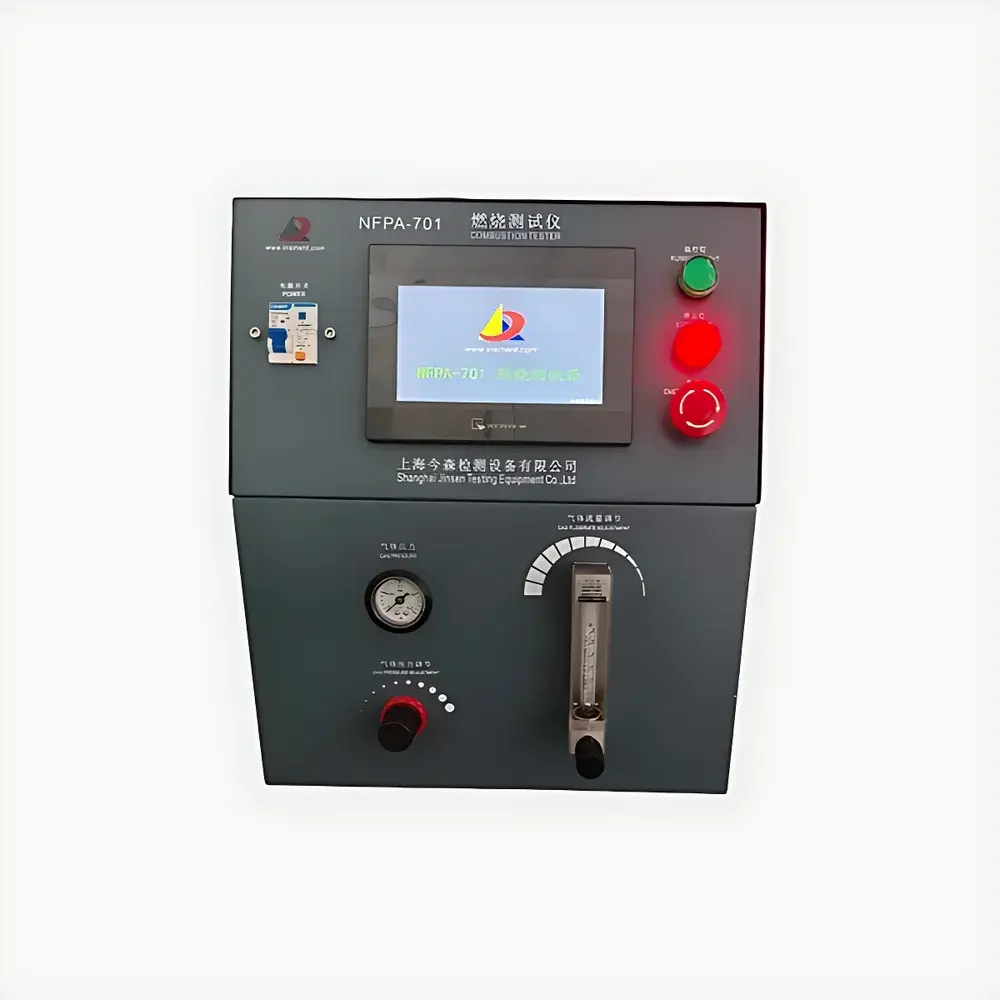
| Control System | Touchscreen-based programmable interface |
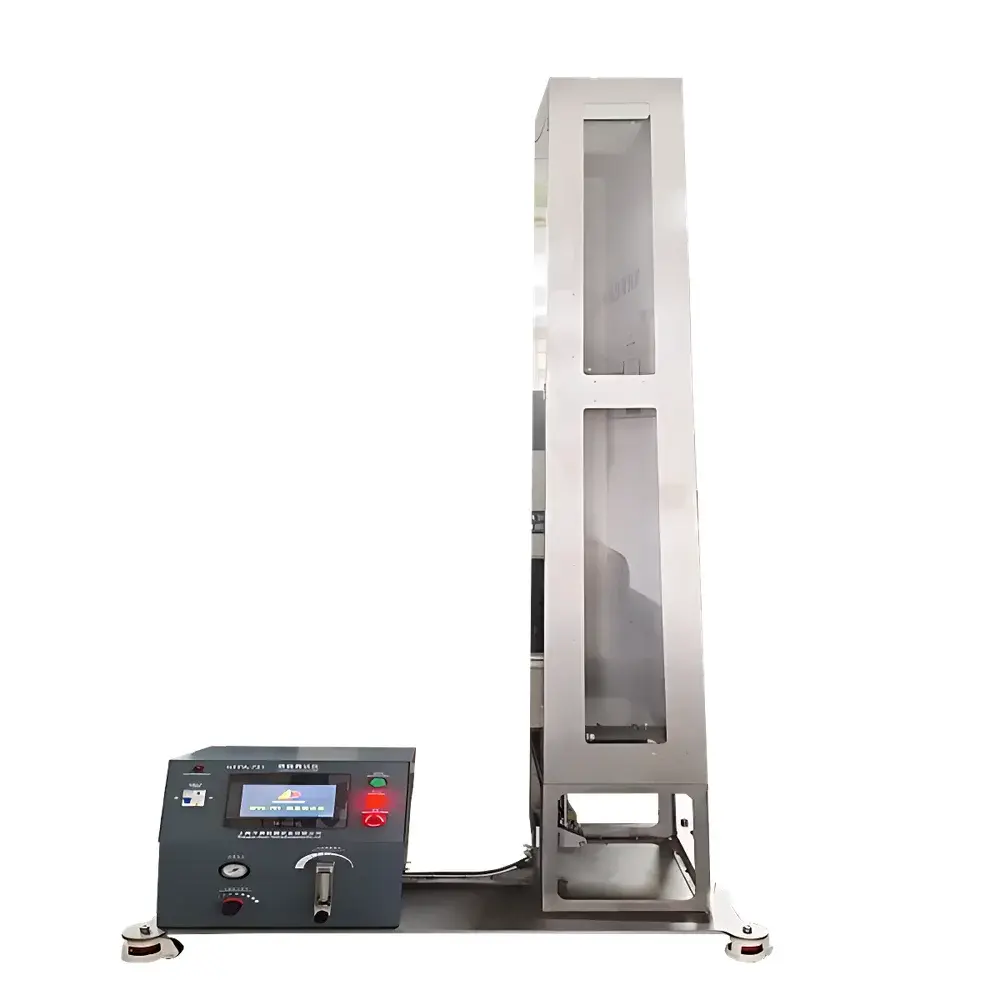
| Viewing Window | Tempered safety glass |
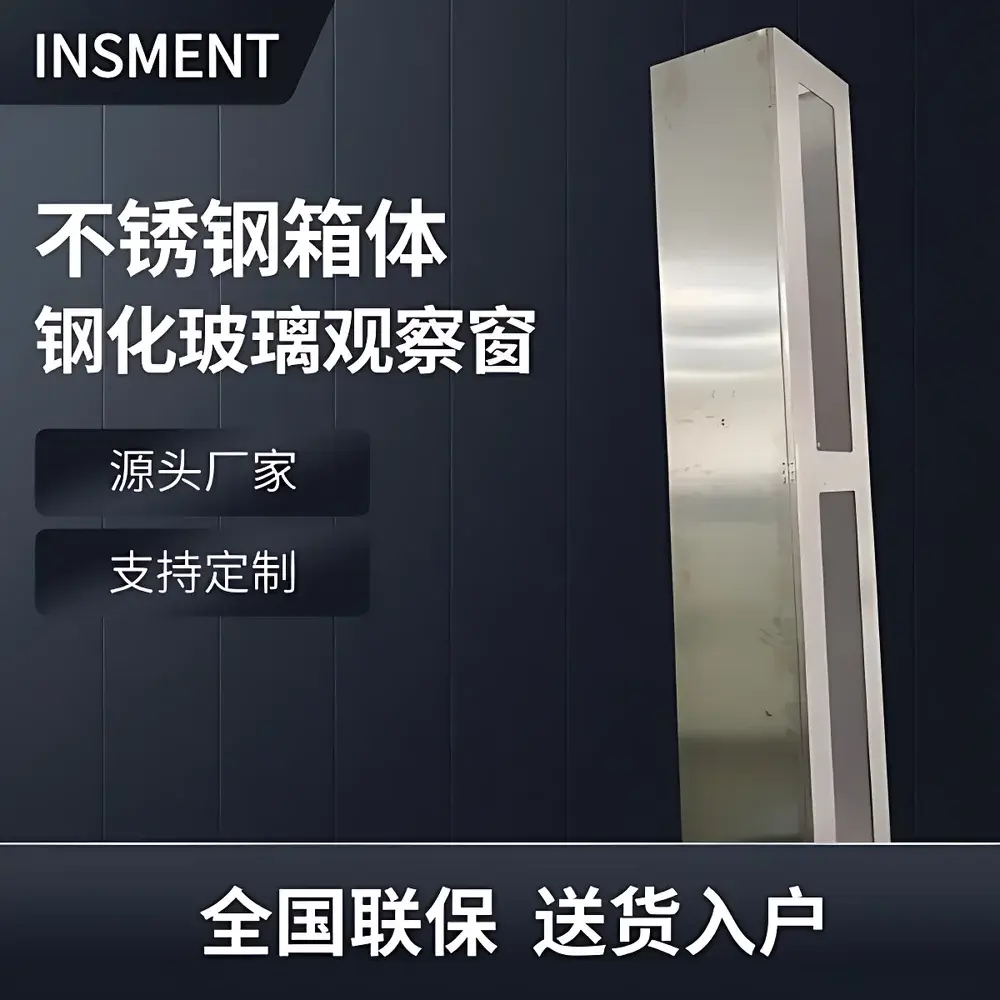
| Construction | Cold-rolled steel with corrosion-resistant coating |
Overview
The Insment KS-701B NFPA 701 Vertical Flame Propagation Test Chamber is a precision-engineered instrument designed to evaluate the flame resistance of vertically oriented textile and film materials in accordance with NFPA 701: Standard Methods of Fire Tests for Flame Propagation of Textiles and Films. This test method quantifies critical fire performance parameters—including afterflame time, char length, and mass loss ratio—under controlled laboratory conditions. The chamber implements the fundamental principles of vertical flame exposure: a standardized burner delivers a reproducible propane or butane flame to the bottom edge of a suspended specimen for a fixed duration (45 s per Method 1), followed by observation of post-ignition behavior. Its design adheres strictly to the dimensional, thermal, and procedural requirements defined in both Method 1 (for single-layer fabrics) and Method 2 (for multilayer, laminated, or folded specimens), ensuring compliance with regulatory validation protocols used by fire safety laboratories, textile QA departments, and third-party certification bodies.
Key Features
- Touchscreen-integrated control system enabling one-touch selection between NFPA 701 Method 1 and Method 2 test sequences, with real-time parameter monitoring and automatic timing synchronization.
- Calibratable Mecker-type burner mounted on a precision linear rail; flame height adjustable to 100 mm ± 2 mm and verifiable via integrated thermocouple-based temperature calibration fixture.
- Gas delivery subsystem featuring imported pressure regulator and digital flow meter for consistent fuel supply (propane or butane), supporting traceable gas flow rate documentation required under GLP audit frameworks.
- Robust cold-rolled steel enclosure with electrostatically applied anti-corrosion coating and a large tempered safety glass viewing window—compliant with ANSI Z87.1 impact resistance standards.
- Automated ignition sequence with fail-safe gas cutoff logic; ignition timer and afterflame timer independently programmable from 0.01 to 99.99 seconds in 0.01-s increments.
- Vertical specimen holder with non-combustible pin-and-clamp assembly, ensuring repeatable sample alignment where the lower edge is precisely level with the burner centerline—critical for inter-laboratory reproducibility.
Sample Compatibility & Compliance
The KS-701B accommodates standard NFPA 701 specimen dimensions: 150 mm × 400 mm (width × height), cut along warp and weft directions to reflect in-service orientation. It supports both single-layer and multilayer configurations—including stitched or heat-laminated assemblies—as specified in Method 2. All mechanical and thermal operating parameters meet the physical constraints outlined in Clause 5 (Apparatus) and Annex A (Verification Procedures) of NFPA 701 (2022 edition). The chamber’s construction, airflow management, and burner geometry are validated against ASTM E84 reference criteria for flame spread apparatus equivalence. It is routinely deployed in facilities maintaining ISO/IEC 17025 accreditation and supporting UL, FM Global, and CPSC-related fire safety evaluations. While not itself certified, the system enables generation of data suitable for submission to AHJs (Authorities Having Jurisdiction) and product listing programs requiring NFPA 701 conformance evidence.
Software & Data Management
The embedded touchscreen interface logs timestamped event data—including ignition start, flame termination, afterflame cessation, and operator annotations—into an internal non-volatile memory buffer. Exportable CSV files contain raw timing values, gas pressure readings, and user-entered specimen IDs. Though the base configuration does not include network connectivity or electronic signature functionality, the system architecture supports optional integration with LIMS platforms via RS-232 or USB-to-serial adapters. For regulated environments, the device may be operated under documented SOPs aligned with FDA 21 CFR Part 11 requirements when paired with external audit-trail software and role-based access controls implemented at the facility level.
Applications
This test chamber serves as a core tool in textile flammability assessment across commercial, institutional, and residential sectors. Primary use cases include pre-market screening of drapery fabrics for hospitality venues (hotels, theaters, convention centers), validation of flame-retardant treatments applied to theatrical backdrops and stage curtains, and quality assurance testing for contract upholstery suppliers serving healthcare and education markets. It is also employed in R&D settings to compare the efficacy of different flame-retardant chemistries (e.g., phosphorus-based vs. halogen-free systems) and to support root-cause analysis of field failures involving vertical fabric ignition. Data generated directly informs compliance with building codes referencing NFPA 101 (Life Safety Code) and IBC Chapter 8 (Interior Finishes).
FAQ
Does the KS-701B comply with the latest edition of NFPA 701?
Yes—the mechanical design, burner specification, and operational parameters conform to NFPA 701 (2022) for both Method 1 and Method 2.
Can the chamber be used for ASTM D6413 testing?
No—ASTM D6413 (Standard Test Method for Flame Resistance of Textiles) employs a different burner geometry, specimen orientation, and pass/fail criteria; it requires a dedicated apparatus.
Is propane the only approved fuel gas?
Both propane and butane are permitted per NFPA 701 Section 4.2.2; users must verify gas purity (>95% grade) and maintain consistent pressure throughout testing.
What environmental conditioning is required prior to testing?
Specimens must be conditioned at 21 ± 1°C and 65 ± 5% RH for minimum 24 h per ASTM D1776, unless otherwise specified in the material’s product standard.
Does the system include calibration certificates?
Factory calibration documentation for burner alignment, flame height verification, and timer accuracy is provided; annual recalibration by an accredited metrology lab is recommended for ISO/IEC 17025 compliance.



