
PROCEPT Plasma Fluidized Bed Reactor / Coater
| Brand | PROCEPT |
|---|---|
| Origin | Belgium |
| Manufacturer Type | Authorized Distributor |
| Origin Category | Imported |
| Model | Plasma Fluid Bed |
| Price Range | USD 70,000 – 140,000 |
| Usable Volume | Small-scale |
| Construction Material | Borosilicate Glass |
| Operating Pressure | Low-pressure (near atmospheric to −0.5 bar gauge) |
| Chamber Capacity | 1 L |
| Vacuum Capability | Not applicable (non-vacuum plasma operation) |
| Typical Batch Mass | 50–200 g (for 1 L reactor) |
| Particle Size Range | 50 µm – 3 mm (optimized for bulk density ~0.5 kg/L) |
| Plasma Gases | N₂, Ar, He, CO₂, or custom gas mixtures |
Overview
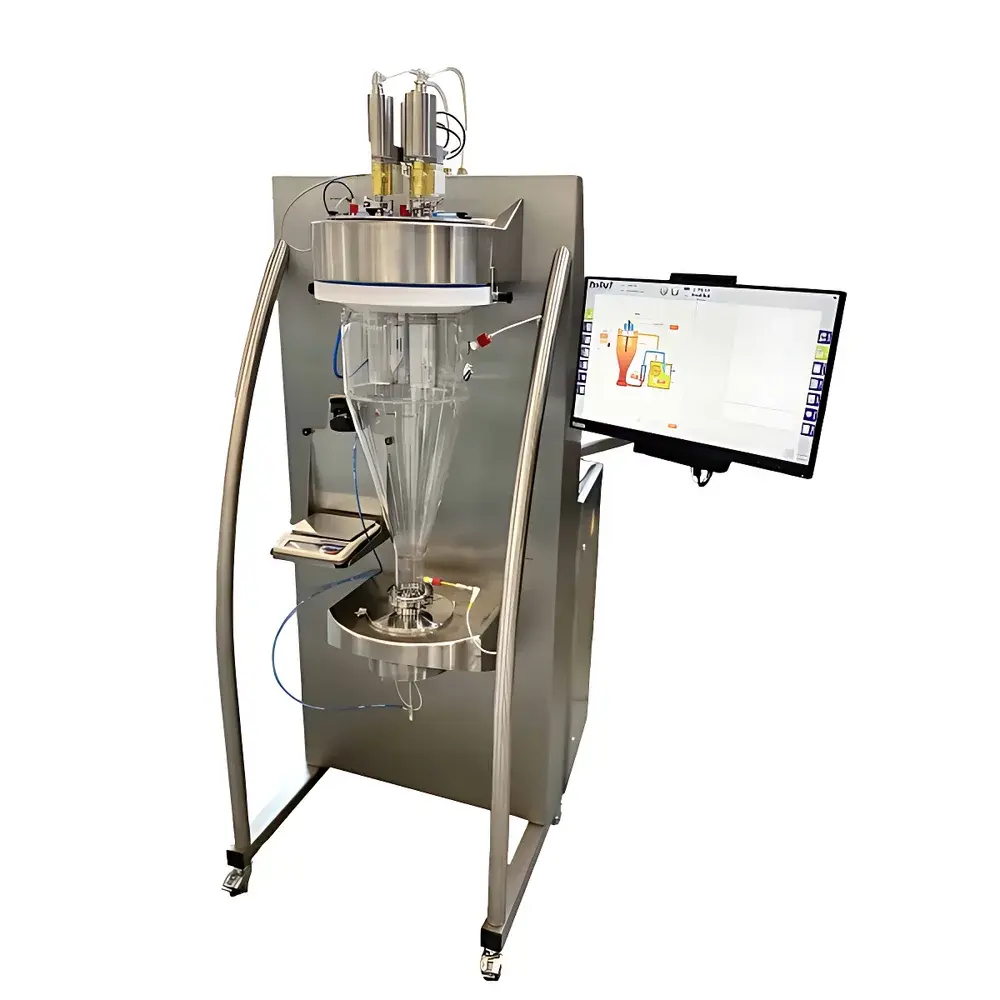
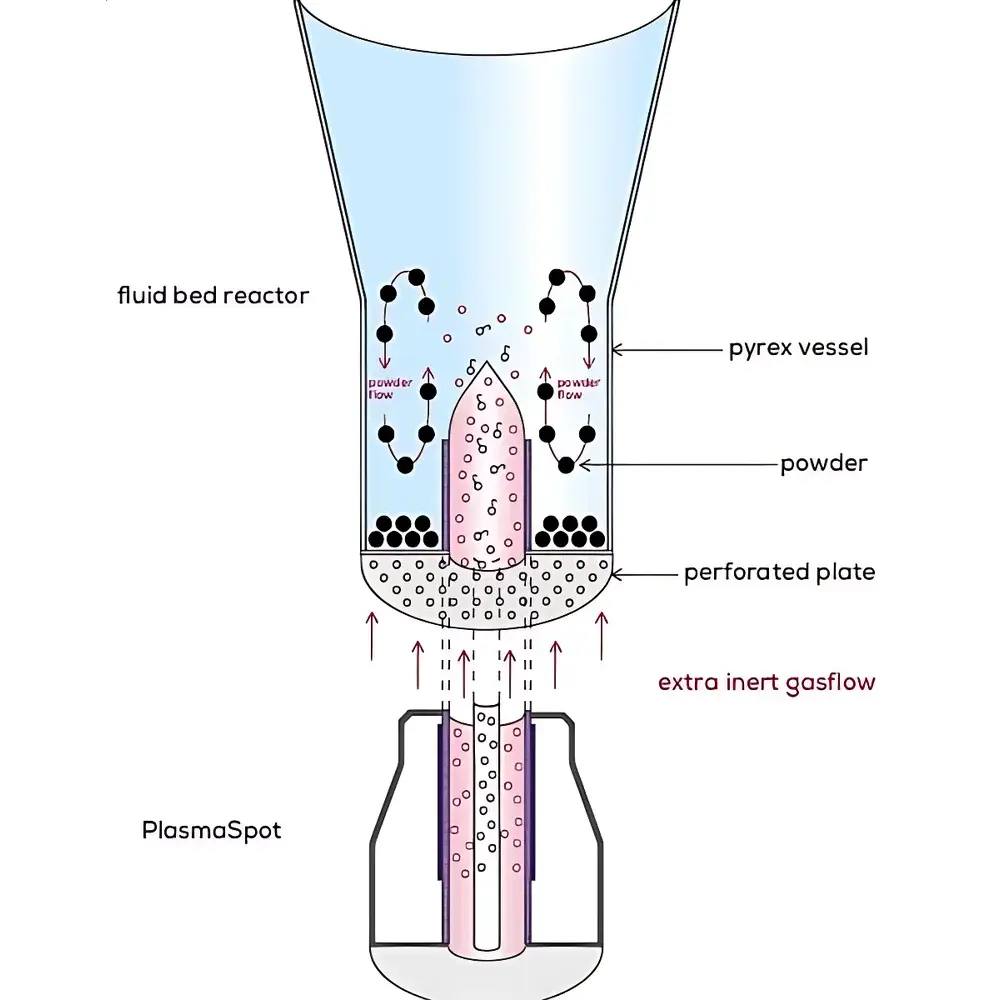
The PROCEPT Plasma Fluidized Bed Reactor / Coater (Model: Plasma Fluid Bed) is an advanced benchtop platform engineered for dry, solvent-free surface functionalization and conformal thin-film coating of fine powders and granules. It integrates PROCEPT’s precision fluidized bed reactor architecture with MPG’s patented PlasmaSpot® atmospheric-pressure plasma source to enable controlled, low-temperature plasma-enhanced chemical vapor deposition (PECVD) and plasma polymerization directly onto particulate substrates. Unlike conventional wet-coating or thermal CVD methods, this system operates at ambient to mildly elevated temperatures (typically <60 °C), eliminating thermal degradation risks for thermolabile APIs, biologics, enzymes, or nanomaterials. The reactor leverages dielectric-barrier discharge (DBD) plasma generated in flowing process gases—such as nitrogen, argon, helium, or carbon dioxide—to activate monomer vapors or precursor solutions introduced via ultrasonic nebulization. This yields covalently anchored, nanometer-to-submicrometer-thick functional coatings—including hydrophobic barriers, pH-responsive layers, bioactive ligands, or antimicrobial polymers—without solvents, post-drying steps, or extended curing times.
Key Features
- Atmospheric-pressure, non-thermal plasma source integrated with a vertically oriented, glass-walled fluidized bed chamber (1 L usable volume)
- Full touchscreen HMI with embedded PC-based control system supporting real-time logging of plasma voltage, current, gas flow rates, bed temperature, and process duration
- Modular gas delivery subsystem compatible with single gases or pre-mixed blends (N₂, Ar, He, CO₂, O₂, NH₃, or organic vapor carriers)
- Ultrasonic nebulizer for precise metering of liquid precursors—including aqueous emulsions, polymeric solutions, nanoparticle suspensions, and biomolecule formulations
- Mobility-enabled design with industrial-grade casters and vibration-damped leveling feet for flexible lab integration
- Process reproducibility ensured by closed-loop feedback on fluidization velocity, plasma power density, and residence time distribution
Sample Compatibility & Compliance
The Plasma Fluid Bed Reactor accommodates free-flowing powders and granules within the size range of 50 µm to 3 mm, provided bulk density falls between 0.3–1.2 kg/L. It is routinely used with pharmaceutical excipients (e.g., microcrystalline cellulose, lactose), battery cathode precursors (e.g., NMC, LFP), metal-organic frameworks (MOFs), silica nanoparticles, and natural fibers. All wetted components are constructed from ASTM E438 Type I, Class A borosilicate glass (e.g., Schott D263 or equivalent), ensuring chemical inertness and optical clarity for in-situ observation. The system complies with IEC 61000-6-3 (EMC emission standards) and meets CE marking requirements for laboratory equipment. While not intrinsically rated for explosion-proof environments, optional grounding kits and gas purge interlocks support safe operation with flammable monomers under ISO 8573-1 Class 2 compressed air supply.
Software & Data Management
The embedded Windows-based control software provides full audit trail functionality aligned with FDA 21 CFR Part 11 principles: electronic signatures, user role-based access control (admin/operator/viewer), immutable parameter logs with timestamped metadata, and exportable CSV/Excel reports compliant with GLP documentation workflows. Process recipes—including plasma power ramp profiles, gas sequencing logic, nebulizer duty cycles, and temperature setpoints—are stored with version history and checksum validation. Optional OPC UA connectivity enables integration into centralized MES or LIMS platforms for automated batch record generation and SPC trend analysis across multiple reactors.
Applications
- Pharmaceutical: Solvent-free enteric or sustained-release coatings; covalent immobilization of antibodies, peptides, or PEG chains onto carrier particles; viral inactivation layers for vaccine adjuvants
- Materials Science: Surface passivation of silicon anode powders for Li-ion batteries; hydrophobic encapsulation of perovskite quantum dots; flame-retardant shell deposition on wood flour composites
- Agrochemicals: Controlled-release pesticide microcapsules with stimuli-responsive polymer shells
- Diagnostics: Functionalized magnetic bead surfaces for immunoassay capture; contrast agent stabilization via plasma-polymerized dextran derivatives
- Sustainable Packaging: Plasma-deposited barrier films on cellulose nanocrystal powders to replace PET laminates
FAQ
What plasma gases are supported, and can reactive precursors be introduced simultaneously?
N₂, Ar, He, CO₂, O₂, and NH₃ are standard; reactive monomers (e.g., allylamine, hexamethyldisiloxane) are delivered via ultrasonic nebulization synchronized with plasma ignition.
Is the system suitable for GMP manufacturing environments?
It is designed for R&D and pilot-scale development; qualification packages (IQ/OQ/PQ) and 21 CFR Part 11-compliant validation templates are available upon request.
Can particle agglomeration occur during plasma treatment?
Fluidization stability is maintained through real-time pressure drop monitoring and adaptive airflow modulation; typical agglomeration rate is <0.3% under optimized conditions.
What is the minimum achievable coating thickness, and how is it verified?
Sub-nanometer monolayer deposition is achievable; thickness is quantified ex situ via XPS, ellipsometry, or TEM cross-sectioning—calibration curves are established per material system.
Does the system require external chilled water or compressed air?
Only standard lab-grade compressed air (oil-free, ≤5 µm filtration) is required; no external cooling loop is needed—the plasma source is air-cooled.



