
ProCepT 4M8-TriX Spray Dryer
| Brand | PROCEPT |
|---|---|
| Origin | Belgium |
| Manufacturer Type | Authorized Distributor |
| Product Category | Imported Equipment |
| Model | 4M8-TriX Spray Dryer |
| Sample Solvents | Water & Organic Solvents |
| Max Feed Rate | 120 mL/h |
| Temperature Range | −10 °C to 200 °C |
| Particle Size Range | 1–350 µm |
Overview
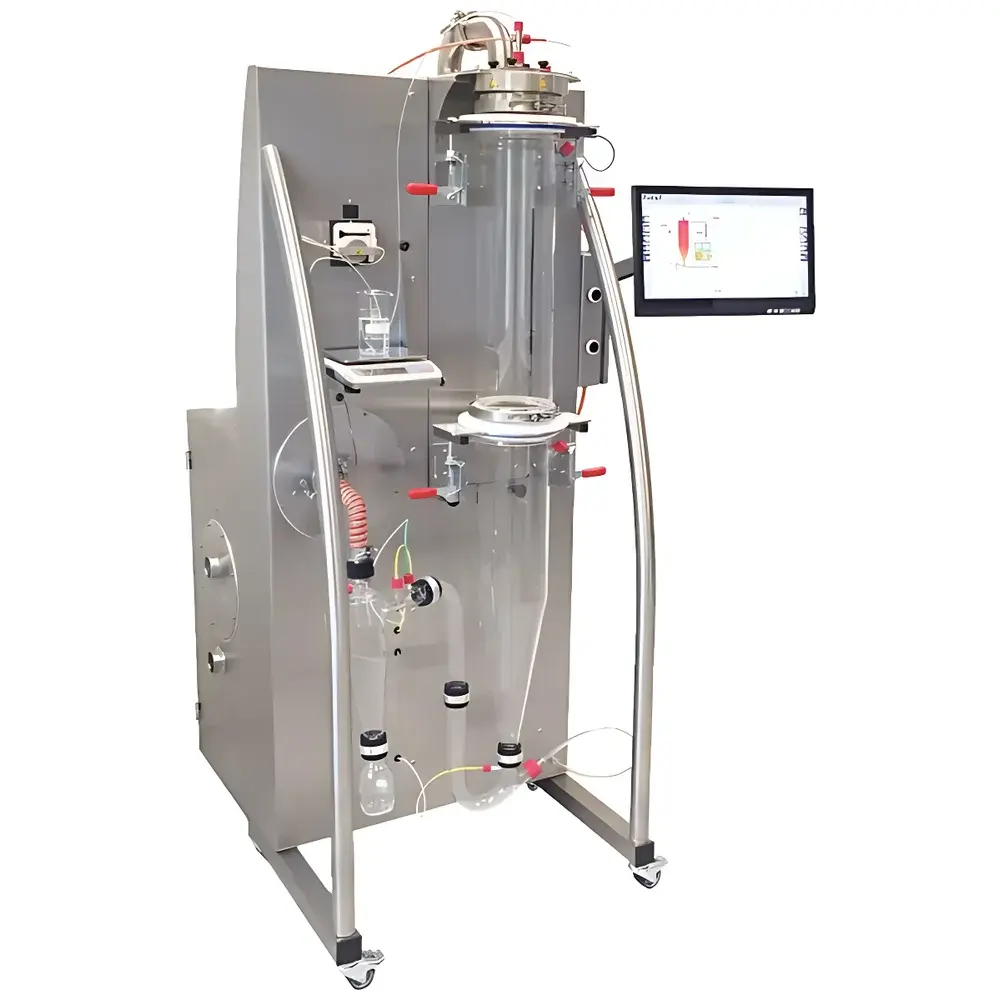
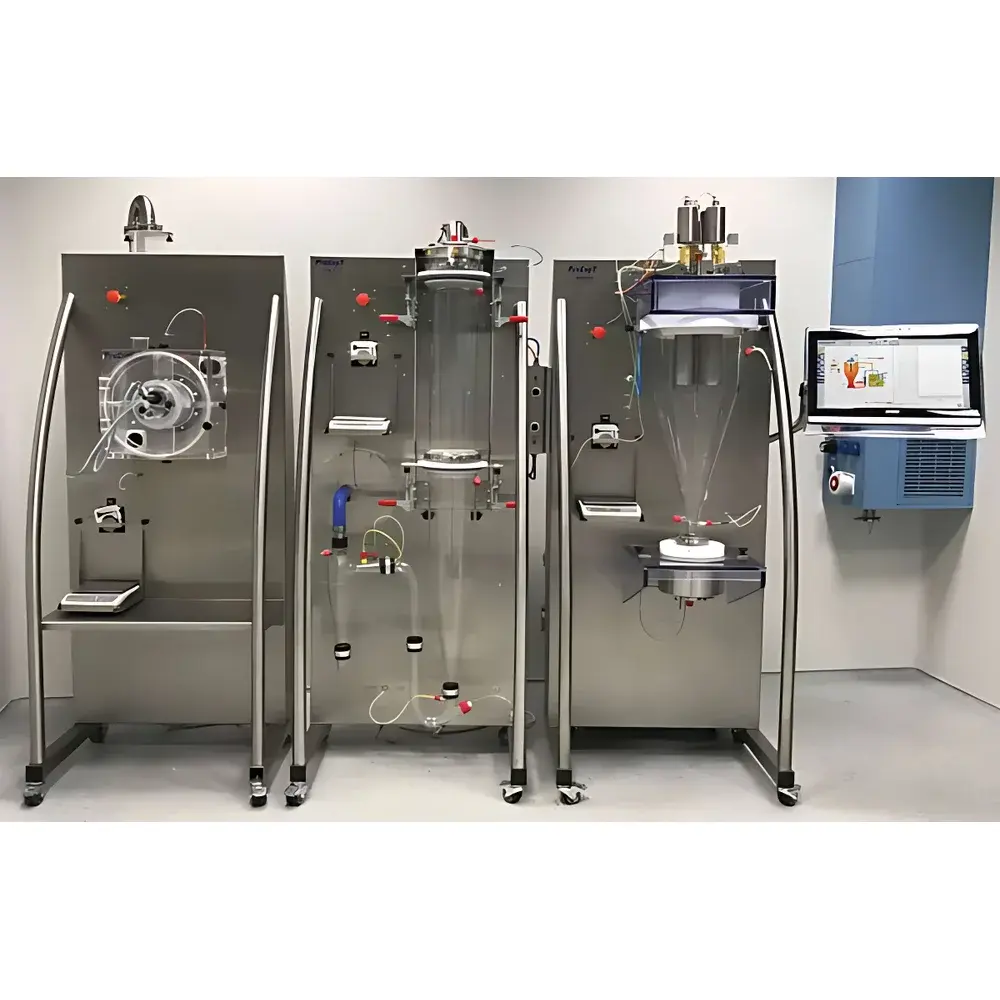
The ProCepT 4M8-TriX Spray Dryer is a benchtop, research-grade spray drying system engineered for precision formulation development in pharmaceutical, nutraceutical, and advanced materials laboratories. It operates on the principle of rapid solvent evaporation via atomization—where liquid feed is dispersed into fine droplets using a dual-fluid nozzle, then exposed to a controlled, laminar hot or cold gas stream. This enables near-instantaneous solidification of particles with high morphological fidelity and minimal thermal degradation. Unlike conventional industrial dryers, the 4M8-TriX is specifically designed for low-volume, high-value R&D workflows—supporting reproducible processing from as little as 10 mg of active ingredient to multi-gram dry powder batches. Its modular architecture accommodates both standard spray drying and specialized variants including spray freeze-congealing (SFC) and cryo-spray drying, making it uniquely suited for thermolabile APIs, lipid nanoparticles, amorphous solid dispersions, and taste-masked microcapsules.
Key Features
- Ultra-low sample requirement: Achieves >90% mass recovery from as little as 1 mL (≈10 mg) feed solution—critical for early-stage API screening and scarce natural product isolation.
- Laminar airflow design: Eliminates turbulent eddies and wall deposition; ensures uniform residence time distribution and prevents thermal overexposure or agglomeration.
- Modular temperature control: Integrated cooling capability down to −10 °C enables solvent-free particle formation via spray freeze-congealing when paired with the optional heated nozzle jacket.
- Dual-fluid high-efficiency atomizer: Standard configuration includes full set of interchangeable nozzle caps (0.15–1.2 mm orifice), supporting precise droplet size tuning across 1–350 µm final particle distributions.
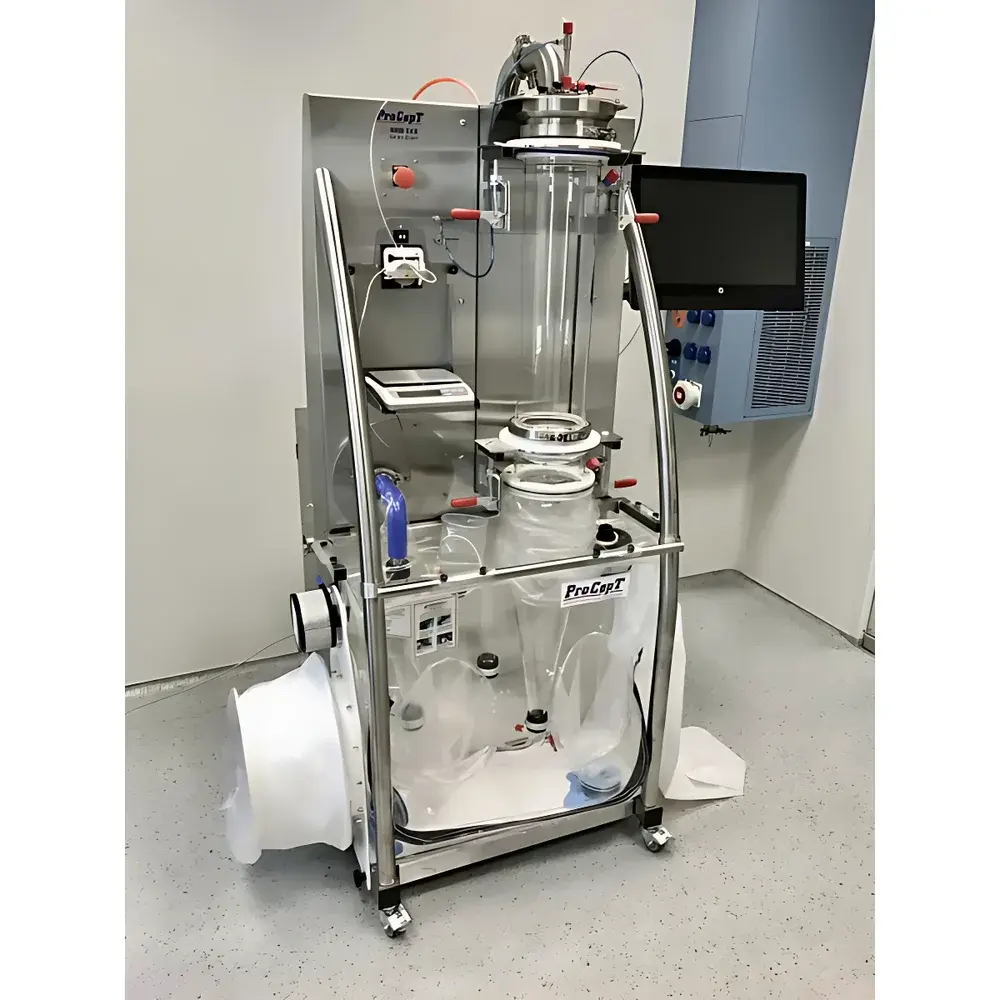
- Negative-pressure enclosure: Maintains operator safety during handling of potent compounds; compatible with integration into ISO Class 5 gloveboxes via optional nitrogen-closed-loop accessory.
- No bake-out or post-drying heating elements: Avoids secondary thermal stress on sensitive formulations—preserves crystallinity, polymorphic form, and biological activity.
Sample Compatibility & Compliance
The 4M8-TriX processes aqueous and organic solvent systems—including ethanol, acetone, dichloromethane, and ethyl acetate—with consistent droplet formation and drying kinetics. Its inert gas compatibility (N₂ or argon) supports oxygen-sensitive compounds and meets ICH Q5C stability testing requirements. The system conforms to EU Machinery Directive 2006/42/EC and carries CE marking. All wetted parts are constructed from 316L stainless steel and borosilicate glass, compliant with USP and ISO 10993-1 for extractables/leachables profiling. Data integrity is maintained per FDA 21 CFR Part 11 through optional audit-trail-enabled software modules, supporting GLP/GMP-aligned documentation for regulatory submissions.
Software & Data Management
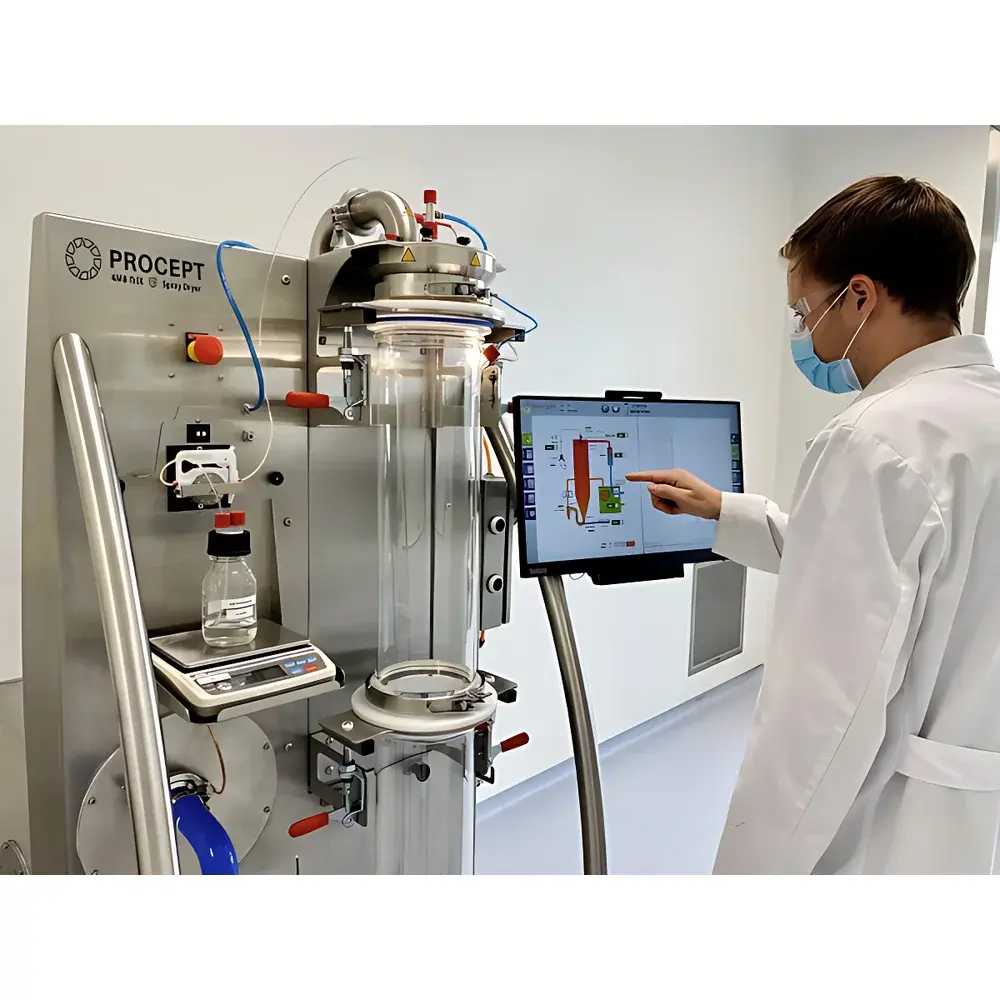
The integrated ProCepT Control Suite provides real-time monitoring and logging of critical process parameters—including inlet/outlet temperature, feed rate, atomizing gas pressure, chamber vacuum, and particle trajectory via optional inline laser diffraction (SpraySight™). All data are timestamped, user-annotated, and exportable in CSV or ASTM E2500-compliant XML format. Version-controlled method templates allow seamless transfer between R&D and tech-transfer labs. Optional electronic signature functionality supports ALCOA+ principles for traceability in regulated environments.
Applications
- Pharmaceutical formulation: Amorphous solid dispersions (ASDs), polymer-stabilized nanosuspensions, enteric-coated microparticles, and taste-masking microcapsules.
- Biologics stabilization: Lysozyme, insulin, and monoclonal antibody powders with preserved secondary structure (validated by FTIR and DSC).
- Functional food delivery: Encapsulated probiotics, omega-3 oils, and polyphenol complexes with enhanced oxidative stability.
- Advanced materials synthesis: Metal-organic framework (MOF) precursors, catalyst supports, and battery electrode slurries requiring narrow PSD control.
- Process analytical technology (PAT): In-line particle sizing integration enables real-time quality-by-design (QbD) implementation per ICH Q8(R2).
FAQ
What is the minimum viable sample volume for method development?
A single 1 mL feed volume (≈10 mg solute) is sufficient to generate statistically representative powder for physicochemical characterization.
Can the system handle chlorinated solvents like DCM or chloroform?
Yes—provided appropriate explosion-proof accessories and exhaust scrubbing are implemented per local ATEX/IECEx regulations.
Is GMP-compliant documentation support available?
Yes—through optional IQ/OQ/PQ protocols, URS mapping, and 21 CFR Part 11-compliant electronic records.
How does the laminar flow design improve powder recovery compared to turbulent systems?
It reduces wall impaction losses by >40% and eliminates localized overheating zones that cause sticking or decomposition—resulting in higher yield and batch-to-batch consistency.
What particle size resolution can be achieved with different nozzle cap configurations?
Using 0.15 mm orifice yields median diameters (Dv50) of 1–10 µm; 1.2 mm orifice extends upper limit to 350 µm while maintaining narrow span (Dv90/Dv10 < 2.5).



