
ProCepT 4M8-TriX Semi-Solid Homogenizer
| Brand | ProCepT |
|---|---|
| Origin | Belgium |
| Model | 4M8-TriX Homogenizer |
| Instrument Type | Probe-Rotor Homogenizer |
| Dimensions (W×D×H) | 300 × 400 × 500 mm |
| Processing Volume Range | 500–1500 mL |
| Minimum Particle Size Achievable | 5 µm |
Overview
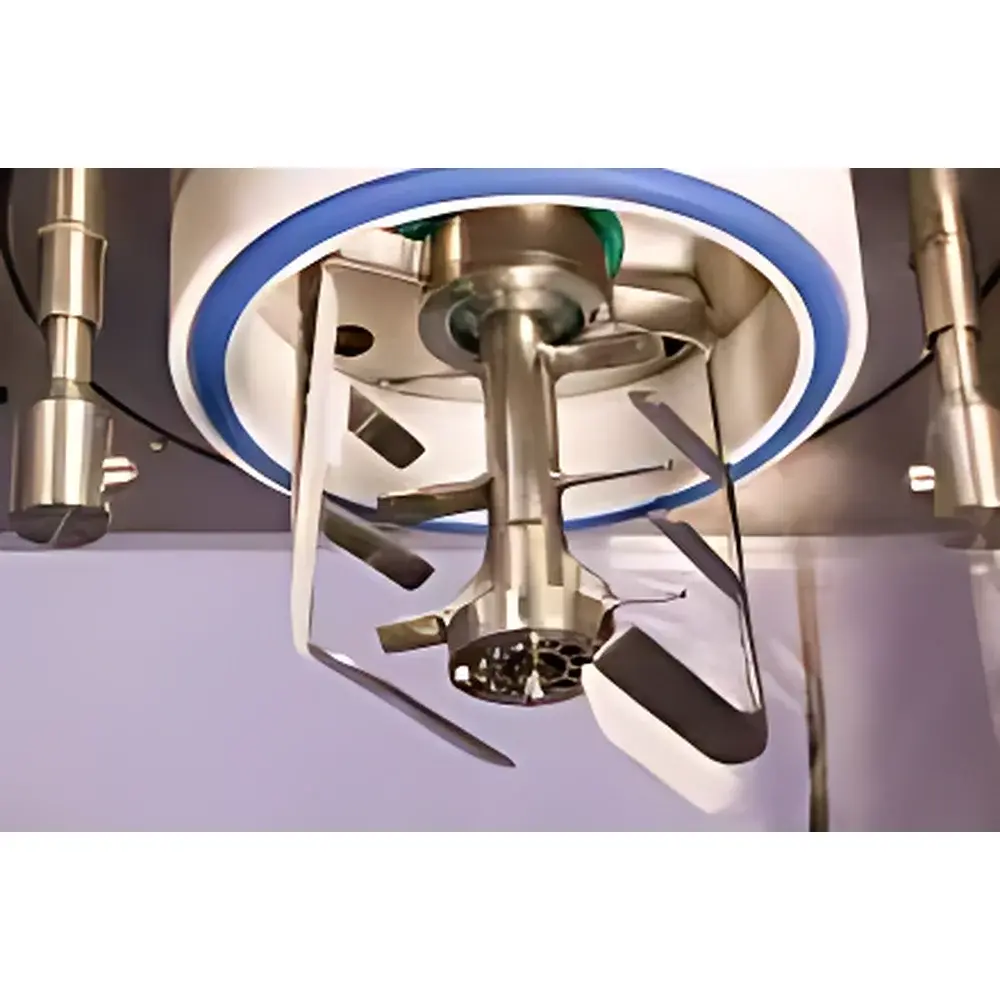
The ProCepT 4M8-TriX Semi-Solid Homogenizer is an engineered solution for controlled, reproducible homogenization of viscous and semi-solid materials—specifically formulated for applications where conventional rotor-stator or ultrasonic systems fail to deliver consistent dispersion without excessive shear-induced degradation. Operating on a high-flow, low-shear probe-rotor principle, the 4M8-TriX generates laminar-to-moderate turbulent flow fields within the processing vessel, enabling uniform particle size reduction down to 5 µm while preserving structural integrity of sensitive actives, thickeners, or suspended phases. Its design targets laboratories engaged in pharmaceutical formulation development (e.g., topical gels, dental pastes, mucoadhesive suspensions), cosmetic emulsion R&D, and advanced material synthesis where batch-to-batch consistency, containment, and process scalability are critical. Unlike general-purpose homogenizers, the 4M8-TriX integrates vacuum-assisted powder dosing and in-line degassing—key capabilities for eliminating air entrapment in high-viscosity matrices and ensuring accurate mass-based formulation input.
Key Features
- Probe-rotor architecture optimized for semi-solid rheology: delivers high volumetric throughput (500–1500 mL per batch) with minimal localized heating and shear stress accumulation
- Vacuum-integrated feed system enables precise, dust-free introduction of powders directly into the processing vessel—eliminating pre-blending steps and reducing operator exposure
- Integrated degassing function operates during homogenization, removing entrained air bubbles from viscous media such as hydrogels or silicone-based ointments
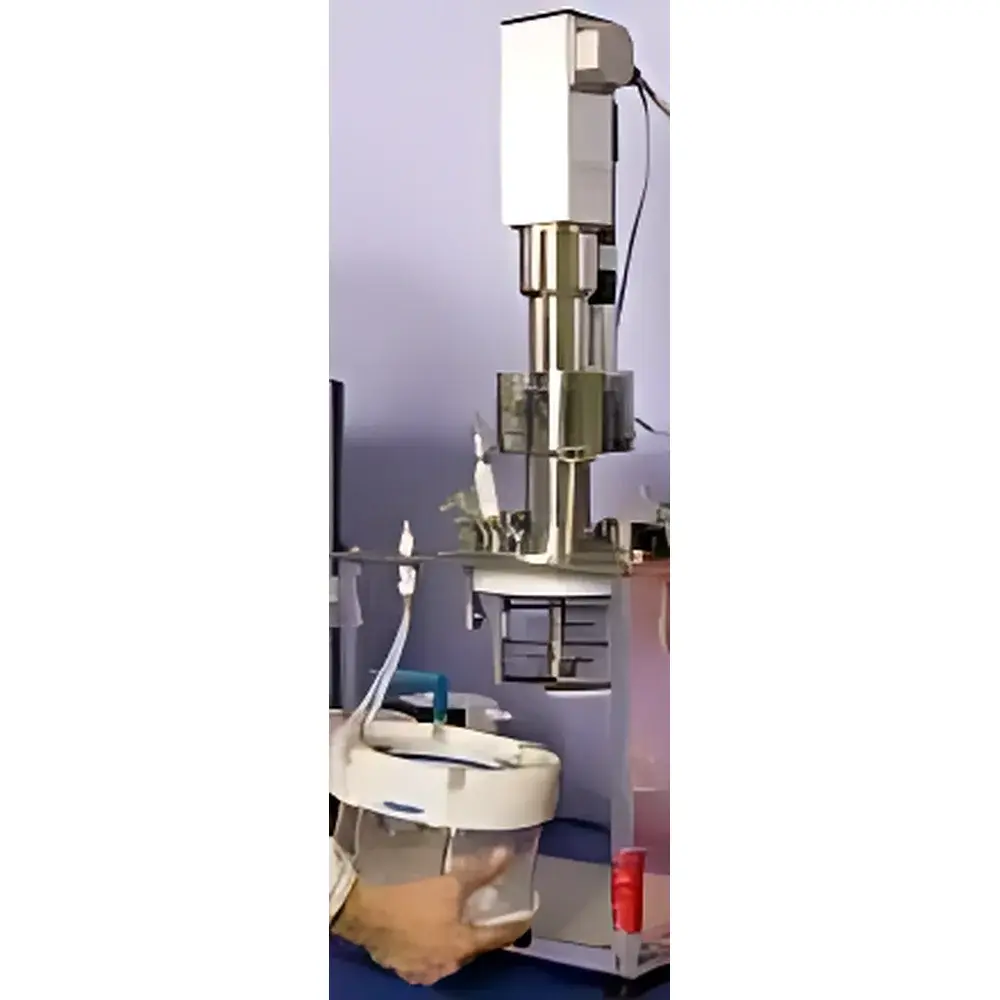
- Full acrylic safety enclosure and transparent process vessel allow real-time visual monitoring without compromising containment integrity
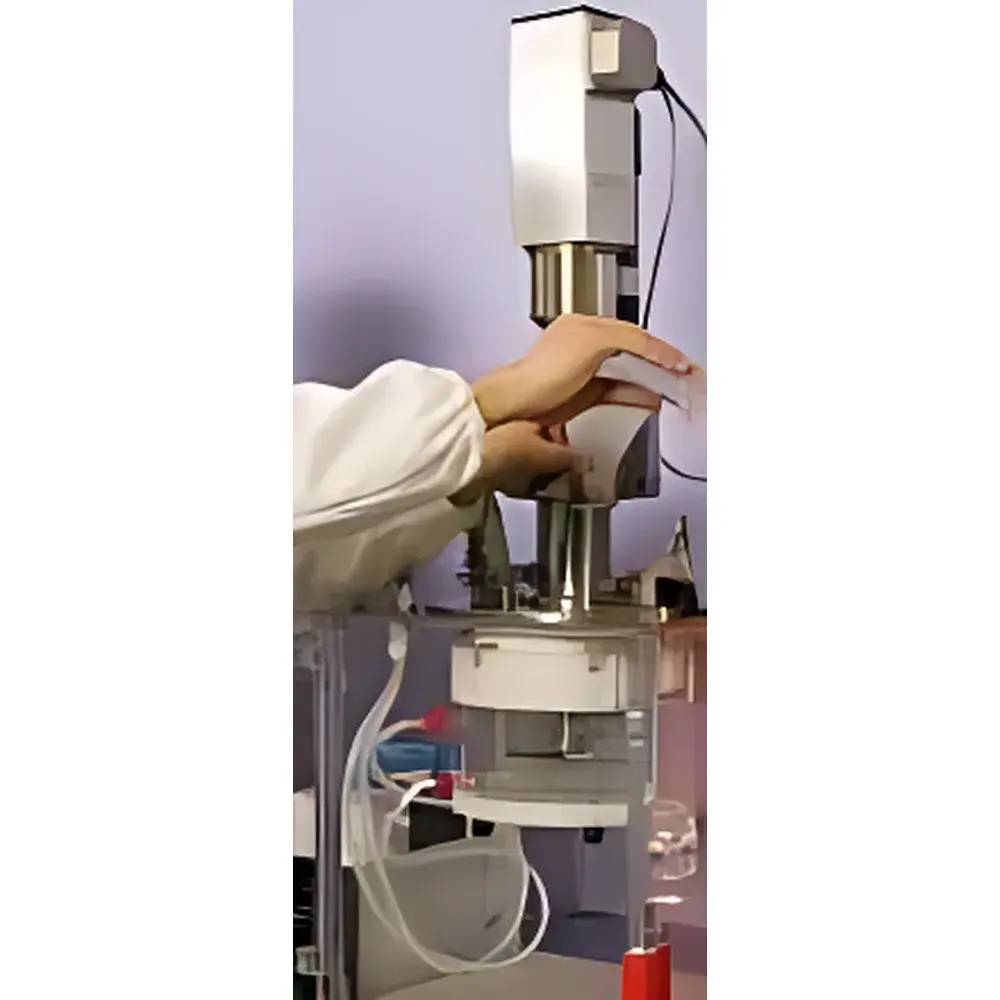
- Tool-free disassembly of all wetted parts—including rotor, stator, shaft seal, and vessel base—for rapid cleaning, sterilization (autoclavable up to 121°C), or replacement with single-use components
- Glove-box mountable configuration supports ISO Class 5–7 environments and closed-system processing for cytotoxic, potent, or controlled-substance formulations
Sample Compatibility & Compliance
The 4M8-TriX accommodates a broad spectrum of semi-solid matrices including aqueous and non-aqueous gels, polymer dispersions, toothpaste bases, pharmaceutical suspensions (e.g., zinc oxide or calamine suspensions), and cosmetic emulsions with viscosity ranges spanning 100 mPa·s to >50,000 mPa·s (measured at 25°C, 10 s⁻¹). All wetted surfaces are constructed from electropolished 316L stainless steel and FDA-compliant PTFE/FFKM elastomers. The system complies with IEC 61000-6-2 (EMC immunity) and IEC 61000-6-4 (EMC emissions), and its mechanical design adheres to EN ISO 12100:2010 for machinery safety. Optional IQ/OQ documentation packages support GLP and GMP validation workflows, including traceable calibration records and audit-ready maintenance logs aligned with FDA 21 CFR Part 11 requirements for electronic records and signatures.
Software & Data Management
While the 4M8-TriX operates via intuitive tactile controls for speed, time, and vacuum setpoints, it features a digital interface port (RS-485 + optional Ethernet module) for integration into laboratory information management systems (LIMS) or centralized process control networks. All operational parameters—including actual RPM, torque load, vacuum level, elapsed time, and cycle count—are timestamped and stored locally on internal flash memory (16 GB) with export capability via USB-C. Audit trail functionality captures user ID, parameter changes, and alarm events—fully compliant with ALCOA+ data integrity principles. Optional ProCepT ControlSuite software provides remote monitoring, SOP-driven protocol execution, and PDF report generation with embedded metadata for regulatory submissions.
Applications
- Development and scale-down studies of topical drug products (creams, gels, foams) per USP and Ph. Eur. 2.9.36
- Formulation of high-potency oncology suspensions under containment conditions meeting ISPE Category 3/4 handling standards
- Rheological conditioning of dental composites and impression materials prior to viscosity testing (ISO 4823)
- Stabilization of nanoemulsion precursors for transdermal delivery systems
- Batch homogenization of conductive polymer pastes used in printed electronics R&D
- Preparation of reference standards for particle size distribution analysis (ISO 13320:2020 laser diffraction)
FAQ
What is the maximum viscosity this homogenizer can process?
The 4M8-TriX has been validated for routine operation up to 50,000 mPa·s (at 25°C, 10 s⁻¹) using standard rotor-stator geometry; higher viscosities may be accommodated with optional high-torque drive modules.
Can the system be validated for GMP manufacturing use?
Yes—ProCepT provides full qualification documentation (IQ/OQ/PQ templates), calibration certificates traceable to NIST standards, and firmware with 21 CFR Part 11-compliant user access control and electronic signature support.
Is the processing vessel autoclavable?
The main vessel, rotor, stator, and shaft assembly are fully autoclavable at 121°C for 30 minutes; O-rings and seals require periodic replacement per manufacturer’s maintenance schedule.
Does the vacuum function support continuous powder feeding?
Vacuum-assisted feeding is designed for discrete, metered batch loading—not continuous feed—but enables quantitative transfer of powders with ≤100 µm particle size and bulk density ≥0.3 g/cm³.
Are single-use kits available for the 4M8-TriX?
Yes—sterile, gamma-irradiated disposable kits include polypropylene vessels, PTFE-coated rotors, and sealed stator assemblies, qualified for Category 3–4 hazardous compound processing per ASTM E2656.



