
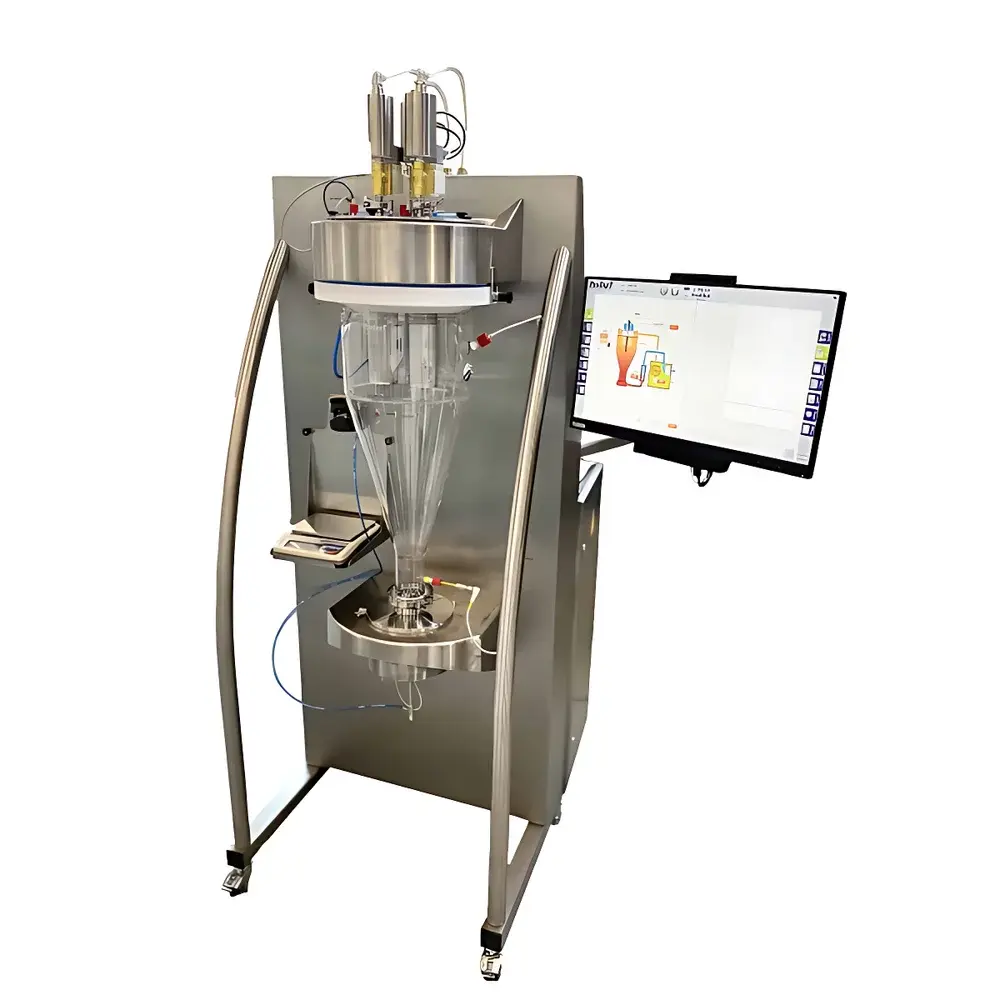
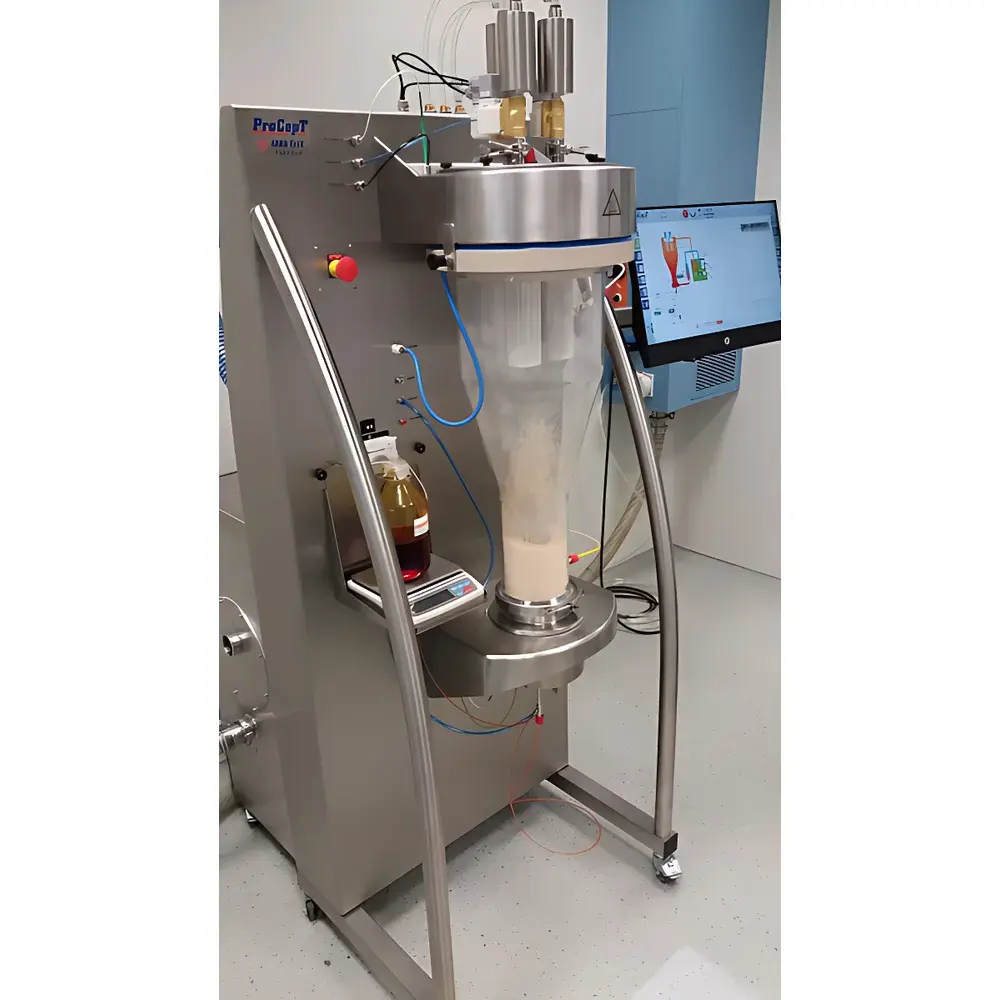
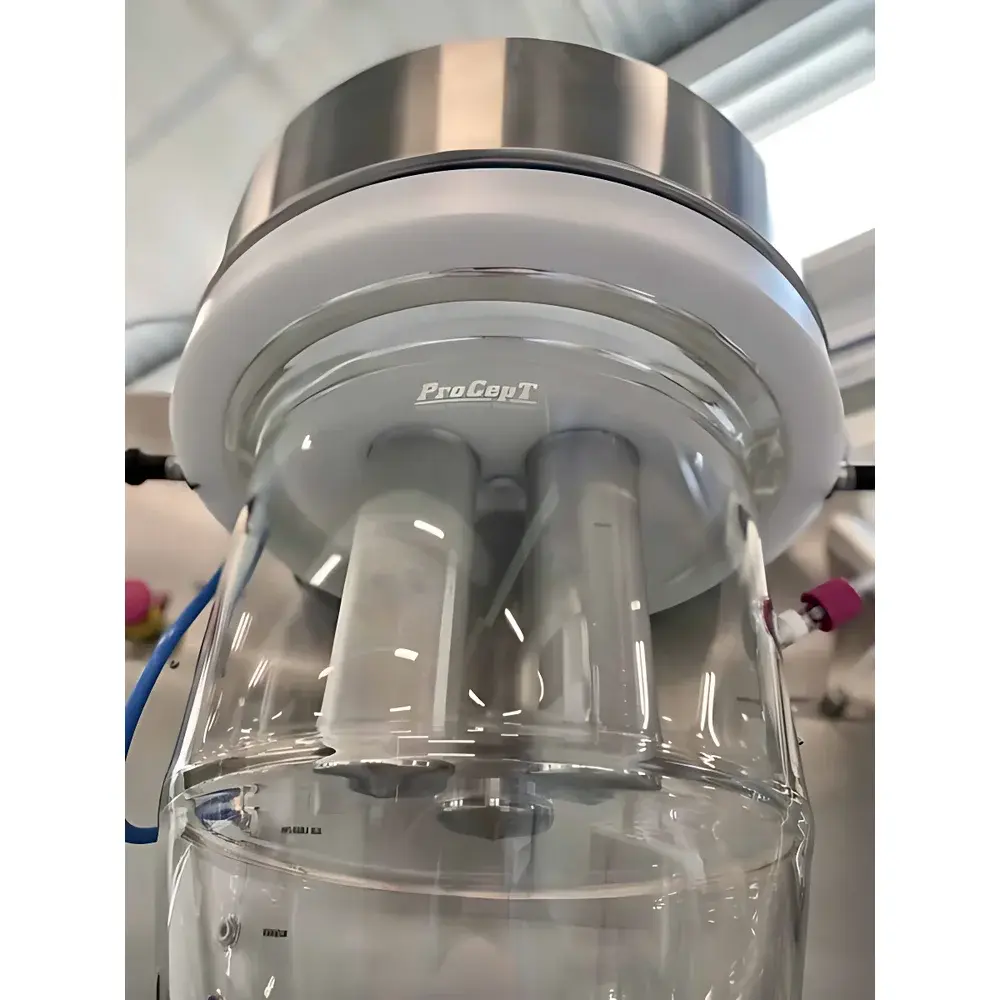
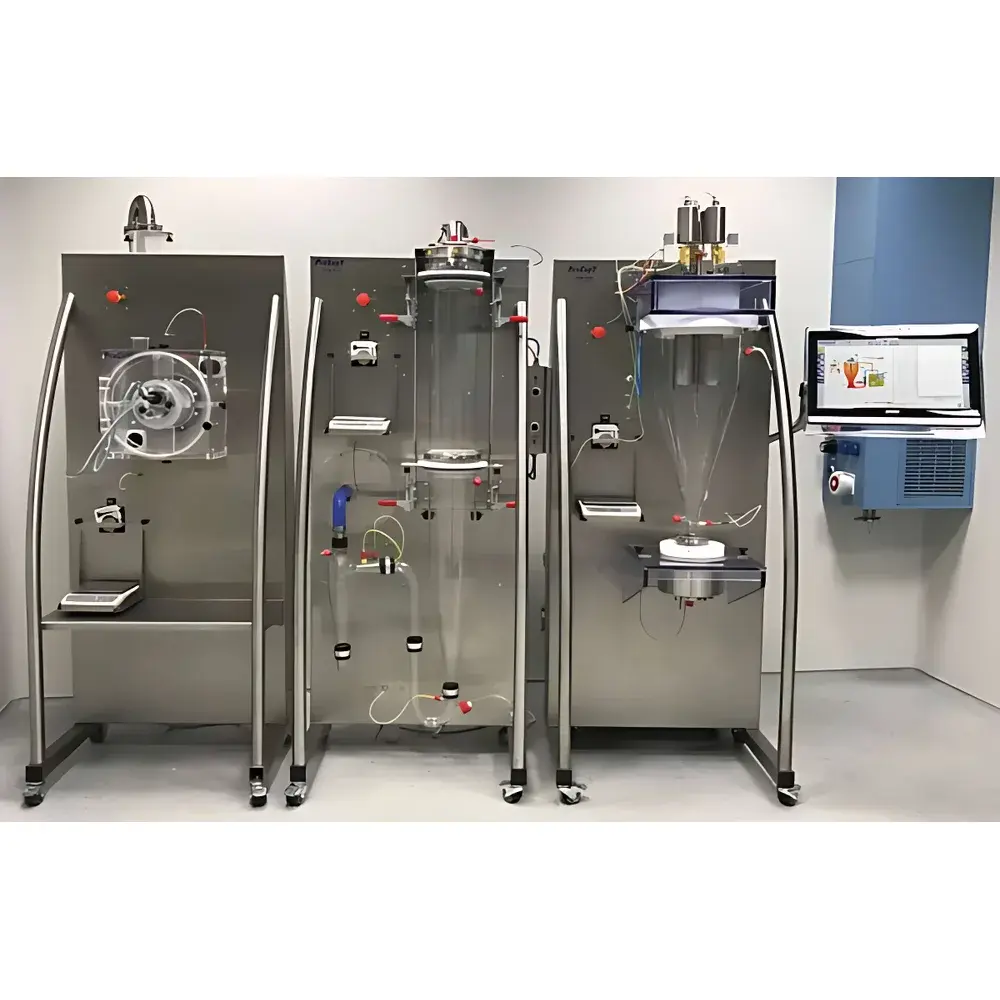
ProCepT 4M8-TriX Pharmaceutical R&D Fluidized Bed Granulator and Coater
| Brand | ProCepT (Belgium) |
|---|---|
| Origin | Belgium |
| Model | 4M8-TriX |
| Batch Capacity | 50 g – 1 kg |
| Fluidized Bed Volume | 1 L (for 50–200 g) or 4 L (for 200–1000 g) |
| 雾化 Nozzle Options | Dual-stream high-efficiency atomizer with interchangeable nozzle caps (orifice diameters: 0.15–1.2 mm) |
| System Design | Negative-pressure operation |
| Optional Accessories | Nitrogen recirculation loop, glovebox integration kit, in-process sampling port, removable spray head assembly |
Overview
The ProCepT 4M8-TriX is a benchtop fluidized bed processor engineered specifically for early-stage pharmaceutical formulation development. It supports three core unit operations—top-spray granulation, bottom-spray Wurster coating, and fluid-bed drying—within a single, modular platform. Its design adheres to the principles of controlled gas-solid suspension dynamics, where precise airflow management, temperature uniformity, and atomization fidelity govern particle growth, film deposition, and moisture removal. Unlike production-scale systems, the 4M8-TriX prioritizes experimental agility: rapid parameter iteration, minimal material consumption, and reproducible small-batch outcomes essential for QbD-driven development. The system operates under negative pressure, inherently limiting operator exposure to potent compounds and enabling seamless integration into containment environments such as ISO Class 5 gloveboxes.
Key Features
- Modular tri-mode configuration: Switch between top-spray granulation, bottom-spray Wurster coating, and drying modes via mechanical reconfiguration of the distributor plate, spray assembly, and air inlet geometry.
- Dual-stream high-efficiency atomizer: Delivers independent control of binder solution and atomizing air, minimizing droplet size distribution (typical Sauter mean diameter < 50 µm at 0.3 mm orifice) and enhancing coating uniformity across microspheres and pellets.
- Scalable fluidization volumes: Two interchangeable fluidization chambers—1 L (optimized for 50–200 g batches) and 4 L (validated for 200–1000 g)—allow method transfer studies from preformulation screening to pilot-scale feasibility testing.
- Negative-pressure architecture: Maintains internal pressure 20–30 Pa below ambient, preventing aerosol escape and supporting occupational exposure limit (OEL) compliance for APIs with thresholds as low as 10 ng/m³.
- Glovebox-ready interface: Includes flanged ports for feed/discharge, pneumatic actuator couplings, and sealed cable penetrations compatible with standard ISO 14644-1 compliant containment enclosures.
- In-process accessibility: Spray nozzles and product containers are removable without tools; optional sampling probe permits real-time withdrawal of 1–5 g aliquots under inert atmosphere for offline particle size or dissolution analysis.
Sample Compatibility & Compliance
The 4M8-TriX accommodates diverse solid dosage forms including immediate-release granules, sustained-release pellets, enteric-coated beads, and microencapsulated actives. It handles powders with median particle sizes from 20 µm to 1 mm and bulk densities ranging from 0.2 to 1.2 g/cm³. All wetted surfaces contact-grade stainless steel (ASTM A276 Type 316L), electropolished to Ra ≤ 0.4 µm. The system meets CE machinery directive 2006/42/EC and conforms to ICH Q5C (stability), Q8(R2) (pharmaceutical development), and Q9 (quality risk management) principles. When equipped with audit-trail-enabled controller firmware and electronic signature modules, it supports ALCOA+ data integrity standards and can be validated per ASTM E2500-13 (user requirement specification) and ISPE GAMP 5 Category 3 software classification.
Software & Data Management
The integrated touchscreen HMI runs on a deterministic real-time OS, logging >20 process variables—including inlet/outlet air temperature, humidity, static pressure differential, airflow rate (±1% FS), and spray mass flow—at 1 Hz resolution. Raw data exports to CSV or .tdms format; metadata (operator ID, batch ID, versioned SOP reference) is embedded per ICH M7 Annex 2. Optional ProCepT Control Suite v3.2 provides automated recipe execution, deviation alerts (e.g., ΔT > ±2°C over 30 s), and trend-based endpoint detection using moving-window PCA of temperature profiles. All electronic records comply with FDA 21 CFR Part 11 requirements when deployed with role-based access control and biometric login.
Applications
- Formulation screening of polymer-coated multiparticulates for gastric-resistant release (e.g., Eudragit® L30D-55 application).
- Optimization of binder concentration and spray rate during high-shear-free granulation of low-dose oncology APIs.
- Process characterization of moisture-sensitive peptides under nitrogen recirculation (O₂ < 100 ppm).
- Design-space mapping for Wurster coating thickness (target: 5–15 µm) using DoE-driven airflow and pan speed combinations.
- Accelerated stability assessment via sequential in-process sampling followed by USP dissolution testing.
FAQ
Can the 4M8-TriX be qualified for GMP-compliant development batches?
Yes—when configured with documented IQ/OQ protocols, calibrated sensors traceable to NIST standards, and Part 11-compliant software, it meets ICH Q5A(R2) and Q5C requirements for clinical-phase material generation.
What is the minimum viable batch size for reliable Wurster coating?
For consistent film thickness distribution (RSD < 8% CV), the recommended lower limit is 150 g in the 4 L chamber using 0.4 mm nozzle cap and optimized airflow velocity (0.3–0.4 m/s).
Is third-party calibration support available outside Belgium?
ProCepT authorizes certified service partners in the US (FDA-registered), UK (MHRA-accredited), and Japan (PMDA-recognized) for annual sensor verification and airflow mapping per ISO 13408-1.
How does nitrogen recirculation impact drying kinetics?
Under closed-loop N₂ operation, dew point drops to −40°C, reducing residual moisture in hygroscopic excipients (e.g., lactose monohydrate) by up to 40% compared to ambient-air drying at identical temperature setpoints.




