
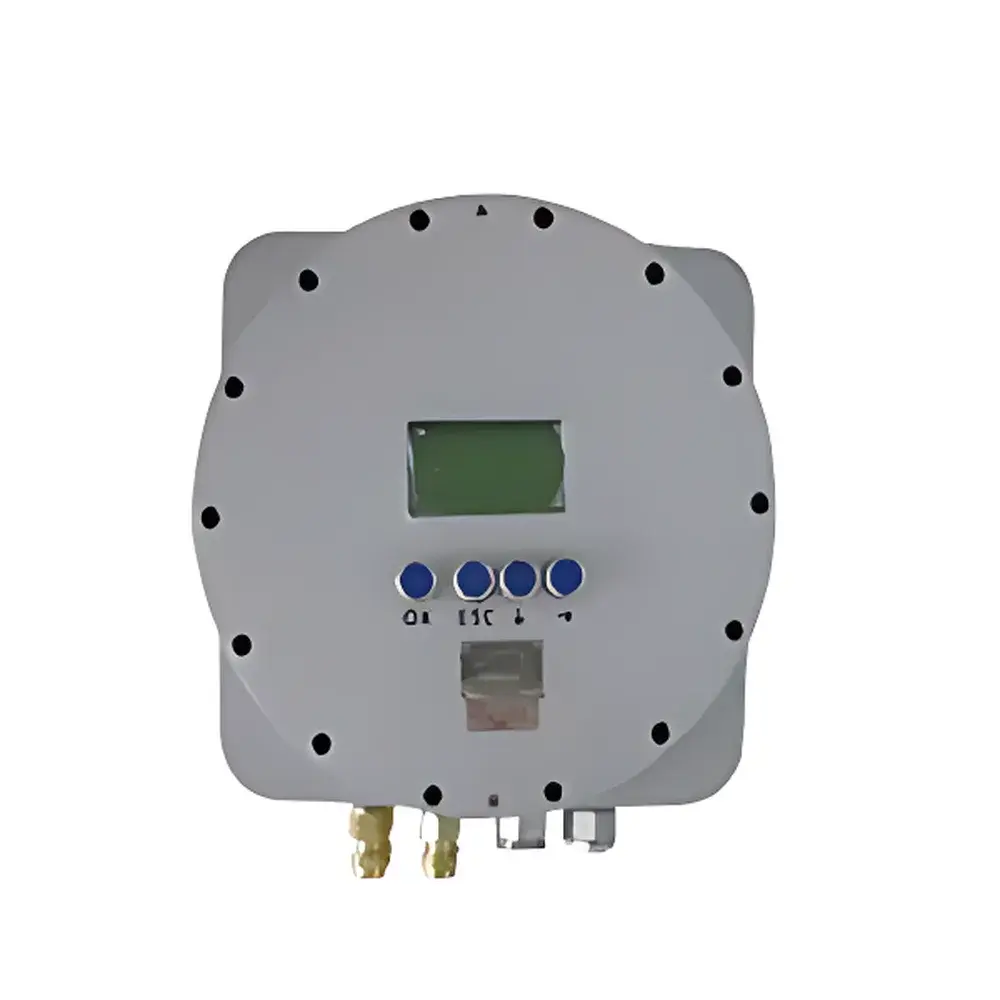
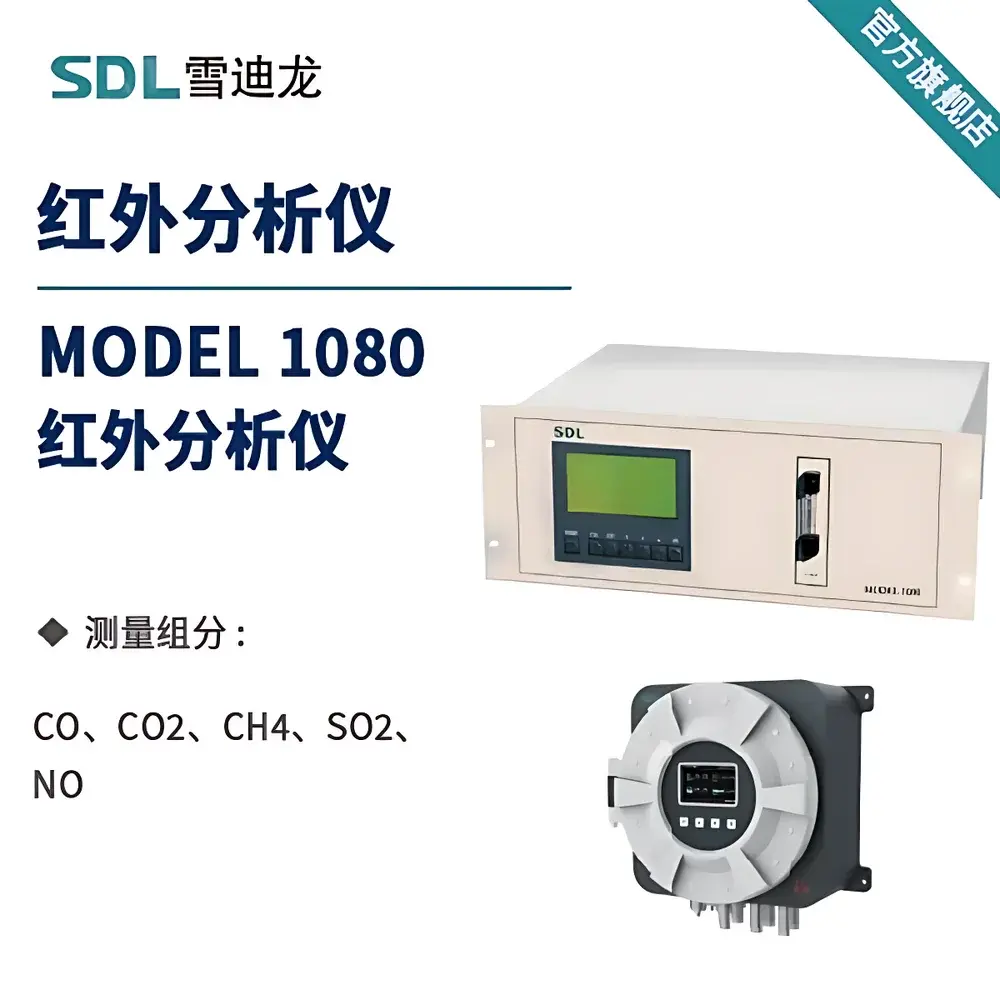
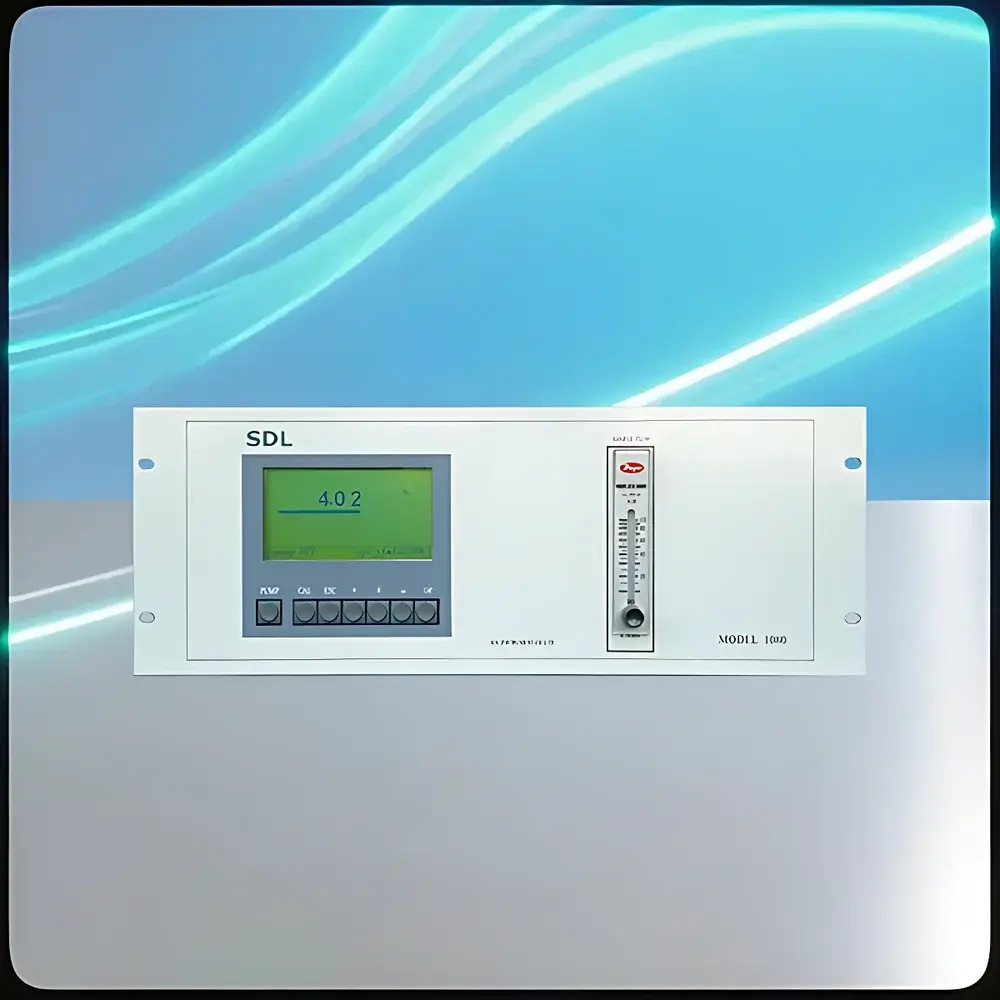
SDL MODEL 1080Ex Explosion-Proof NDIR Gas Analyzer
| Brand | SDL |
|---|---|
| Origin | Beijing, China |
| Manufacturer Type | OEM Manufacturer |
| Regional Classification | Domestic (China) |
| Model | MODEL 1080Ex |
| Instrument Category | Continuous Emission Monitoring System (CEMS) |
| Detection Principle | Non-Dispersive Infrared (NDIR) Spectroscopy |
| Measurable Gases | SO₂, NO, CO, CO₂, CH₄, H₂, O₂, C₂H₄ |
| Compliance | ATEX/IECEx Zone 1 Certified |
| Output Signals | 4–20 mA, RS485, Modbus RTU |
| Environmental Rating | IP65 |
| Power Supply | 220 VAC ±10%, 50/60 Hz |
| Operating Temperature | –20 °C to +50 °C |
| Enclosure Material | Stainless Steel 316L with Explosion-Proof Housing |
Overview
The SDL MODEL 1080Ex is an intrinsically safe, explosion-proof non-dispersive infrared (NDIR) gas analyzer engineered for continuous, real-time measurement of multiple combustion-related and process gases in hazardous environments. Designed in accordance with IEC 60079-0 and IEC 60079-1 standards for electrical equipment in explosive atmospheres, the instrument features a certified ATEX/IECEx Zone 1 enclosure (Ex d IIB T4 Gb), enabling reliable deployment in petrochemical refineries, natural gas processing units, coal-fired power plants, and other Class I, Division 1 classified areas. Its optical architecture employs dual-beam NDIR detection with thermopile detectors and narrow-band interference filters, delivering high selectivity and immunity to cross-interference among target analytes—including SO₂, NO, CO, CO₂, CH₄, H₂, O₂, and C₂H₄—without requiring consumable reagents or catalytic cells. The analyzer operates on the principle of Beer–Lambert absorption spectroscopy, where gas concentration is quantified by measuring attenuation of infrared radiation at characteristic vibrational absorption wavelengths (e.g., 7.3 µm for SO₂, 5.3 µm for NO, 4.6 µm for CO). It is fully integrated into continuous emission monitoring systems (CEMS) and complies with technical requirements outlined in EPA Method 10, EN 15267, and HJ 75–2017 for flue gas monitoring.
Key Features
- Explosion-proof certification to ATEX Directive 2014/34/EU and IECEx Scheme (Zone 1, Group IIB, T4 temperature class)
- Dual-beam NDIR optical path design with temperature-stabilized light source and reference/detection channel compensation
- Multi-gas capability: Simultaneous quantification of up to eight gases via dedicated spectral channels and embedded calibration algorithms
- Auto-zero and auto-span functionality with programmable calibration intervals; supports external zero/span gas delivery systems
- Integrated self-diagnostic suite including optical path contamination monitoring, detector drift tracking, and heater/fan status verification
- Robust stainless steel 316L housing rated IP65 for outdoor installation under harsh industrial conditions
- Low-power warm-up sequence achieving operational readiness within ≤15 minutes after cold start
- Real-time diagnostics output via LED indicators and digital communication interface
Sample Compatibility & Compliance
The MODEL 1080Ex accepts conditioned sample gas streams with particulate filtration ≤1 µm, dew point ≤–5 °C, and hydrocarbon-free operation to prevent optical window fouling. It interfaces directly with standard CEMS extractive sampling trains equipped with heated sample lines (≥180 °C), condensate traps, and permeation dryers. All internal wetted parts are chemically inert (316L SS, PTFE, FKM seals), ensuring compatibility with acidic flue gas matrices containing SO₂, NOₓ, and trace halogens. Regulatory compliance includes alignment with China’s HJ 75–2017 and HJ 76–2017 for CEMS performance validation, as well as foundational conformity to ISO 14001 environmental management system integration requirements. Data integrity meets GLP-aligned audit trail provisions when paired with compliant data acquisition software.
Software & Data Management
The analyzer communicates via isolated 4–20 mA analog outputs (per gas channel) and bidirectional RS485 Modbus RTU protocol for integration into SCADA, DCS, or third-party CEMS data handling platforms. Firmware supports configurable alarm thresholds (high/low, rate-of-change), event logging with timestamps, and memory retention of ≥30 days of 1-minute averaged concentration data. When deployed with SDL’s optional CEMS Data Manager (CDM) software, the unit enables full 21 CFR Part 11-compliant electronic records—including user authentication, audit trails, electronic signatures, and immutable data archiving—satisfying QA/QC documentation needs for regulated emissions reporting.
Applications
- Continuous monitoring of SO₂, NOₓ, CO, and CO₂ in coal-, oil-, and gas-fired boiler flue gas stacks per national emission standards
- In-situ analysis of synthesis gas composition in ammonia and methanol production facilities
- Process safety interlock support in ethylene crackers and hydrogen reformers via real-time H₂ and CH₄ tracking
- Combustion efficiency optimization through O₂ and CO co-monitoring in industrial kilns and incinerators
- Leak detection and fugitive emission quantification in LNG terminals and offshore platform ventilation ducts
- Research-grade multi-component gas profiling in laboratory-scale pyrolysis and catalytic reaction studies
FAQ
What certifications does the MODEL 1080Ex hold for use in hazardous locations?
It carries ATEX and IECEx certifications for Zone 1 (Group IIB, T4), along with CNEx certification for domestic Chinese applications.
Can the analyzer be configured for custom gas combinations beyond the standard eight?
Yes—optical module configurations may be adapted during factory build to accommodate alternate NDIR-absorbing species, subject to spectral window availability and cross-sensitivity evaluation.
Is remote firmware update supported?
Firmware updates require local USB connection and authenticated access; over-the-air updates are not implemented for security and regulatory traceability reasons.
Does the device meet EPA Performance Specification 2 (PS-2) requirements?
While not pre-certified to PS-2, its optical design, stability metrics, and calibration methodology align with core PS-2 functional criteria for SO₂ and NOₓ analyzers when validated per EPA Reference Method 7E and 10.
What maintenance schedule is recommended for long-term field operation?
Optical window cleaning and span verification every 90 days; annual full calibration and detector response check using NIST-traceable standards are advised for CEMS compliance.







